Artwork
The Siege of La Rochelle: Plate 16
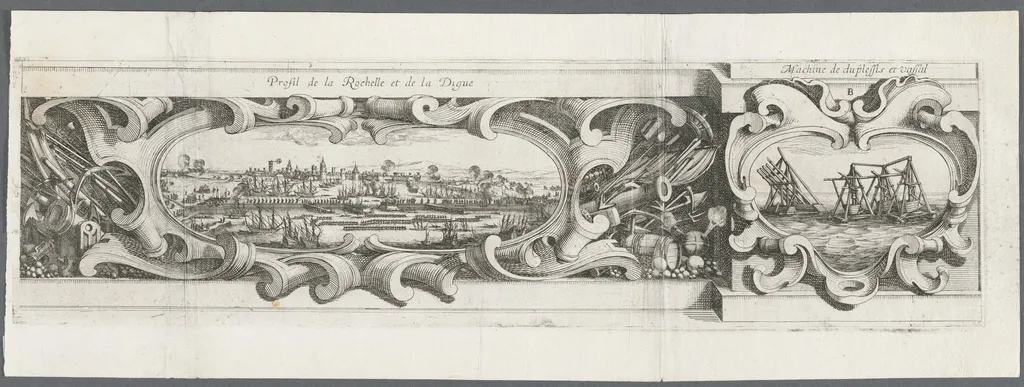
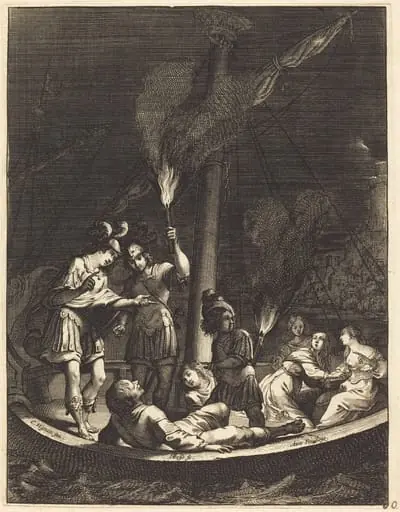
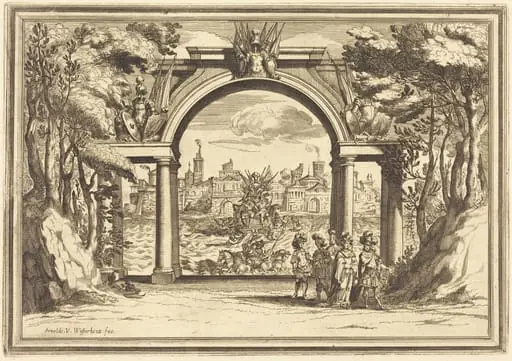
The Siege of La Rochelle: Plate 16 is a print by the Baroque artist Abraham Bosse. It dates from 1629 and is held in the collection of the Cleveland Museum of Art.
About this work
Overview
The print is held in the collection of the Cleveland Museum of Art and reflects the intersection of art, warfare, and engineering in early 17th-century France.
Plate 16 from Abraham Bosse’s series on the Siege of La Rochelle, completed in 1629, is a detailed engraving documenting military operations during the French royal campaign against the Huguenot stronghold. Produced as part of a larger illustrated account, it functions both as a visual record and a technical reference. The print is held in the collection of the Cleveland Museum of Art and reflects the intersection of art, warfare, and engineering in early 17th-century France.
Subject & Meaning
The scene depicts the harbor of La Rochelle under bombardment, with ships ablaze, troops deployed along the shore, and artillery positioned for sustained attack. Smoke rises over densely packed buildings, conveying chaos and destruction. Inscriptions at the top identify the location and specific siege machinery, emphasizing the print’s purpose as a documentary tool. The inclusion of technical details suggests an intent to inform rather than merely dramatize the conflict.
Technique & Style
Bosse employed fine-line engraving to render intricate details of siege equipment—cranes, pulleys, and fortifications—with precision. The composition is tightly structured, framed by ornamental borders typical of the period. Despite the crowded scene, each element is clearly delineated, reflecting the influence of cartographic and architectural drawing traditions. The style prioritizes clarity and accuracy over emotional intensity, aligning with contemporary military documentation practices.
History & Provenance
Created in the immediate aftermath of the siege’s conclusion in 1628, the plate was part of a published series commissioned to glorify Louis XIII’s victory. Bosse, a known engraver and theorist of perspective, worked closely with royal engineers to ensure technical fidelity. The print entered the Cleveland Museum of Art’s collection through documented acquisitions in the 20th century, preserving its role as a primary source on early modern siege warfare.
Context
The siege marked a turning point in France’s religious wars, ending Huguenot political autonomy. Bosse’s prints were produced under royal patronage to legitimize the crown’s authority. Unlike purely decorative Baroque works, these engravings served administrative and educational ends, circulating among military officers and engineers. Their detailed depictions of machinery reflect a growing institutional interest in standardized siege techniques during the early modern period.
Legacy
Bosse’s engravings influenced later military illustrators by establishing a model for combining visual clarity with technical specificity. The series remains a key resource for historians studying early modern fortification and siege tactics. While not widely exhibited as fine art, its value lies in its function as a documentary record—preserving the material culture of warfare at a time when such records were rare and strategically valuable.
Artist & collection

Artist
Abraham Bosse (c. 1604 – 14 February 1676) was a French artist, mainly as a printmaker in etching, but also in watercolour.