Artwork
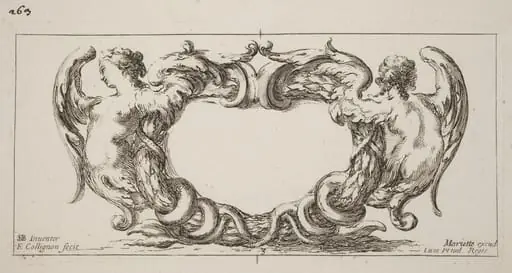
Cartouches de diferentes Inventions. Tres Utilles a plussieurs sortes de Personnes
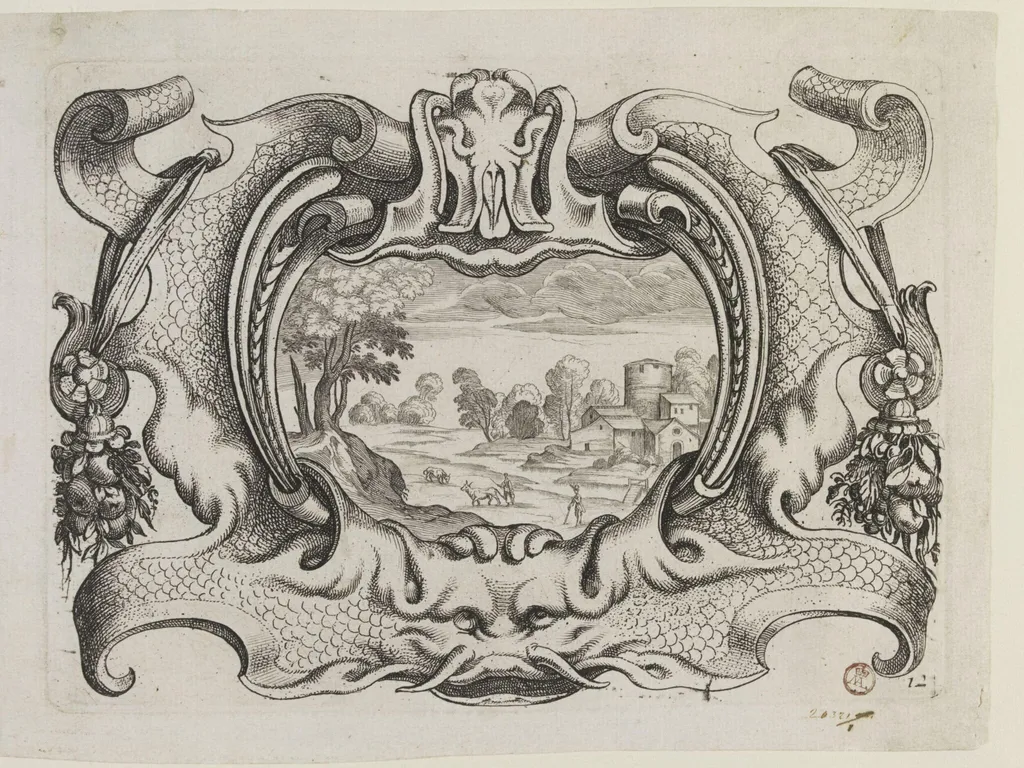
Cartouches de diferentes Inventions. Tres Utilles a plussieurs sortes de Personnes is a print by the Baroque artist Daniel Rabel. It dates from 1634 and is held in the collection of the Victoria and Albert Museum.
About this work
This print is a 1634 Baroque cartouche—a decorated frame meant for names or titles. It’s by Daniel Rabel, who helped bring the playful "auricular" style to France.
The frames look like twisting animal ears, but here they twist like fish. Useful? Maybe. These frames were often left blank for an inscription or coat of arms.
Check out the Victoria and Albert Museum to see more of Rabel’s prints.
Overview
Daniel Rabel’s 1634 print, Cartouches de différentes Inventions, presents a series of ornamental frames designed for inscriptions or heraldic emblems.
Daniel Rabel’s 1634 print, Cartouches de différentes Inventions, presents a series of ornamental frames designed for inscriptions or heraldic emblems. These cartouches reflect the Baroque fascination with fluid, organic forms and were part of a broader effort to introduce new decorative vocabularies into French design. Though rooted in ancient Egyptian precedents, Rabel’s versions diverge through their biomorphic, sinuous contours.
Subject & Meaning
The prints function as blank frameworks—intended to hold names, titles, or coats of arms—rather than standalone images. Their meaning derives from their use: they are vessels for personal or institutional identity, framed by elaborate decoration. The absence of fixed text invites customization, aligning the cartouches with the social practice of displaying status through heraldry and epigraphy.
Technique & Style
Rabel employed etching to achieve fine, flowing lines that mimic the undulating forms of aquatic life, departing from the more common auricular style’s ear-like curves. The intricate, asymmetrical borders suggest movement and organic growth, characteristic of early Baroque ornamentation. The precision of the lines and the rhythmic repetition of forms reveal a mastery of printmaking suited to disseminating decorative motifs across a wide audience.
History & Provenance
Created in 1634, these prints circulated among French artisans and patrons seeking fresh decorative models. Rabel, a court artist and illustrator, leveraged his position to introduce Italian and Flemish influences into French design. The prints were likely distributed as pattern books, guiding craftsmen in woodwork, metalwork, and architecture. Their survival in collections like the Victoria and Albert Museum attests to their influence in decorative arts circles.
Context
In early 17th-century France, decorative arts were undergoing a transformation under the influence of international styles. Rabel’s cartouches emerged during a period when the French court sought to distinguish its aesthetic from Spanish and Italian models. By adapting the auricular idiom with aquatic motifs, he contributed to a uniquely French interpretation of Baroque ornament, blending naturalism with structural elegance.
Legacy
Rabel’s cartouches helped standardize a visual language that would inform French interior decoration for decades. Their emphasis on asymmetry and organic flow anticipated later Rococo tendencies. Though no longer used for inscriptions, the prints remain valuable as documents of design transmission, illustrating how printed media facilitated the spread of stylistic innovation across Europe in the absence of centralized artistic institutions.
Artist & collection
Artist
Daniel Rabel loved turning everyday life into something playful. While most painters stuck to grand religious scenes, he drew fencing manuals and carnival costumes with a sharp eye for movement. His 1634 print…

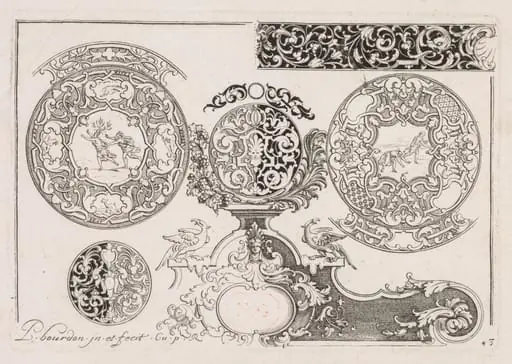 # 3 from " Livre second essais de Gravjre "
Second book of Engraved Designs
# 3 from " Livre second essais de Gravjre "
Second book of Engraved Designs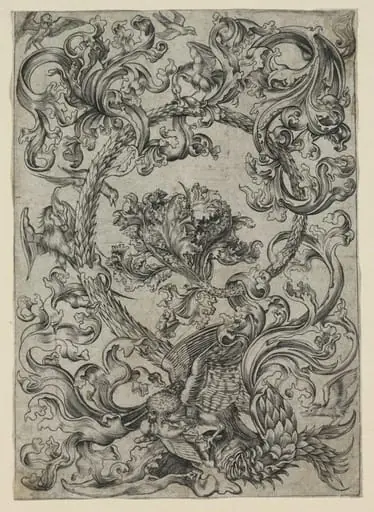 Ornamental Foliage, with an Owl and other Birds
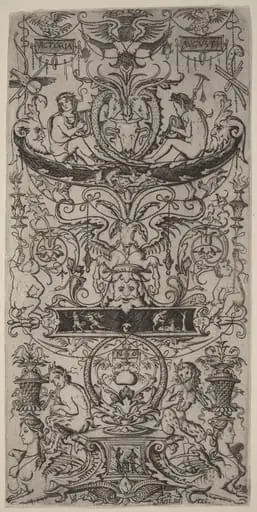 Ornament Panel: Victoria Augusta
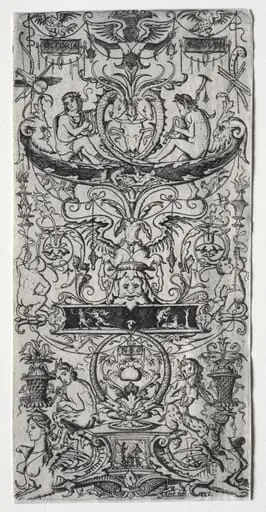 Ornament Panel Inscribed Victoria Augusta
 Ornament Panel: Triton Ridden by a Child
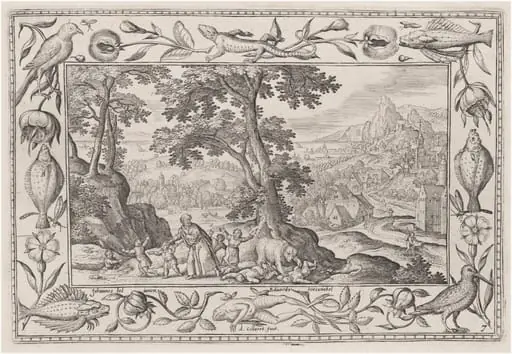 The Mocking Children Cursed by Elijah and Eaten by a She-Bear
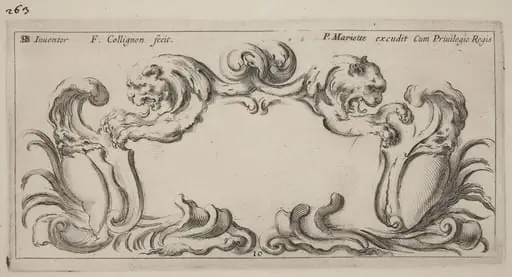 Cartouche
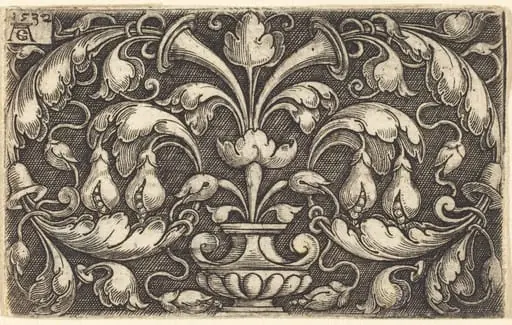 Ornament
 Ornament Panel: Two Children Wearing Helmets
 Cartouche
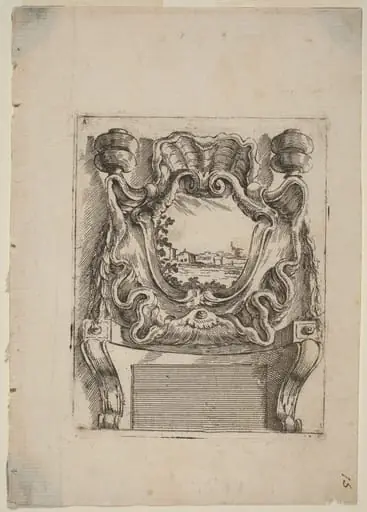 Architectural Motif with a Landscape
 Two Children Wearing Helmets