Artwork
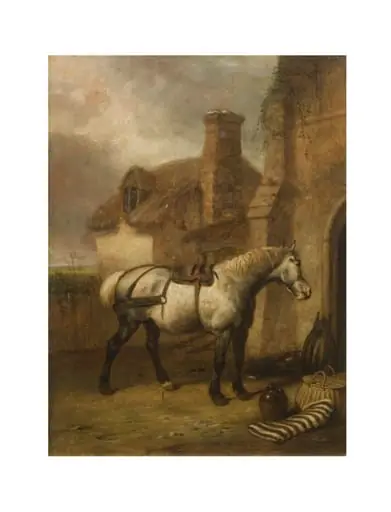
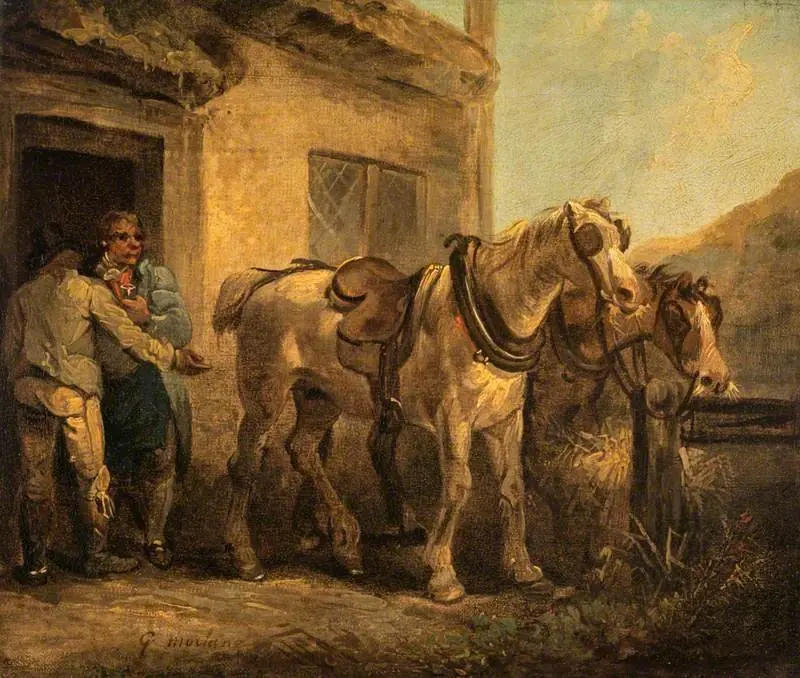
A Grey Horse at a Stable Door
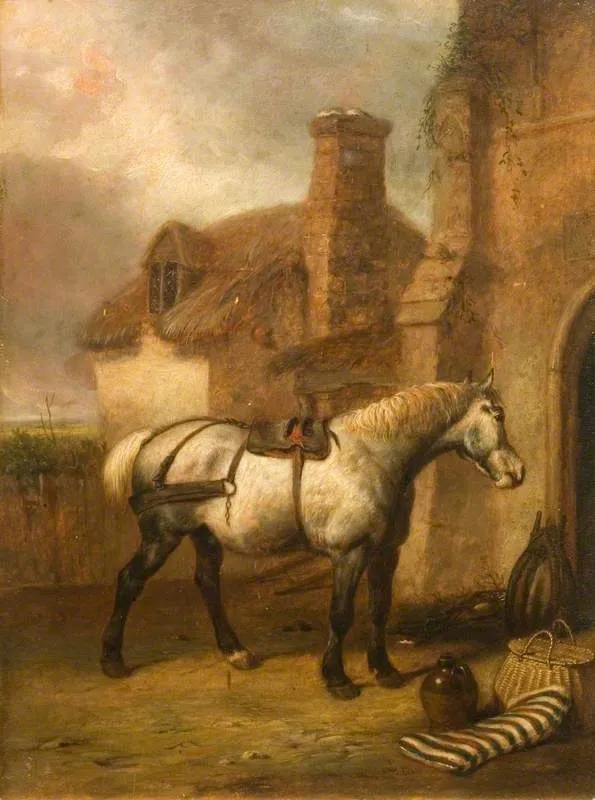
A Grey Horse at a Stable Door is an oil painting by Abraham Cooper. It dates from 1818 and is held in the collection of the Victoria and Albert Museum.
About this work
Overview
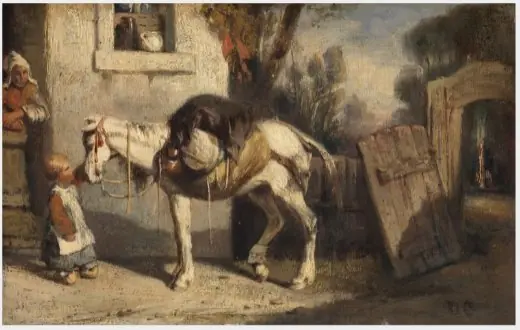
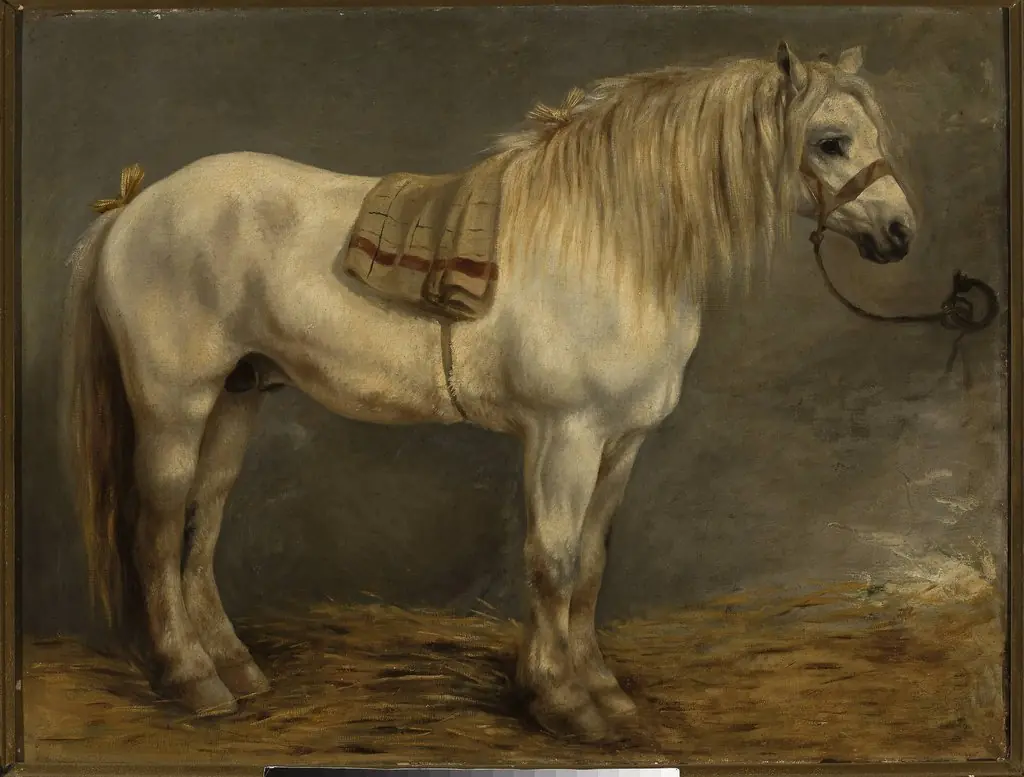
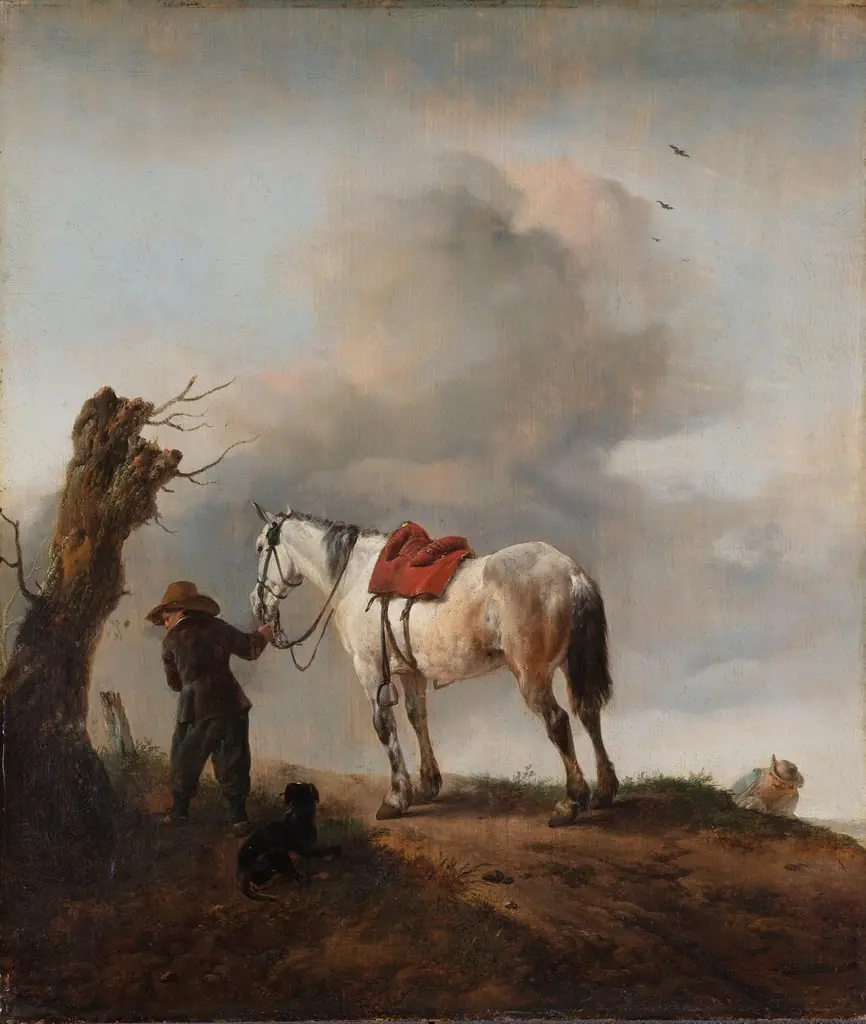
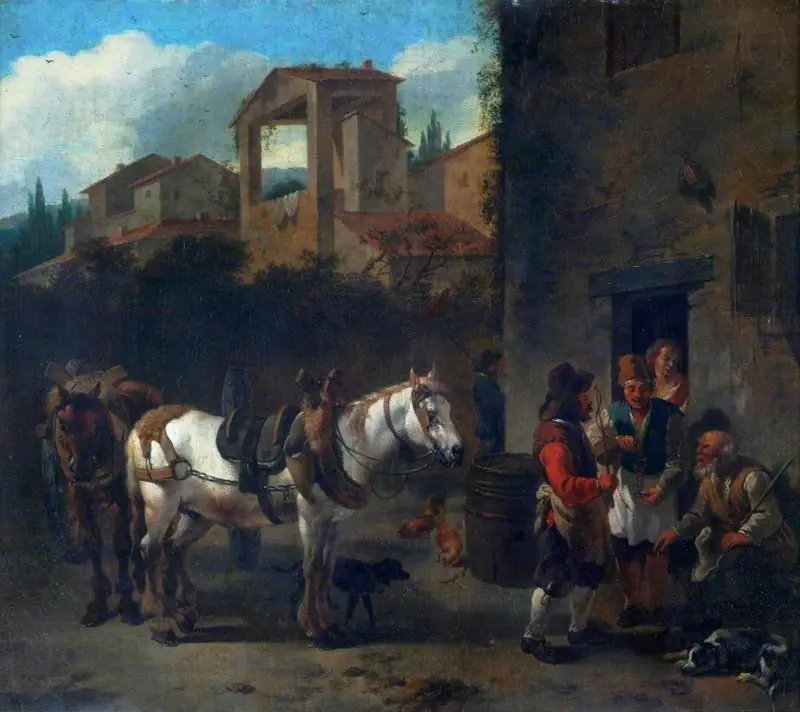
Painted in 1818 by Abraham Cooper, this oil on canvas depicts a grey horse standing near the entrance of a rural stable. The composition is restrained, focusing on the animal’s calm posture and the quiet surroundings. The work belongs to the collection of the Victoria and Albert Museum in London, where it is preserved as an example of early 19th-century British equestrian observation.
Subject & Meaning
The horse, adorned with saddle and bridle, stands still before a weathered stone stable, suggesting a moment of pause in daily farm life. Objects at its feet—a striped blanket and a jug—hint at recent activity, now suspended. The animal’s turned head invites quiet engagement, evoking a sense of dignity and routine rather than action or drama.
Technique & Style
Cooper rendered the horse with careful attention to texture—dappled grey fur, leather straps, and woven fabric are rendered in subtle tonal shifts. The brushwork is precise yet unobtrusive, avoiding theatricality. The background, with its thatched roof and overcast sky, is softly modeled, reinforcing the painting’s subdued mood and emphasis on naturalism over idealization.
History & Provenance
The painting was completed in 1818 and entered the Victoria and Albert Museum’s collection through its predecessor, the South Kensington Museum. Its continuous presence in public holdings since the 19th century reflects its status as a representative work of Cooper’s animal studies, valued for its documentary quality rather than commercial appeal.
Context
In early 19th-century Britain, depictions of working animals were increasingly valued for their truth to everyday rural life. Cooper, known for his military and livestock scenes, contributed to this trend by portraying horses not as symbols of nobility but as integral, quiet participants in agricultural routines, aligning with broader cultural interest in observational realism.
Legacy
Though not widely exhibited today, the painting remains a quiet reference in studies of British animal painting. It exemplifies a shift away from romanticized equestrian portraiture toward understated, empathetic depictions of working animals, influencing later artists who sought to capture the dignity of ordinary rural existence.
Artist & collection