Artwork
A Donkey and a Spaniel in a Stable
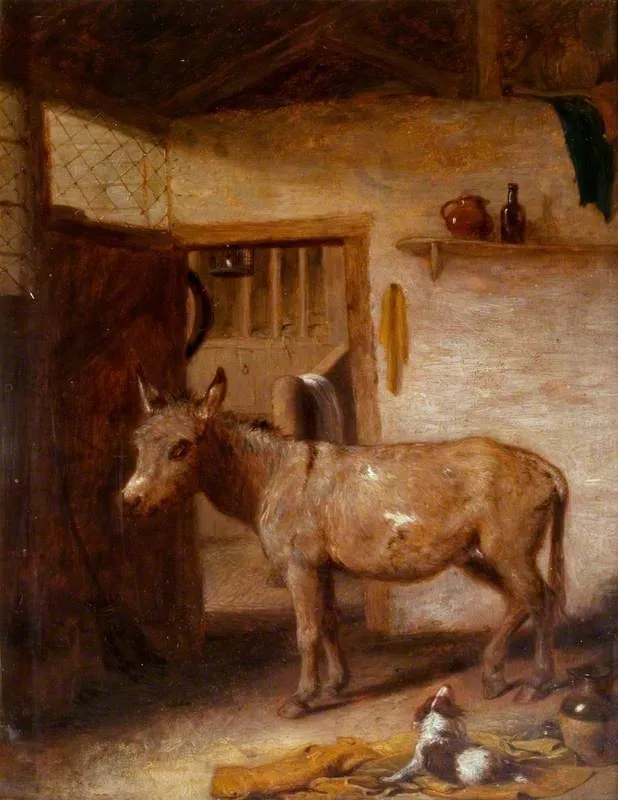
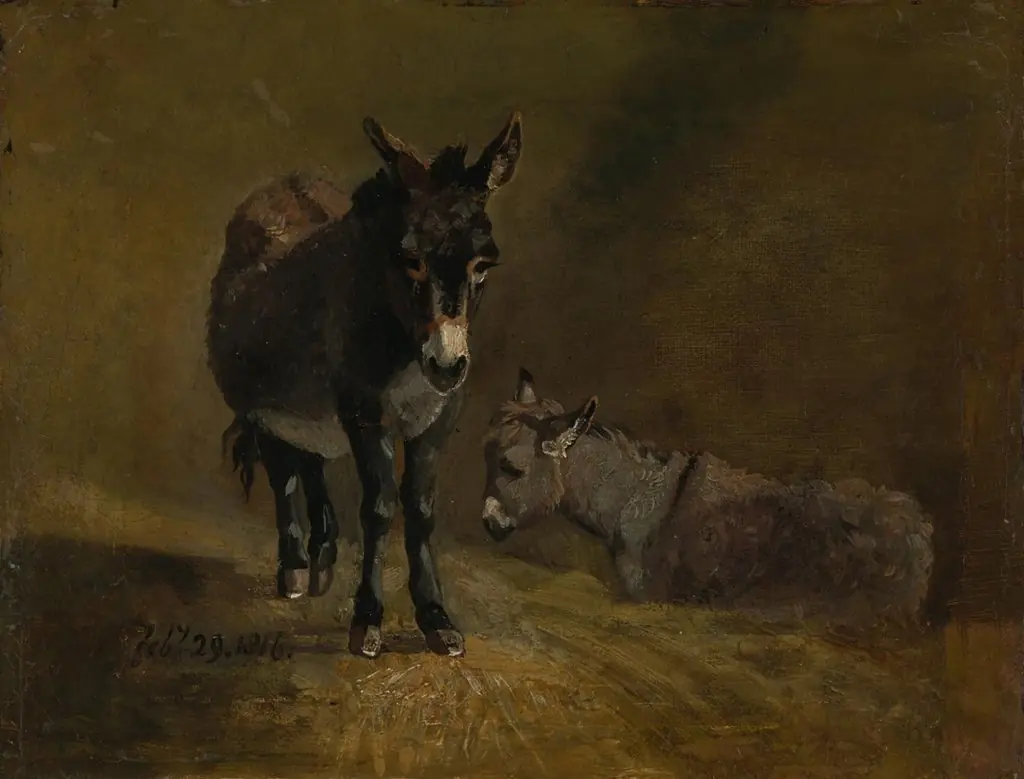
A Donkey and a Spaniel in a Stable is an oil painting by Abraham Cooper. It dates from 1818 and is held in the collection of the Victoria and Albert Museum.
About this work
Overview
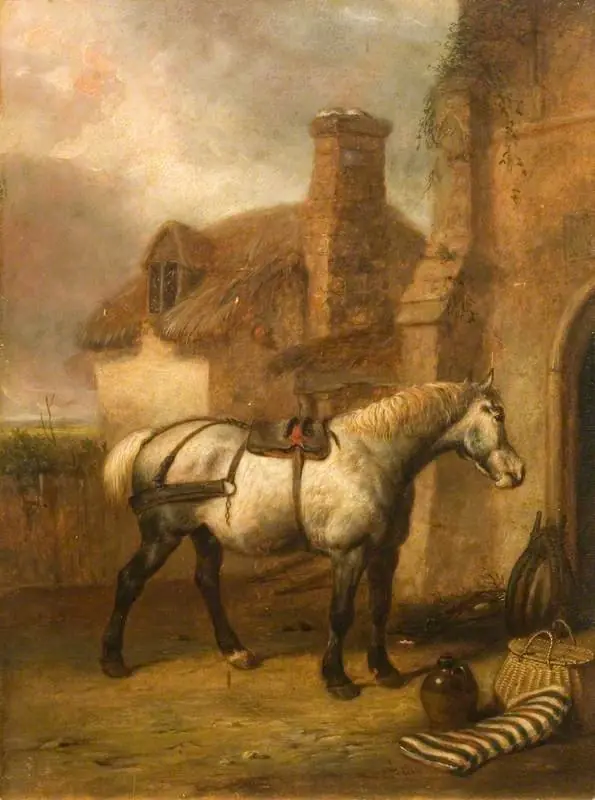
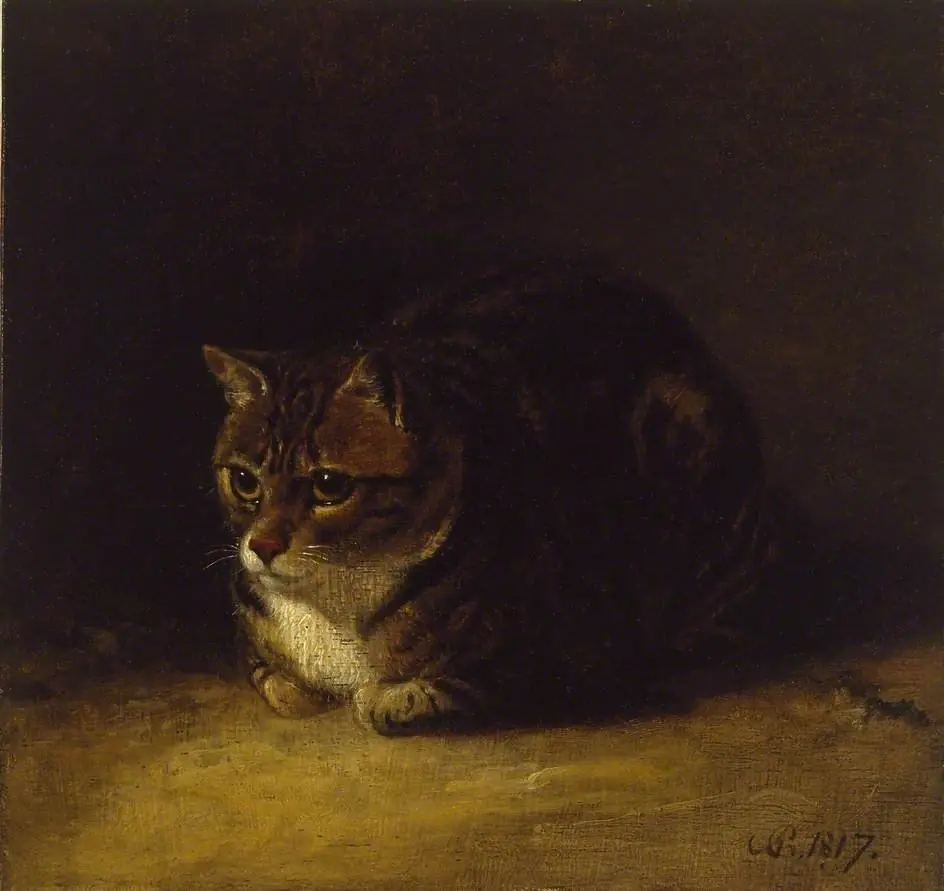
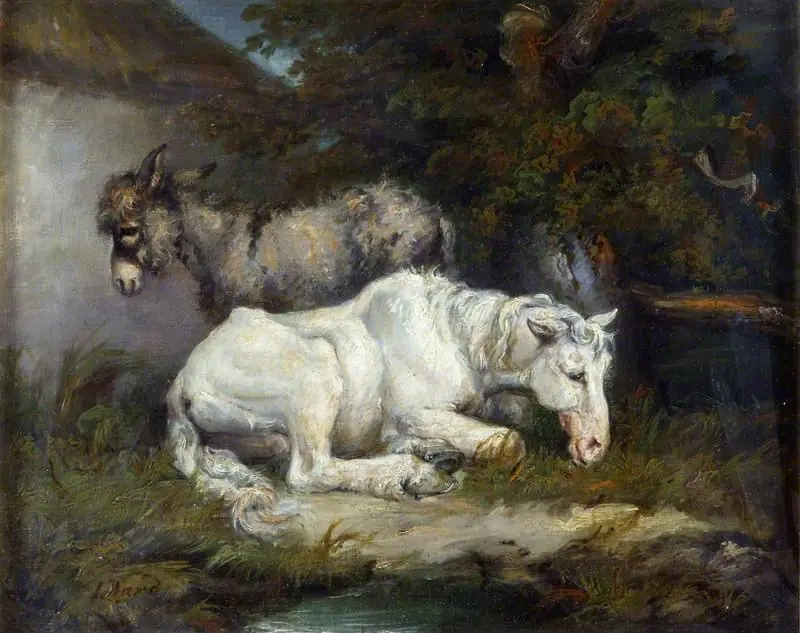
Painted in 1818 by Abraham Cooper, this oil work depicts a quiet moment within a rural stable. The composition centers on a standing donkey and a resting spaniel, rendered with attention to naturalistic detail. The painting is part of the Victoria and Albert Museum’s collection, where it represents Cooper’s interest in animal subjects and everyday rural life during the early 19th century.
Subject & Meaning
The donkey, positioned prominently, and the spaniel, curled at its feet, suggest a quiet bond between two working animals. The scene avoids drama or symbolism, instead conveying a sense of calm coexistence. The stable, though sparse, implies a functional space where animals rest between labor, reflecting the unidealized reality of rural animal life in early Victorian England.
Technique & Style
Cooper employed oil paint to capture subtle variations in texture—rough fur, weathered wood, and earthen walls. Light enters from the left, casting soft shadows and highlighting the animals’ forms against the dim interior. The palette is muted, dominated by browns and grays, with careful attention to the play of natural illumination to ground the scene in realism rather than romanticism.
History & Provenance
It was acquired during a period when the museum actively expanded its holdings of British art, particularly works depicting domestic and agricultural life.
The painting was completed in 1818 and entered the Victoria and Albert Museum’s collection in the 19th century. It was acquired during a period when the museum actively expanded its holdings of British art, particularly works depicting domestic and agricultural life. Its preservation reflects its status as a representative example of Cooper’s animal studies, though it was never widely exhibited in his lifetime.
Context
In early 19th-century Britain, animal painting gained traction as a genre separate from portraiture or landscape. Cooper, known for his depictions of horses and livestock, contributed to this trend by portraying working animals with dignity and quiet observation. This piece aligns with broader cultural interest in rural life, even as industrialization reshaped the countryside.
Legacy
Though not among Cooper’s most famous works, this painting exemplifies his consistent focus on animals as subjects worthy of careful study. It contributes to a body of work that helped shift artistic attention toward the everyday lives of domesticated creatures, influencing later realist painters who sought to depict nature without sentimentality or myth.
Artist & collection