Artwork
Essender Bauer
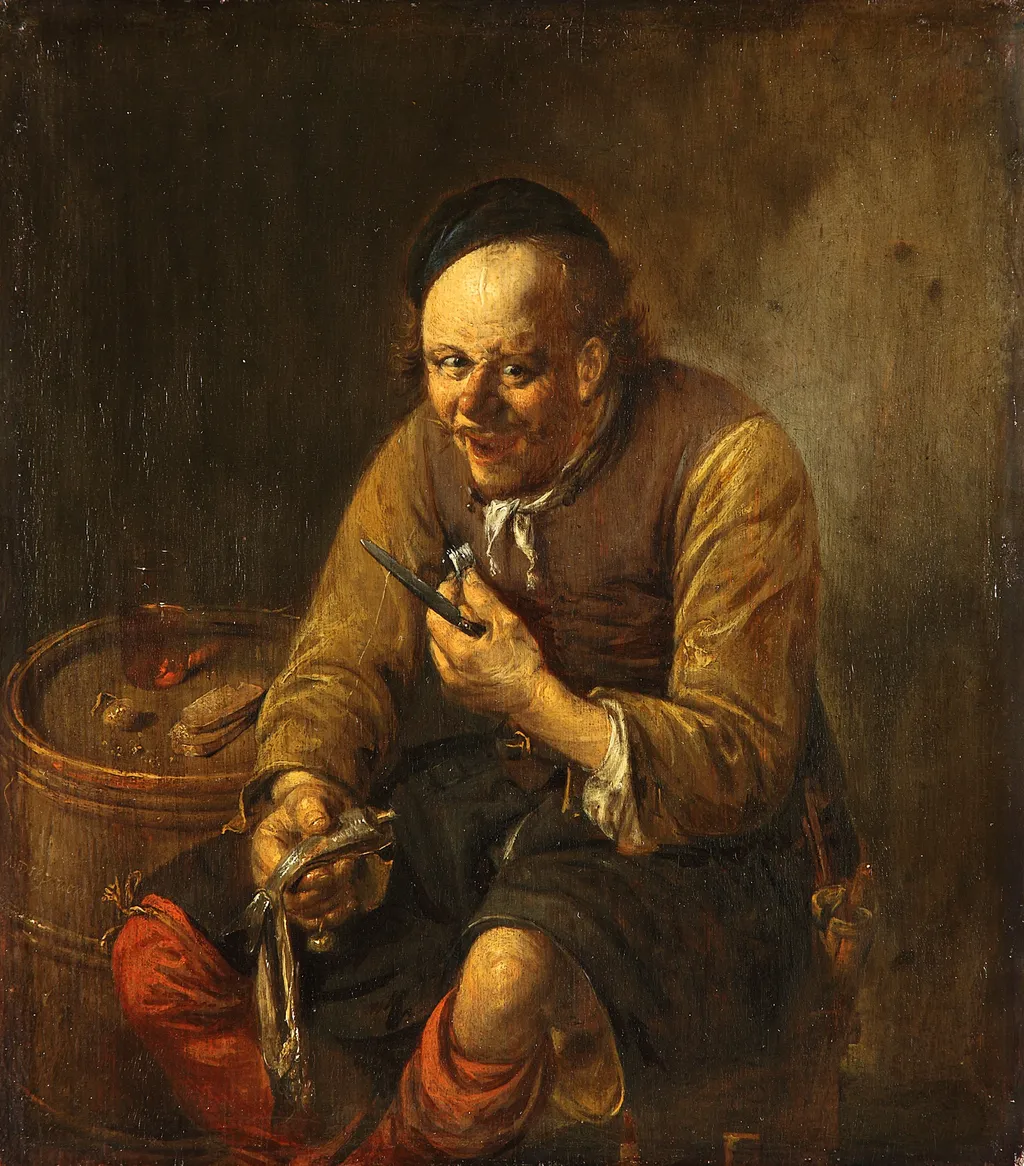
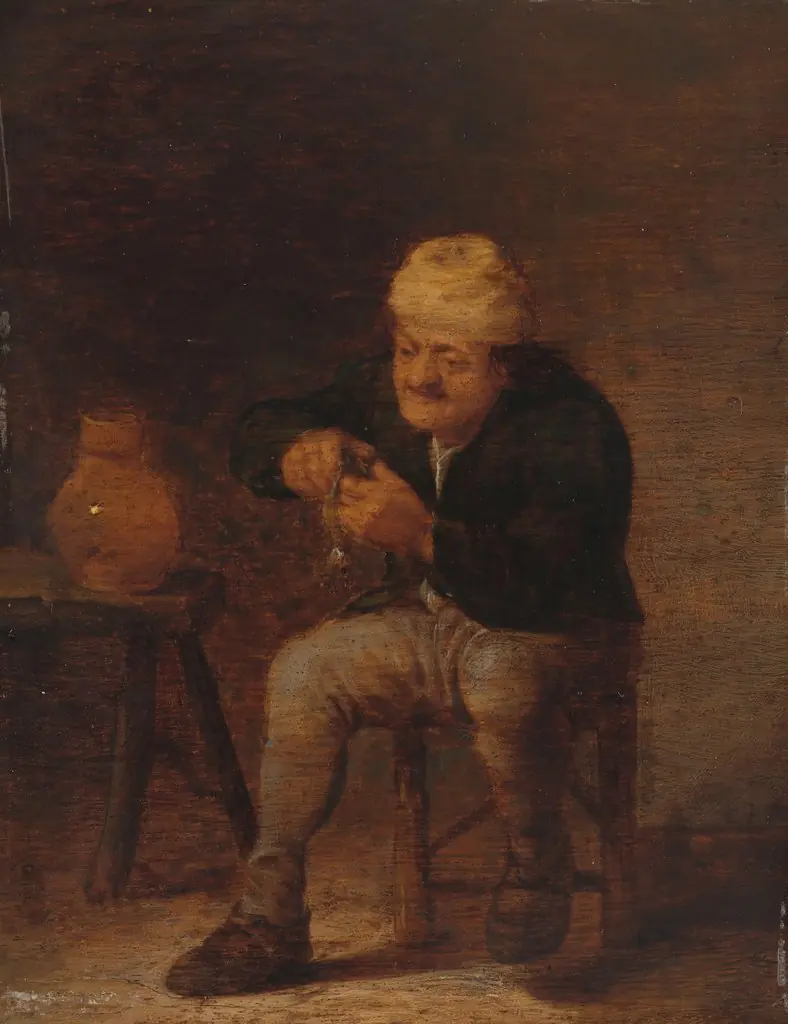
Essender Bauer is a paint painting by the Dutch Golden Age artist Abraham Diepraam. It dates from 1665 and is held in the collection of the Gemäldegalerie Berlin.
About this work
Overview
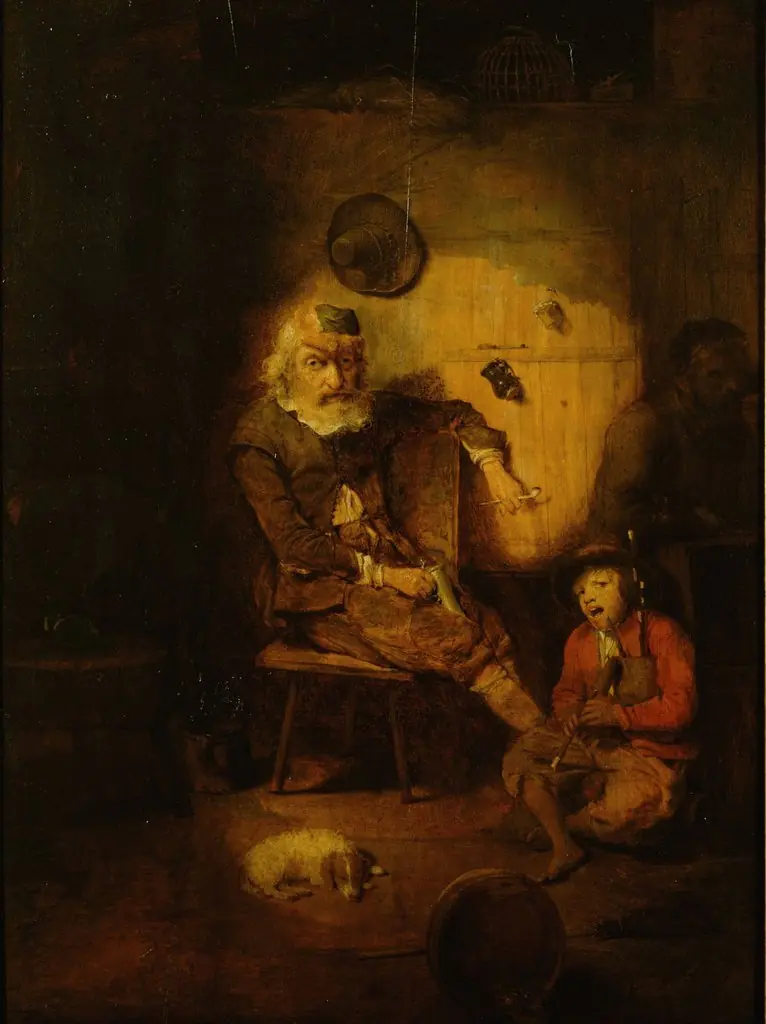
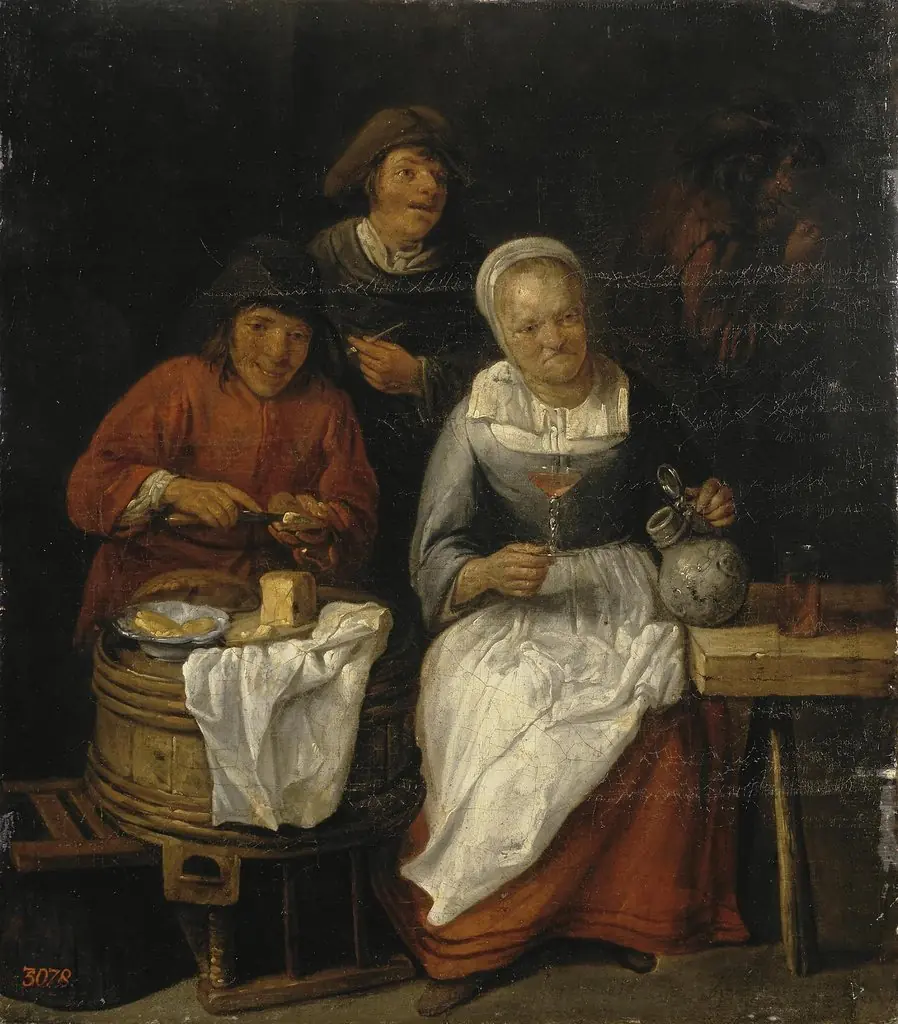
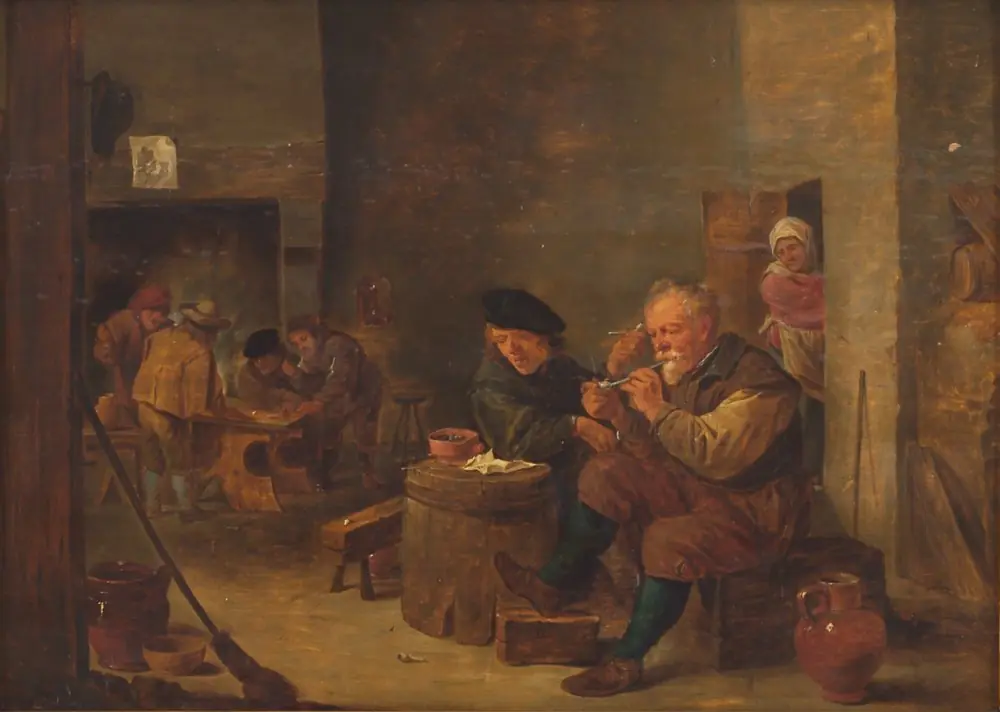
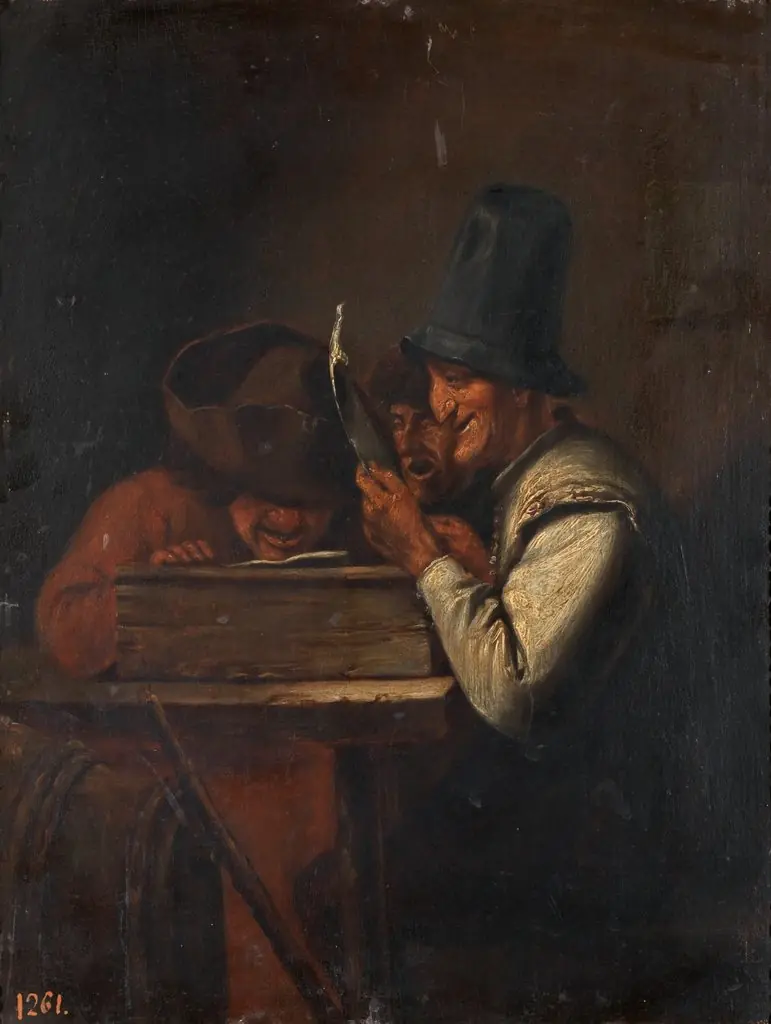
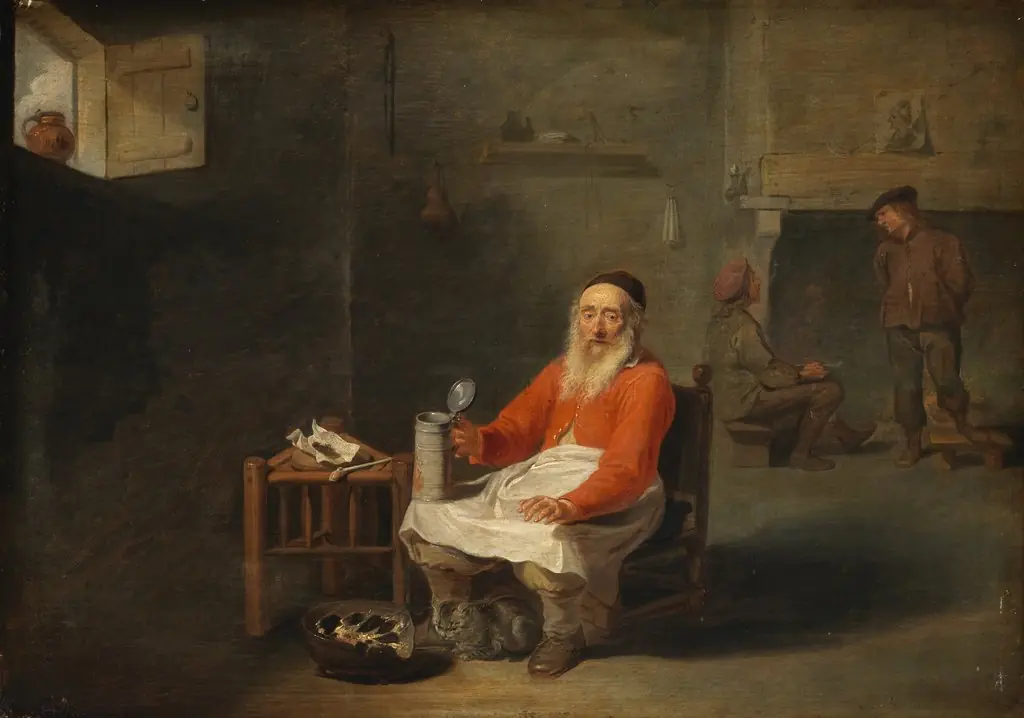
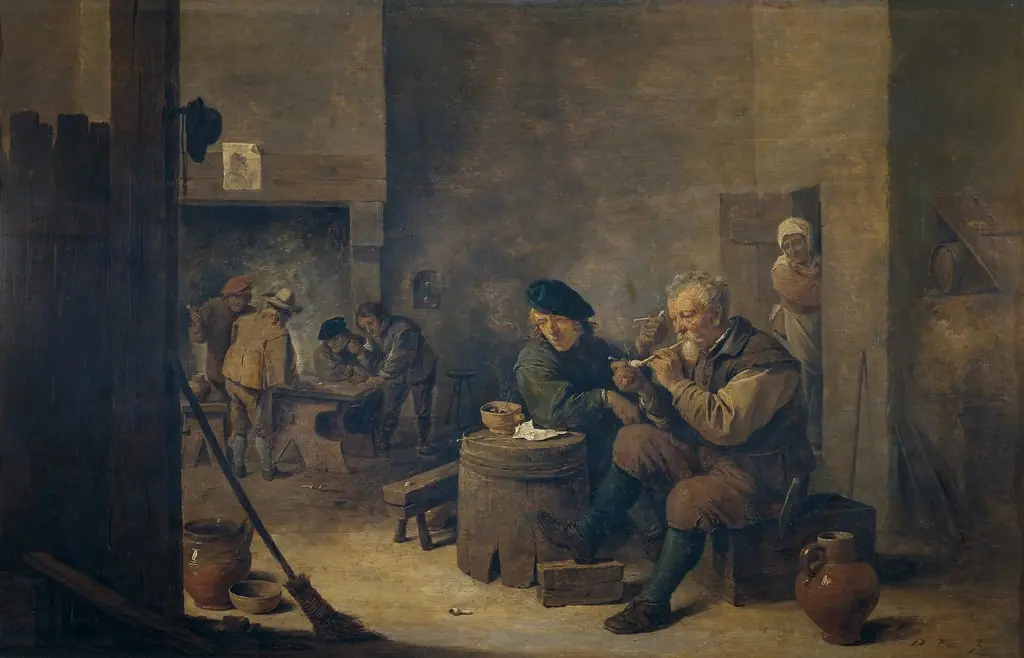
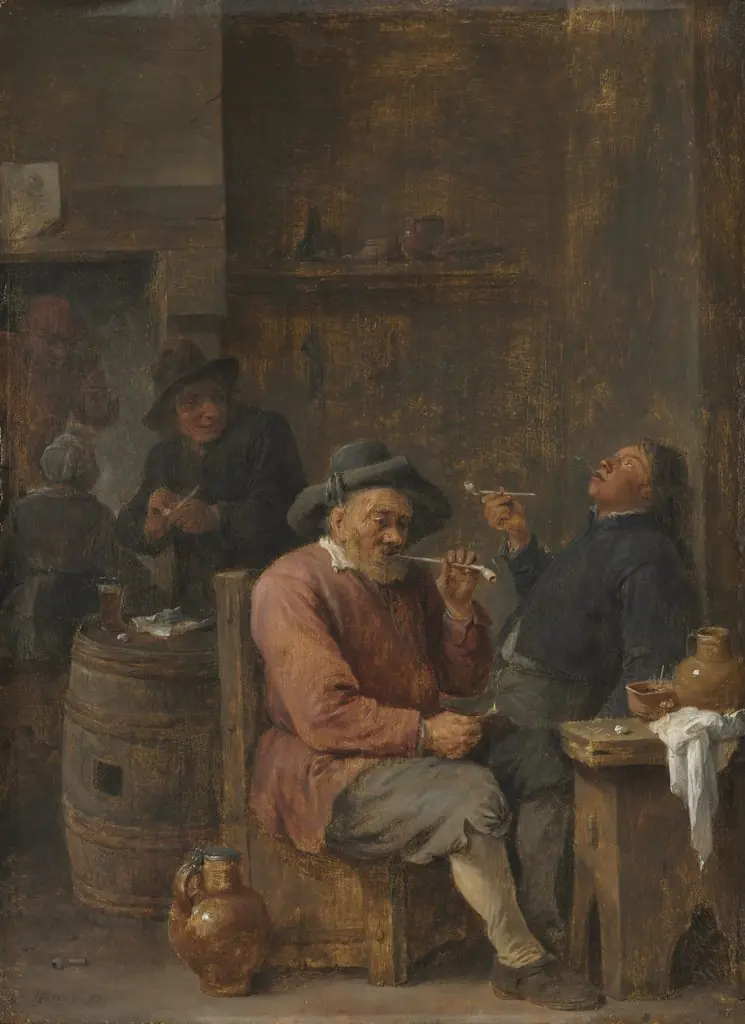
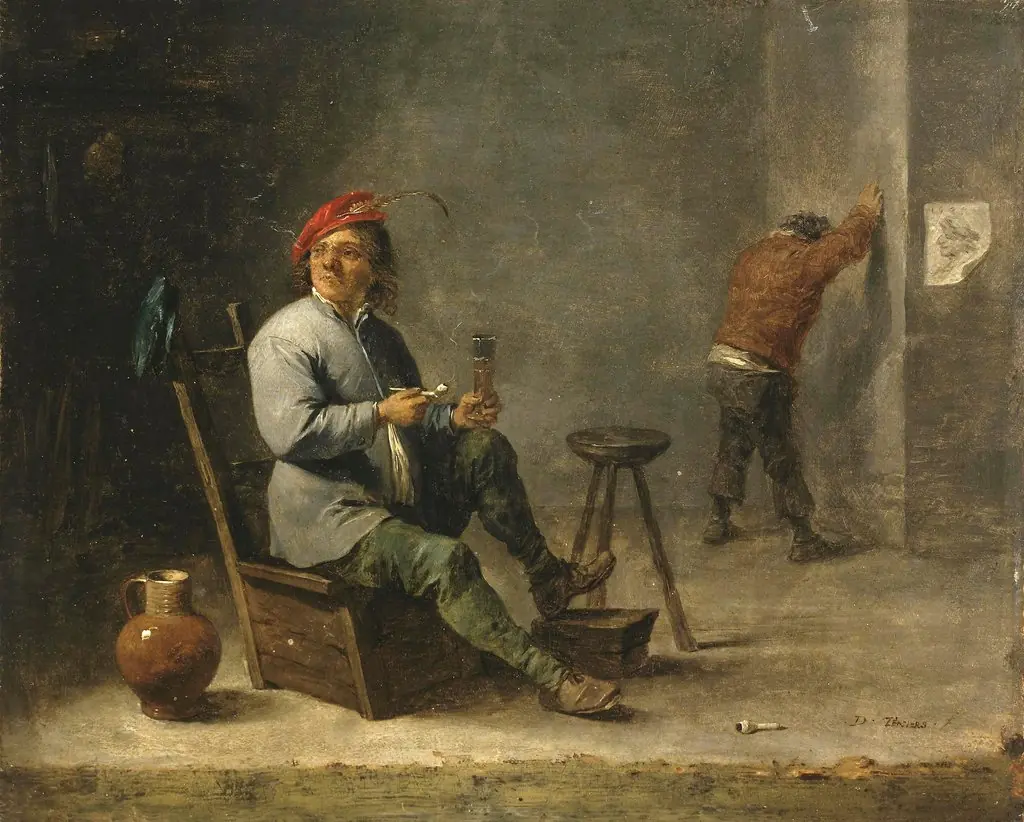
Painted in 1665 by Abraham Diepraam, this work portrays a peasant seated with meat and knife in hand. Executed in oil on panel, it belongs to the Gemäldegalerie in Berlin. The composition centers on a solitary figure in quiet labor, rendered with restrained realism and a muted palette. The dark background isolates the subject, emphasizing physical presence over narrative context.
Subject & Meaning
The figure, a rural laborer, is captured mid-action, knife poised to carve. His focused expression and taut posture suggest an ordinary moment of domestic necessity rather than theatrical drama. The absence of setting or companionship underscores solitude and routine. The act of preparing food, rendered without sentiment, reflects the quiet dignity of manual work in 17th-century Dutch life.
Technique & Style
Diepraam employs chiaroscuro to model the figure with subtle gradations of light, enhancing volume without theatrical contrast. The brushwork is precise yet unadorned, particularly in the textures of fabric, skin, and meat. The light, faintly emanating from the right, defines contours without illuminating the background, reinforcing the figure’s isolation and the painting’s intimate scale.
History & Provenance
The painting entered the Gemäldegalerie Berlin’s collection in the 19th century, likely through state acquisitions of Dutch Golden Age works. Its attribution to Diepraam, a lesser-known contemporary of Rembrandt, was confirmed through stylistic analysis and archival records. No earlier provenance is documented, suggesting it remained in private Dutch hands until institutional acquisition.
Context
Created during the Dutch Golden Age, the work aligns with a broader trend of genre scenes depicting everyday labor. Unlike grand historical or religious subjects, such images valued observation over idealization. Diepraam’s focus on a single peasant reflects regional interest in unembellished rural life, distinct from the urban middle-class themes more common in Amsterdam.
Legacy
Though not widely exhibited, the painting contributes to understanding the diversity of Dutch genre painting beyond its most famous practitioners. Its quiet intensity and technical restraint offer insight into how lesser-known artists engaged with realism. It remains a quiet testament to the artistic value placed on ordinary moments in 17th-century Northern Europe.
Own this work as a print
Artist & collection