Artwork
Peasants in a tavern
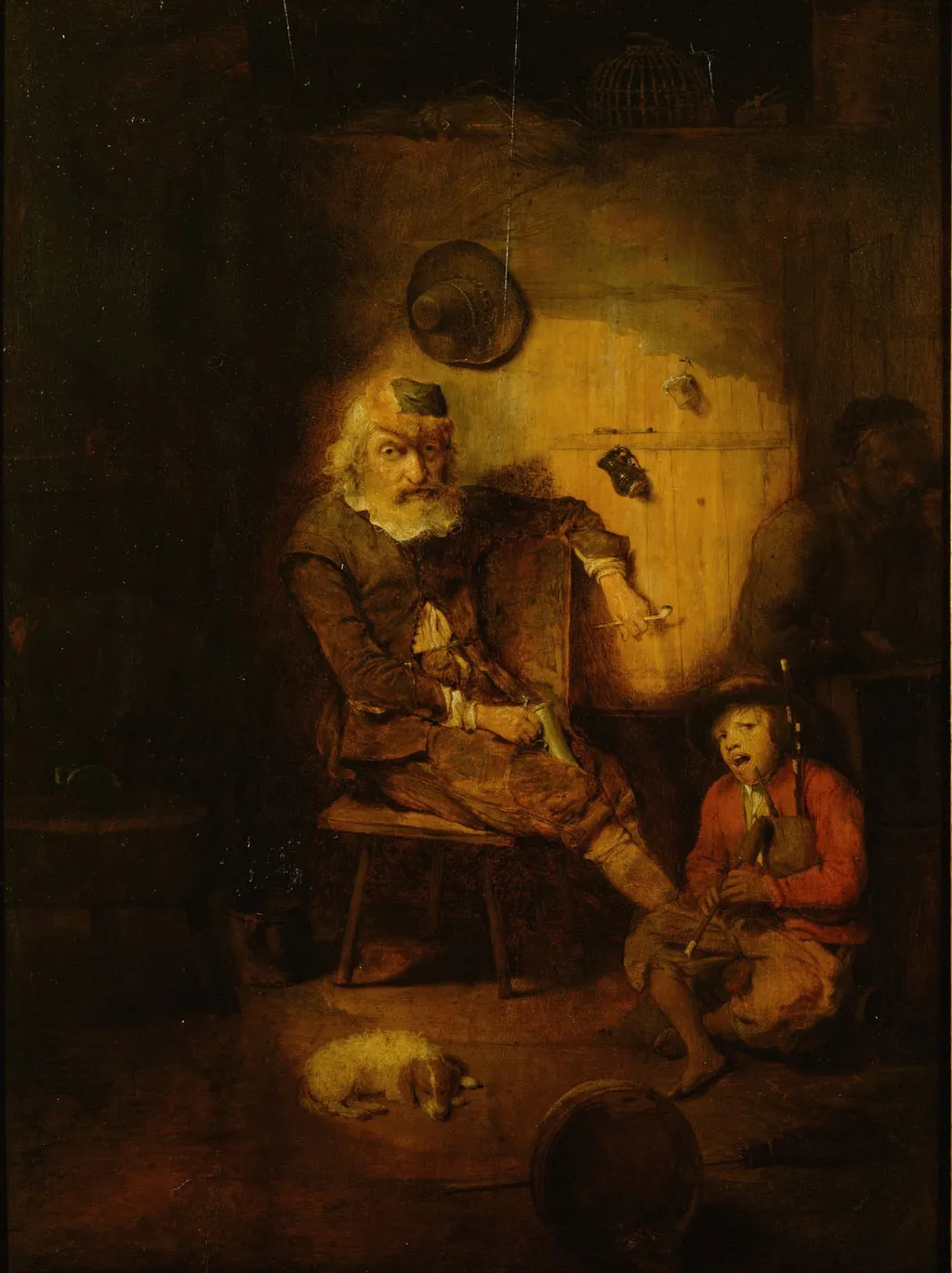
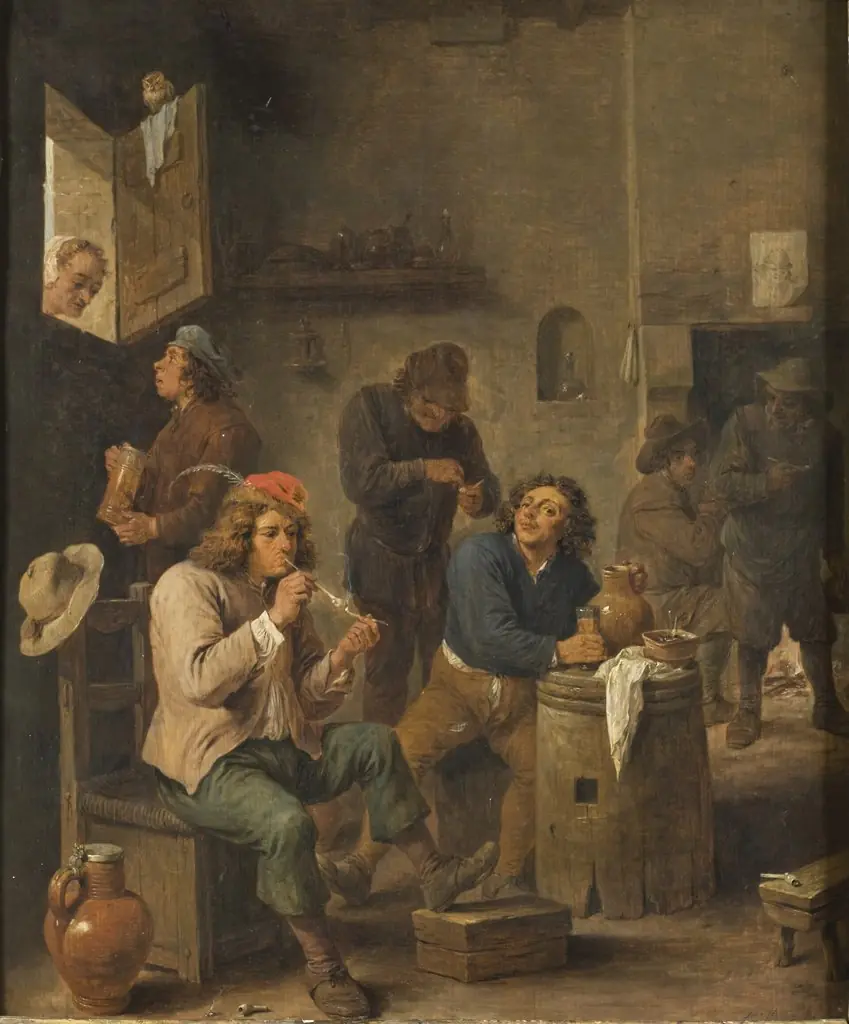
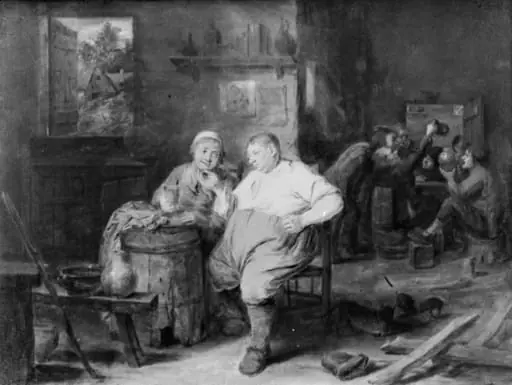
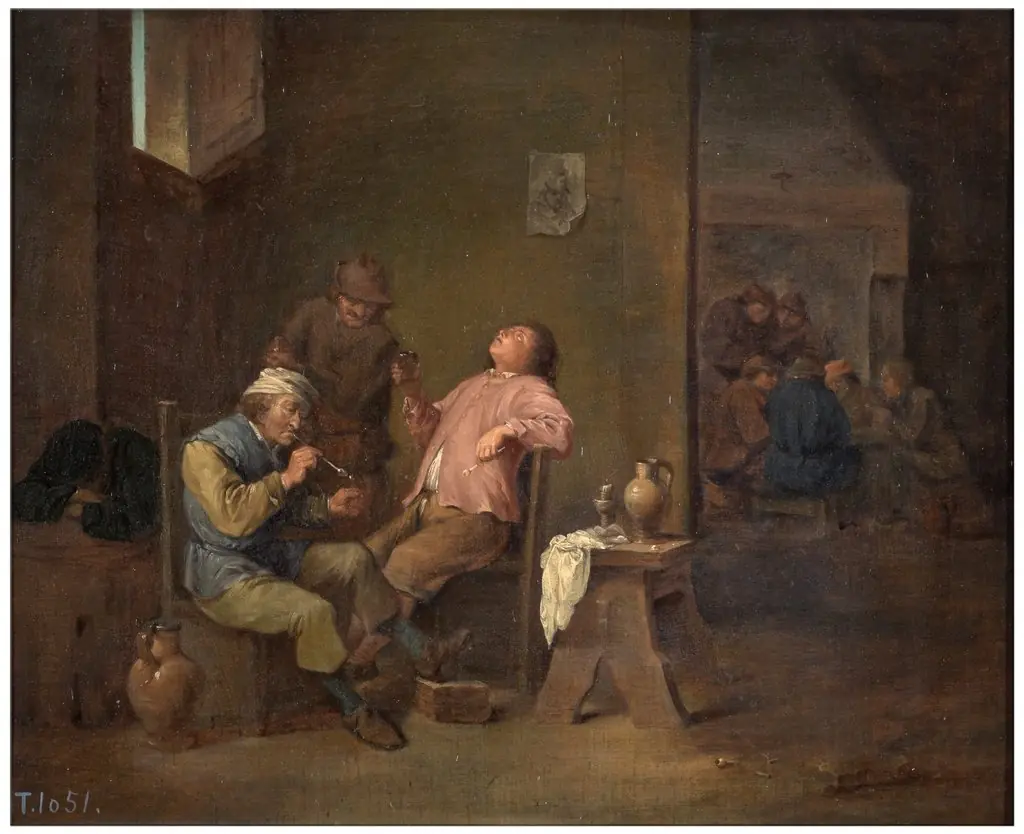
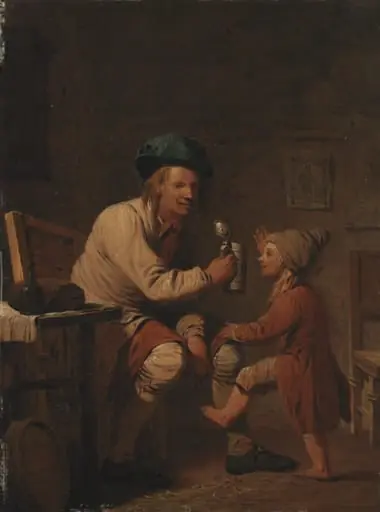
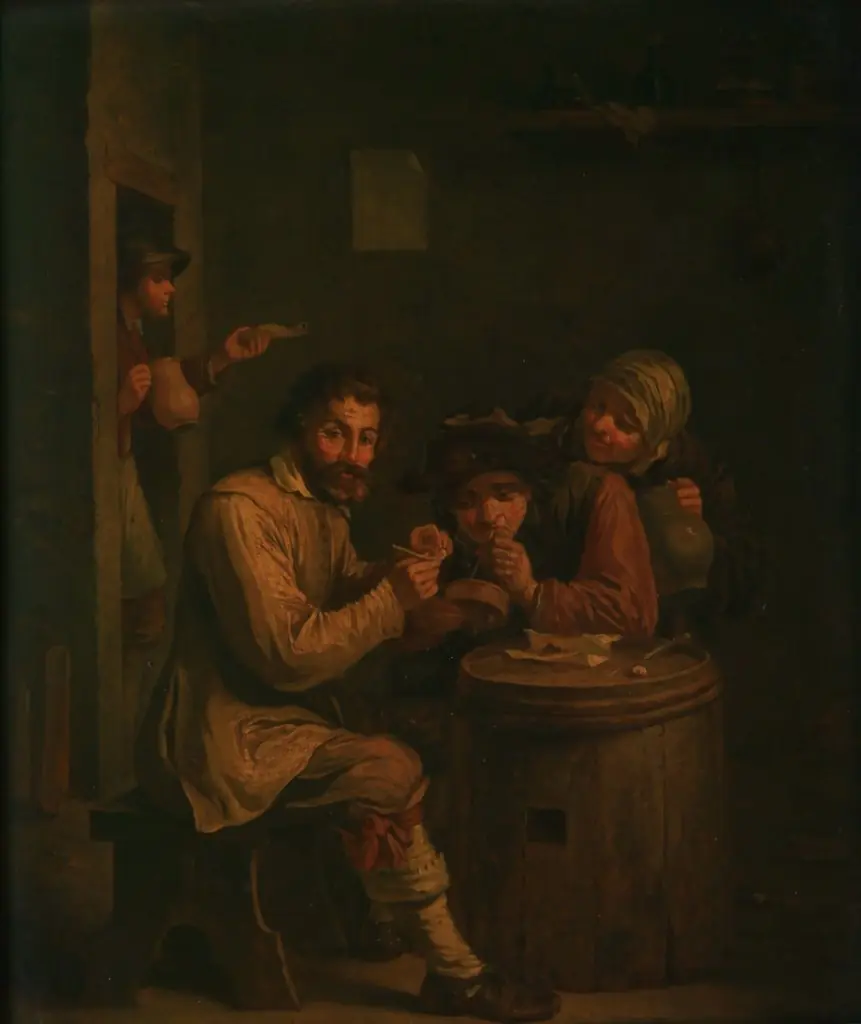
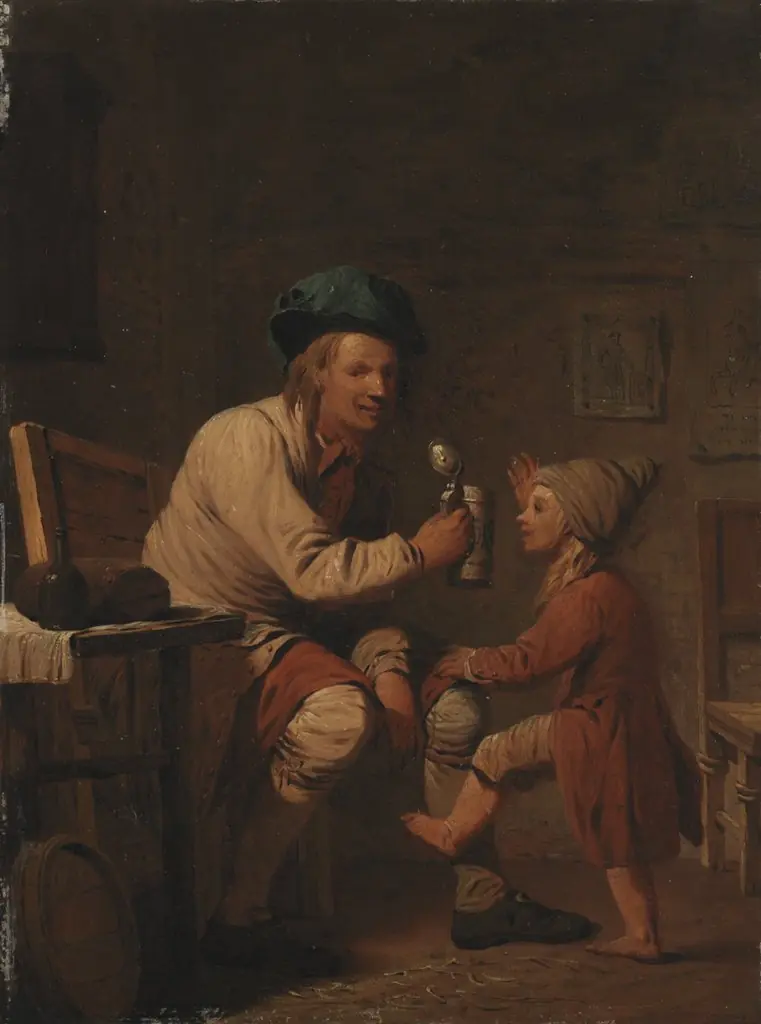
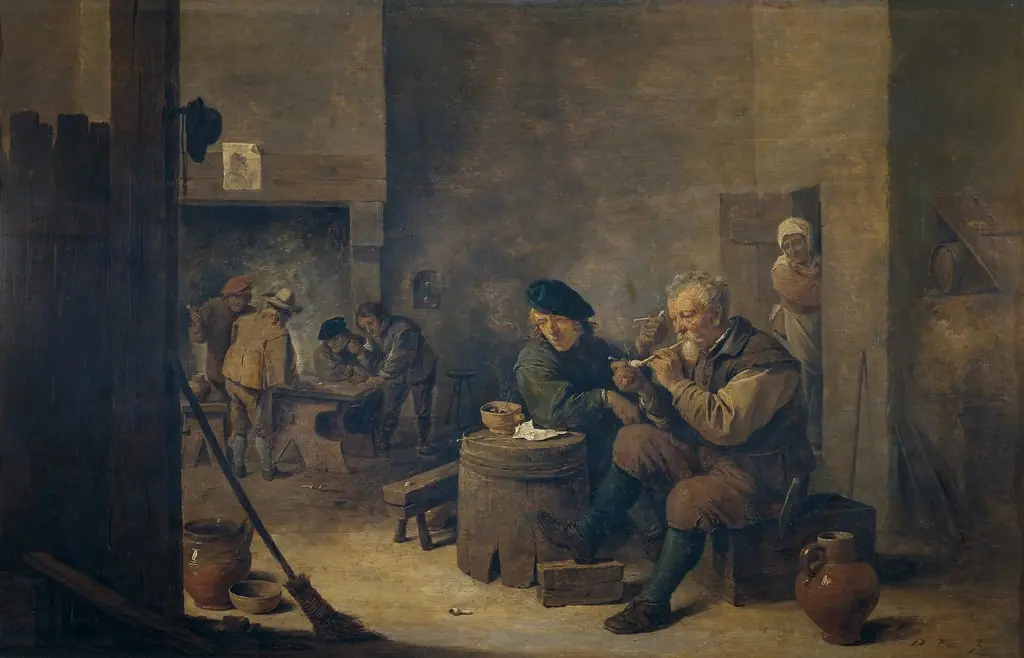
Peasants in a tavern is an oil painting by the Dutch Golden Age artist Christopher Paudiß. It dates from 1664 and is held in the collection of the Kunsthistorisches Museum.
About this work
Overview
The painting 'Peasants in a tavern' is a 17th-century oil painting by Christoph Paudiß, created in 1664. It is now part of the Kunsthistorisches Museum's collection.
Subject & Meaning
The scene depicts two men in a dimly lit tavern, one older with a white beard, the other younger in a red jacket. A dog lies on the floor, and a hat hangs on the wall. The men's interaction is the focus, with the older man's hand on a wooden box and the younger man holding a pipe.
Technique & Style
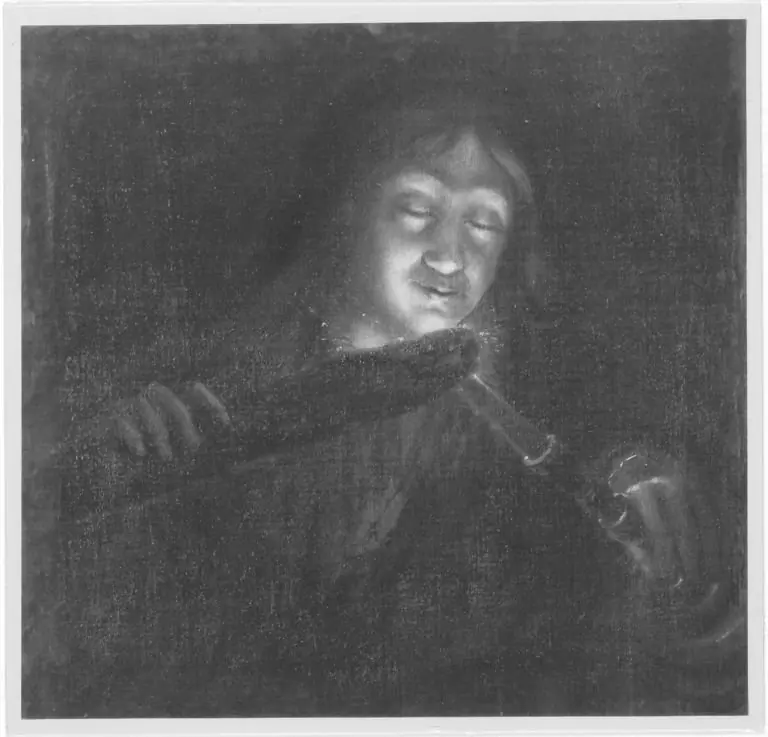
The use of chiaroscuro creates a warm, intimate atmosphere, with strong contrasts between light and dark. The lighting highlights the men's faces while leaving the edges of the scene in shadow, contributing to the cozy feel.
Context
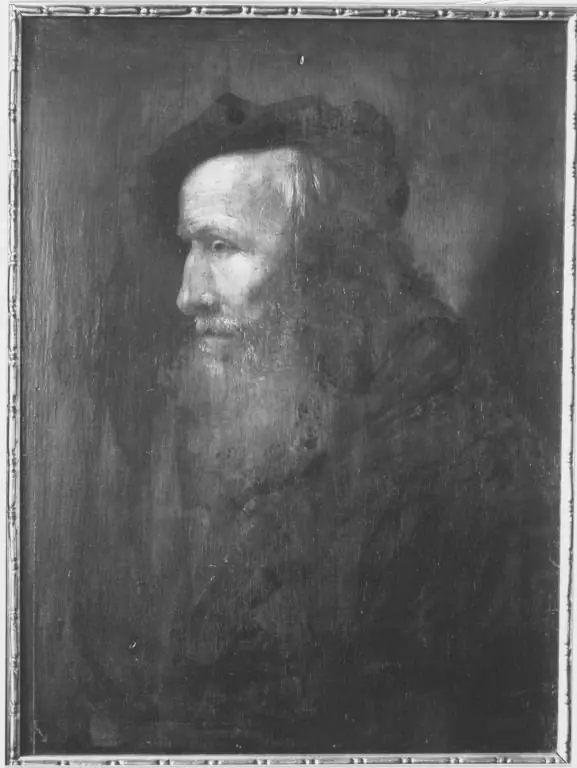
As a work from the Dutch Golden Age, 'Peasants in a tavern' reflects the period's interest in everyday life and genre scenes. Paudiß, influenced by Rembrandt, brings a nuanced use of light and shadow to the depiction of a common scene.
Artist & collection
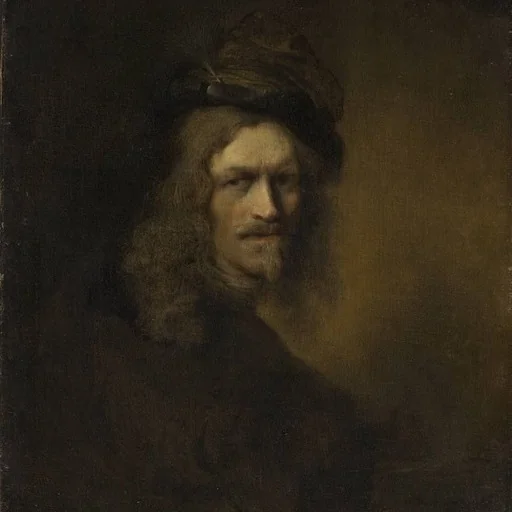
Artist
Christoph(er) Paudiß (1630 in Lower Saxony – 1666 in Freising, Upper Bavaria) was a Bavarian Baroque painter and a student of Rembrandt van Rijn.