Artwork
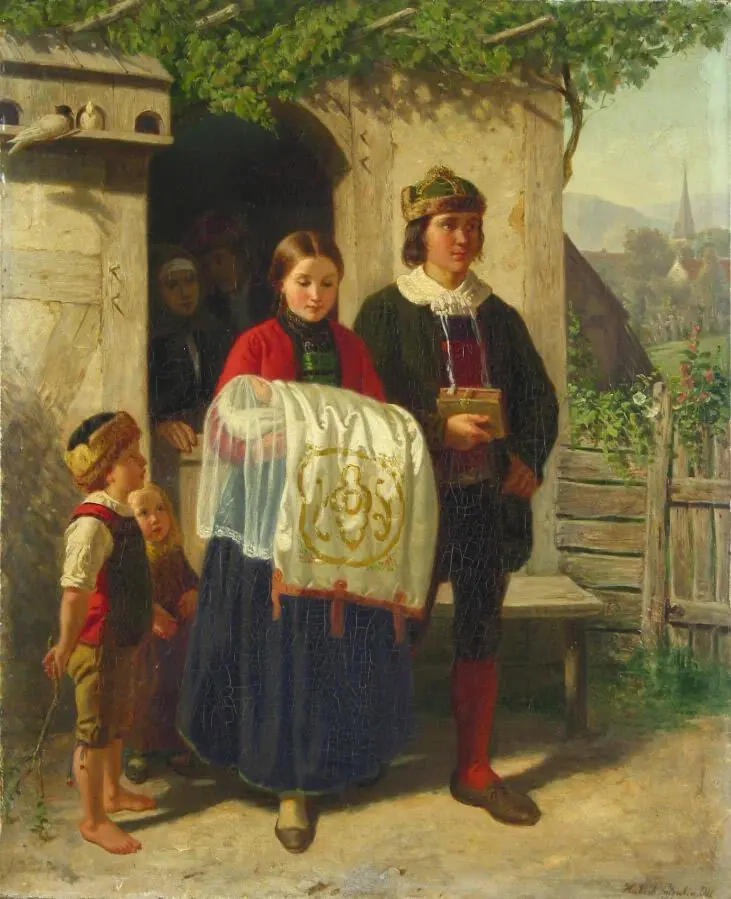
The Baptism Procession
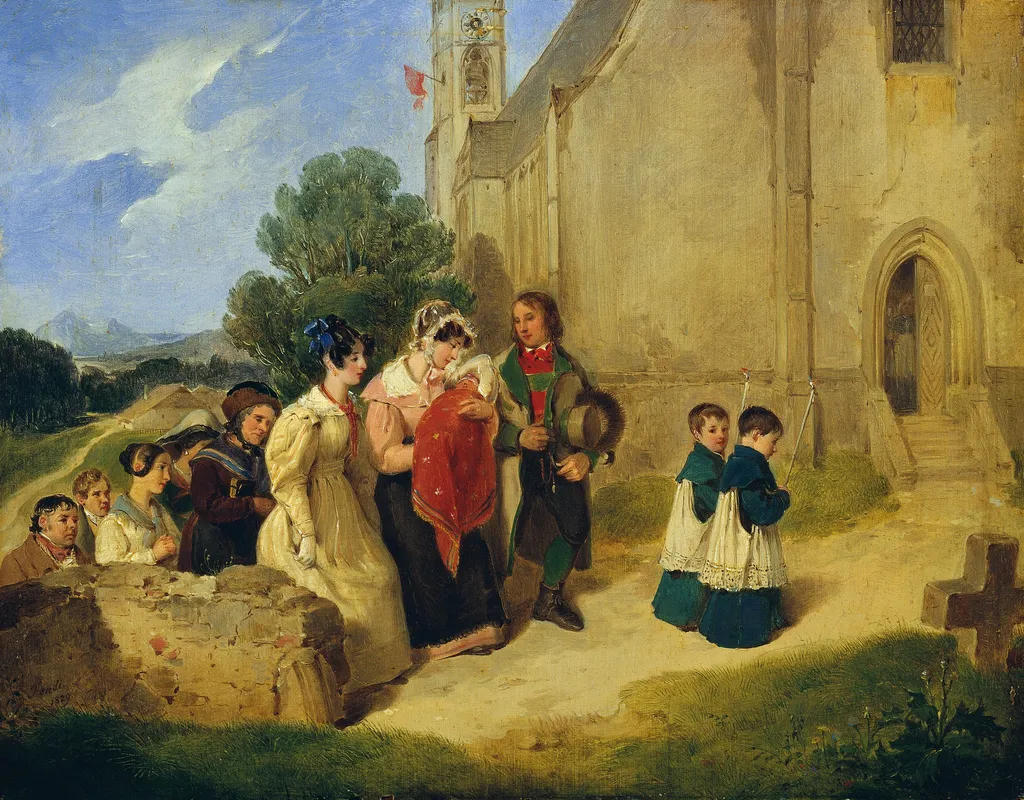
The Baptism Procession is an oil painting by the Biedermeier artist Peter Fendi. It dates from 1829 and is held in the collection of the Kunsthistorisches Museum.
About this work
Overview
Created in 1829 by Austrian court painter Peter Fendi, *The Baptism Procession* is an oil on canvas that belongs to the collection of the Kunsthistorisches Museum. The work exemplifies the Biedermeier period’s focus on domestic tranquility, presenting a modest, orderly scene of a communal ritual.
Subject & Meaning
The composition depicts a small procession moving along a dirt track toward a stone edifice crowned by a tower. At its head are two boys dressed in blue and white robes, followed by a woman cradling an infant, a man in a green coat, and additional participants, suggesting a baptismal ceremony and the communal bonds surrounding it.
Technique & Style
Fendi employs a restrained palette and fine brushwork to render textures—from the fabric of the robes to the rough stone of the building—while maintaining a clear, luminous atmosphere. The balanced arrangement and gentle chiaroscuro reflect the Biedermeier aesthetic of clarity and modest elegance.
History & Provenance
Since its completion, the painting has remained in Austrian public collections, ultimately entering the holdings of the Kunsthistorisches Museum in Vienna, where it is displayed among other works illustrating early nineteenth‑century Austrian genre painting.
Context
Fendi’s career centered on genre scenes and portraiture that documented everyday life with precise observation. *The Baptism Procession* aligns with his broader output, capturing a ritual moment in a rural setting, a theme common among Biedermeier artists who emphasized the stability of family and community after the upheavals of the Napoleonic era.
Own this work as a print
Artist & collection
Artist
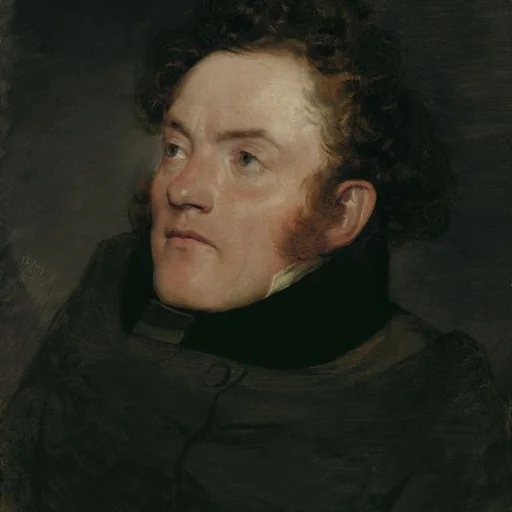
Peter Fendi (4 September 1796 – 28 August 1842) was an Austrian court painter, portrait and genre painter, engraver, and lithographer. He was one of the leading artists of the Biedermeier period.

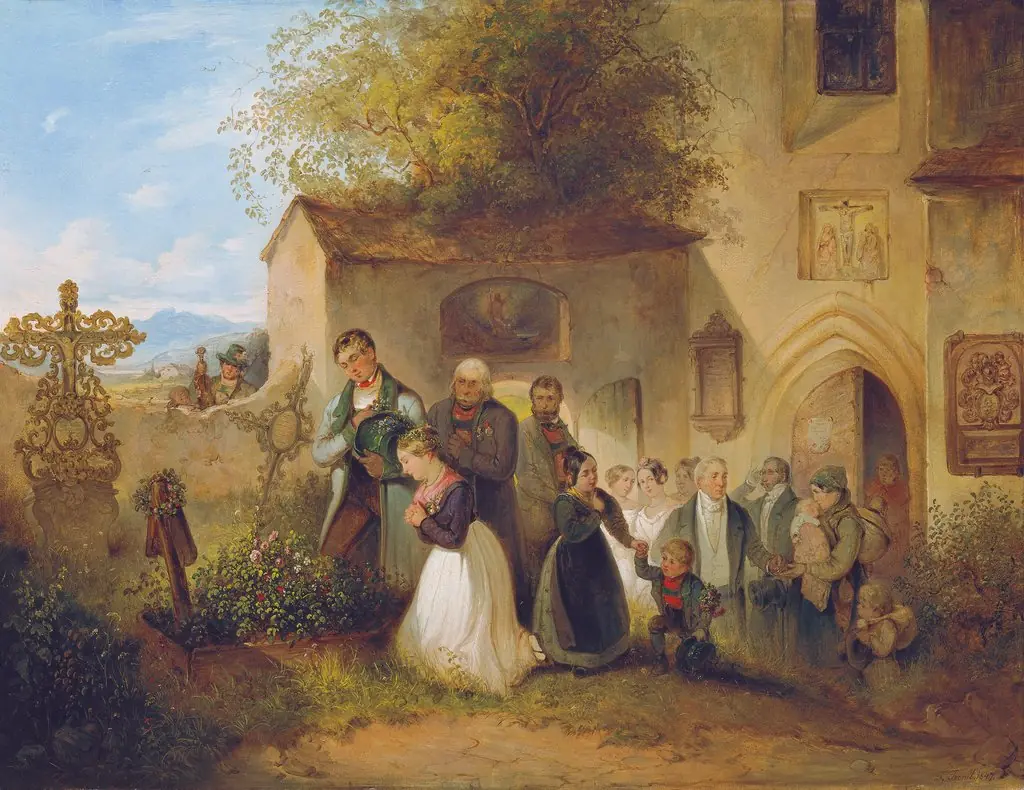 Am Friedhof ("Die Braut am Grabe")
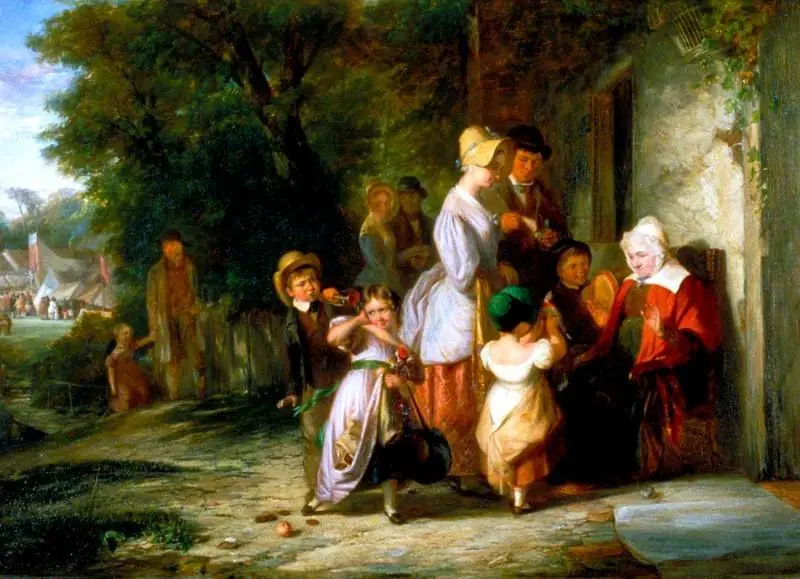 Returning from the Fair
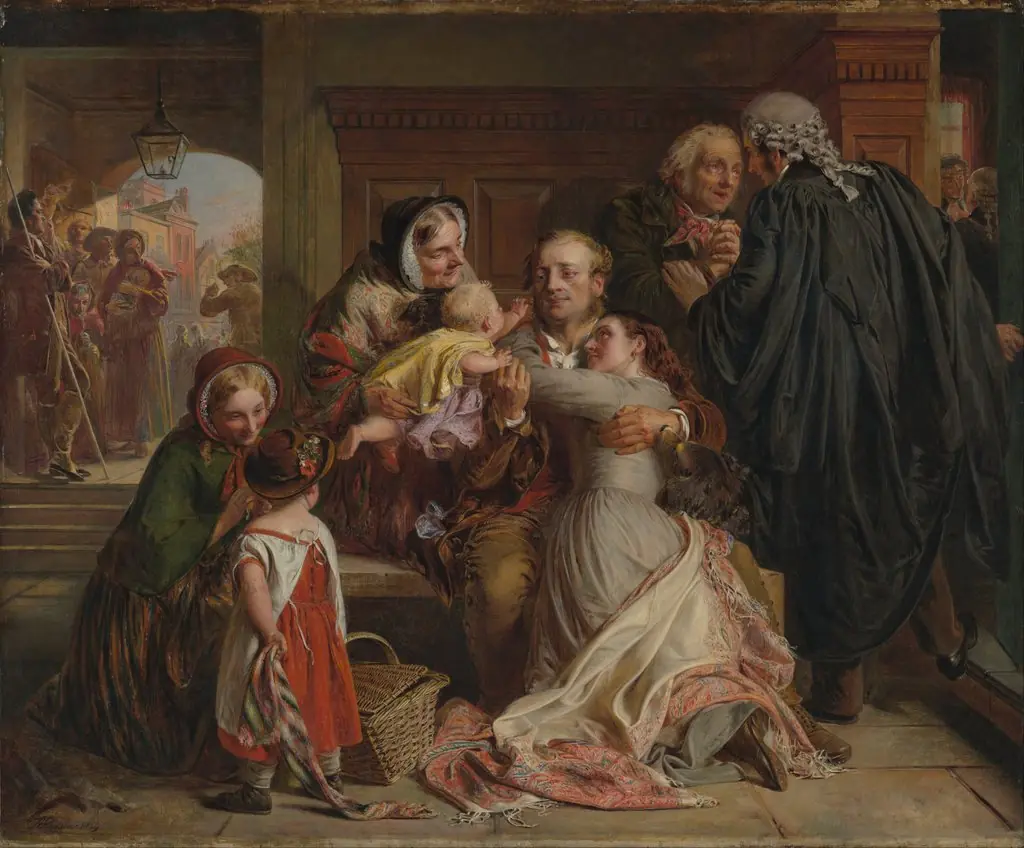 Not Guilty
 An English Merrymaking a Hundred Years Ago
 A Venetian Fishing Family
 Madame Elisabeth de France assistant à la distribution du lait dans sa maison de Montreuil
 The Parting: A Recruit Taking Leave of His Family
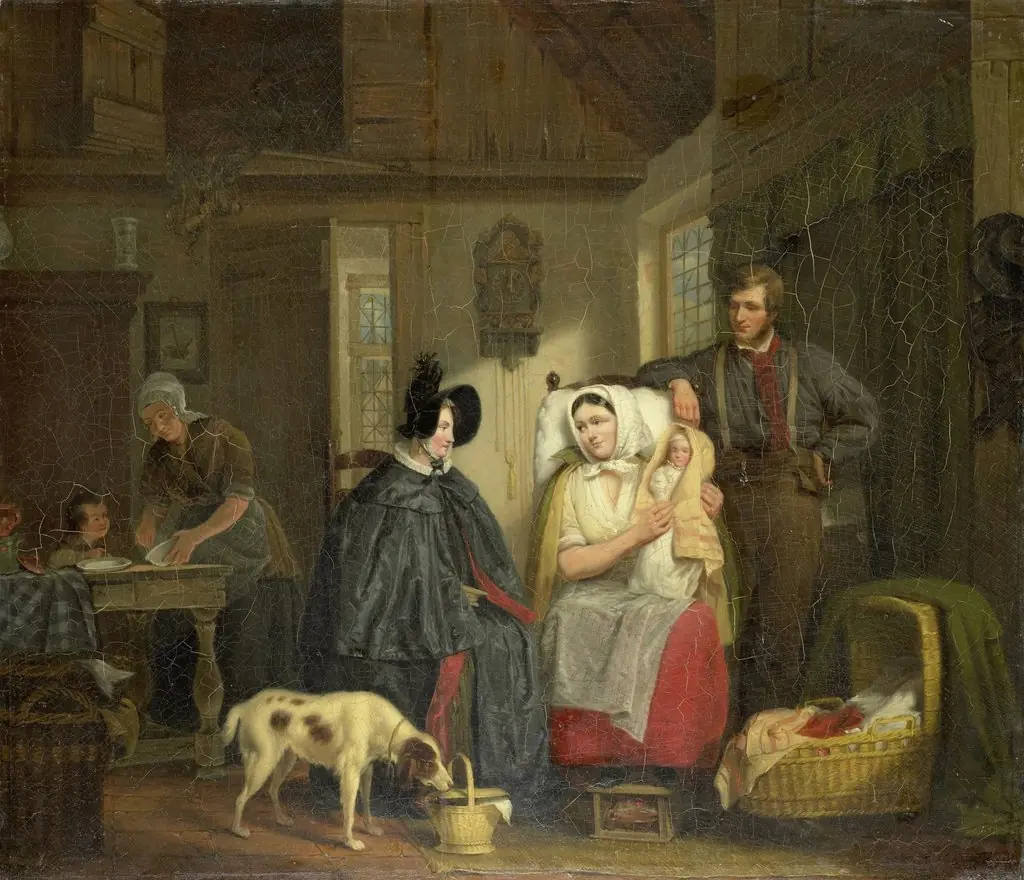 Visit to a New Mother
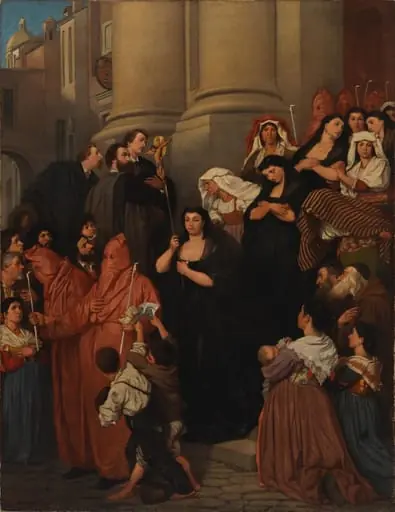 Juhlakulkue Roomassa
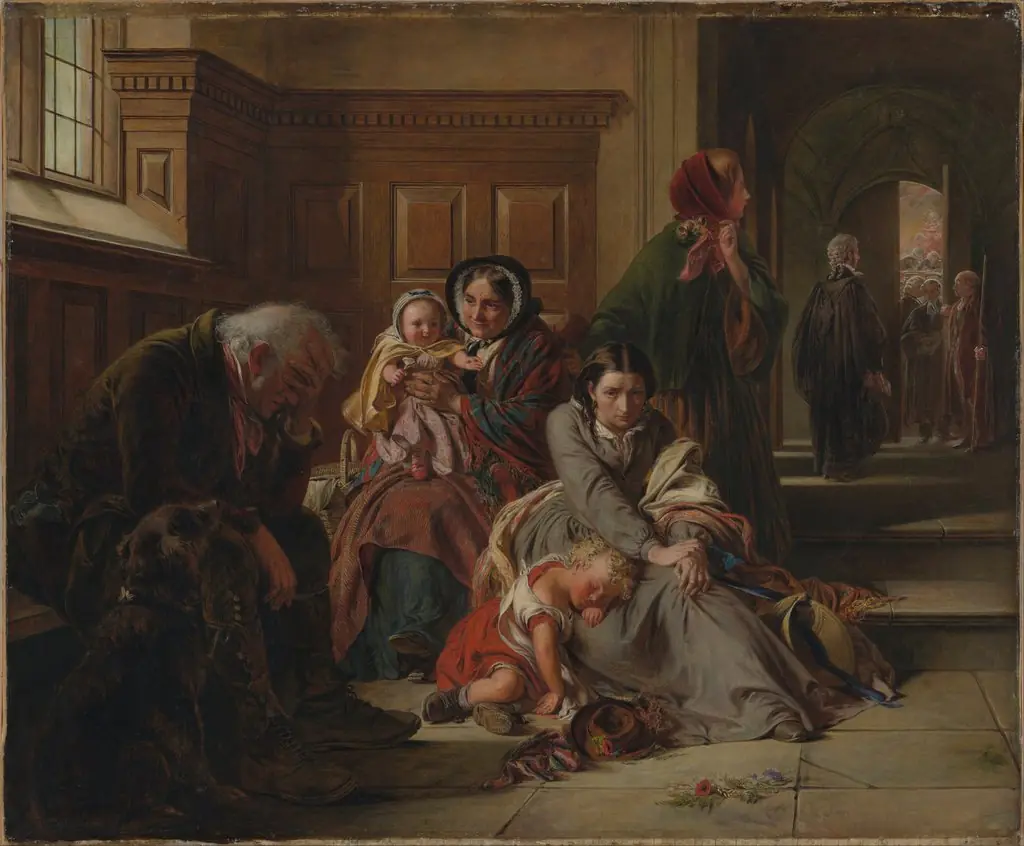 Waiting for the Verdict
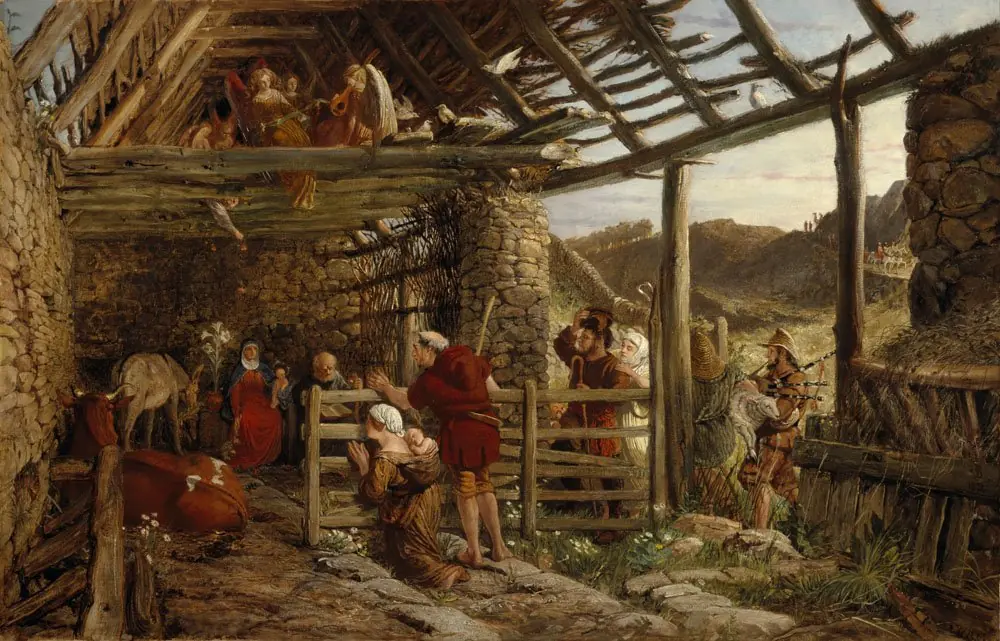 The Nativity
 Baptism