Artwork
De waterval van Tivoli
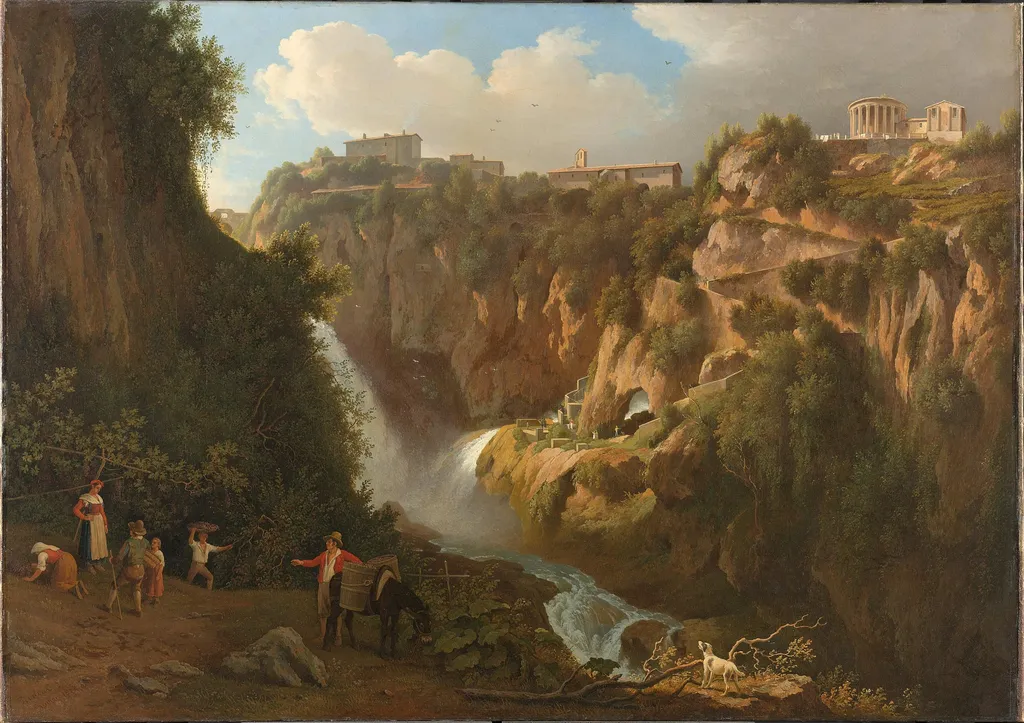
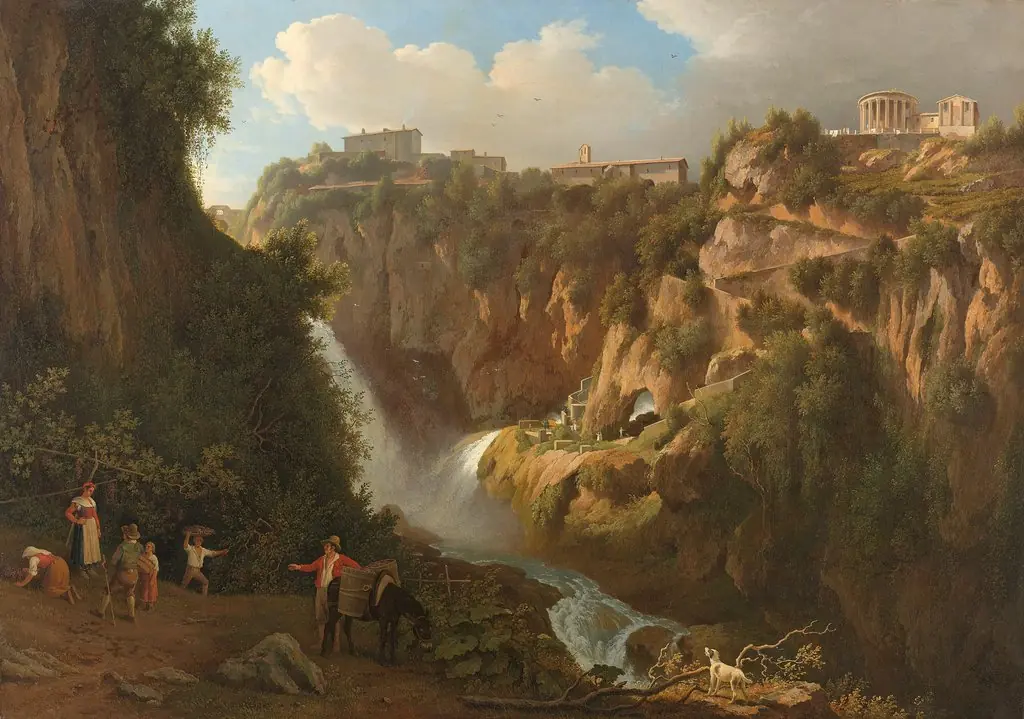
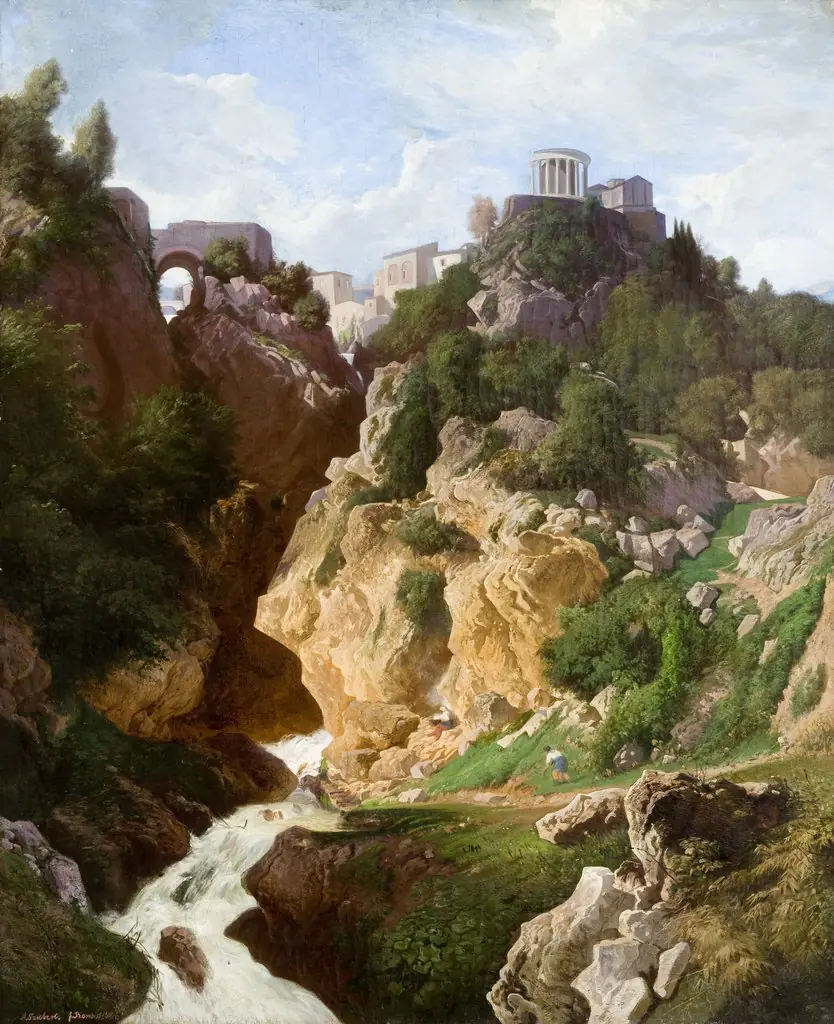
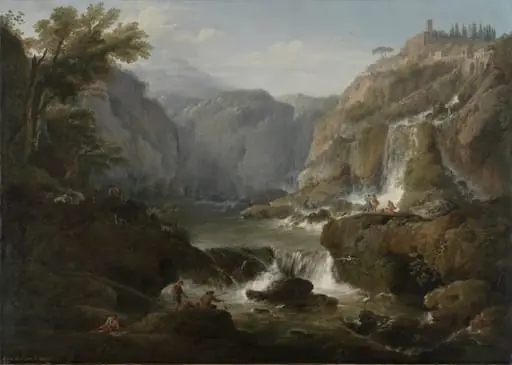
De waterval van Tivoli is an unspecified painting by Abraham Teerlink. It dates from 1824 and is held in the collection of the Rijksmuseum. The work, dated 1824, depicts the celebrated waterfalls of Tivoli, a town just outside Rome.
About this work
You see a waterfall tumbling down rocky cliffs, with a tiny village perched on top and a round temple in the distance.
You see a waterfall tumbling down rocky cliffs, with a tiny village perched on top and a round temple in the distance.
This painting was made in 1824 by an unknown artist who likely traveled to Italy on a royal grant. The scene shows Tivoli, a spot near Rome famous for its dramatic waterfalls and ancient ruins. The artist probably worked alongside Abraham Teerlink, a landscape painter who stayed in Italy after his patron left.
To see more paintings like this, visit the Rijksmuseum.
Overview
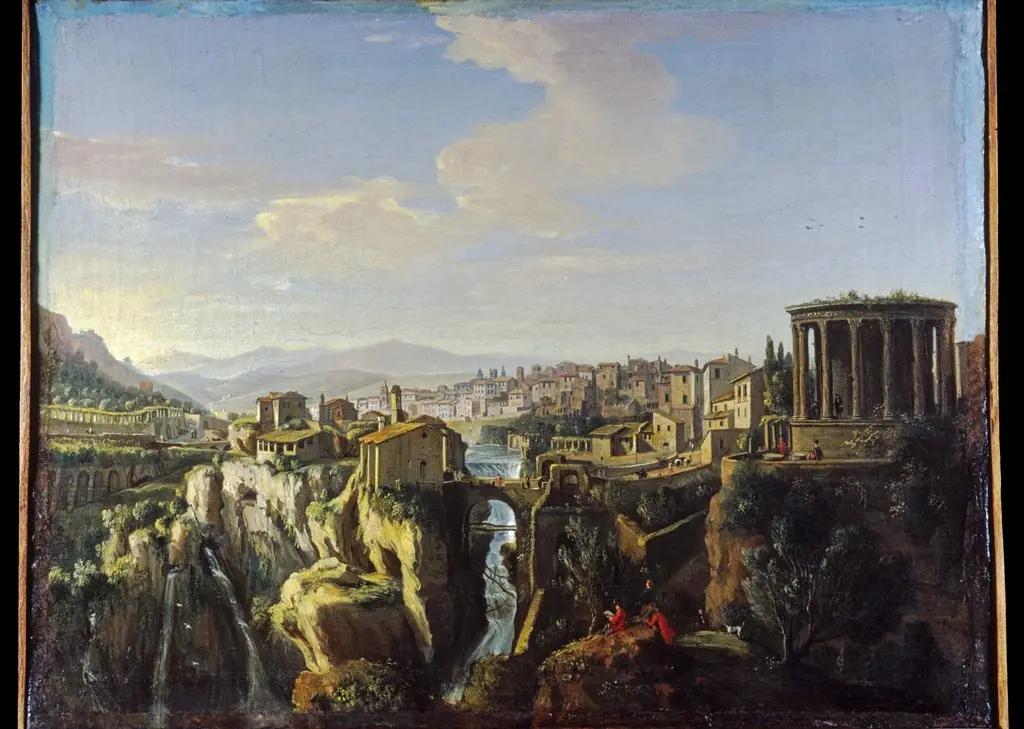
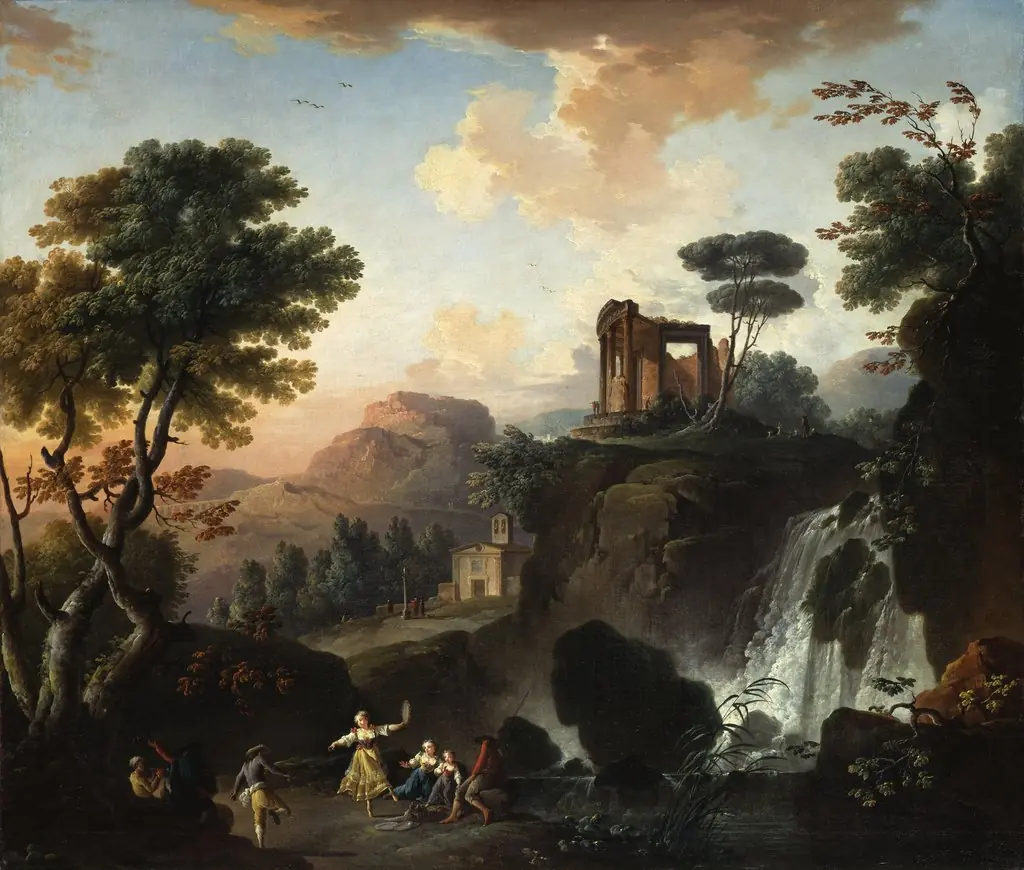
The work, dated 1824, depicts the celebrated waterfalls of Tivoli, a town just outside Rome. A cascade tumbles over rugged cliffs, while a modest settlement crowns the hill and the circular Temple of Vesta looms in the distance. The composition is rendered as a pair of companion pieces, intended to be displayed together as pendants.
Subject & Meaning
The painting captures Tivoli’s blend of natural drama and classical heritage. The waterfall represents the power of nature, whereas the temple, dedicated to the goddess of domestic harmony, alludes to the enduring presence of ancient Roman culture within the landscape.
Technique & Style
Executed in a landscape tradition popular among early‑19th‑century travelers, the artist employs a balanced palette of cool blues for water and warm earth tones for the cliffs and village. Precise yet atmospheric brushwork conveys both the solidity of the rock and the fleeting motion of the falling water.
History & Provenance
Created by an unidentified hand, the painting likely resulted from a royal scholarship that enabled the artist to journey to Italy, a route also taken by Dutch painter Abraham Teerlink after receiving a grant from Louis Napoleon in 1807. The work entered the Dutch collection in the 20th century, where it remains on view.
Context
During the early 1800s, Italian scenery attracted many Northern European artists seeking classical motifs and dramatic vistas. Tivoli, with its celebrated waterfalls and ruins, became a frequent subject, reflecting the period’s fascination with the sublime and the antiquarian.
Legacy
Although the creator remains unknown, the painting contributes to the broader corpus of Dutch landscape art that documented Italian travel experiences. It offers contemporary viewers insight into 19th‑century artistic perceptions of Italy’s natural and historic landmarks.
Artist & collection
Artist
Abraham Teerlink (Dordrecht, 5 November 1776 -- Rome, 26 May 1857 or July 1857) was a 19th-century painter and draughtsman from the Netherlands.