Artwork
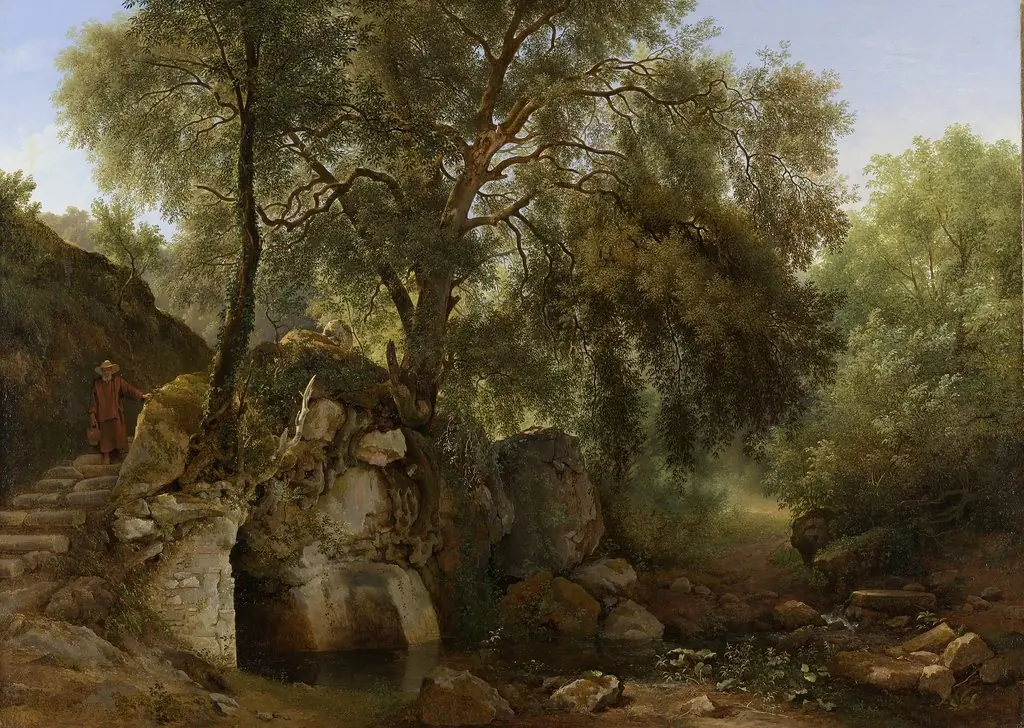
Shepherd and his flock by Lake Nemi
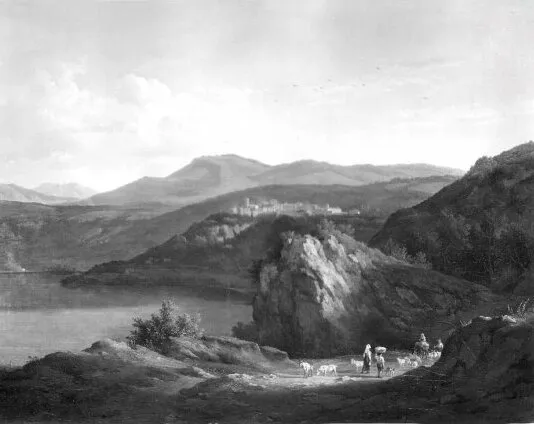
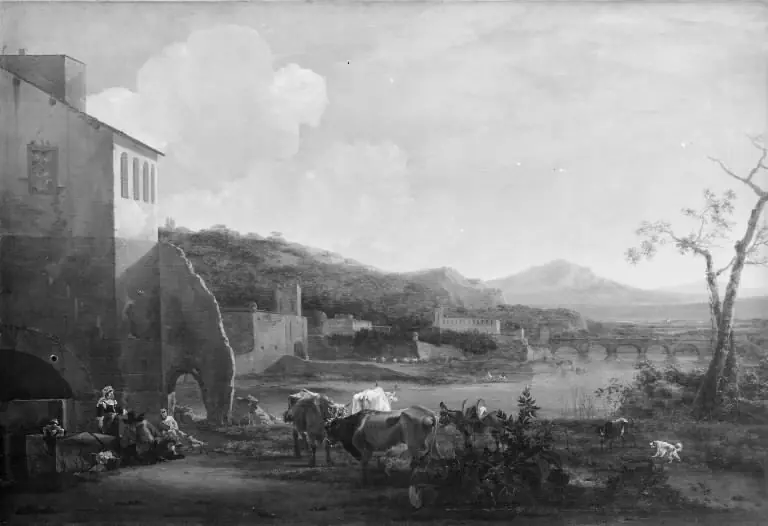
Shepherd and his flock by Lake Nemi is an oil painting by Abraham Teerlink. It dates from 1801 and is held in the collection of the Kunsthistorisches Museum.
About this work
Overview
Painted in 1801 by Dutch artist Abraham Teerlink, this oil-on-canvas work captures a quiet moment in the Roman countryside near Lake Nemi.
Painted in 1801 by Dutch artist Abraham Teerlink, this oil-on-canvas work captures a quiet moment in the Roman countryside near Lake Nemi. Teerlink, who lived and worked in Rome for much of his career, focused on rural scenes observed firsthand. The painting belongs to the collection of the Kunsthistorisches Museum in Vienna, where it remains as part of a broader group of 19th-century European landscapes.
Subject & Meaning
A solitary shepherd leads a small flock along a winding dirt path that traces the slope of a low hill. The lake beyond, still and reflective, anchors the composition in calm. The scene offers no narrative drama—only the quiet rhythm of pastoral life. Teerlink’s choice of subject reflects a Romantic-era appreciation for unembellished nature and the dignity of rural labor, grounded in direct observation rather than idealization.
Technique & Style
Teerlink employed loose, tactile brushwork to render the textured surfaces of wool, stone, and earth. Warm ochres, browns, and muted greens dominate the palette, evoking the sunlit terrain of central Italy. Light falls naturally across the hillside, suggesting time of day without dramatic contrast. The handling of form is suggestive rather than precise, emphasizing atmosphere over detail, with a sensitivity to the tactile qualities of the landscape.
History & Provenance
Created during Teerlink’s years in Rome, the painting likely originated as a study or personal record of the region’s topography. It entered the Kunsthistorisches Museum’s collection in the 19th century, possibly through acquisition from a European collector familiar with Dutch and Italian landscape traditions. Its preservation reflects institutional interest in lesser-known Northern European artists working abroad during the early 1800s.
Context
Teerlink painted this work amid a broader European fascination with the Italian countryside, fueled by Grand Tour travelers and Romantic ideals. While contemporaries like Turner or Constable pursued grander effects, Teerlink’s approach was intimate and restrained. His focus on modest, everyday scenes aligned with a growing interest in authentic rural life, distinct from classical or mythological themes common in academic art of the period.
Legacy
Though not widely celebrated in art history, Teerlink’s work contributes to the understanding of Dutch artists who absorbed Italian light and terrain into their practice. His restrained style influenced later generations of landscape painters seeking authenticity over spectacle. This painting endures as a quiet testament to the value of close observation and the enduring appeal of pastoral solitude.
Artist & collection
Artist
Abraham Teerlink (Dordrecht, 5 November 1776 -- Rome, 26 May 1857 or July 1857) was a 19th-century painter and draughtsman from the Netherlands.

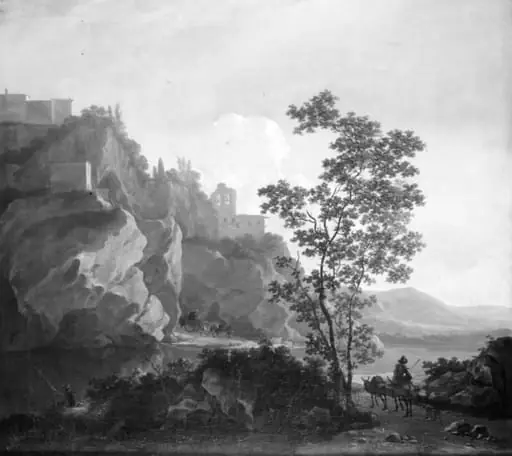 Southern Landscape with Angler
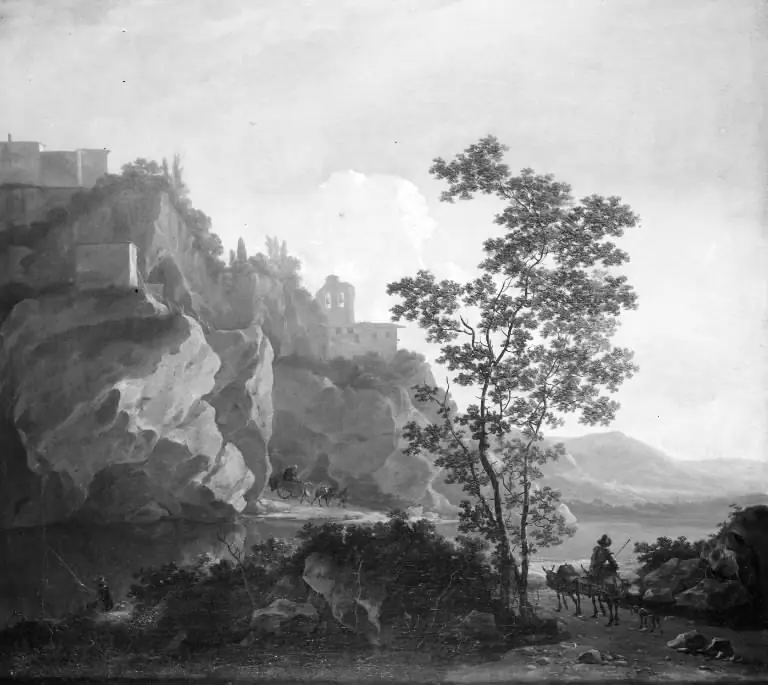 Southern Landscape with Angler
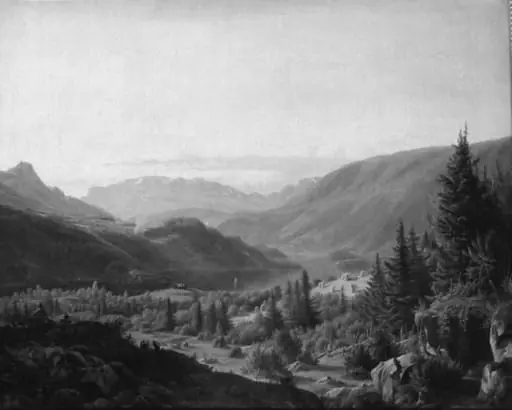 Parti i Valders i Norge. Aften
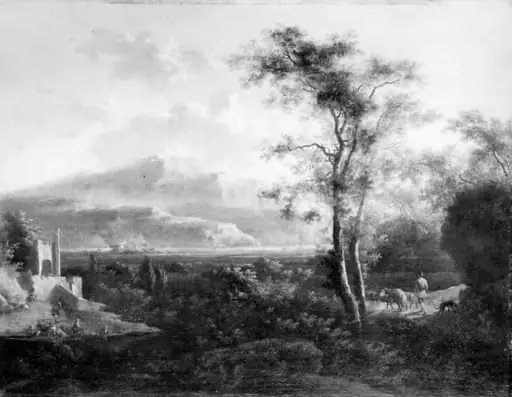 Italianate Landscape
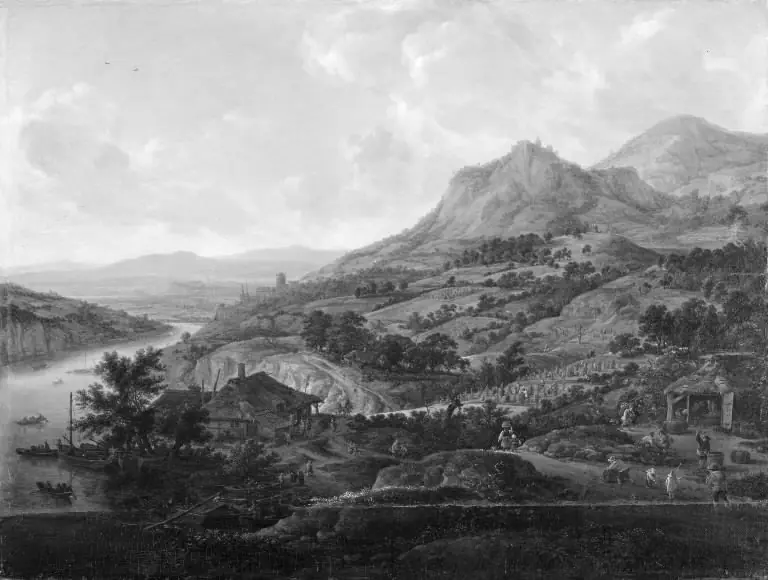 Wine Harvest at the Rhine
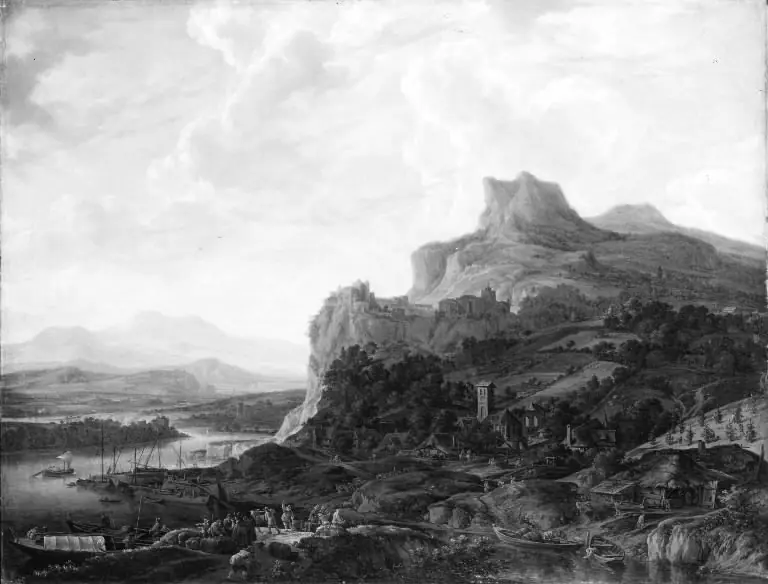 Landscape by the Rhine
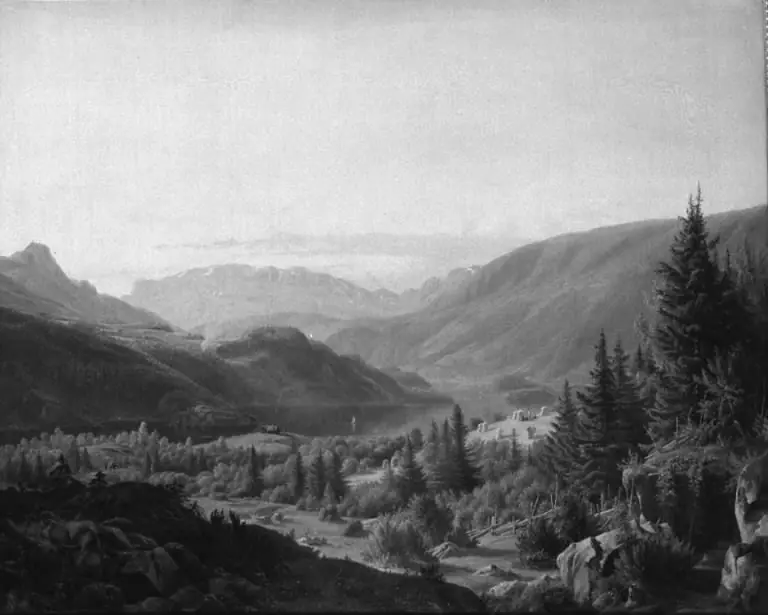 Parti i Valders i Norge. Aften
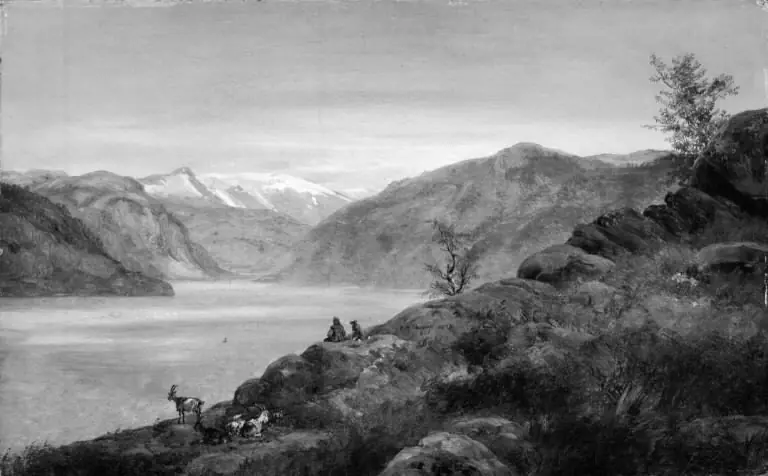 Landscape Study. Kroken at Sogn, Norway
 Landscape Study. Kroken at Sogn, Norway
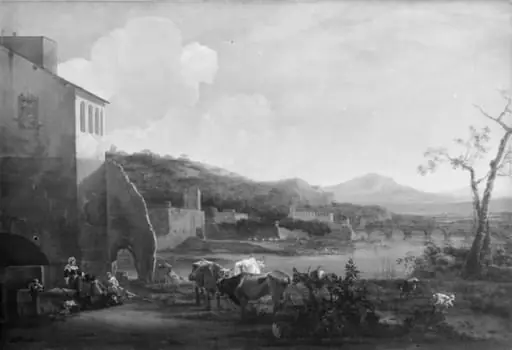 Italian Landscape
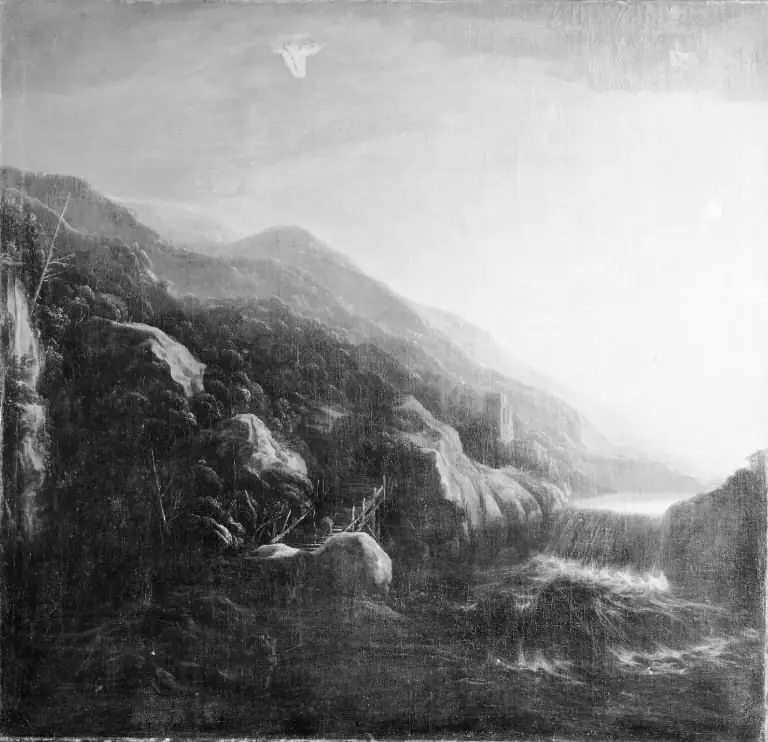 Mountain Landscape
 Italian Landscape