Artwork
Table
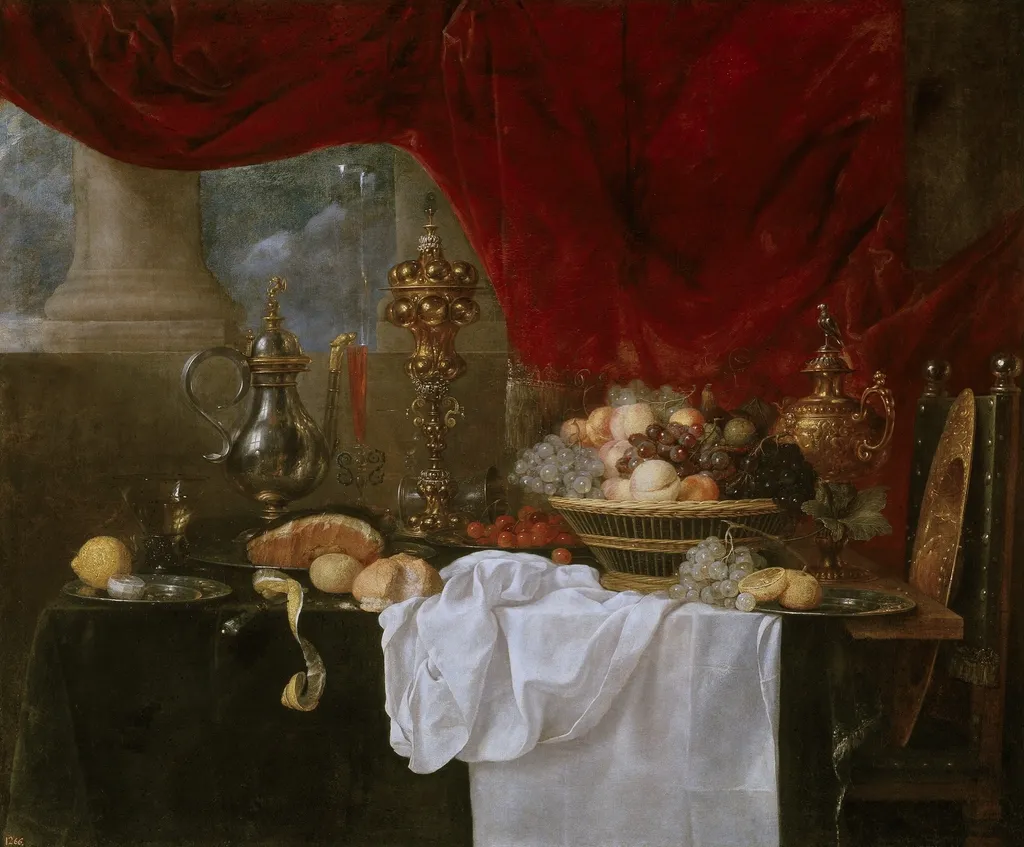
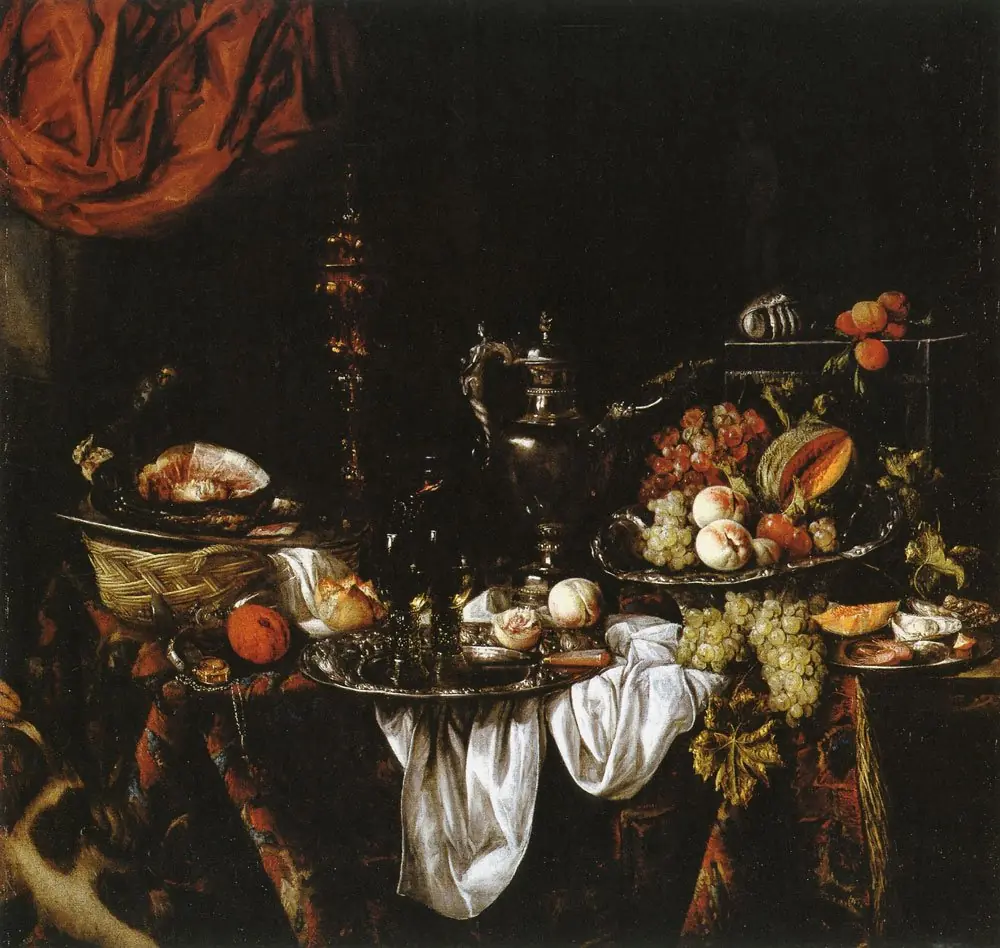
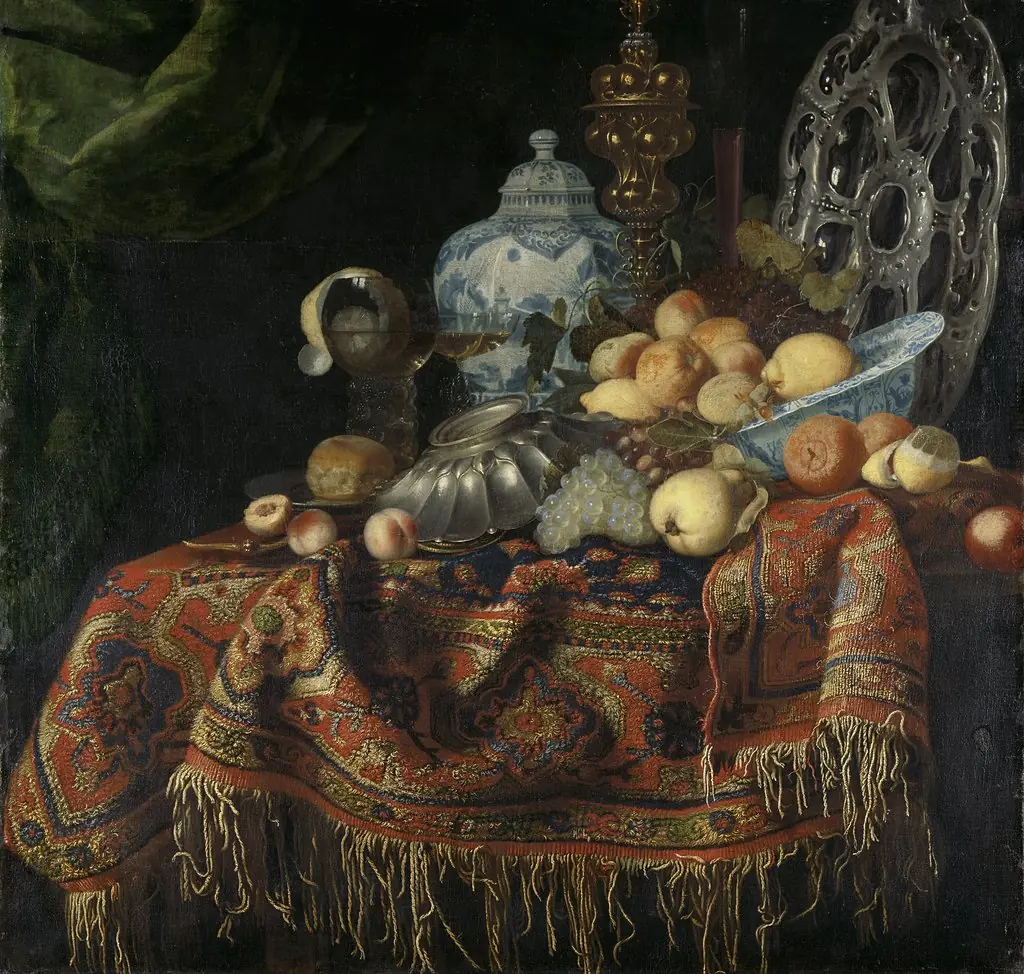
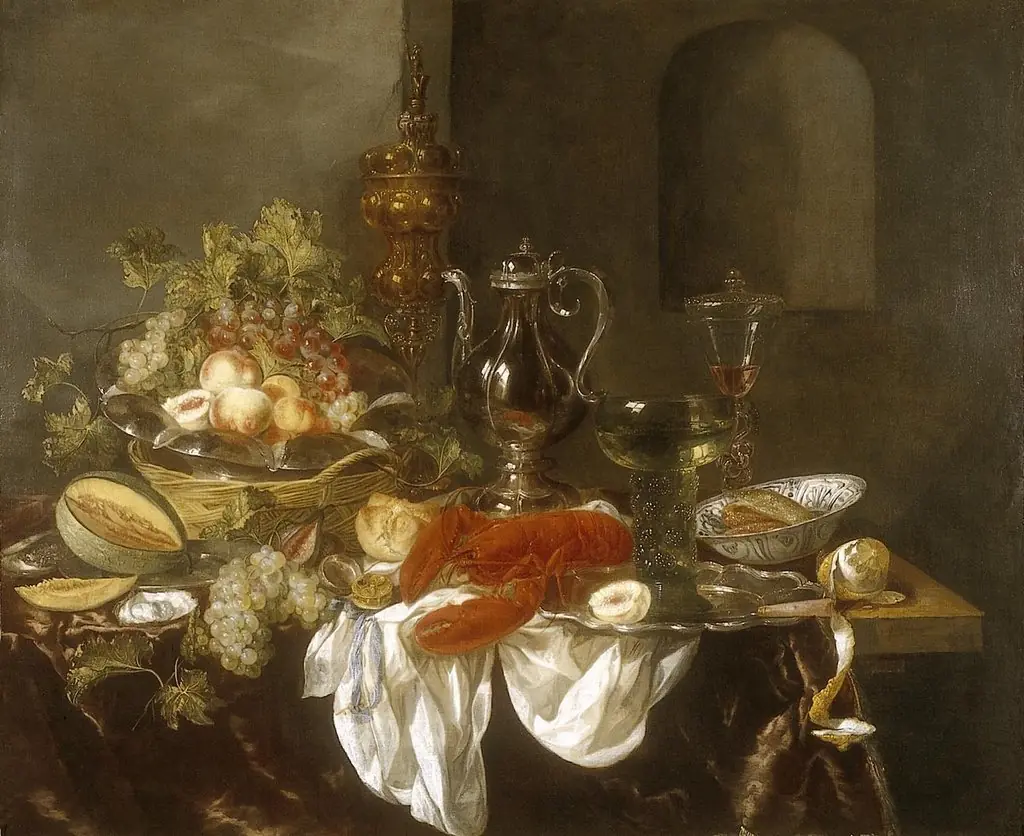
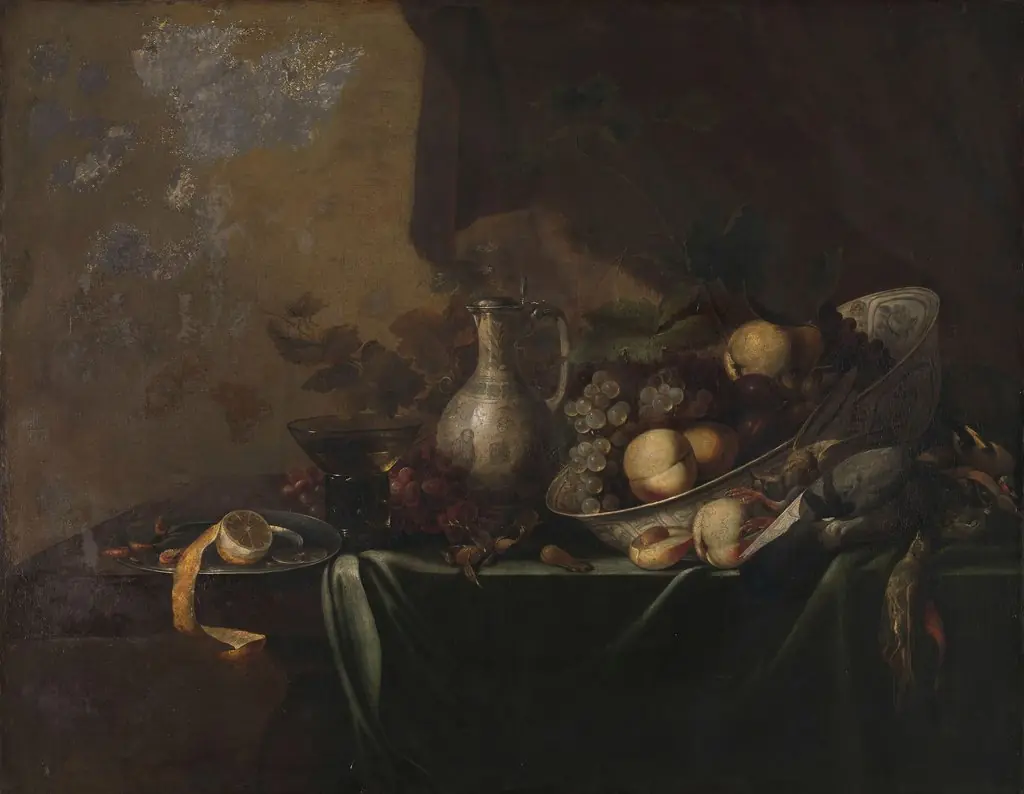
Table is an oil painting by the Dutch Golden Age artist Andries Benedetti. It is held in the collection of the Museo del Prado.
About this work
If you're interested in learning more about this technique, you can explore the work of other artists who have used it, such as Rembrandt.
The painting "Table" by Andries Benedetti, created in 1650, showcases a still life scene. The arrangement features various objects, including a knife, bread, and eggs, set against a dark background. The use of oil paint adds depth to the scene.
A closer look reveals the intricate details of the objects, with the knife and bread appearing to be the central focus. The eggs are depicted in a basket, adding a sense of texture and depth to the scene.
The use of chiaroscuro, a technique that emphasizes contrasts between light and dark, adds a sense of drama to the scene. This technique is characteristic of many still life paintings from the same era. If you're interested in learning more about this technique, you can explore the work of other artists who have used it, such as Rembrandt.
Overview
Andries Benedetti, a Flemish painter working in Antwerp, created Table around 1650. This oil painting is a still life composition featuring common household items, such as bread, an egg, and a knife, arranged against a dark backdrop. The artwork exemplifies the detailed observation and dramatic lighting characteristic of the era, and it is currently housed in the collection of the Museo del Prado.
Subject & Meaning
The painting presents an arrangement of humble, everyday items. A knife and a loaf of bread appear prominently, alongside eggs nestled in a basket and a small fountain. Benedetti's focus on these seemingly simple objects invites viewers to appreciate the textures and forms of domestic life. While not explicitly a pronkstilleven with opulent goods, the careful depiction elevates these ordinary elements.
Technique & Style
Benedetti utilized oil paint to achieve rich depth and intricate detail in Table. The composition employs a dark background, which intensifies the visual impact of the foreground objects. A notable aspect of the work is its use of chiaroscuro, a technique that creates strong contrasts between light and shadow. This dramatic lighting enhances the scene's realism and was a common stylistic choice in still life painting during the mid-17th century.
Context
Active during the Dutch Golden Age, Andries Benedetti was a Flemish artist based in Antwerp, specializing in still life painting, particularly known for his fruit compositions. Table reflects the period's broader artistic interest in depicting the material world with precision and evocative atmosphere. It aligns with the tradition of still life art that flourished in the Low Countries, showcasing domestic scenes and objects.
Own this work as a print
Artist & collection
Artist
Andries Benedetti or Andrea Benedetti (1615/18 – after 1649 and before 1660) was a Flemish still life painter mainly active in Antwerp who is known for his fruit still lifes and pronkstillevens.