Artwork
Portrait of Catharina van der Voort
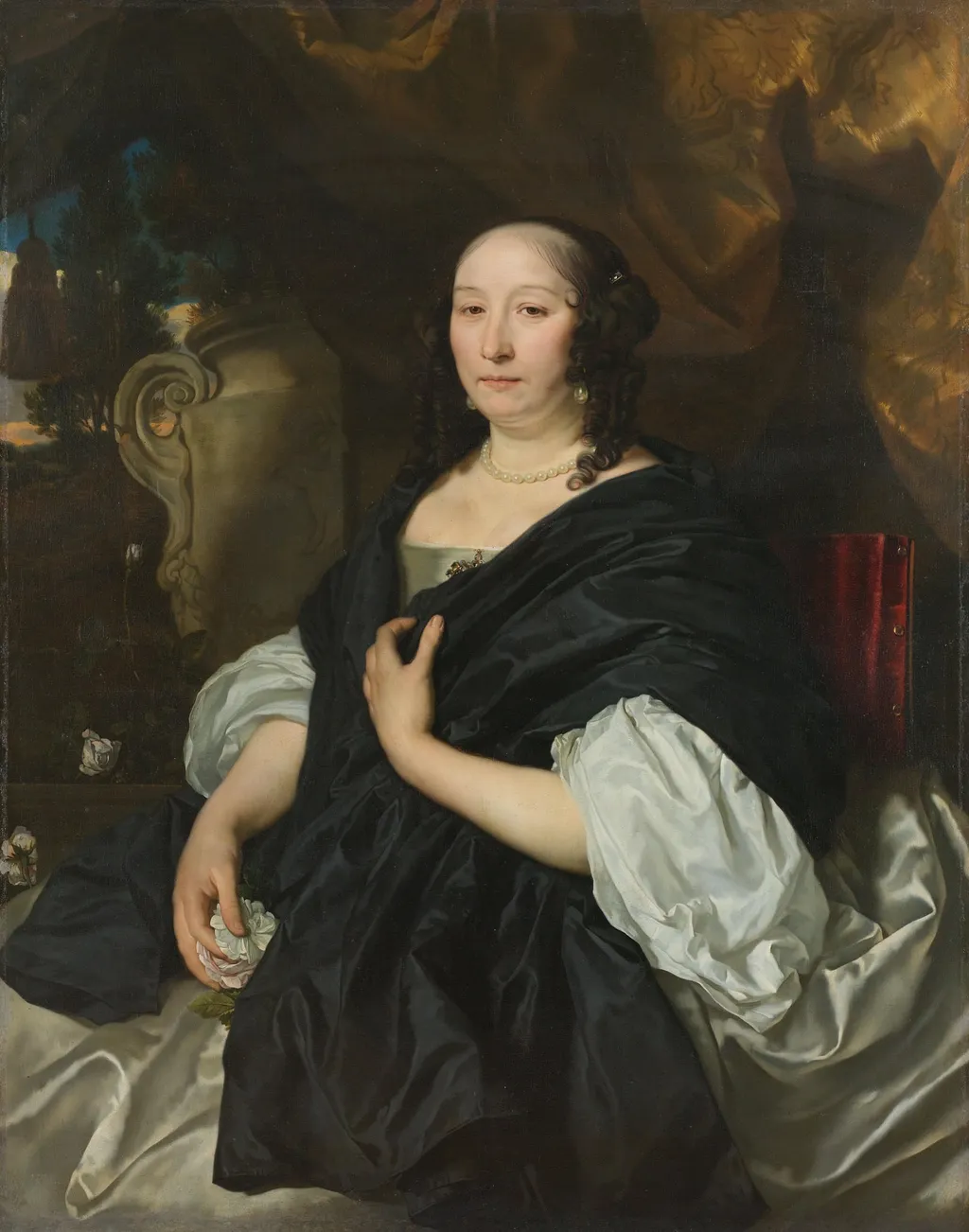
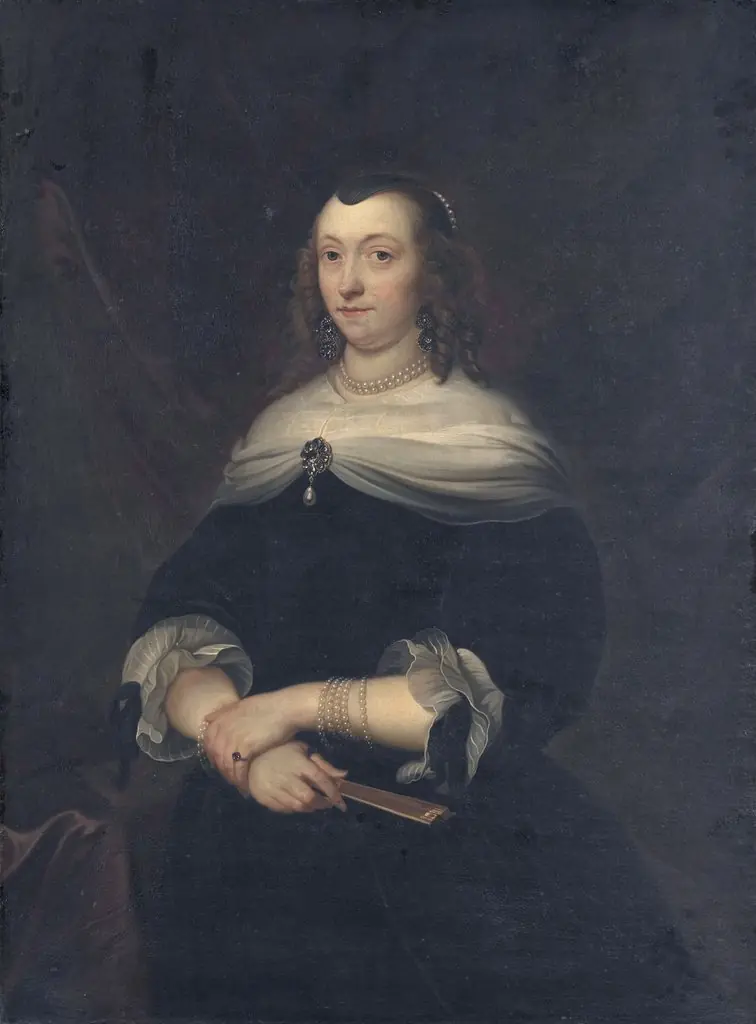
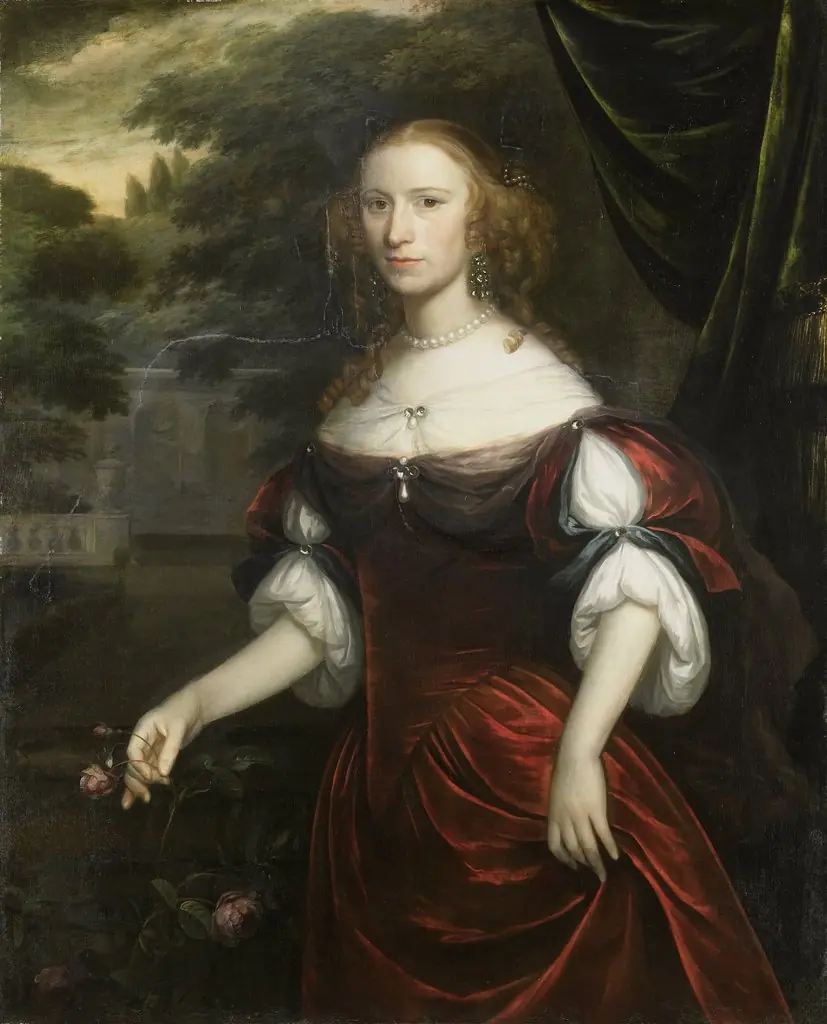
Portrait of Catharina van der Voort is an unspecified painting by the Baroque artist Abraham Lambertsz van den Tempel. It dates from 1667 and is held in the collection of the Rijksmuseum. The canvas presents Catharina van der Voort, rendered by Jan van den Tempel in a full‑length portrait.
About this work
Overview
The canvas presents Catharina van der Voort, rendered by Jan van den Tempel in a full‑length portrait. She is seated before a stone balustrade, with a modest rose bush placed behind her. The composition emphasizes the breadth of her attire, which dominates the visual field.
Subject & Meaning
Catharina is depicted wearing an opulent dark dress trimmed with pearls that cascade over her neck and wrists. The abundance of jewelry and the lavish fabric serve as visual indicators of her family's affluence, reflecting the social aspirations of the Dutch elite in the early 18th century.
Technique & Style
Van den Tempel employs a careful handling of light to highlight the sheen of the pearls and the texture of the voluminous gown. The drapery is rendered with broad, flowing strokes that extend across the canvas, creating a sense of depth and grandeur typical of Dutch portraiture of the period.
History & Provenance
The work was commissioned as a private family portrait, intended to document Catharina’s status within her social circle. It later entered museum collections, where it has been displayed as an example of wealth representation in Dutch portraiture.
Context
During the Dutch Golden Age, portraiture often functioned as a visual ledger of economic power. The inclusion of a rose bush, a common symbol of beauty and fertility, aligns the sitter with contemporary ideals of femininity and prosperity.
Artist & collection
Artist
Abraham Lambertsz van den Tempel
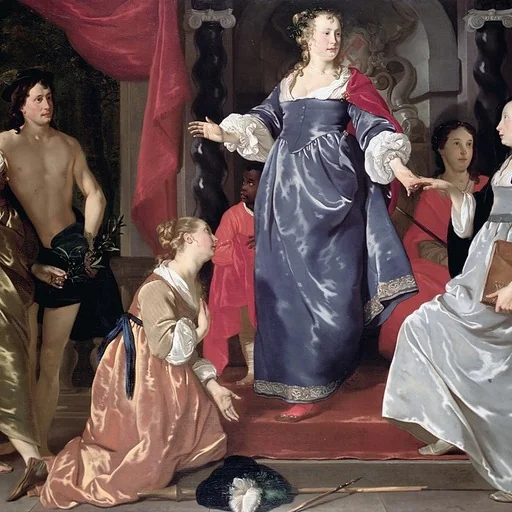
Abraham Lambertsz van den Tempel (1622–1672) was an artist, born in Leeuwarden.