Artwork
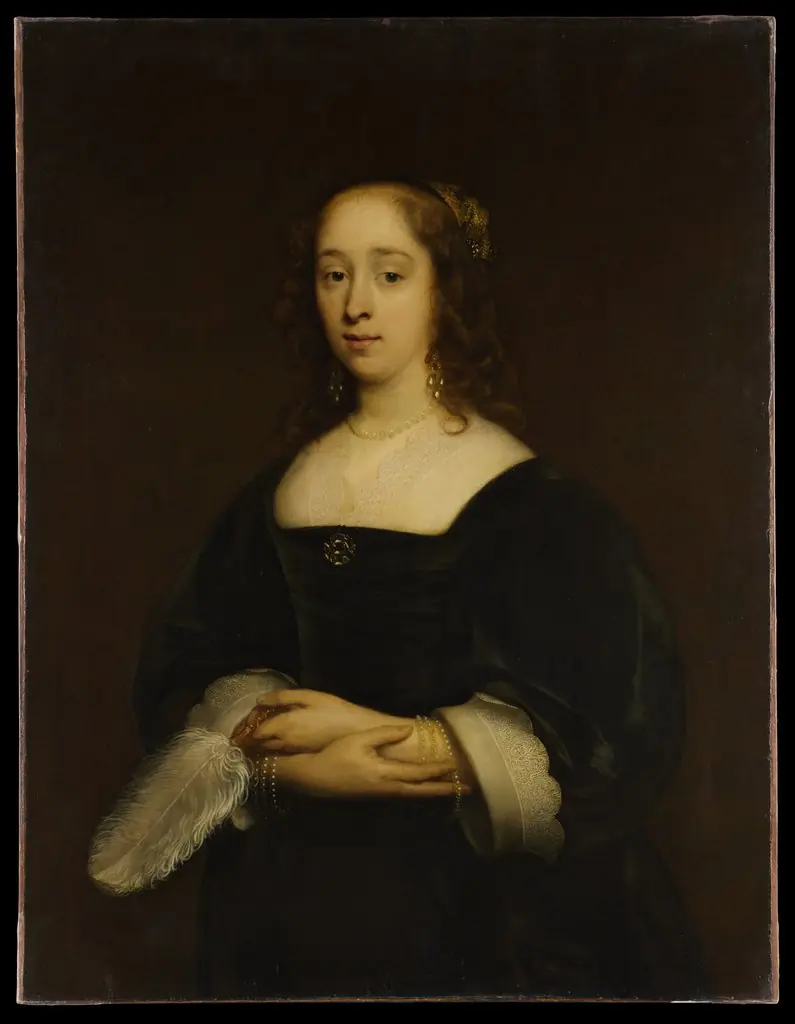
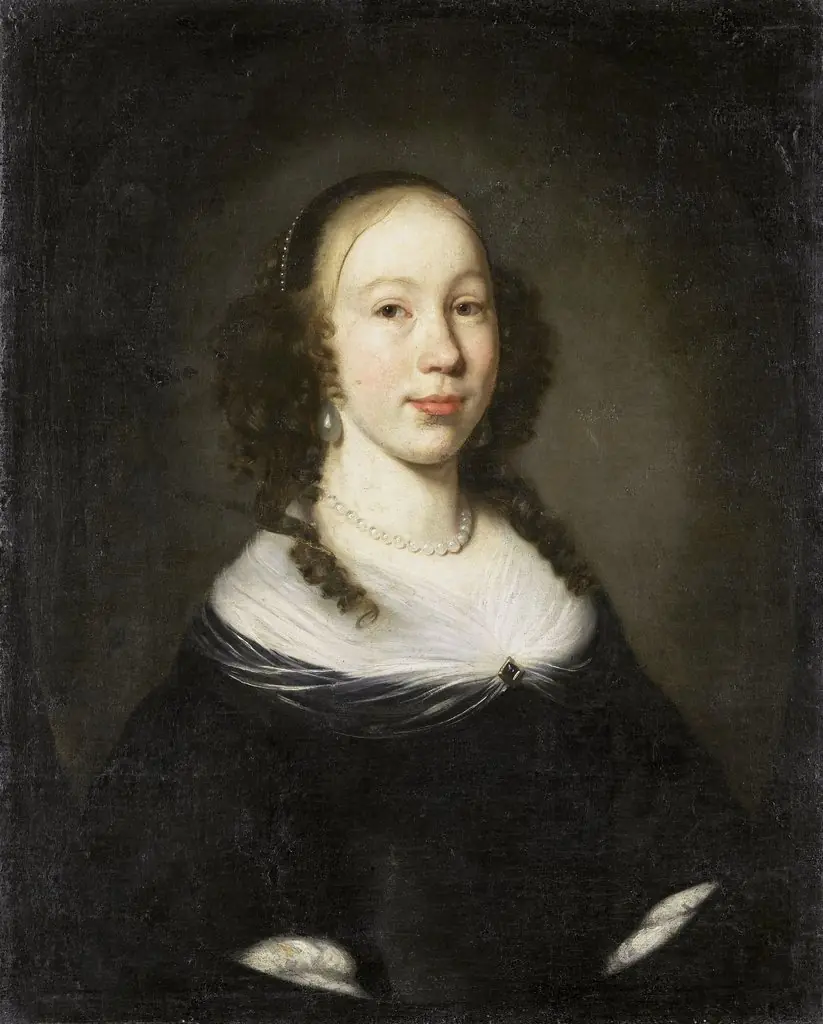
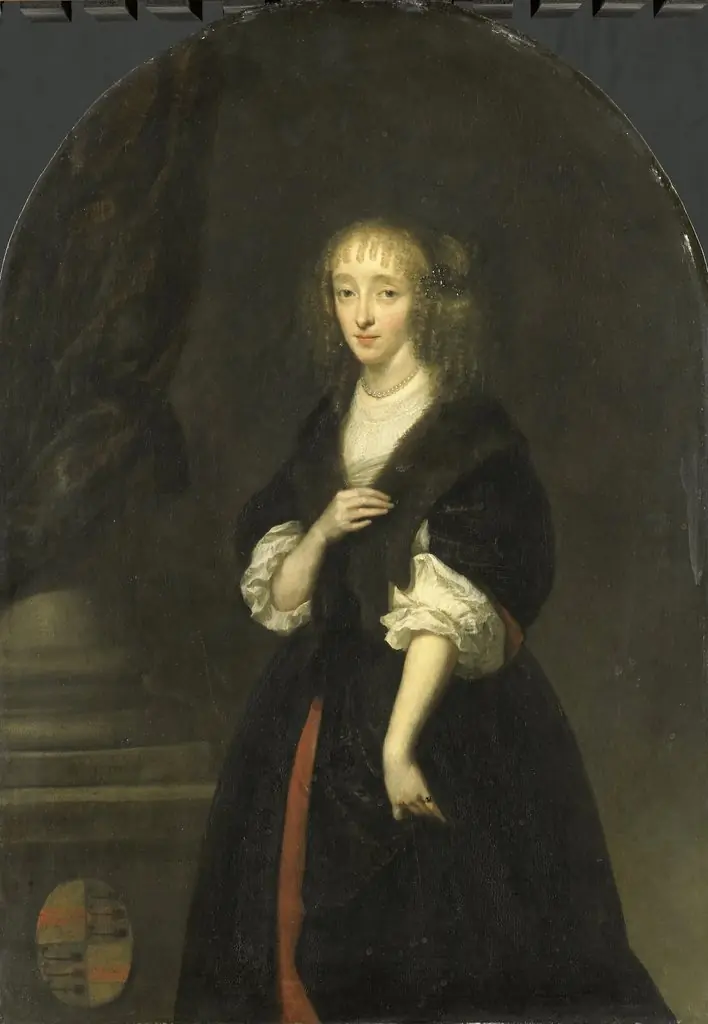
Portrait of a woman, thought to be Lucretia Boudaen
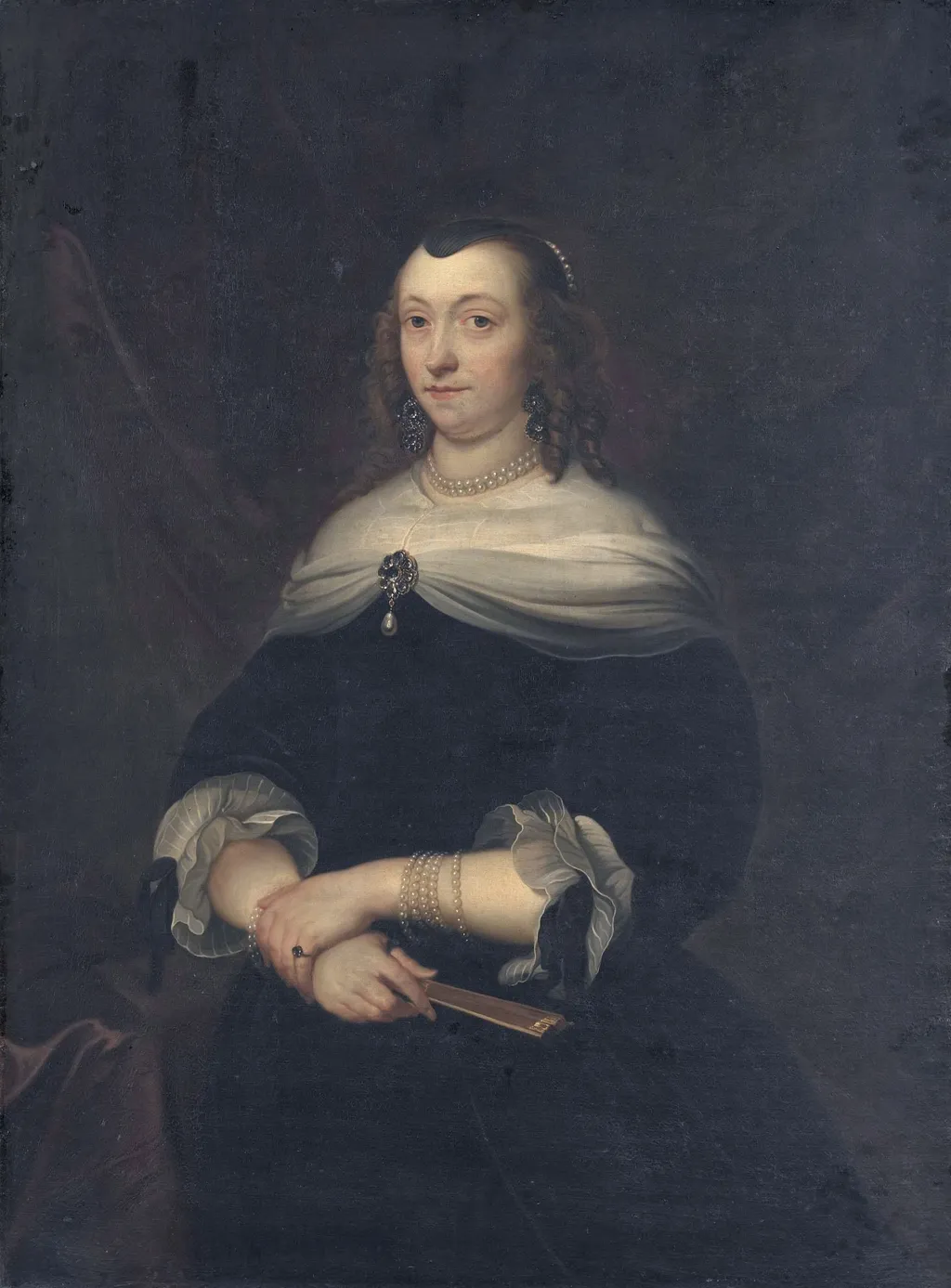
Portrait of a woman, thought to be Lucretia Boudaen is an oil painting by the Dutch Golden Age artist Jacob van Loo. It dates from 1650 and is held in the collection of the Rijksmuseum.
About this work
Overview
Created circa 1650 by Dutch painter Jacob van Loo, this oil portrait presents a seated woman rendered in the refined manner typical of the Dutch Golden Age. The composition places the sitter against a dark, neutral backdrop, allowing the details of her attire and accessories to dominate the visual field. The work is part of the Rijksmuseum’s collection.
Subject & Meaning
The figure is identified as Lucretia Boudaen, though the attribution remains tentative. She is shown with curly brown hair, a white headband, and pearl jewelry, suggesting a status of wealth and cultivated taste. The inclusion of a fan and the poised hand gesture convey a sense of modest elegance, common in 17th‑century portraiture intended to reflect the sitter’s social standing.
Technique & Style
Van Loo employs a smooth, luminous oil technique that captures the sheen of silk and pearl with subtle gradations of light.
Van Loo employs a smooth, luminous oil technique that captures the sheen of silk and pearl with subtle gradations of light. The dark background functions as a chiaroscuro device, heightening the three‑dimensionality of the figure. Fine brushwork delineates the delicate folds of the dark blue dress, while the crisp rendering of the white collar and cuffs demonstrates the artist’s attention to texture.
History & Provenance
The painting was produced in Amsterdam during van Loo’s early career, before his relocation to Paris. It entered the Rijksmuseum’s holdings through acquisition in the 20th century, though earlier ownership records are sparse. The work has been exhibited as an example of van Loo’s portraiture, illustrating his reputation for rendering refined, affluent sitters.
Context
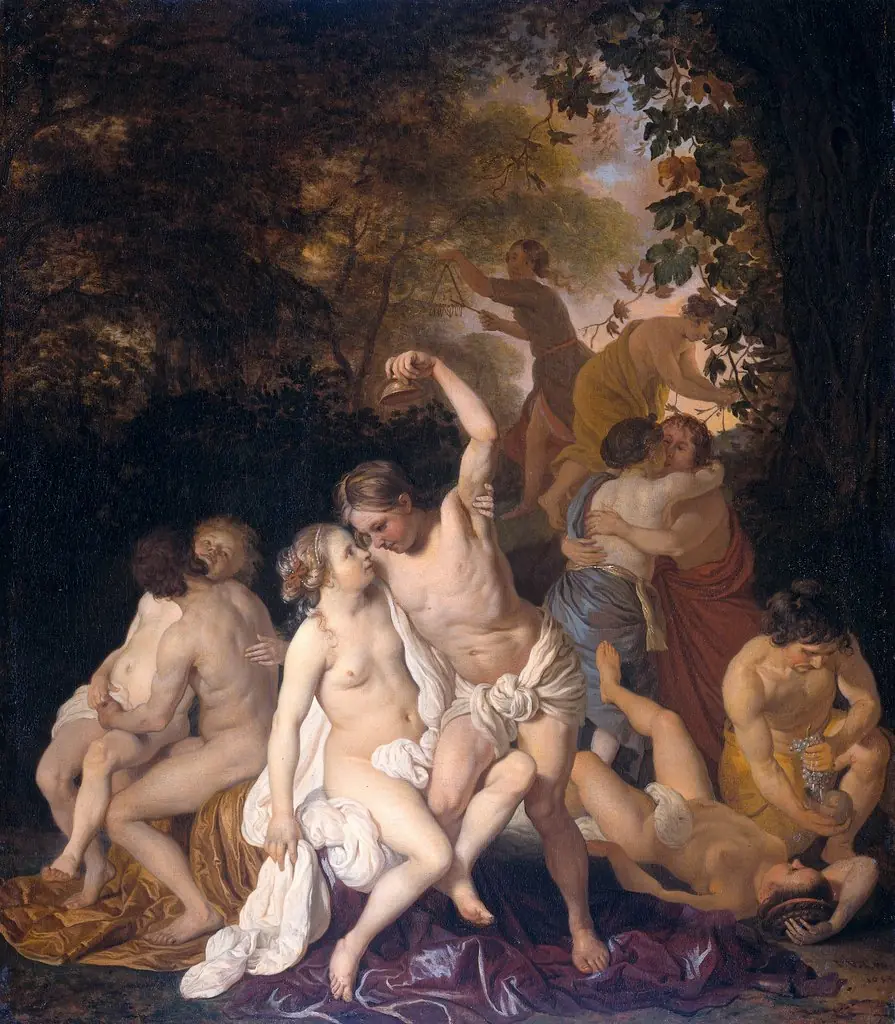
In the mid‑17th century, Dutch portraiture emphasized realism and individual character, often incorporating luxurious fabrics and jewelry to signal status. Van Loo, known for both mythological scenes and nudes, applied the same meticulous approach to portraiture, aligning his work with contemporaries such as Frans van Mieris and Gerard Ter Borch, who similarly blended elegance with naturalistic detail.
Own this work as a print
Artist & collection
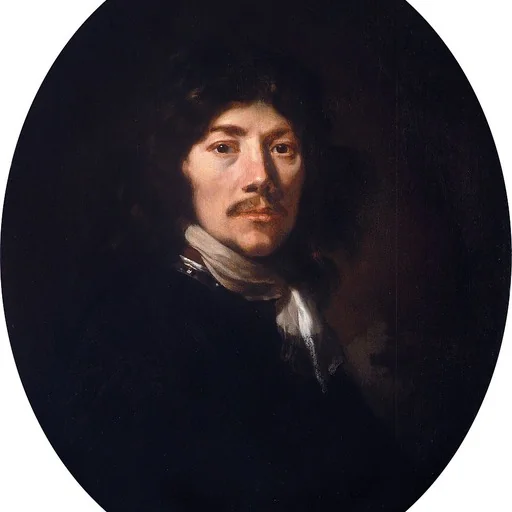
Artist
Jacob van Loo (1614 – 26 November 1670) was a painter of the Dutch Golden Age, chiefly active in Amsterdam and, after 1660, in Paris.