Artwork
The Ferry to Utrecht (Het veer van der Uytersche schiet-schuyten)
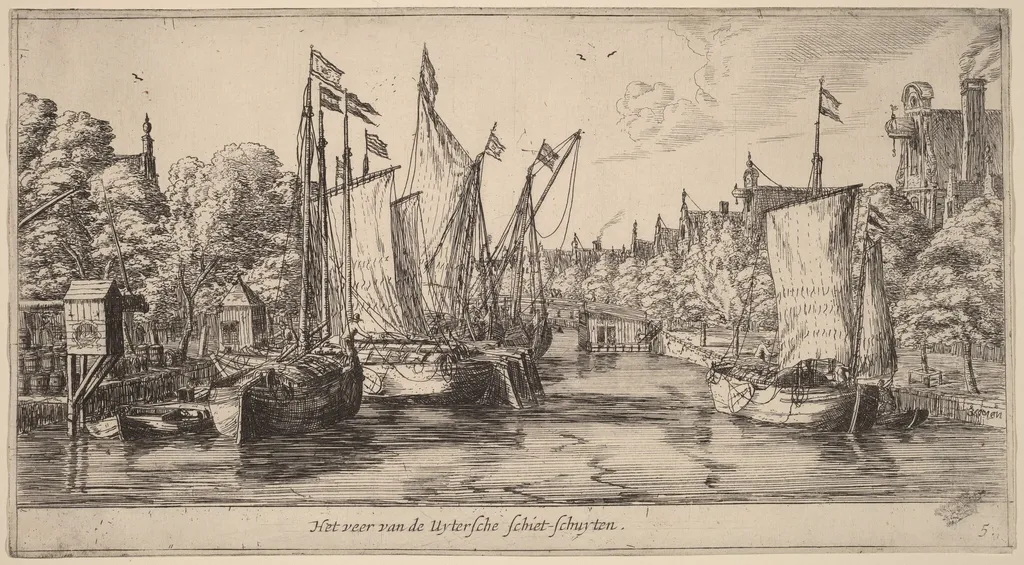
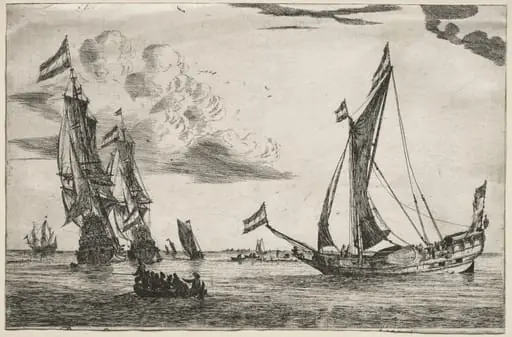
The Ferry to Utrecht (Het veer van der Uytersche schiet-schuyten) is an ink print by the Baroque artist Nooms, called Zeeman, Reinier. It dates from 1645 and is held in the collection of the National Gallery of Art. Reinier Nooms, known as Zeeman, created this 1645 etching depicting a quiet ferry crossing near Utrecht.
About this work
Overview
As a Dutch artist with deep familiarity with maritime life, he focused on precise renderings of vessels and waterways.
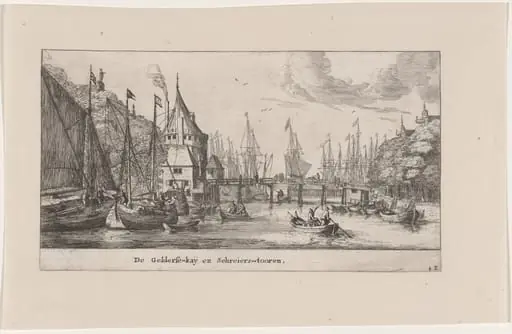
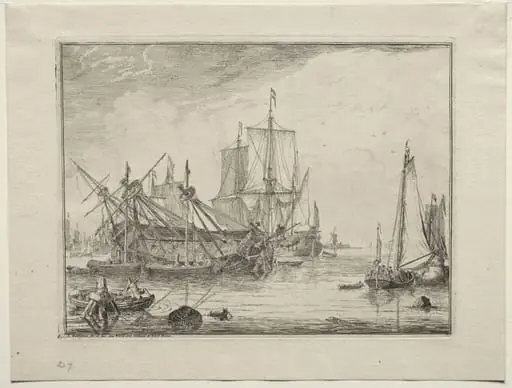
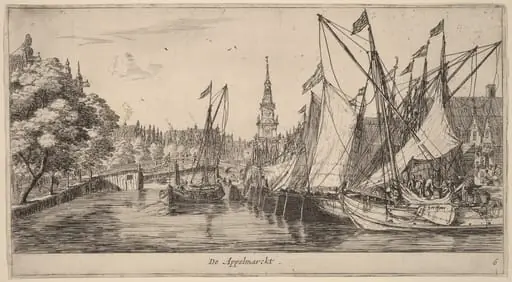
Reinier Nooms, known as Zeeman, created this 1645 etching depicting a quiet ferry crossing near Utrecht. As a Dutch artist with deep familiarity with maritime life, he focused on precise renderings of vessels and waterways. This print belongs to a body of work that documents everyday river traffic, emphasizing observation over drama. The composition balances activity and stillness, typical of his approach to urban water scenes.
Subject & Meaning
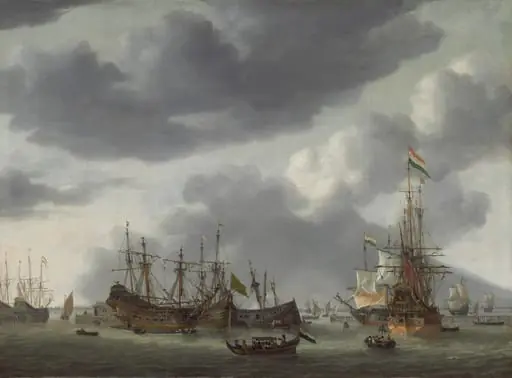
The scene portrays a modest canal ferry in operation, with multiple boats moored along the bank and one under sail in the distance. Flags on the vessels suggest commercial or municipal use, while the quiet architecture along the shore implies a working riverside community. Nooms presents transport as an unremarkable yet essential part of daily life, avoiding grandeur in favor of authentic, unembellished detail.
Technique & Style
Using etching, Nooms achieved fine linear control to define hulls, rigging, and water ripples with clarity. Delicate cross-hatching conveys texture in wood and fabric, while varying line weight suggests depth and distance. The composition avoids dramatic contrasts, favoring a muted tonal range that enhances the scene’s calm atmosphere. His technique prioritizes accuracy over expressive flourish, aligning with Dutch topographical traditions.
History & Provenance
Created in 1645, this print emerged during Nooms’s early period of printmaking, before his more widely circulated series of Amsterdam harbor views. It reflects his local knowledge of Utrecht’s waterways, likely made for collectors interested in regional topography. Few early impressions survive, and the work was not widely reproduced, making it a rare example of his pre-1650s output.
Context
In mid-seventeenth-century Holland, river transport was vital for commerce and travel. Utrecht, a key inland port, relied on ferries to connect its urban center with surrounding districts. Nooms’s prints captured this infrastructure with documentary precision, offering contemporaries a visual record of daily movement. His work stood apart from idealized landscapes, instead grounding maritime imagery in functional reality.
Legacy
Though less celebrated than his later Amsterdam etchings, this early work demonstrates Nooms’s foundational skill in rendering nautical detail. His commitment to accurate depiction influenced a generation of Dutch printmakers interested in urban waterways. The print remains a quiet but significant example of how ordinary transport networks were documented in art during the Dutch Golden Age.
Artist & collection

Artist
Reinier Nooms (c. 1623 – 1664), also known as Zeeman or Seeman (Dutch for "sailor"), was a Dutch maritime painter known for his highly detailed paintings and etchings of ships. From the 1650s, Nooms started producing…