Artwork
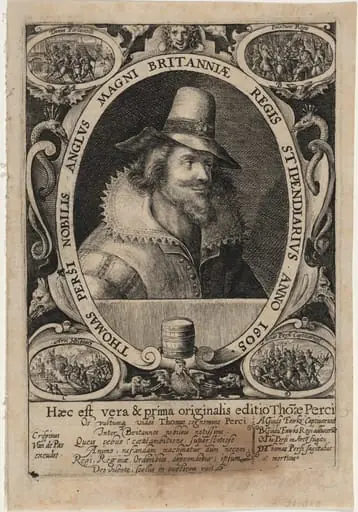
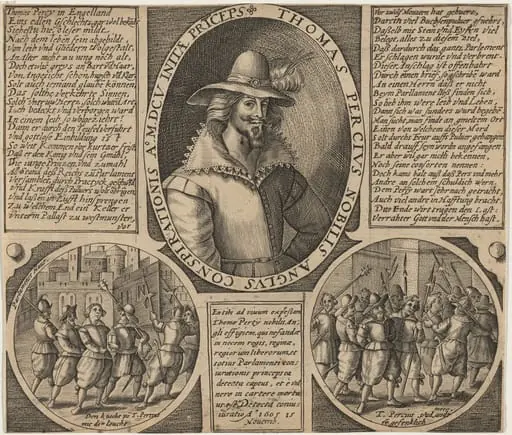
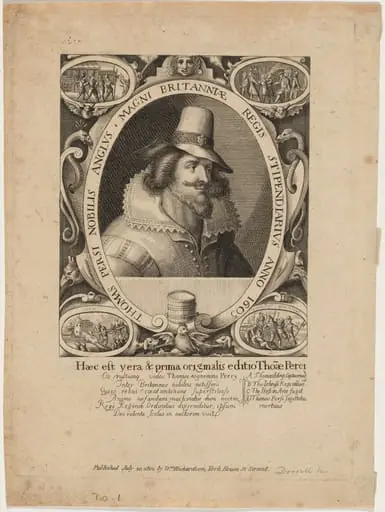
Thomas Percy
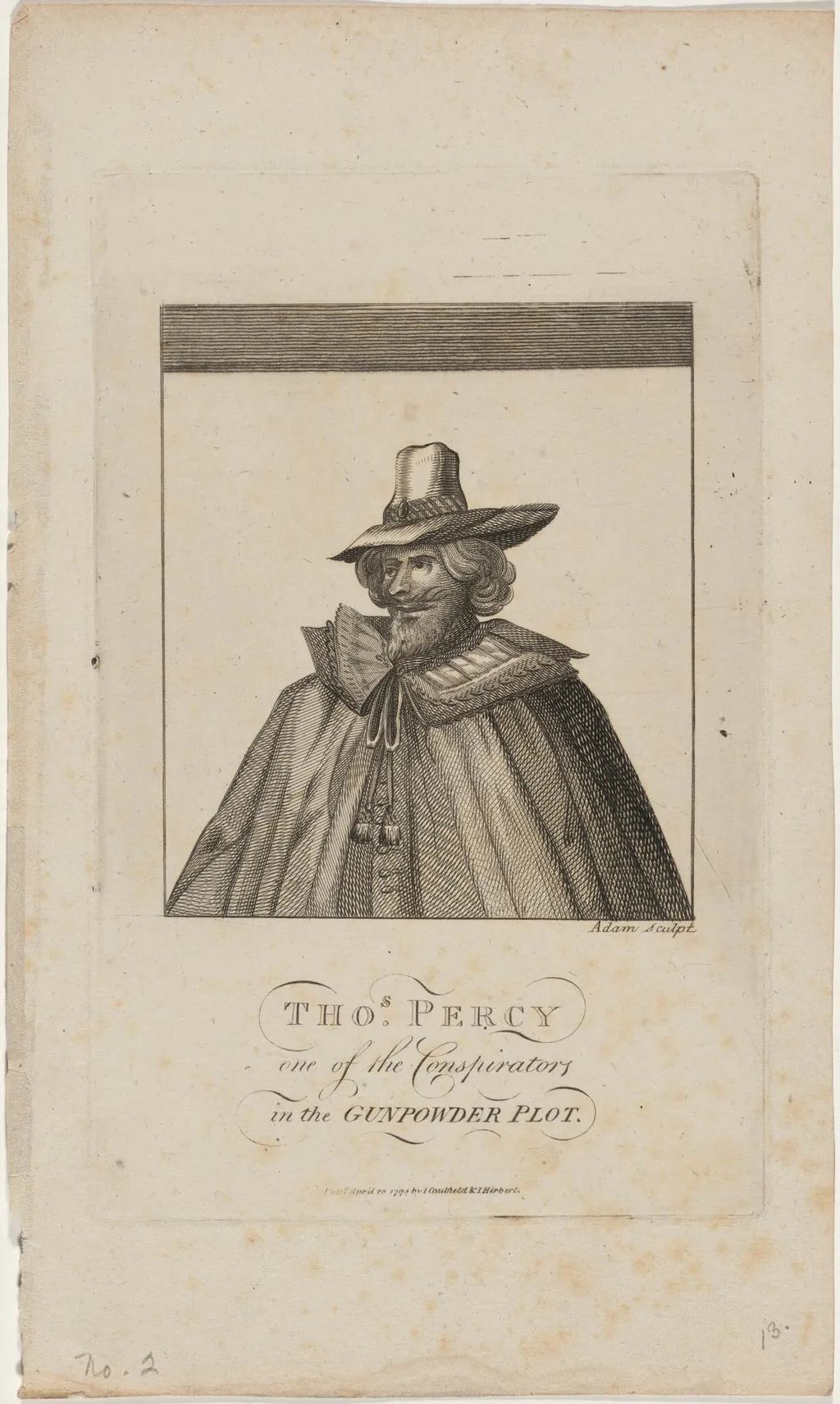
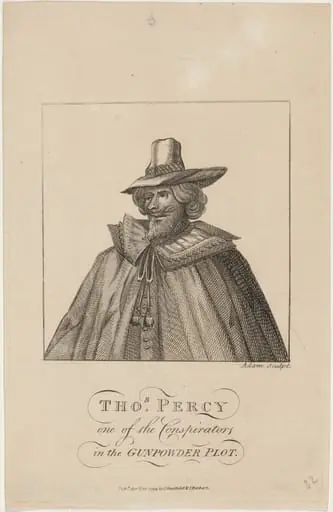
Thomas Percy is a print by the Romanticist artist Adam. It dates from 1794 and is held in the collection of the National Gallery of Art.
About this work
Overview
This printed portrait, reproduced as a facsimile, dates from 1794 and attributes its creation to an artist identified only as Adam. Rendered in monochrome, the image presents a solitary figure against an unadorned backdrop, drawing attention to the subject’s attire and expression. The work functions as a visual record of a historical individual linked to a notable 17th‑century conspiracy.
Subject & Meaning
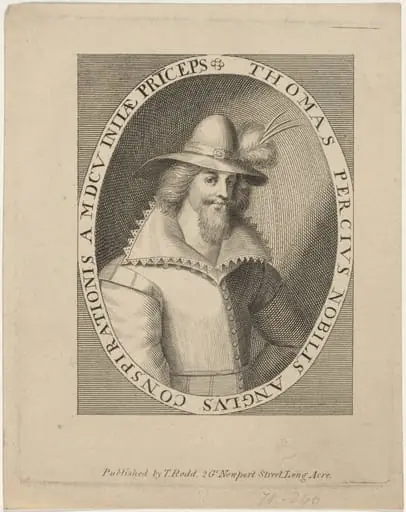
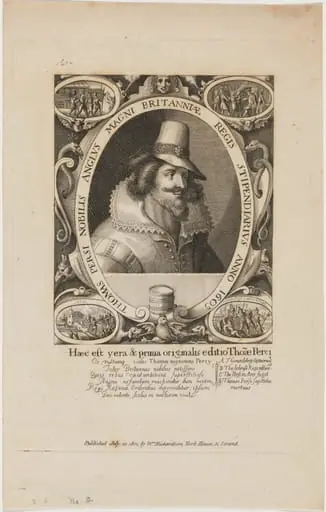
The sitter is identified as Thomas Percy, a participant in the 1605 Gunpowder Plot—a failed attempt by a group of English Catholics to destroy the House of Lords. The portrait’s formal dress, including a broad‑brimmed hat, ruffled collar and a cape fastened with a bow, conveys the status and fashion of a gentleman of the period, while the plain background emphasizes his personal identity over narrative detail.
Technique & Style
Executed as a print, the image relies on line work and tonal contrast to model the figure’s features and clothing. The black‑and‑white palette reflects the technical limitations of the era’s reproductive processes, while the precise rendering of textures—such as the fabric folds and hat brim—demonstrates the printer’s skill in conveying materiality without color.
History & Provenance
Originally produced in the late 18th century, the portrait has survived as a facsimile, indicating that it was likely copied from an earlier source for broader distribution. Its association with the National Gallery of Art in Washington suggests inclusion in a collection focused on historical portraiture, though specific acquisition details remain undocumented.
Artist & collection