Artwork
Thomas Percy
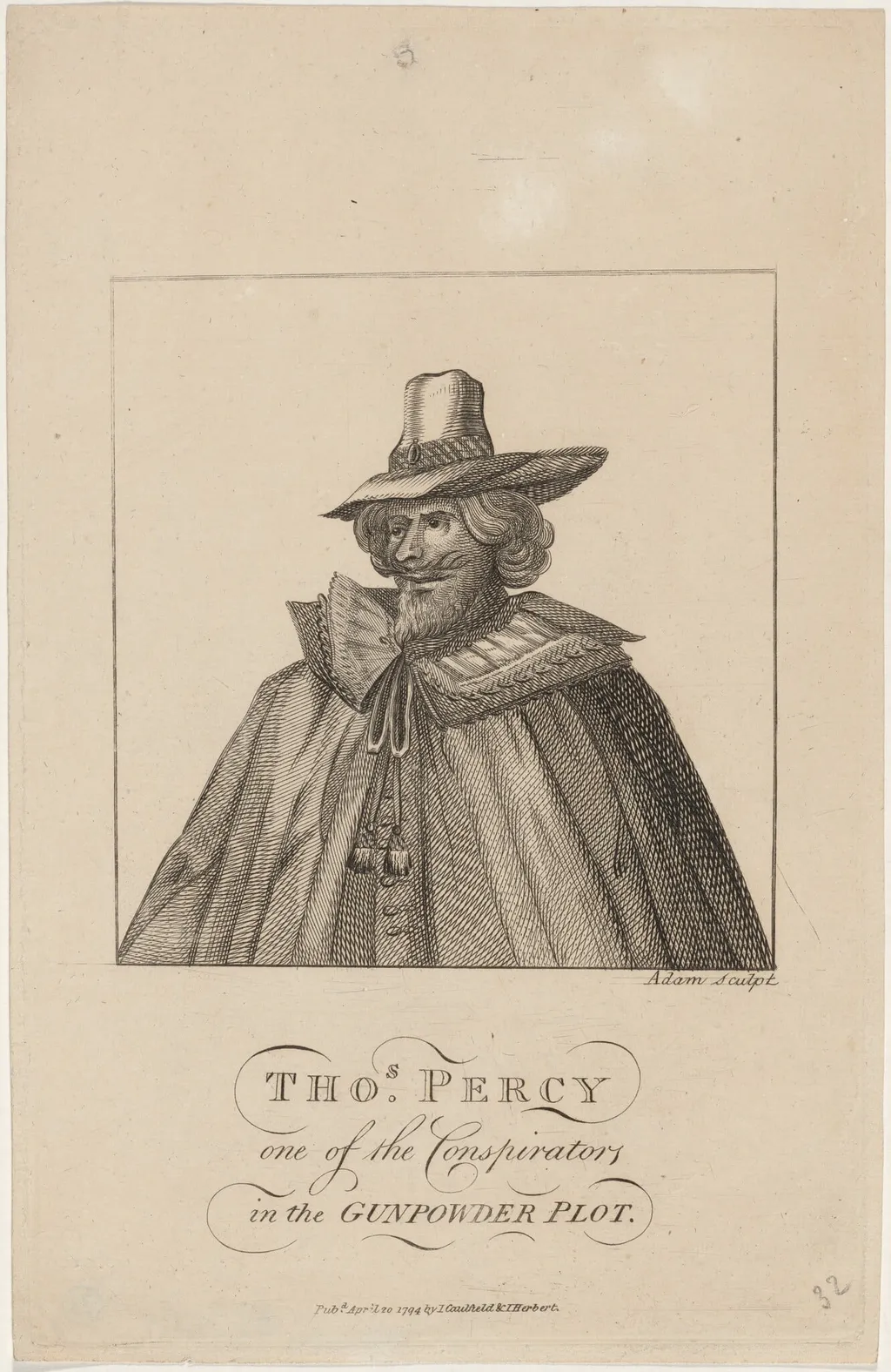
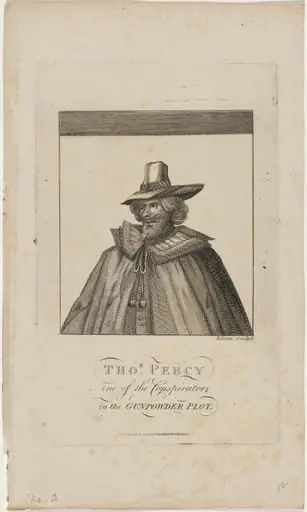
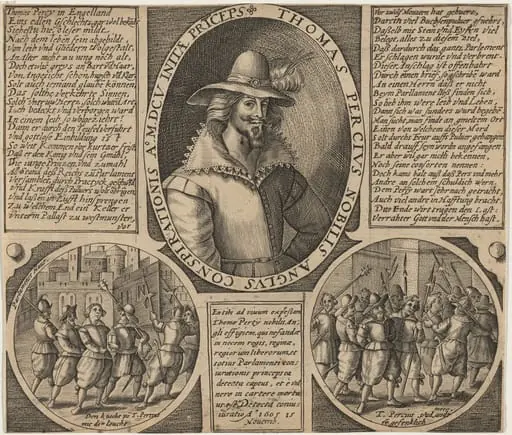
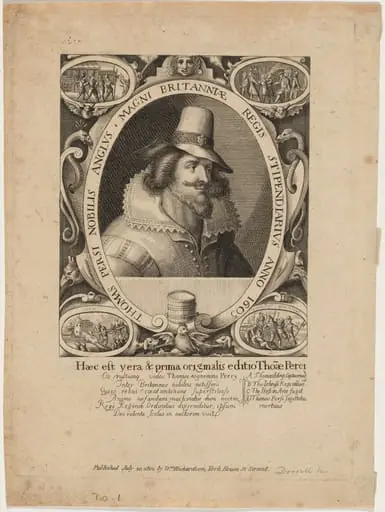
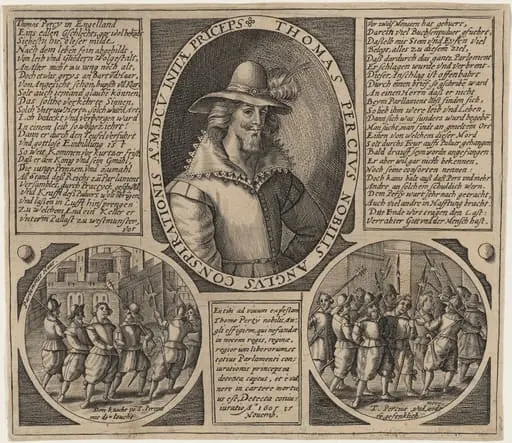
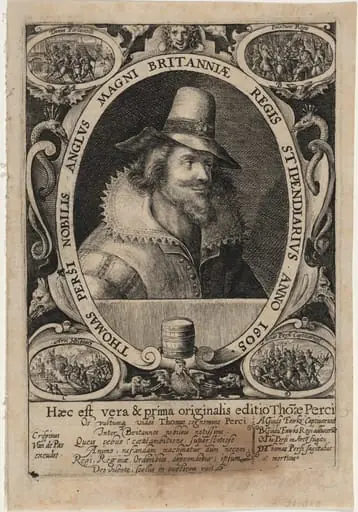
Thomas Percy is a print by the Romanticist artist Adam. It dates from 1794 and is held in the collection of the National Gallery of Art.
About this work
Overview
The accompanying inscription explicitly links him to the Gunpowder Plot, framing the portrait as a historical record rather than a personal likeness.
This 1794 black-and-white print is a facsimile portrait of Thomas Percy, produced by an artist identified only as Adam. Rendered in fine linear detail with minimal shading, the image presents a formal, restrained depiction of a man in early 17th-century attire. The accompanying inscription explicitly links him to the Gunpowder Plot, framing the portrait as a historical record rather than a personal likeness.
Subject & Meaning
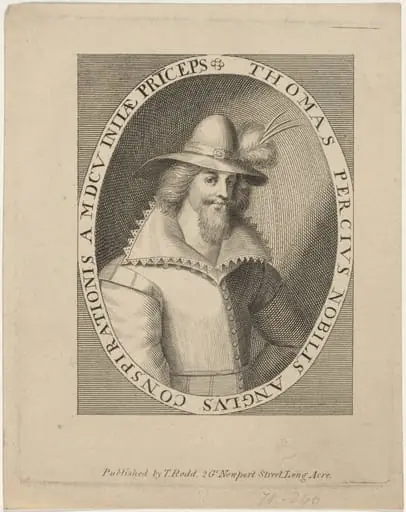
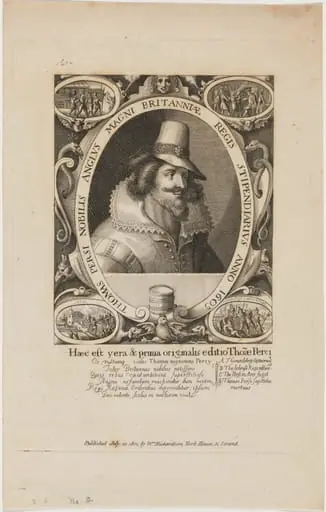
Thomas Percy was a key participant in the 1605 Gunpowder Plot, a failed attempt to assassinate King James I and dismantle Parliament. The portrait, though created nearly two centuries later, serves as a visual identifier of a figure associated with treason and political upheaval. Its stark presentation and explicit labeling reflect an intent to memorialize him as a historical villain, not a sympathetic figure.
Technique & Style
The print employs sharp, clean lines and flat tonal contrasts to define facial features and clothing. The ruffled collar, wide-brimmed hat, and long coat are rendered with schematic precision, avoiding elaborate texture. The absence of color and the limited shading emphasize clarity over emotional nuance, aligning with the conventions of engraved portraiture used for historical documentation in the late 18th century.
History & Provenance
Created in 1794, the print likely originated as part of a series illustrating notorious figures from British history. Its production coincided with renewed public interest in conspiracies and state security following the French Revolution. Though the artist Adam is otherwise undocumented, the work was probably distributed as a broadsheet or included in printed collections of historical portraits.
Context
In the late 1700s, Britain was deeply concerned with internal subversion. Depictions of Gunpowder Plot conspirators like Percy served as cautionary symbols, reinforcing loyalty to the Crown. Such prints were circulated among the literate public to educate and warn, blending historical memory with contemporary political anxiety. The portrait’s simplicity made it easily reproducible and widely accessible.
Legacy
The print endures as a representative example of how historical figures were visually codified in the 18th century. Though not artistically innovative, it reflects the era’s reliance on engraved portraiture to anchor public memory of political events. Today, such images are studied for their role in shaping collective perceptions of treason and national identity.
Artist & collection