Artwork
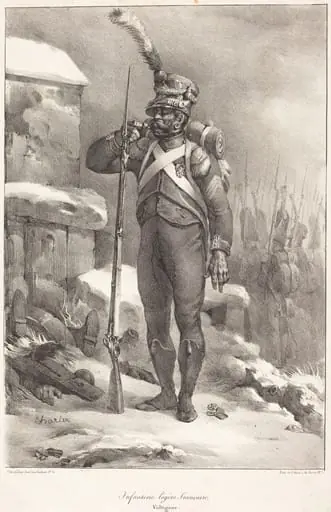
Infanterie legère française, Carabinier
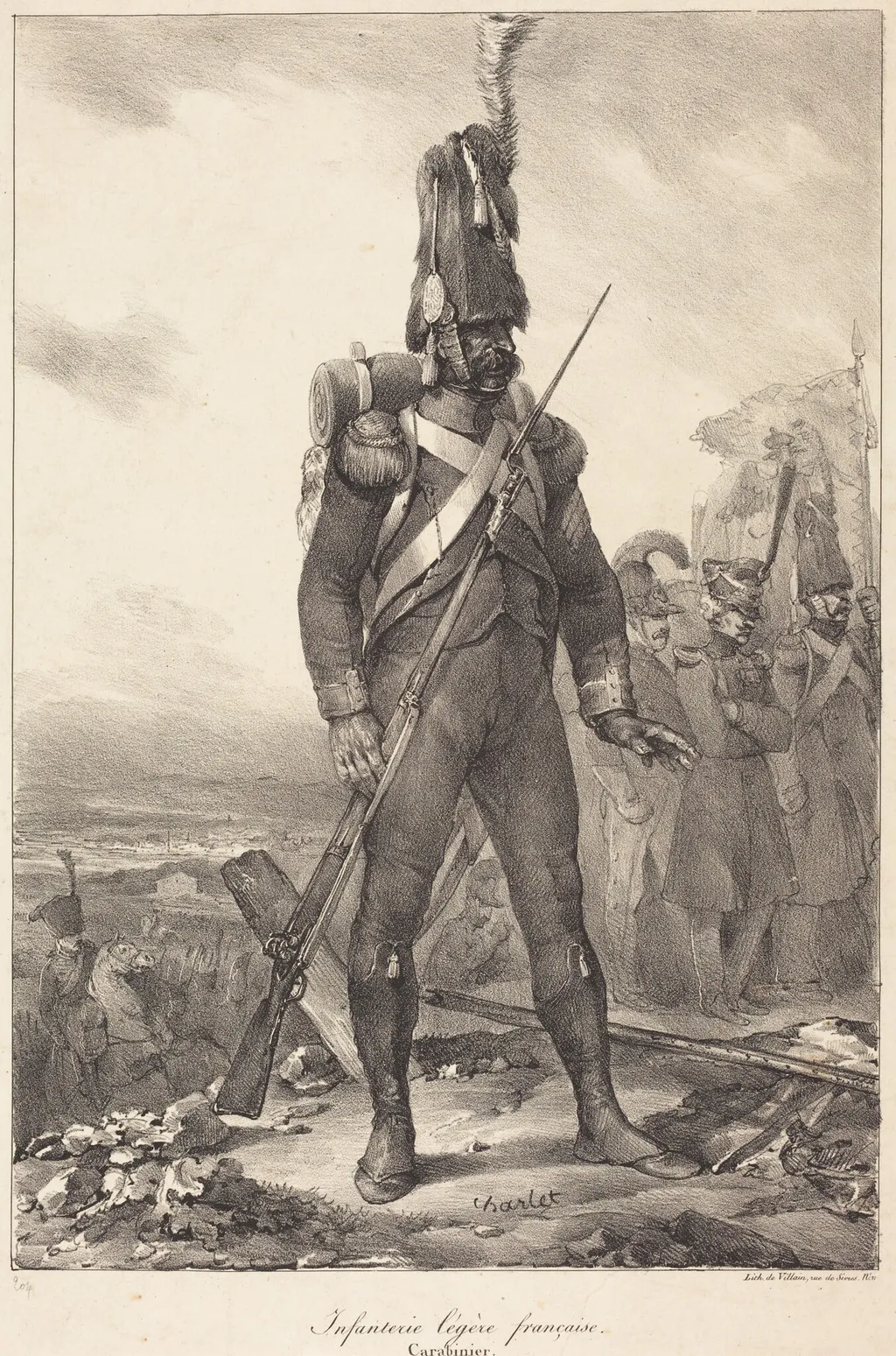
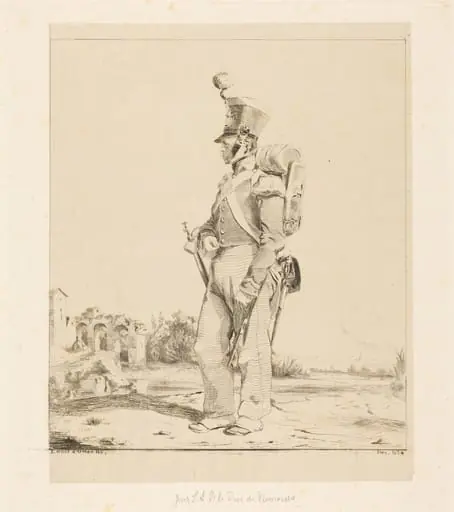
Infanterie legère française, Carabinier is an ink print by the Romanticist artist Nicolas Toussaint Charlet. It dates from 1822 and is held in the collection of the National Gallery of Art.
About this work
Overview
Created in 1822, this lithographic print depicts a French light infantryman, known as a Carabinier, poised on a craggy rise with a rifle in hand. The solitary figure dominates the composition, while faint silhouettes of comrades suggest a broader battlefield scene beyond the immediate foreground.
Subject & Meaning
The central figure is rendered in meticulous detail, emphasizing the distinctive uniform elements of the period: a tall feathered shako, a long coat marked by a white cross on the chest, and a flared silhouette. By isolating the soldier, the image conveys both individual resolve and the collective identity of France’s post‑Napoleonic light infantry.
Technique & Style
Executed in black‑and‑white lithography, the work showcases Charlet’s skill in line work and tonal contrast. Fine hatching defines the soldier’s attire, while broader washes suggest the distant terrain. The medium allows for crisp edges on the foreground figure against a softer, atmospheric background.
History & Provenance
Nicolas‑Toussaint Charlet, a noted French painter and printmaker, produced this image during the early nineteenth century, a period when he regularly documented military subjects. The print contributes to his broader visual record of Napoleonic and post‑Napoleonic forces, reflecting contemporary interest in national military heritage.
Artist & collection

Artist
Nicolas-Toussaint Charlet was a French painter and printmaker, more especially of military subjects.

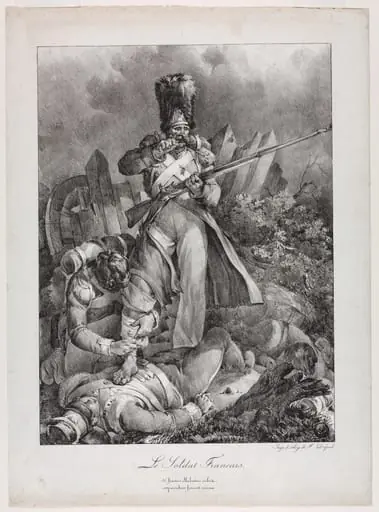 The French Soldier (Le Soldat français)
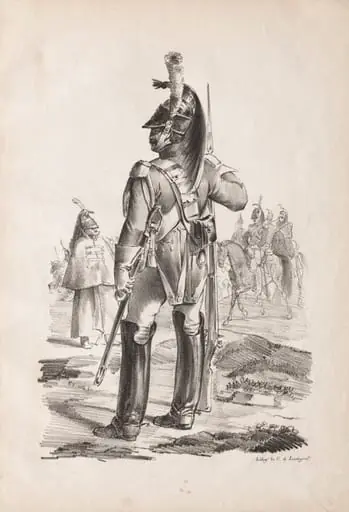 Military Costumes: Grenadier of the Royal Guard
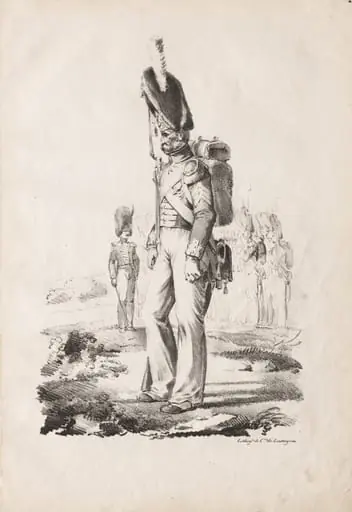 Military Costumes: Infantry Sargent
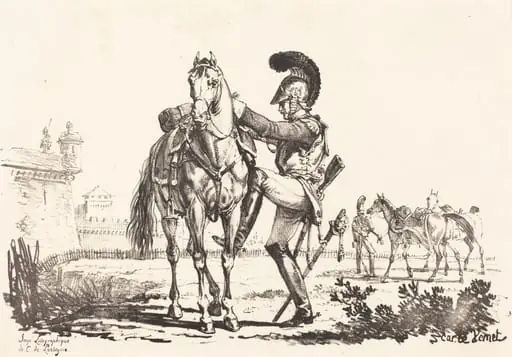 Carabinier Mounting a Horse
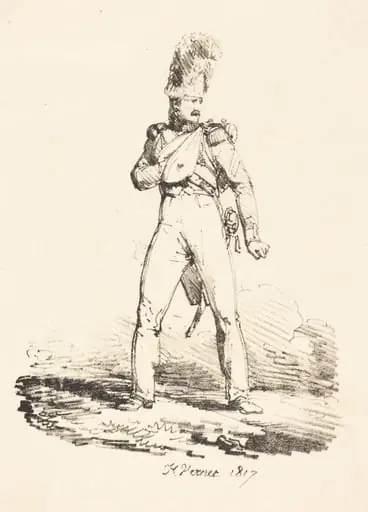 Grenadier
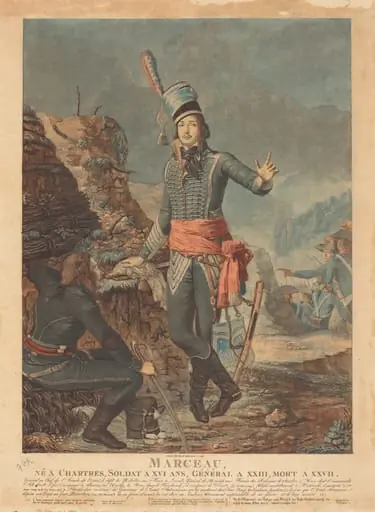 François Séverin Marceau-Desgraviers
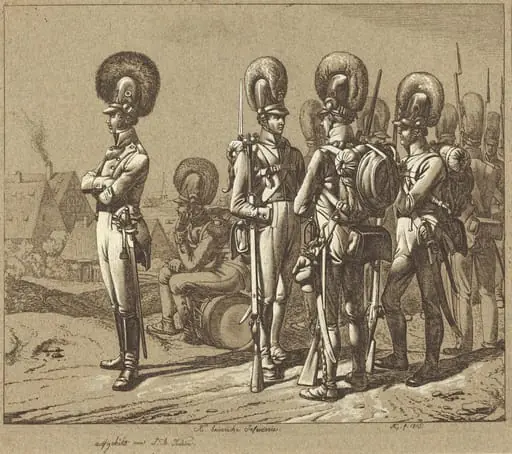 K. baierische Infanterie (Bavarian Infantrymen)
 Infantryman
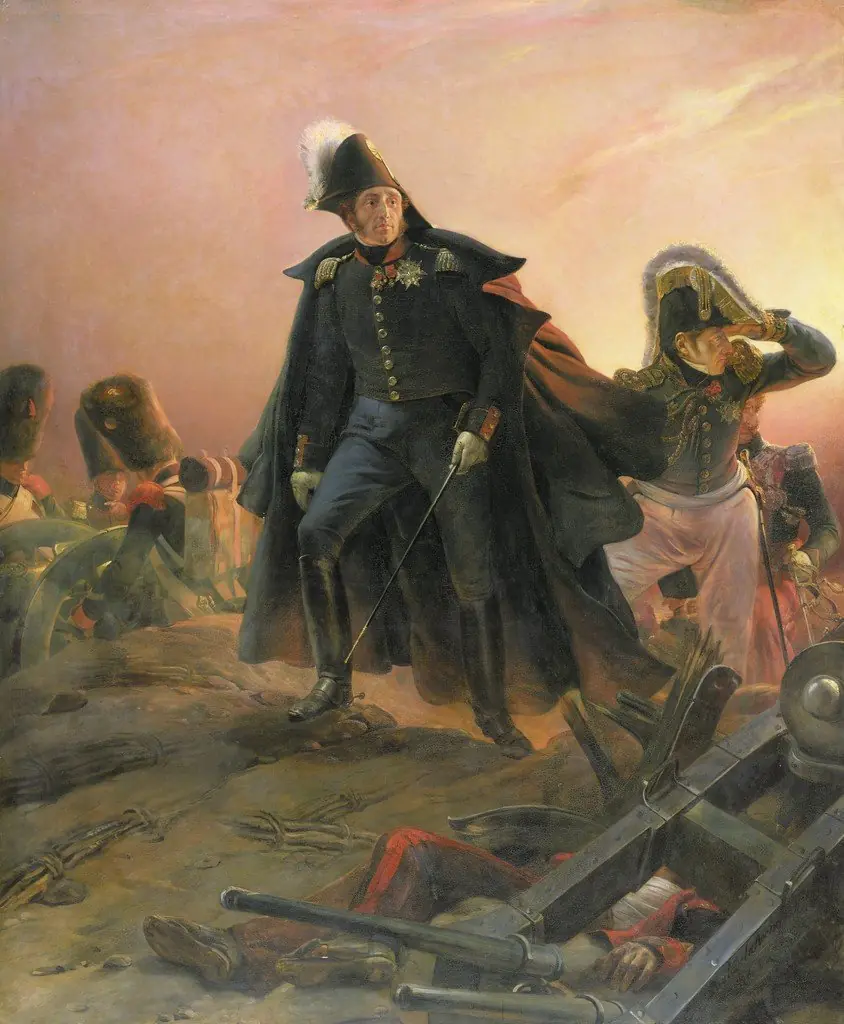 The Duke of Angoulême in the Battle of Trocadero
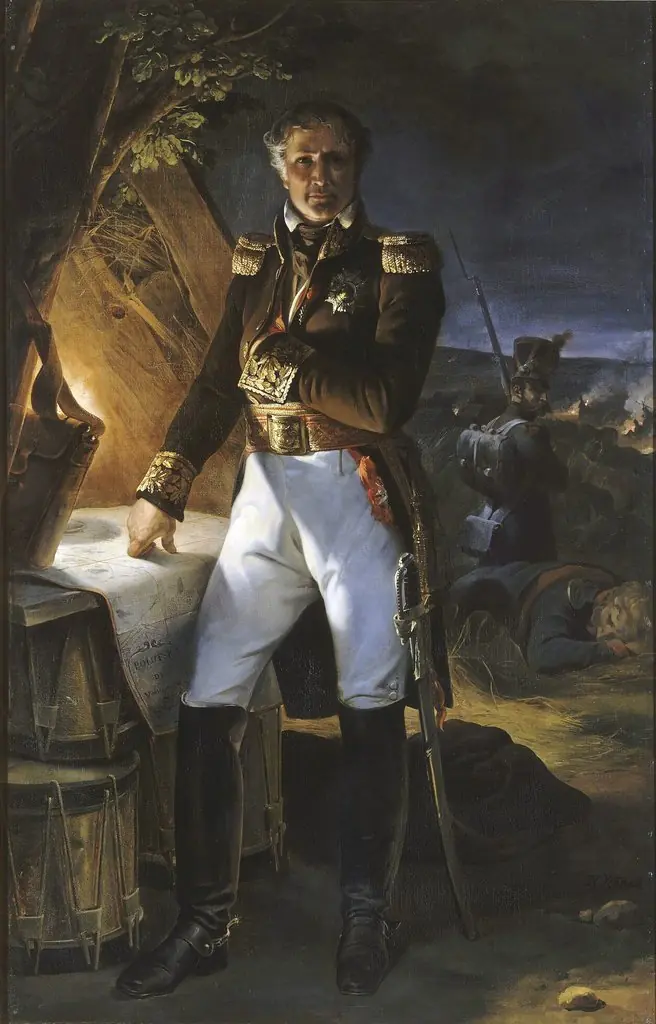 Laurent, Marquis of Gouvion Saint-Cyr