Artwork
Wherwell
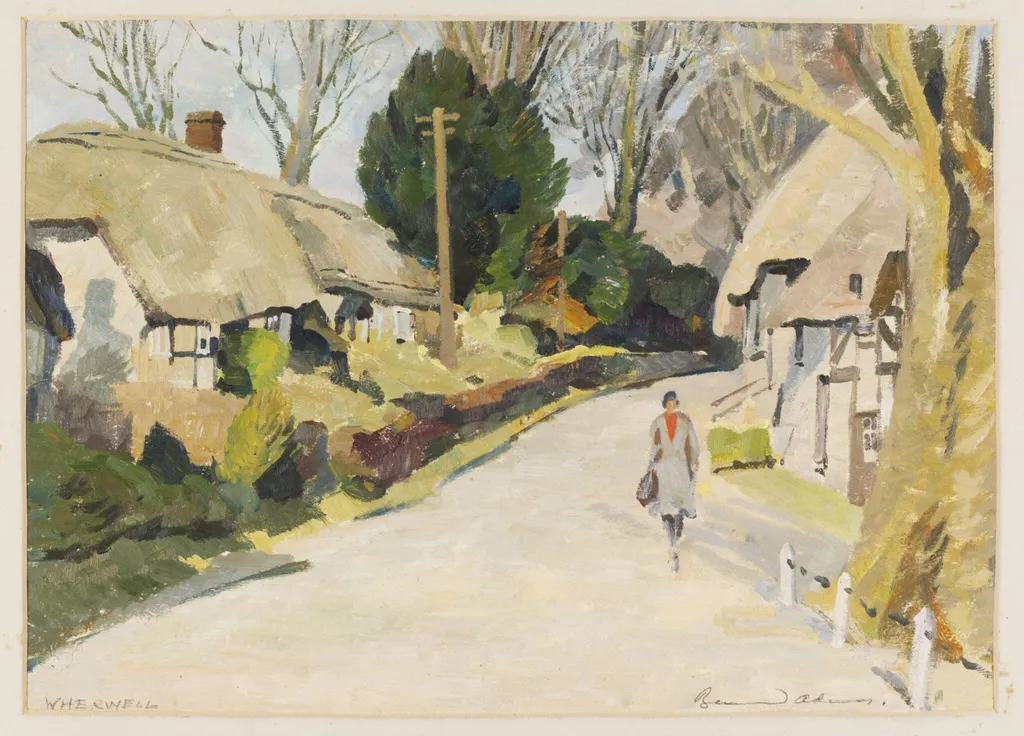
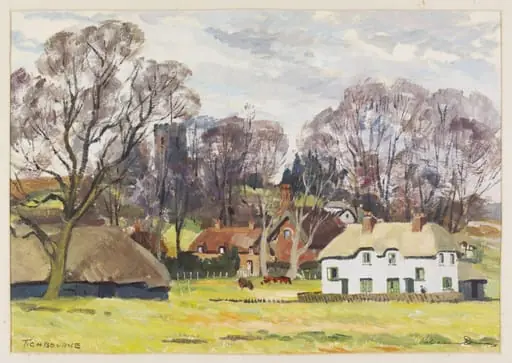
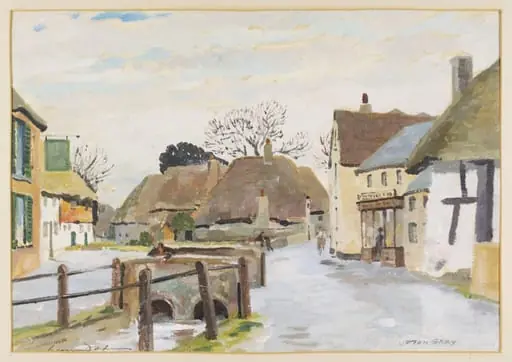
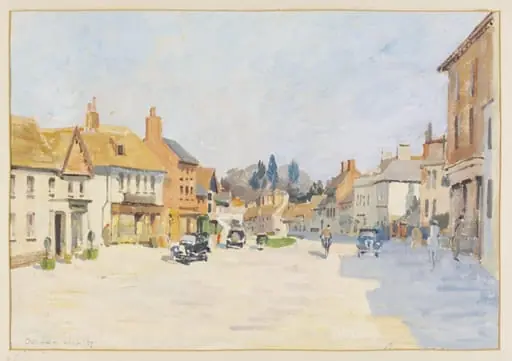
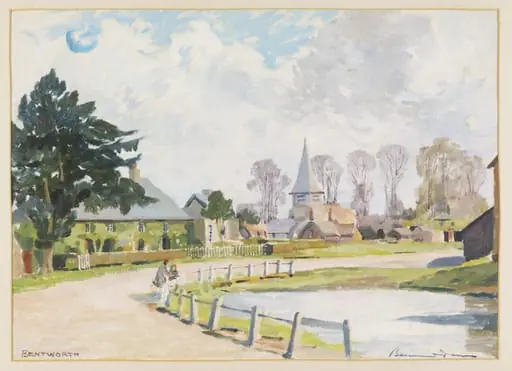
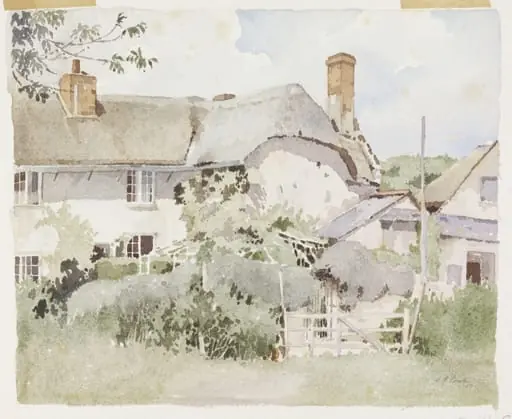
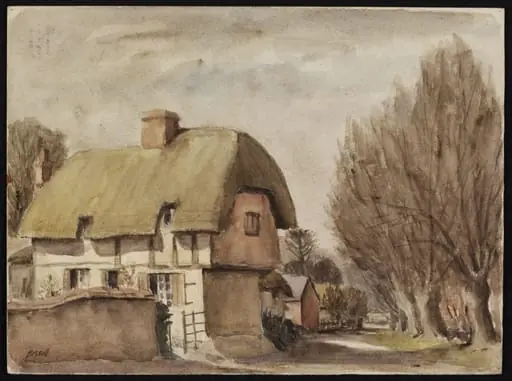
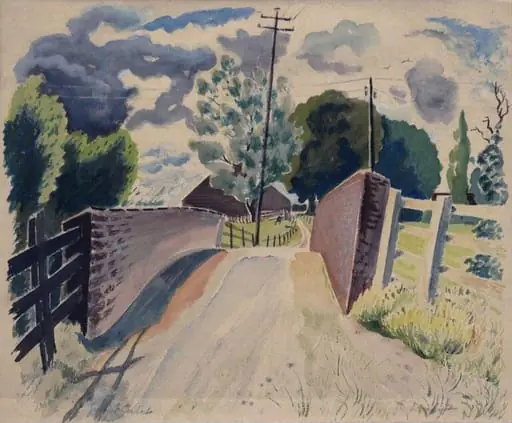
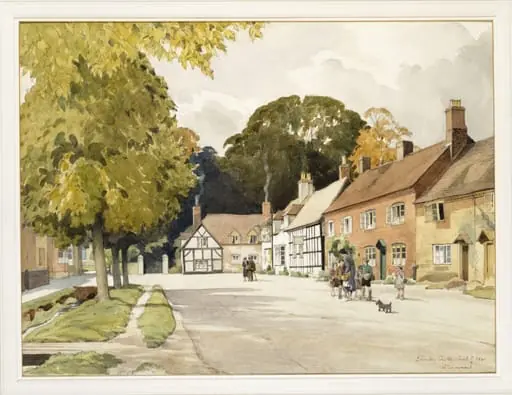
Wherwell is a paint painting by Adams. It dates from 1940 and is held in the collection of the Victoria and Albert Museum.
About this work
Overview
Its modest scale and intimate subject reflect the project’s focus on everyday vernacular scenes rather than grand monuments.
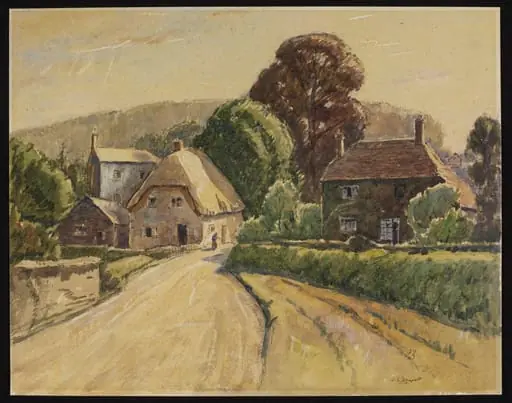
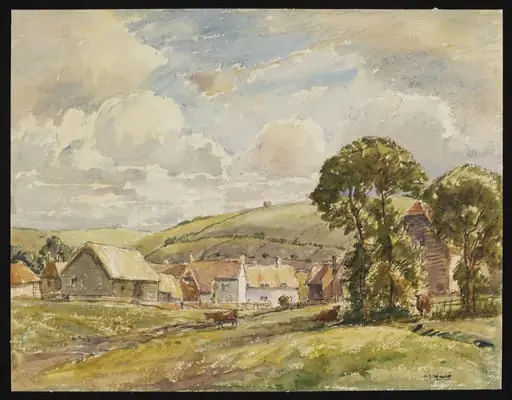
Edward Adams created this watercolour in 1940 as part of the Recording Britain initiative, a wartime effort to preserve visual records of rural landscapes deemed culturally significant. The painting captures a narrow lane in the Hampshire village of Wherwell, rendered with loose brushwork and a textured surface that emphasizes immediacy over precision. Its modest scale and intimate subject reflect the project’s focus on everyday vernacular scenes rather than grand monuments.
Subject & Meaning
The scene centers on a solitary woman descending the lane, dressed in a white dress and red scarf, carrying a bundle. Her presence introduces a quiet human rhythm to the landscape, contrasting with the stillness of the cottages and grazing sheep. The composition suggests continuity in rural life amid wartime disruption, subtly reinforcing the project’s aim to affirm national identity through ordinary, enduring places.
Technique & Style
Adams employed a vigorous, tactile application of watercolour, using thick, visible strokes to build form and texture. The paint is layered in a way that allows underlying washes to show through, creating a sense of spontaneity. The rough handling of edges and the emphasis on light-dappled surfaces give the scene an energetic, almost sketch-like quality, prioritizing emotional resonance over detailed realism.
History & Provenance
Commissioned by the Recording Britain scheme, this work was produced between 1940 and 1943 under the auspices of the Pilgrim Trust. Artists were selected to document threatened or vanishing rural architecture and landscapes. Adams’s painting entered the Victoria and Albert Museum’s collection as part of this initiative, where it remains as a record of both place and purpose during a time of national uncertainty.
Context
Created during the early years of World War II, the painting reflects a broader cultural effort to safeguard Britain’s visual heritage against potential destruction. The Recording Britain project responded to fears of aerial bombardment and social change by cataloging scenes perceived as authentically English. Wherwell’s preserved vernacular architecture offered a symbolic anchor to pre-war stability.
Legacy
The work endures as part of a significant archive of wartime British art, valued for its documentary honesty and emotional tone. While not widely exhibited, it contributes to scholarly understanding of how art was mobilized for national memory during crisis. Its unpolished style and quiet subject matter continue to inform interpretations of British landscape painting in the 20th century.
Artist & collection
Artist
This bundle gathers quiet English countryside scenes from an artist whose name isn’t widely recorded.