Artwork
Brother Devil
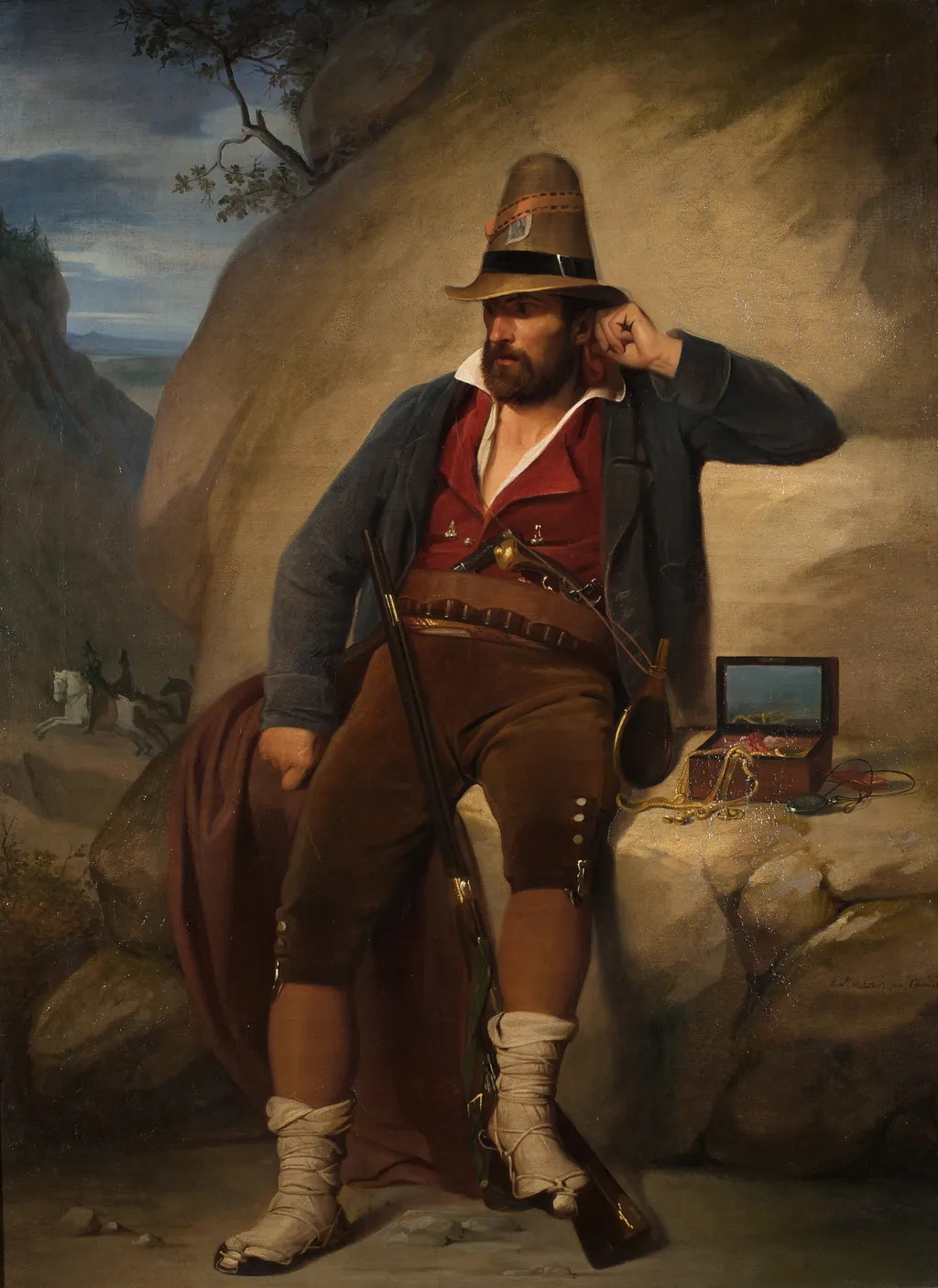
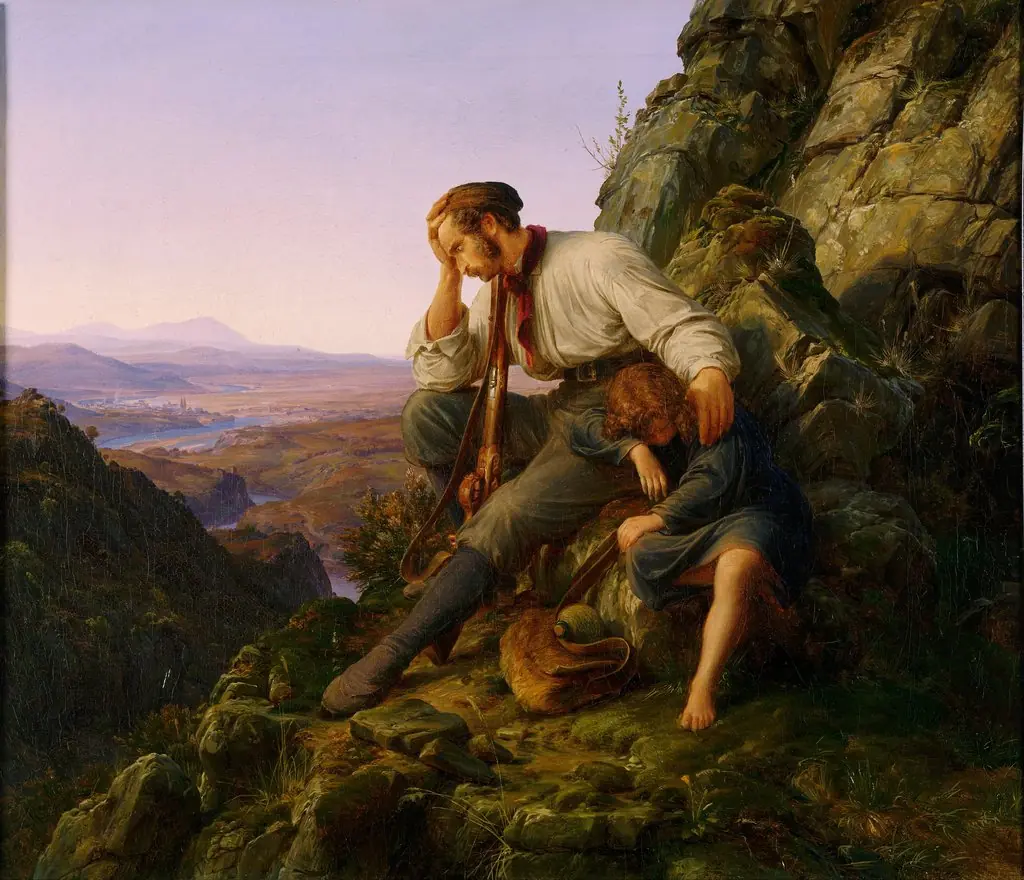
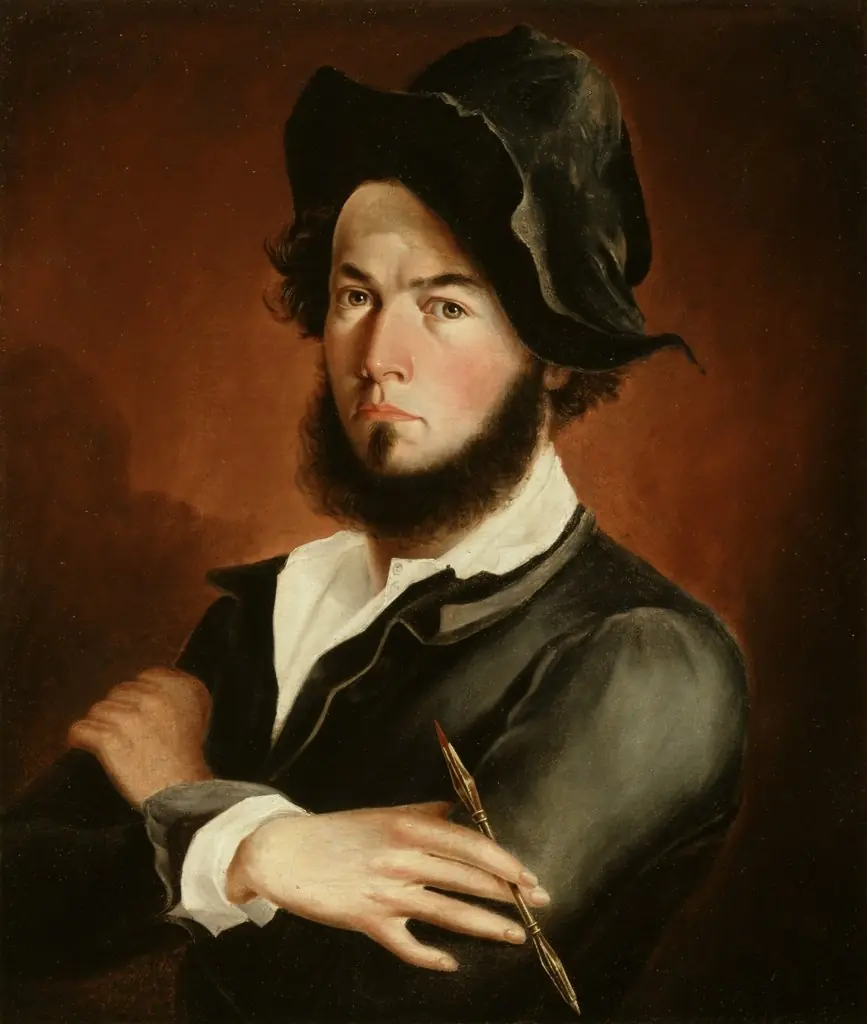
Brother Devil is an oil painting by Adeodato Malatesta. It dates from 1840 and is held in the collection of the Belvedere.
About this work
Overview
The work reflects his focus on historical and spiritual themes, though this piece diverges into a more personal, narrative scene.
Adeodato Malatesta, an Italian artist trained in the Neoclassical style, completed *Brother Devil* in 1840 using oil on canvas. The work reflects his focus on historical and spiritual themes, though this piece diverges into a more personal, narrative scene. It is part of the permanent collection at the Kunsthistorisches Museum in Vienna, where it remains as an example of mid-19th-century Italian figurative painting outside the dominant religious canon.
Subject & Meaning
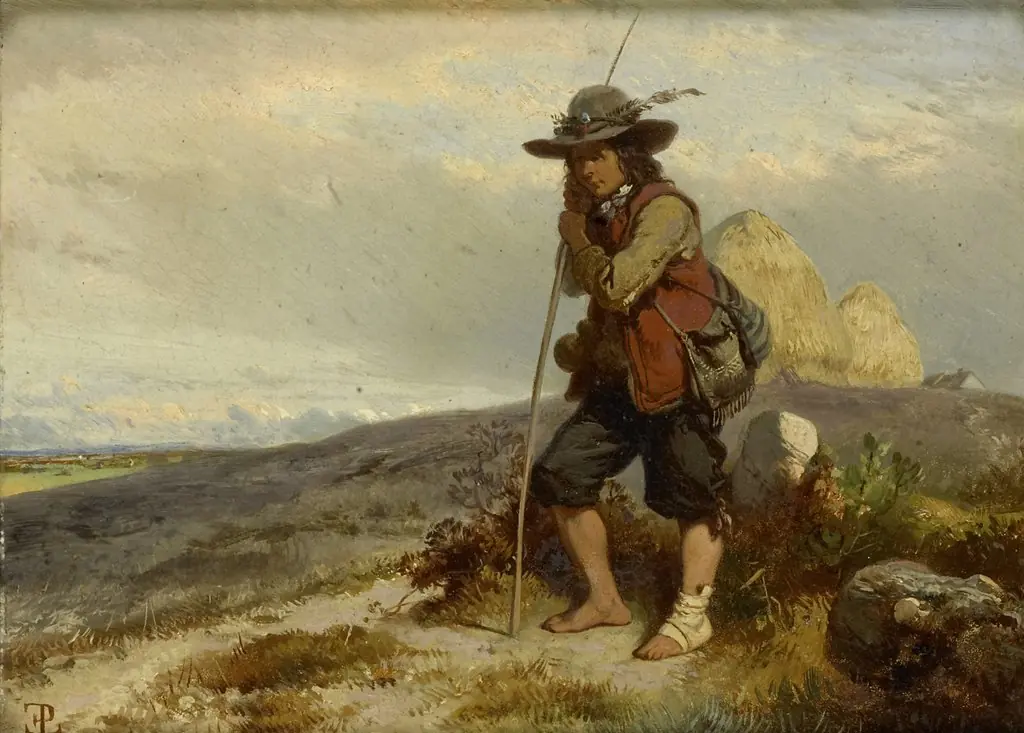
The painting depicts a solitary figure seated on a rocky outcrop, equipped with a rifle, sword, and modest belongings. His posture and gaze suggest contemplation or readiness, evoking a transient moment between journeys. The title *Brother Devil* implies a duality—perhaps a spiritual or moral conflict—but no definitive narrative is provided. The figure’s attire and gear hint at a wanderer or soldier, leaving interpretation open to the viewer’s perception of solitude and inner tension.
Technique & Style
Malatesta employs a restrained palette dominated by earth tones and muted blues, consistent with Neoclassical conventions. The figure is rendered with careful attention to anatomical structure and fabric folds, while the background remains loosely brushed, creating depth without distraction. Lighting is even and diffused, emphasizing form over drama. The composition balances the central figure with subtle elements—rope, box, distant rider—to suggest a broader world beyond the frame.
History & Provenance
Created in 1840, *Brother Devil* entered the Kunsthistorisches Museum’s collection in the 19th century, likely through acquisition or donation. Malatesta’s reputation during his lifetime was tied to religious commissions, making this secular work an unusual example of his output. Its presence in a major European museum suggests it was valued by contemporaries for its quiet intensity, though little documentation exists regarding its early ownership or exhibition history.
Context
In the 1840s, Italian art was transitioning from Neoclassical idealism toward Romanticism’s emotional intensity. Malatesta, rooted in the former, here hints at the latter through the figure’s introspective mood and rugged setting. The painting reflects broader European interests in solitary figures and nature as mirrors of the soul, even as it avoids overt sentimentality. It stands apart from his more conventional religious works, revealing a quieter, personal side of his practice.
Legacy
Though not widely exhibited or studied, *Brother Devil* endures as a quiet anomaly in Malatesta’s oeuvre. It offers insight into an artist navigating the boundaries between tradition and individual expression. Its preservation in a major institution ensures continued access, allowing later viewers to consider how Neoclassical training could accommodate introspective, non-religious subjects during a period of artistic change.
Own this work as a print
Artist & collection
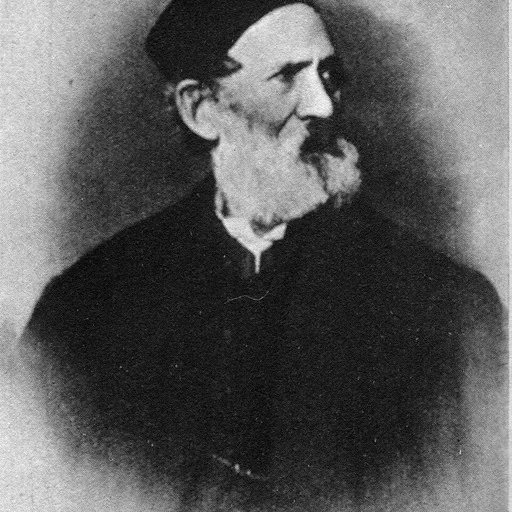
Artist
Adeodato Malatesta (May 14, 1806– December 24, 1891) was an Italian painter, trained in a grand Neoclassical style, depicting mostly of sacred and historic subjects.