Artwork
The Brierwood Pipe
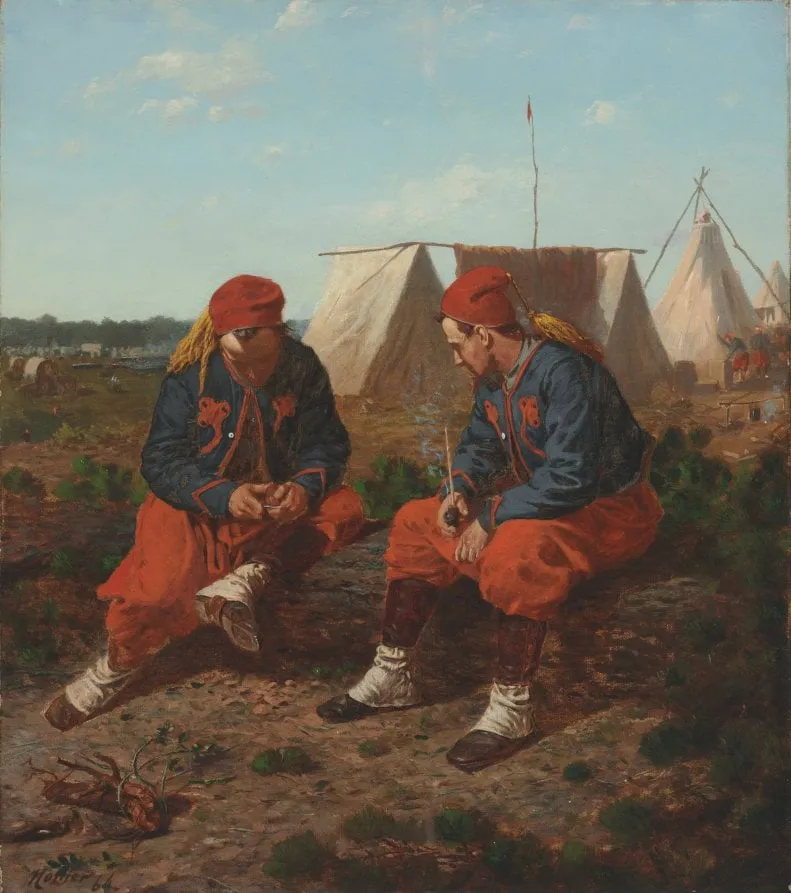
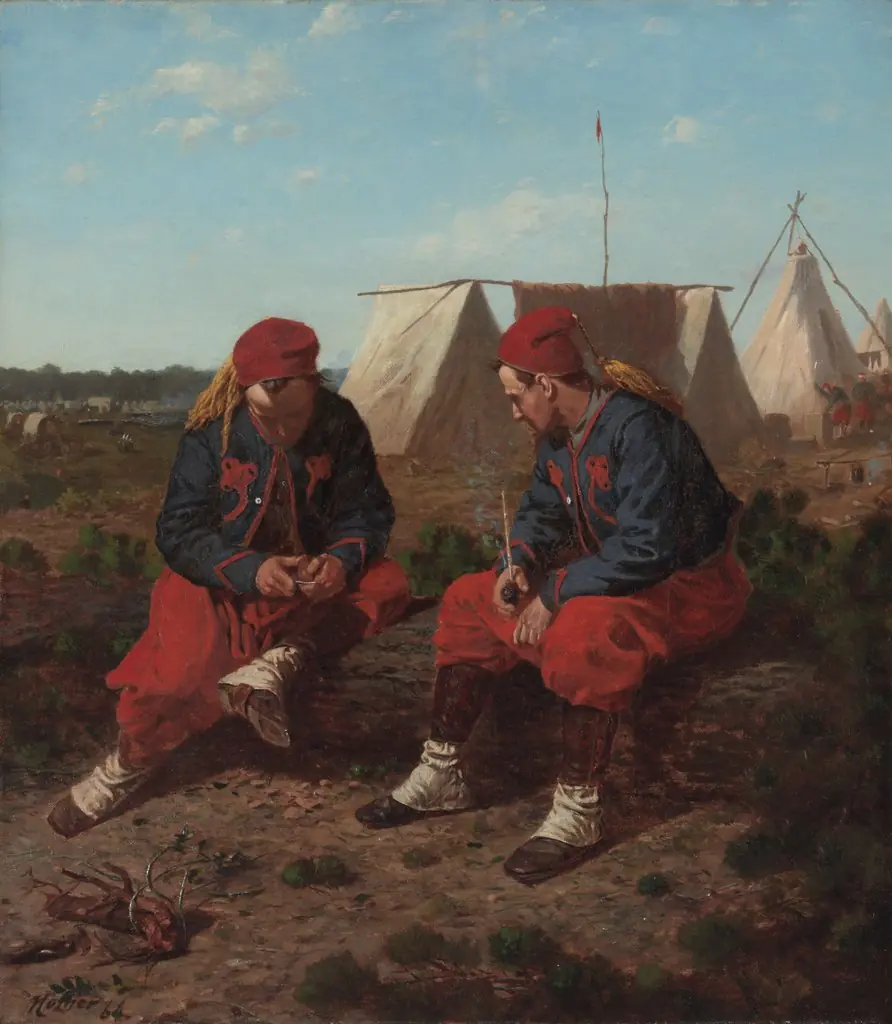
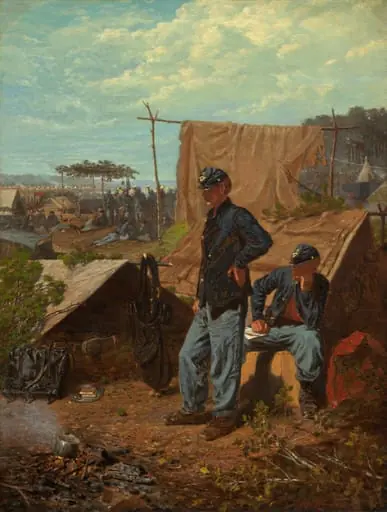
The Brierwood Pipe is an unspecified painting by the American Folk Art artist Winslow Homer. It dates from 1864 and is held in the collection of the Cleveland Museum of Art.
About this work
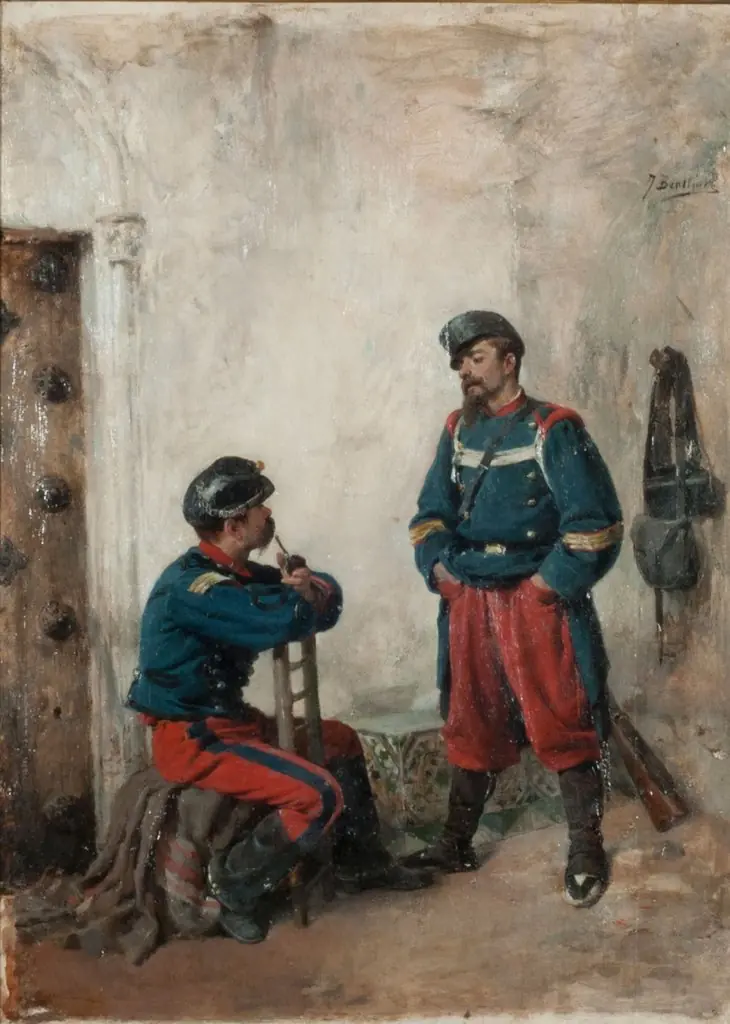
You see two Union soldiers in bright blue and red uniforms sitting in a tent. One smokes a pipe; the other carves wood.
The uniforms were real—too flashy for war. Sharpshooters could pick them off easily. Homer painted this in 1864, while the Civil War still raged. The title comes from a poem about soldiers daydreaming of home.
Look up more paintings of America, American next.
Overview
The Brierwood Pipe, a painting by Winslow Homer created in 1864, depicts two Union Army volunteers passing time in their encampment during the American Civil War.
Subject & Meaning
The scene shows one soldier smoking a pipe and the other whittling wood, evoking idle moments amidst war. The title references a contemporary poem where a soldier daydreams of returning home after the conflict, suggesting a longing for peace.
Technique & Style
While specific artistic techniques are not highlighted in the provided facts, the vivid depiction of the soldiers’ colorful uniforms showcases Homer’s attention to detail, contrasting the mundane activity with the stark reality of war.
History & Provenance
Painted in 1864, during the Civil War, the painting was acquired by the museum during World War II, likely valued for its resonant wartime themes relevant to the audience of the time.
Context
The uniforms, though colorful, were historically impractical due to their visibility to enemy sharpshooters, adding a layer of poignancy to the otherwise serene scene, highlighting the harsh realities of war.
Artist & collection
Artist
Winslow Homer (February 24, 1836 – September 29, 1910) was an American landscape painter and illustrator, best known for his marine subjects.