Artwork
Long Jakes; The Rocky Mountains Man
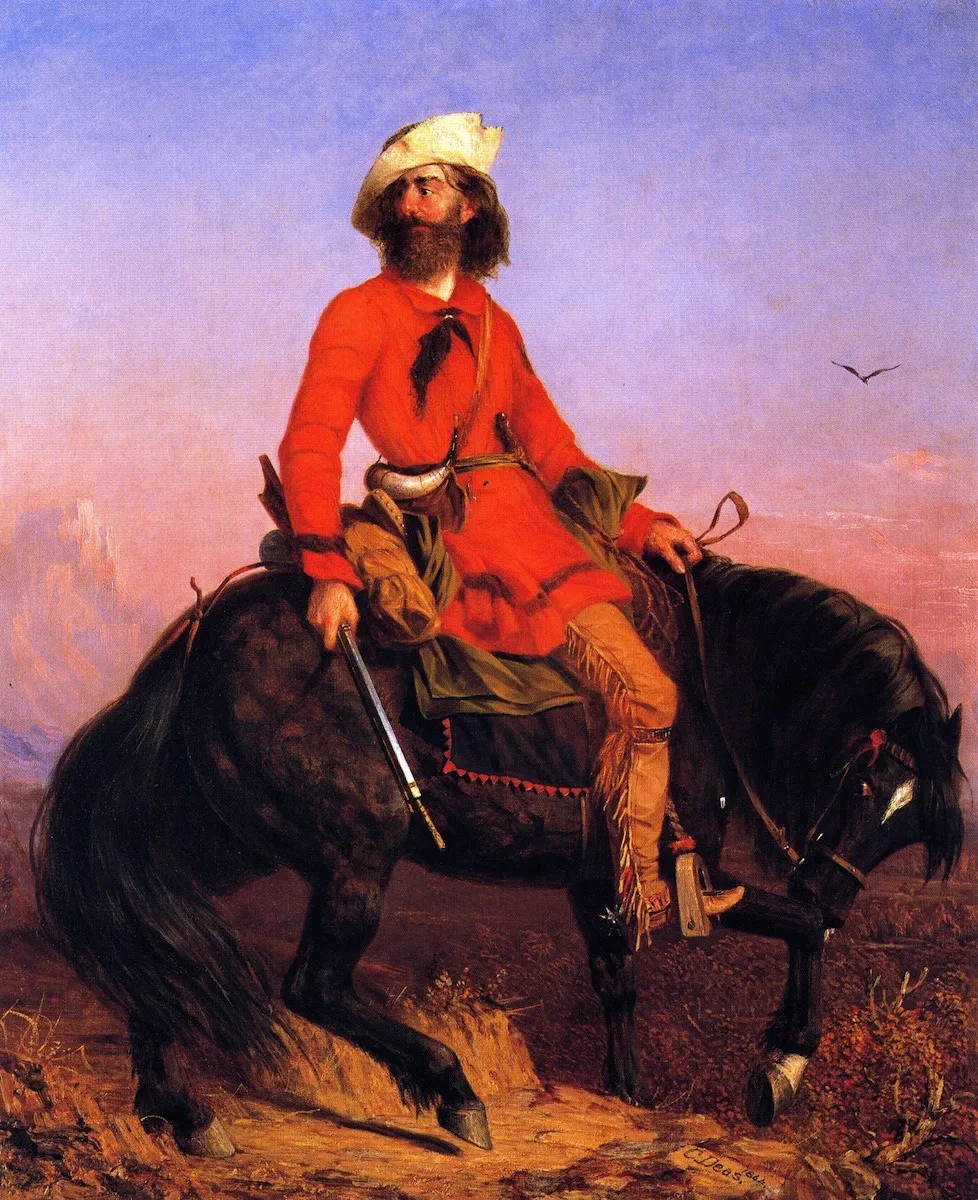
Long Jakes; The Rocky Mountains Man is an oil painting by the Hudson River School artist Charles Deas. It dates from 1844 and is held in the collection of the Denver Art Museum.
About this work
Overview
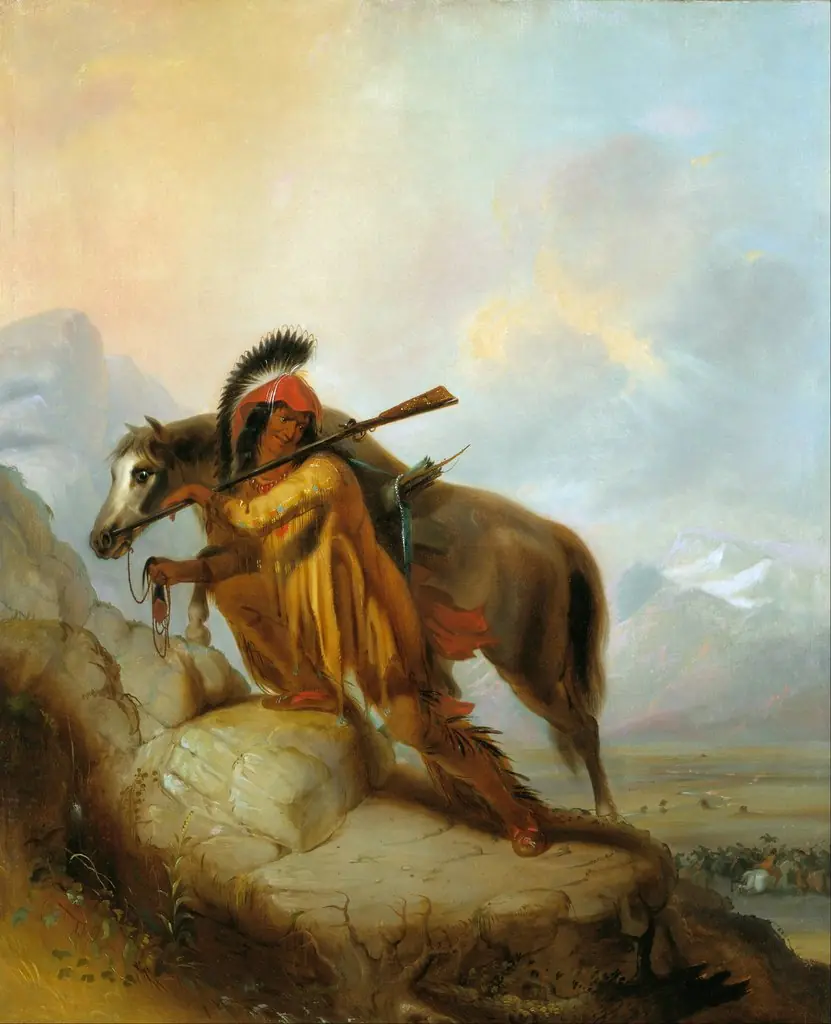
Created in 1844 by American painter Charles Deas, *Long Jakes; The Rocky Mountains Man* is an oil on canvas that belongs to the mid‑19th‑century Hudson River School tradition. The work presents a lone figure on horseback set against a distant, pink‑tinged sky and rugged mountains, embodying the period’s fascination with the untamed western frontier.
Subject & Meaning
The central figure is a rugged frontiersman, identifiable by his red shirt, green jacket, white hat and sword, astride a black horse marked with a white nose patch. His solitary presence amid the stark landscape suggests themes of individualism and the challenges of life on the American frontier, reflecting contemporary narratives about exploration and survival.
Technique & Style
Deas employs a realistic approach, rendering the textures of clothing and the horse’s musculature with careful detail. Light and shadow are modeled through chiaroscuro, giving the scene depth and a sense of atmospheric haze. The composition balances a detailed foreground with a softened, almost luminous background, characteristic of Hudson River School aesthetics.
History & Provenance
After its completion, the painting entered the American art market and eventually became part of the Denver Art Museum’s collection, where it remains on view. Its acquisition reflects the museum’s focus on works that document the cultural and geographic development of the western United States.
Artist & collection
Artist
Charles Deas (December 22, 1818 – March 23, 1867) was an American painter noted for his oil paintings of Native Americans and fur trappers of the mid-19th century.