Artwork
Trophy of the Hunt
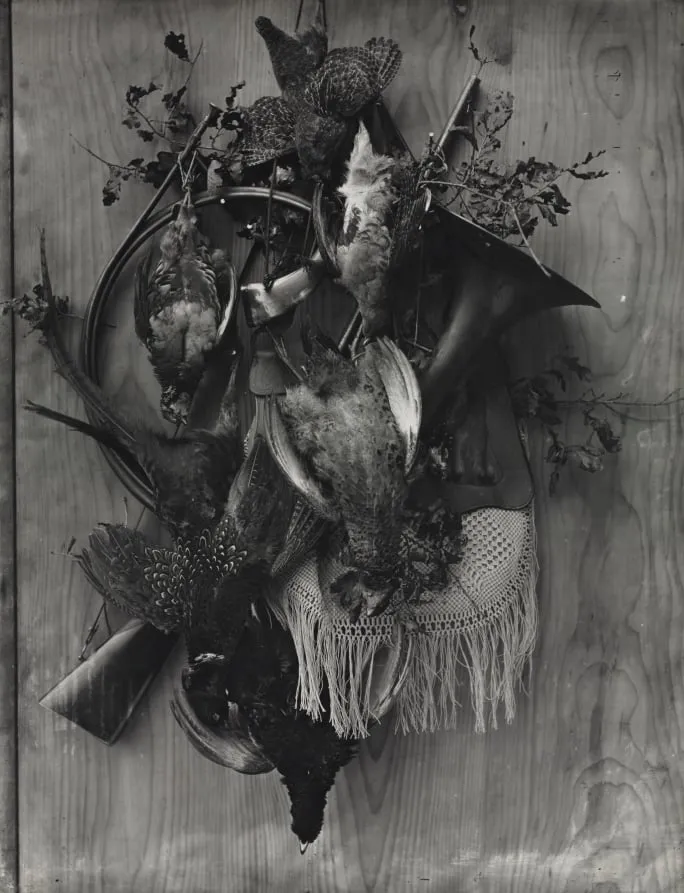
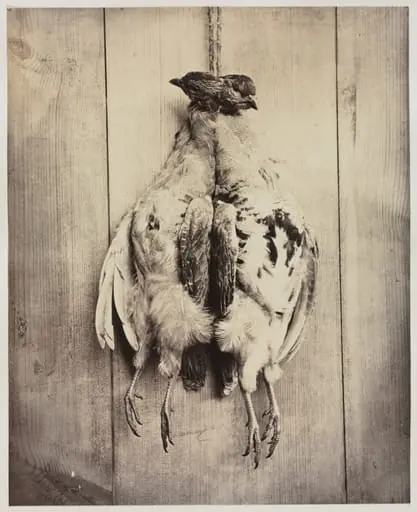
Trophy of the Hunt is a photography by the Impressionist artist Adolphe Braun. It dates from 1867 and is held in the collection of the Cleveland Museum of Art.
About this work
These prints copied the big painted scenes rich people hung in their homes.
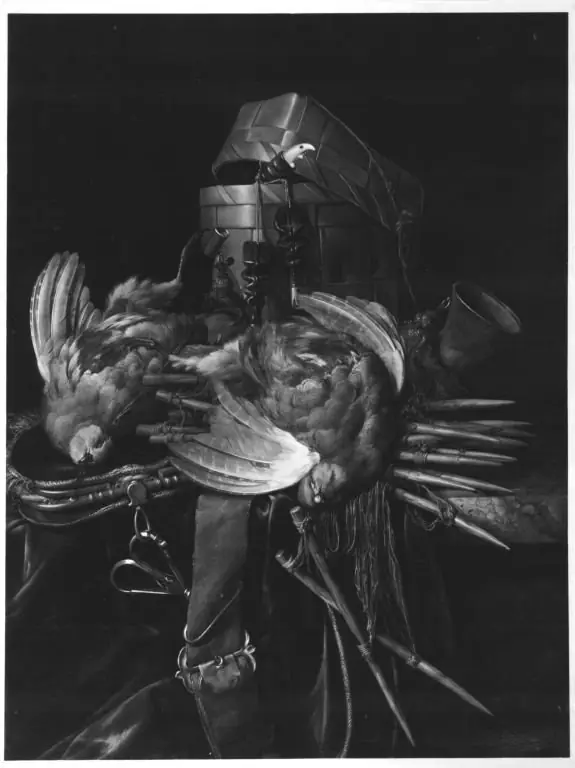
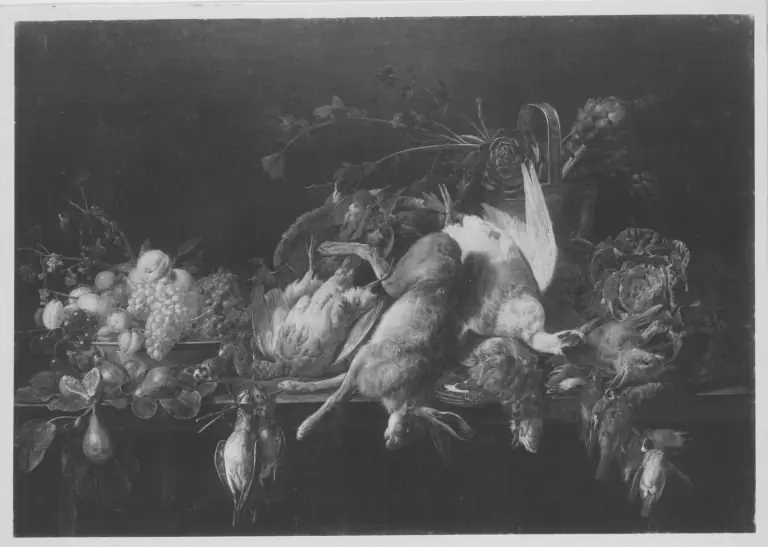
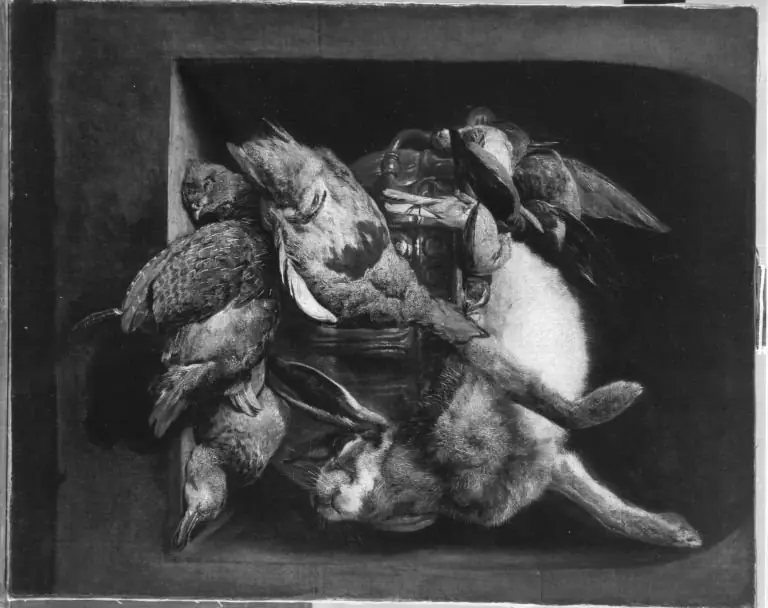
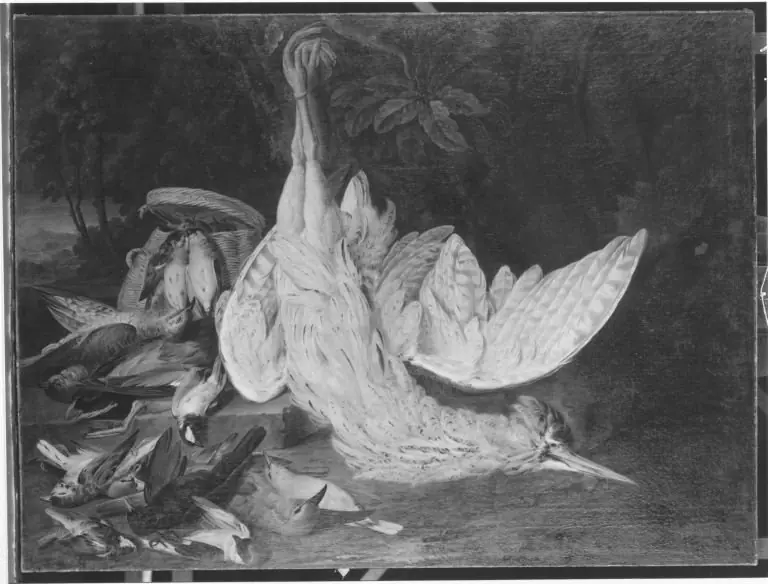
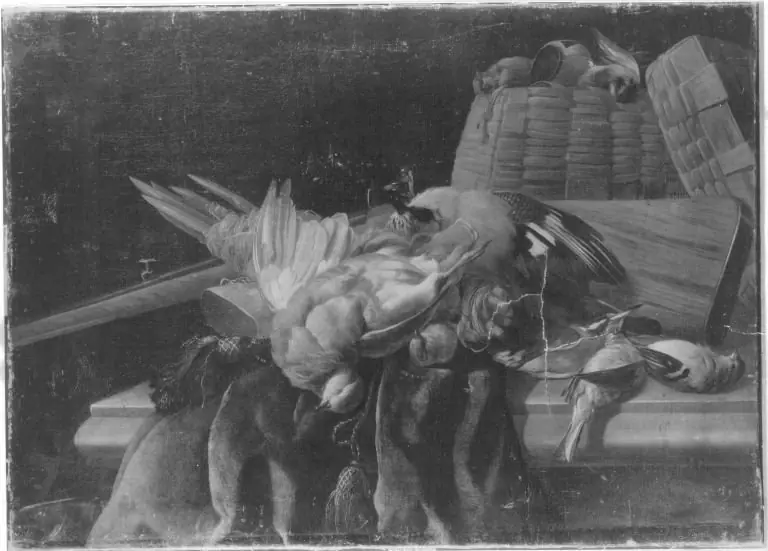
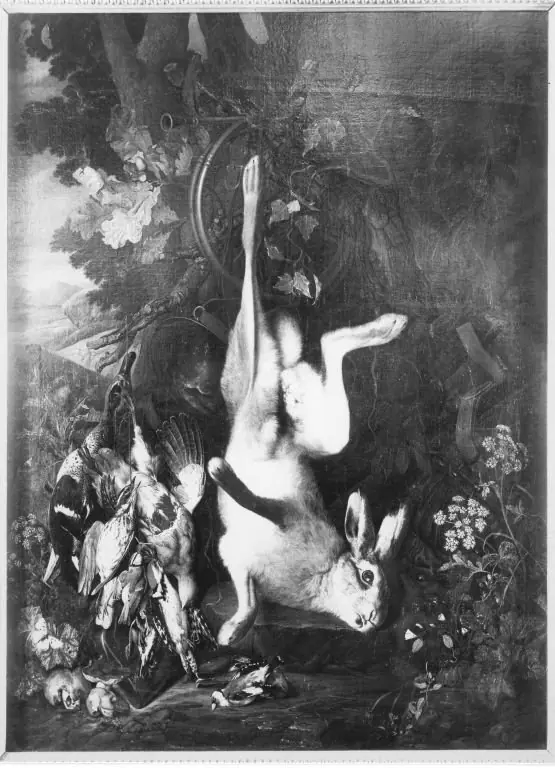
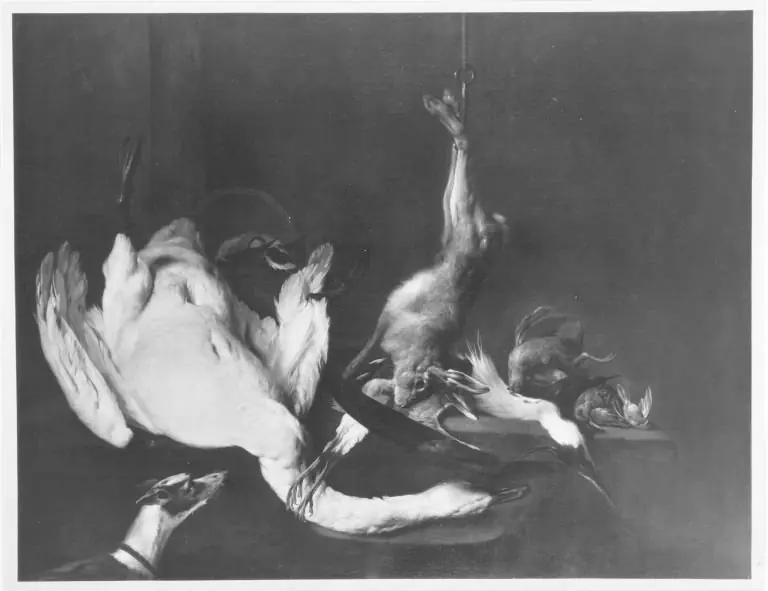
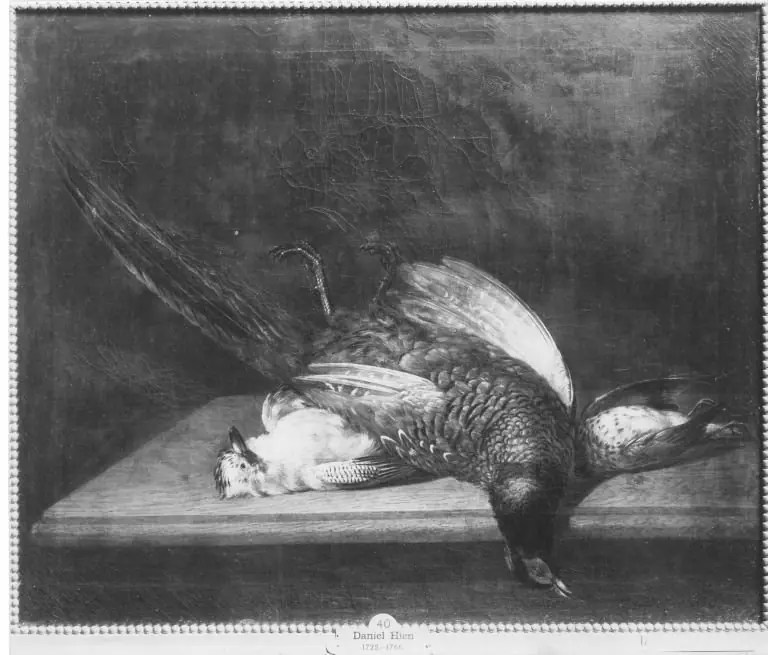
This painting shows dead game birds hanging from a wall. Pheasants, partridges, and hares hang neatly arranged. The birds look freshly caught with bright eyes and soft feathers.
Braun made huge prints so middle-class families could afford hunt scenes. These prints copied the big painted scenes rich people hung in their homes. They show a fading rural France where hunting was still a favorite pastime.
Look at how he lights the birds from the side to show every feather. It’s like a spotlight on fresh meat.
Check out Adolphe Braun (French, 1812–1877).
Overview
Adolphe Braun created large-format photographic prints in the mid-19th century to replicate the ornate hunting still lifes traditionally displayed in aristocratic homes. Aimed at the rising middle class, these images offered an accessible substitute for expensive paintings, bringing the visual language of rural sport into domestic interiors. His work capitalized on photography’s growing capacity to reproduce detail with precision, making the aesthetics of the hunt available beyond elite circles.
Subject & Meaning
The composition features a disciplined arrangement of game birds—pheasants, partridges, and hares—suspended as trophies. Their lifelike appearance, with intact feathers and expressive eyes, suggests recent capture rather than decay. These images evoke a romanticized vision of rural life, one increasingly distant as industrialization reshaped French society. The hunt, once a widespread tradition, is framed here as a nostalgic emblem of a vanishing way of life.
Technique & Style
Braun employed careful lighting to emphasize texture, casting soft side illumination that reveals the fine structure of feathers and fur. The high contrast and sharp focus reflect the technical capabilities of wet-plate photography, allowing for unprecedented clarity. His compositions mimic the formal symmetry of painted still lifes, translating painterly conventions into photographic form without overt manipulation, relying instead on precise arrangement and exposure.
History & Provenance
Produced in the 1850s–1870s, Braun’s photographic prints were distributed widely through his Strasbourg studio, which became a hub for commercial photography. These works were marketed as affordable decorative items, often sold in sets. Their popularity coincided with the expansion of the middle class and the rise of domestic ornamentation. Few original prints survive intact, but their influence is documented in contemporary catalogs and collector inventories.
Context
In mid-19th-century France, urbanization and industrial growth diminished the cultural presence of rural pursuits like hunting. Yet the imagery persisted in popular taste, idealized as a symbol of natural order and aristocratic leisure. Photographers and painters alike turned to such subjects to preserve a sense of continuity. Braun’s work reflects this cultural tension—documenting a fading practice while making it commercially viable for a new social class.
Legacy
Braun’s photographic still lifes helped establish photography as a legitimate medium for decorative art, bridging fine art and mass production. His approach influenced later still-life photographers and contributed to the acceptance of photography in domestic spaces. Though his prints are no longer common in homes, they remain important artifacts of how visual culture adapted to social change in the 19th century.
Artist & collection