Artwork
Napoleon's Bivouac on the Battlefield of Wagram
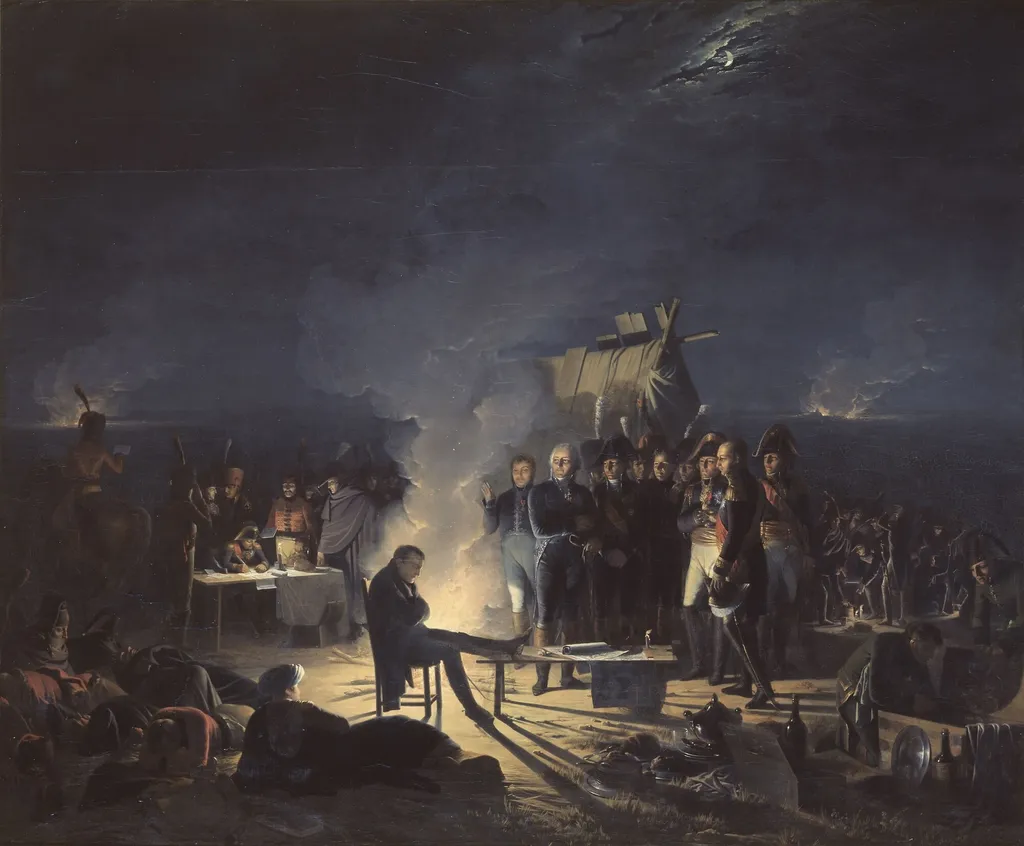
Napoleon's Bivouac on the Battlefield of Wagram is an oil painting by Adolphe Roehn. It dates from 1830 and is held in the collection of the Palace of Versailles.
About this work
Overview
Adolphe Roehn’s 1810 oil painting captures a nocturnal moment on the Wagram battlefield, where Napoleon and his senior officers gather around a modest campfire.
Adolphe Roehn’s 1810 oil painting captures a nocturnal moment on the Wagram battlefield, where Napoleon and his senior officers gather around a modest campfire. The composition centers on the emperor, portrayed in a dark coat and hat, addressing his staff amid the lingering gloom of a hard‑fought day. The work conveys the tension and contemplation that followed the intense combat of early July 1809.
Subject & Meaning
The scene illustrates the French command’s brief respite after the fierce clashes of the Battle of Wagram. Napoleon, depicted deep in thought, appears to be issuing directives or reflecting on strategy while his generals listen attentively. The intimate setting emphasizes the human dimension of leadership amid war, highlighting the contrast between the calm of the bivouac and the surrounding chaos of the battlefield.
Technique & Style
Roehn employs chiaroscuro to dramatize the night, allowing the fire’s glow to illuminate faces and uniforms against a predominately dark background. The careful rendering of light creates depth and accentuates the textures of military attire. Loose yet precise brushwork conveys the immediacy of the moment, while the restrained palette reinforces the somber atmosphere of a post‑battle encampment.
History & Provenance
Commissioned directly by Napoleon, the painting was exhibited at the 1810 Salon in the Louvre, where it was viewed by contemporary audiences. In 1835 the work entered the collection of the Musée de l’Histoire de France at the Palace of Versailles, where it remains part of the broader assemblage of artworks documenting the emperor’s campaigns.
Context
The Battle of Wagram, fought on 5–6 July 1809, marked a decisive French victory over Austria during the Fifth Coalition of the Napoleonic Wars. Roehn’s depiction captures the night of 5 July, when fighting had subsided but the outcome was still uncertain. The painting thus serves both as a historical record of the campaign’s critical juncture and as a visual testament to Napoleon’s command presence.
Own this work as a print
Artist & collection
Artist
Adolphe Roehn (March 5, 1780 – October 19, 1867) was a French painter, draughtsman, and lithographer.

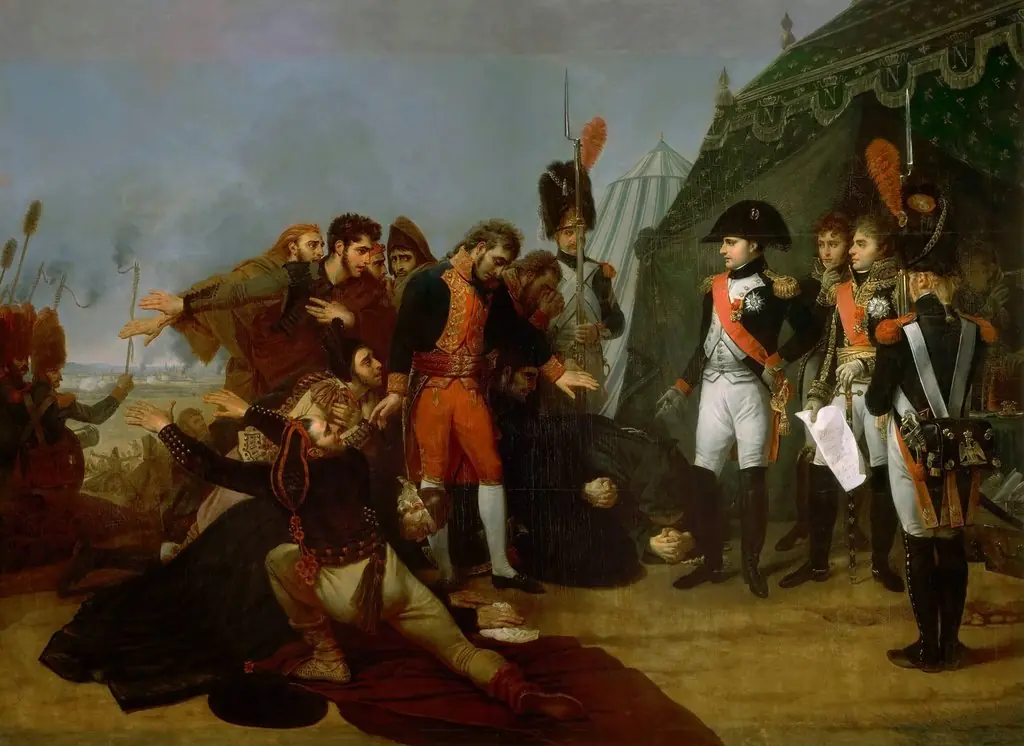 Napoleon accepts the surrender of Madrid, 4 December 1808
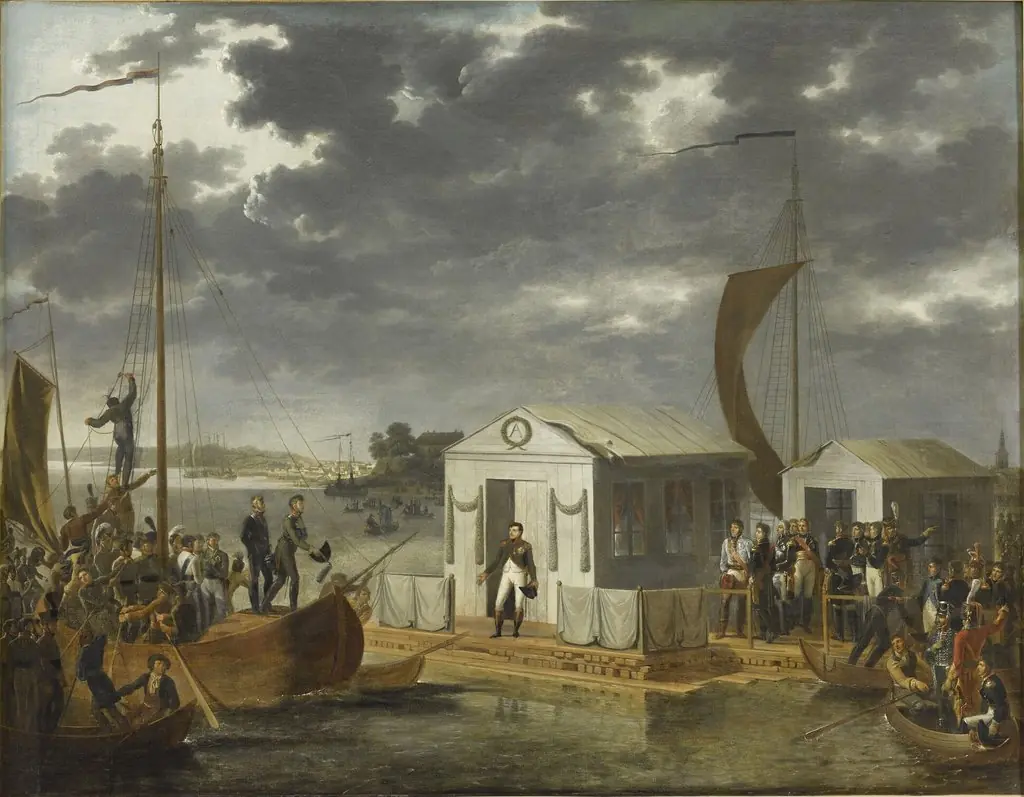
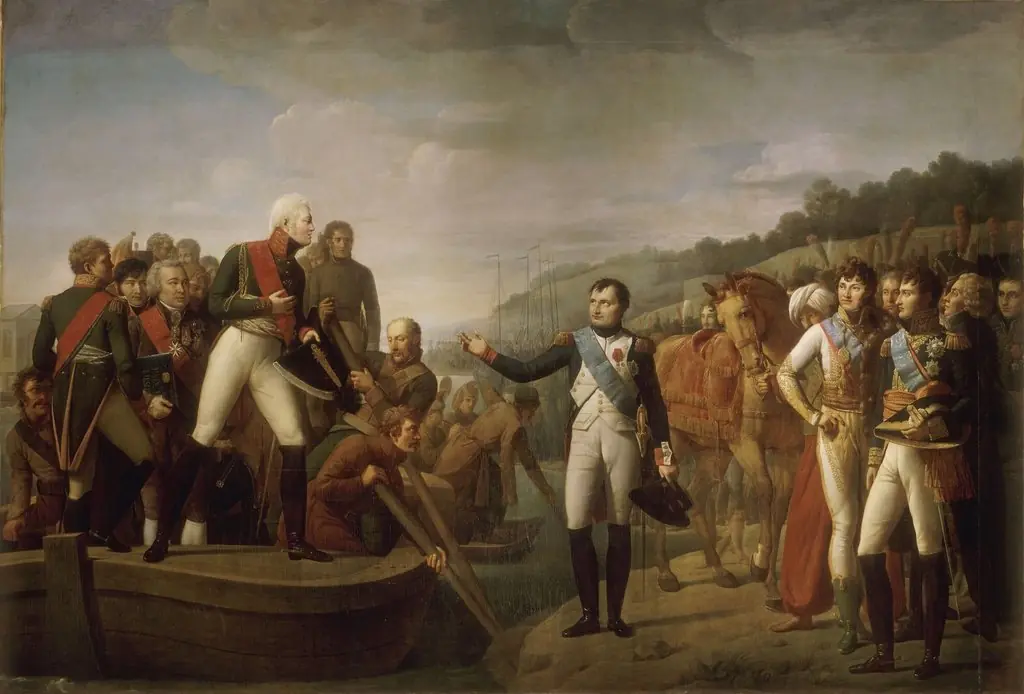 Farewell of Napoleon I and Alexander after the peace of Tilsitt, July 9, 1807
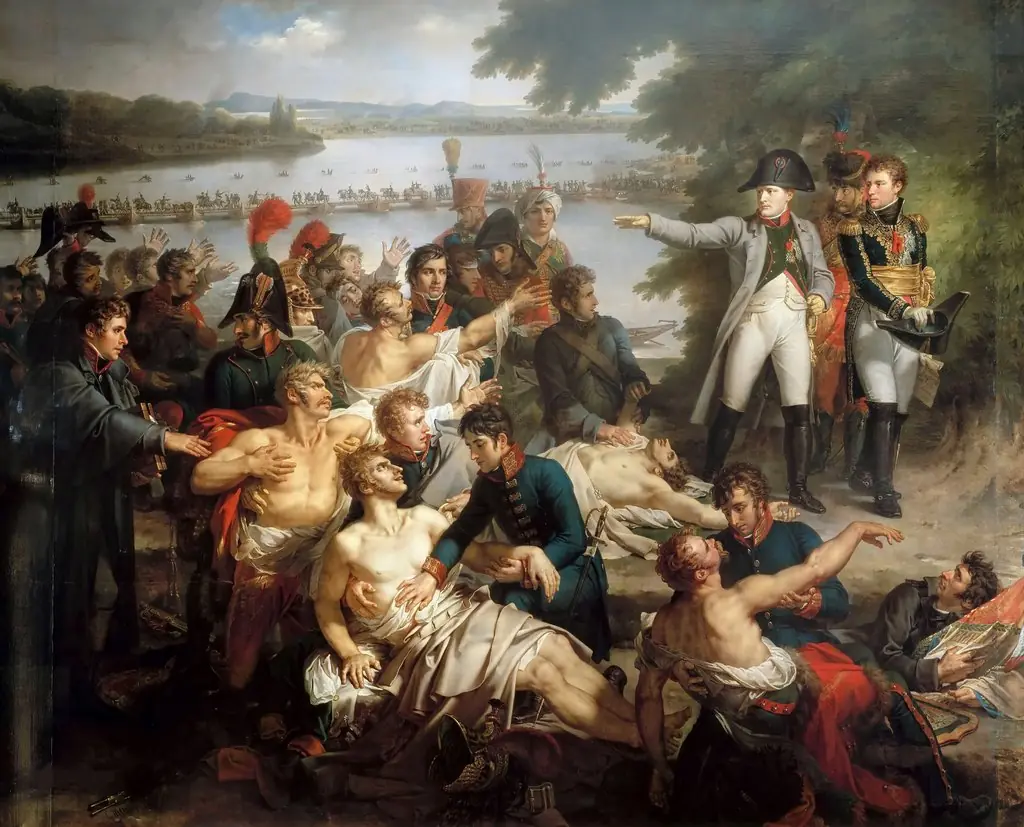 Napoleon's Return to the Island of Lobau After the Battle of Essling
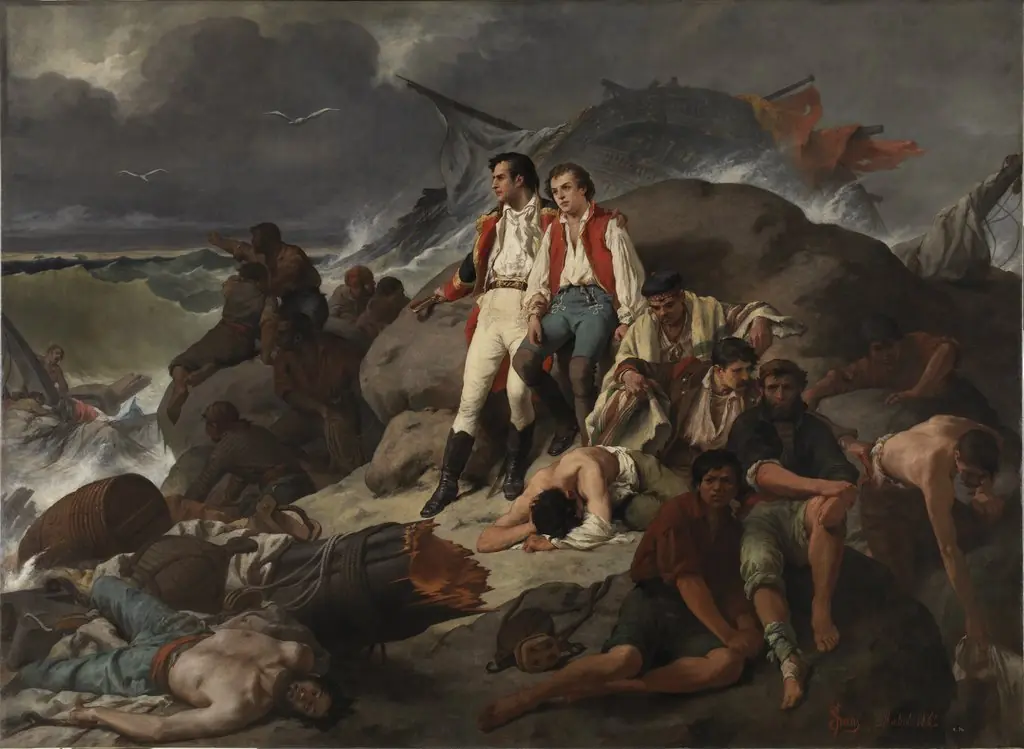 Episode after Trafalgar
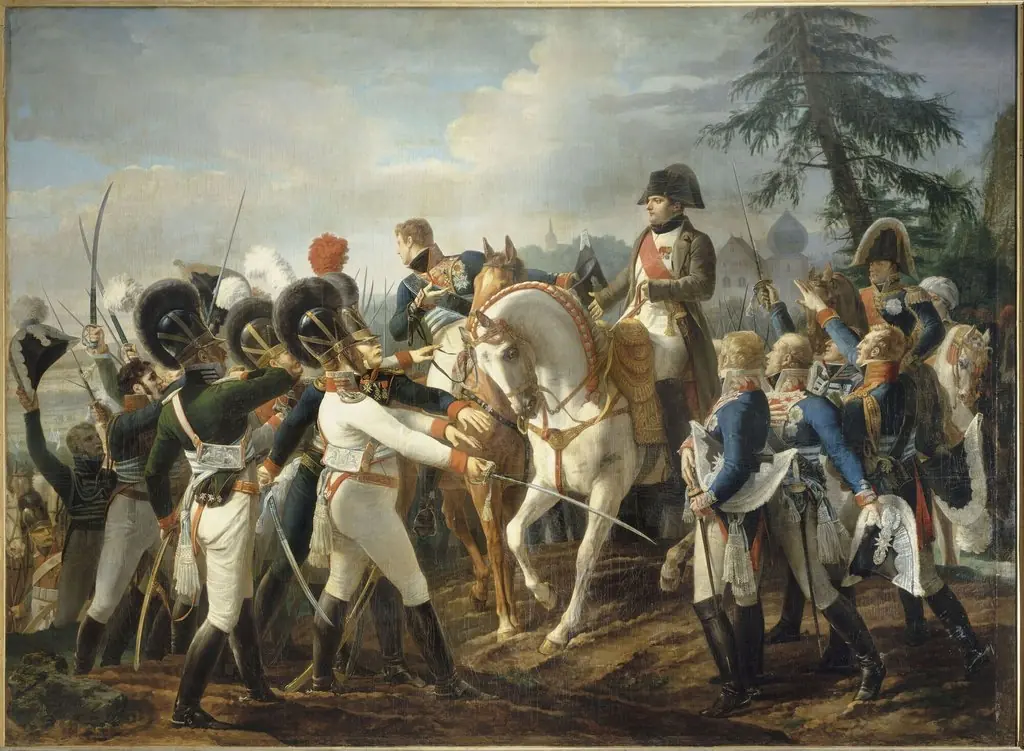 Napoléon harangue les troupes bavaroises et wurtembourgeoises à Abensberg, 20 avril 1809
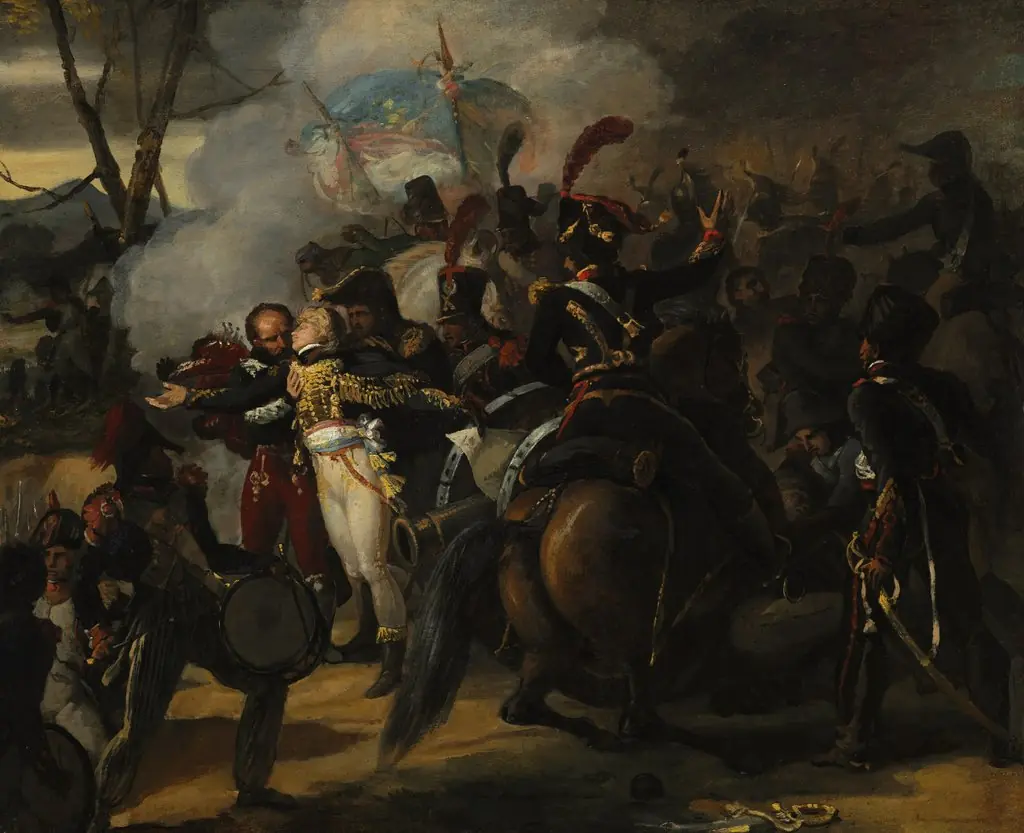 The Death of General Colbert
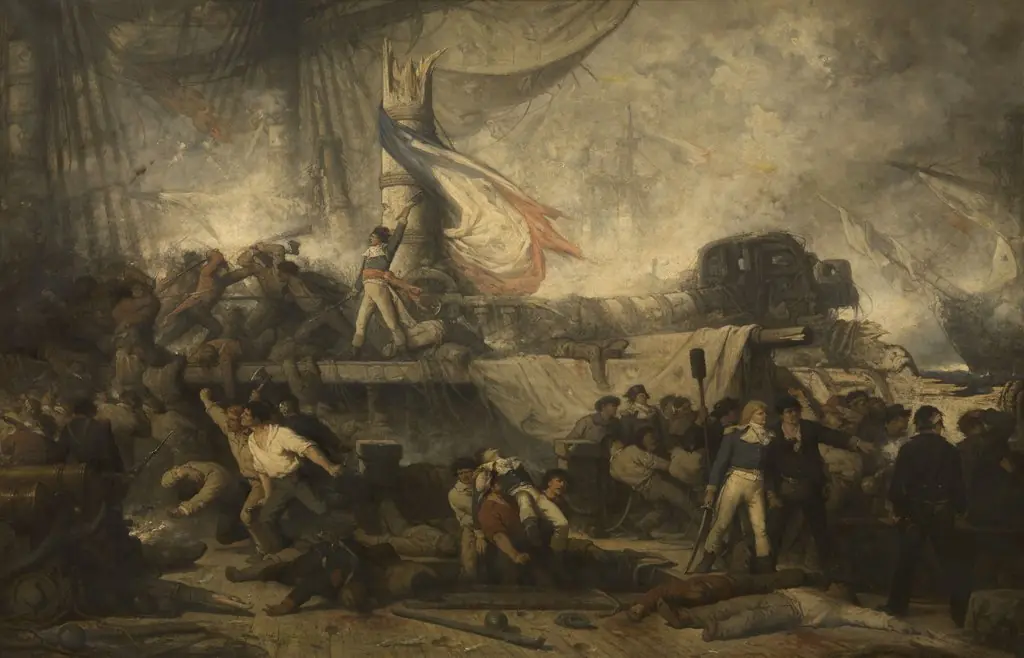 The Algeciras at the Battle of Trafalgar
 The Death of General Colbert
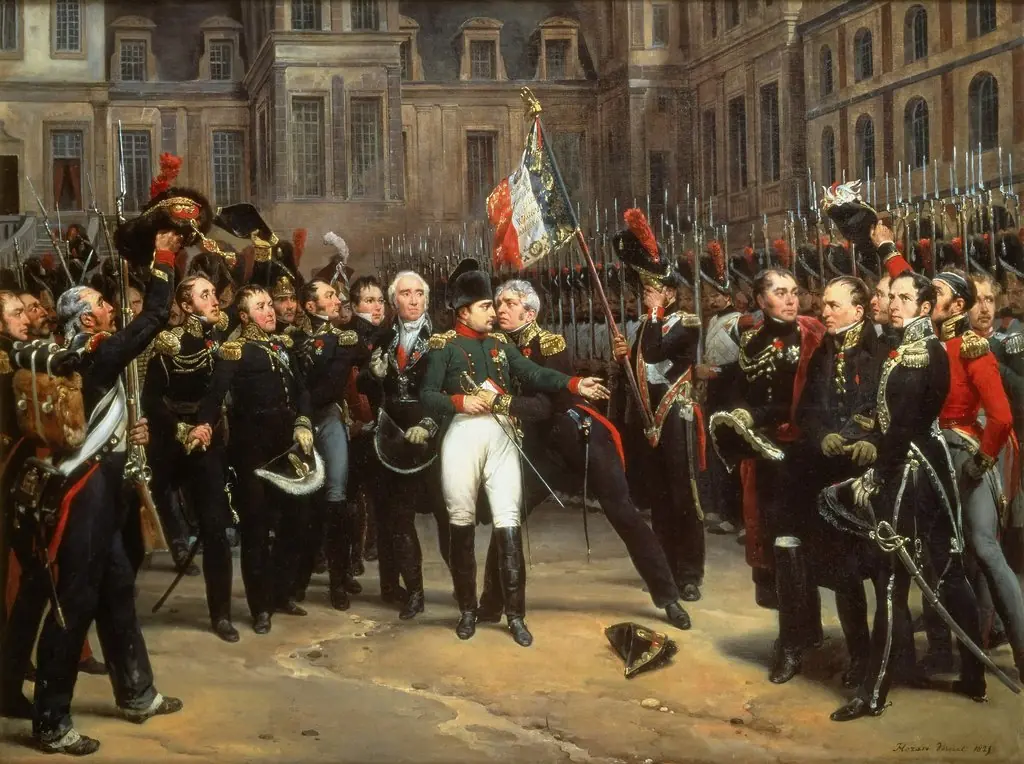 Napoleon bids farewell to his Guard at Fontainebleau on 20 April 1814
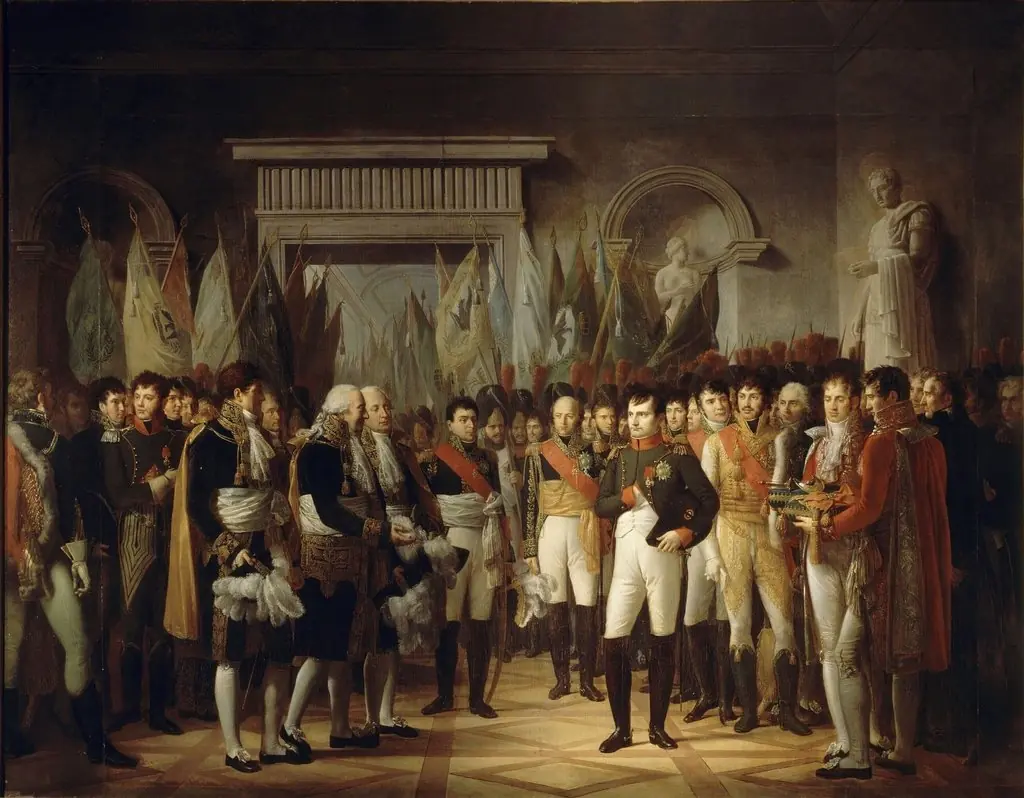 The Emperor receiving the deputies of the Conservative Senate in Berlin at the royal palace, 19 November 1806