Artwork
The Mass of Saint Gregory the Great
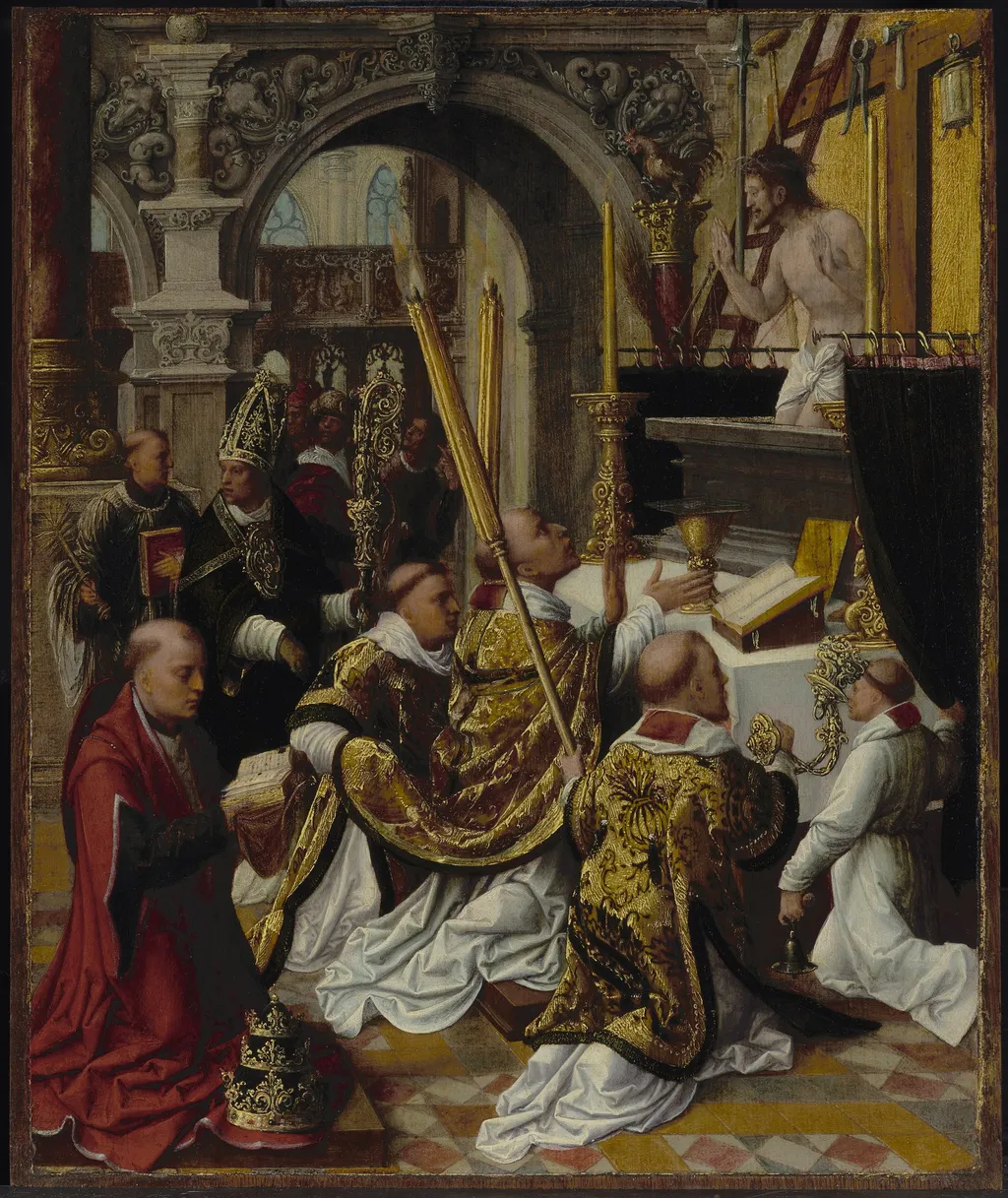
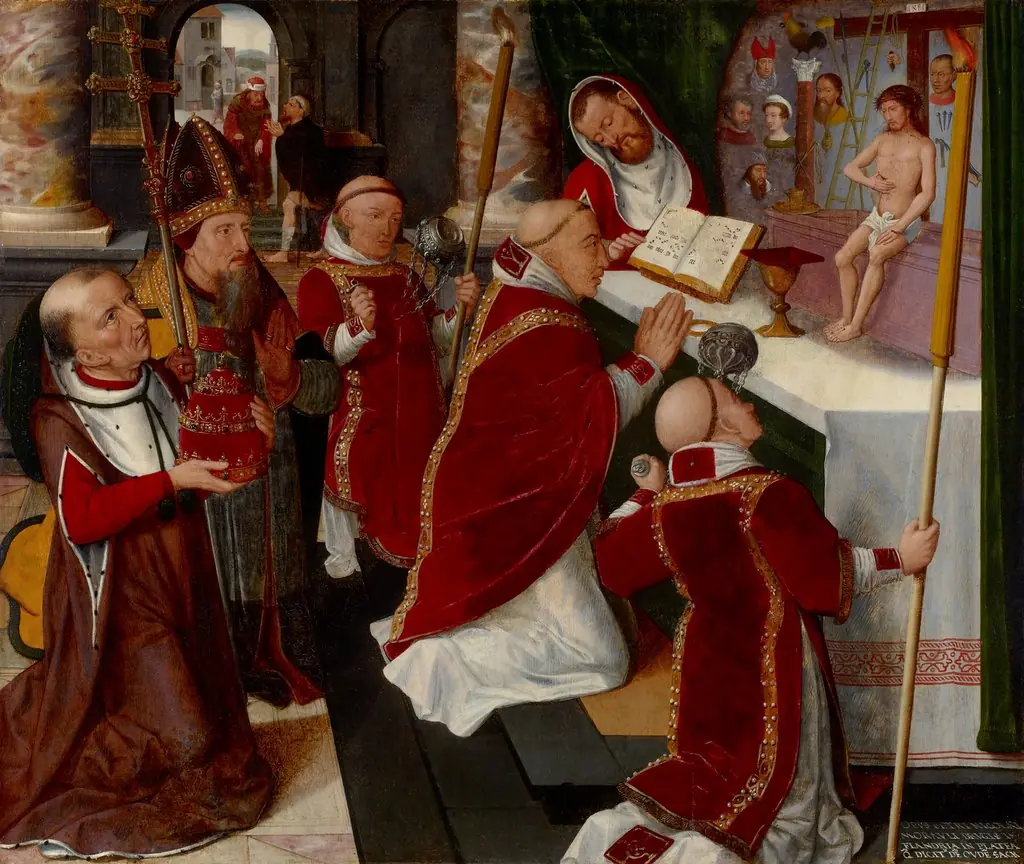
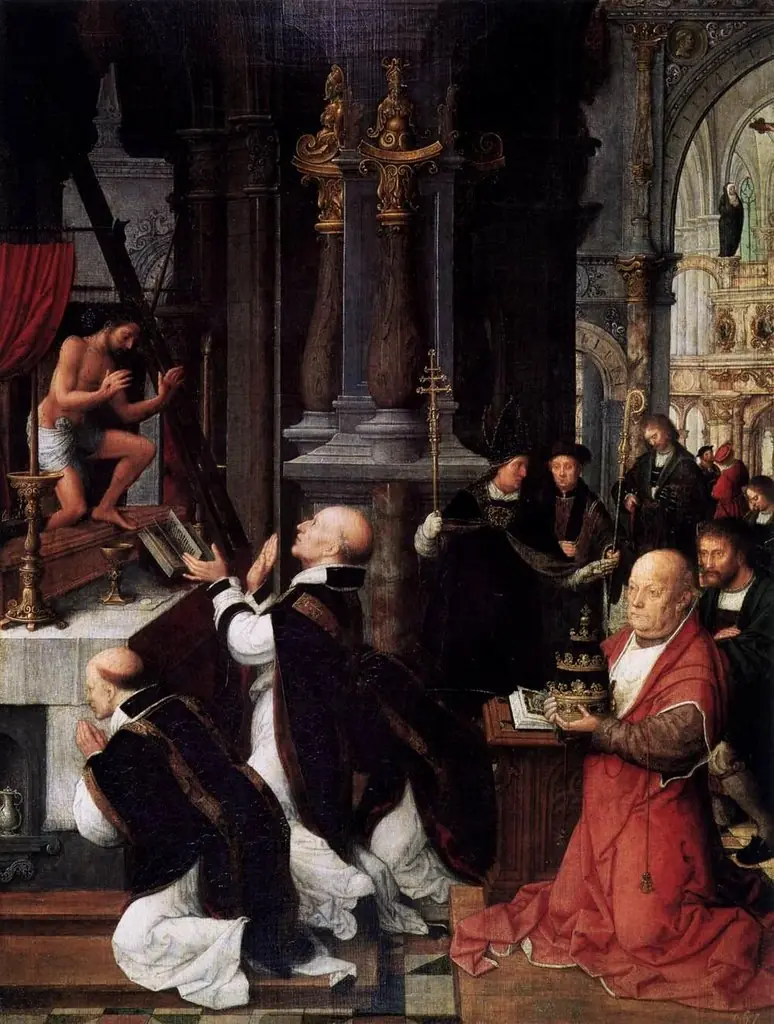
The Mass of Saint Gregory the Great is an oil painting by the Early Baroque Italian artist Adriaen Isenbrandt. It dates from 1550 and is held in the collection of the J. Paul Getty Museum.
About this work
Overview
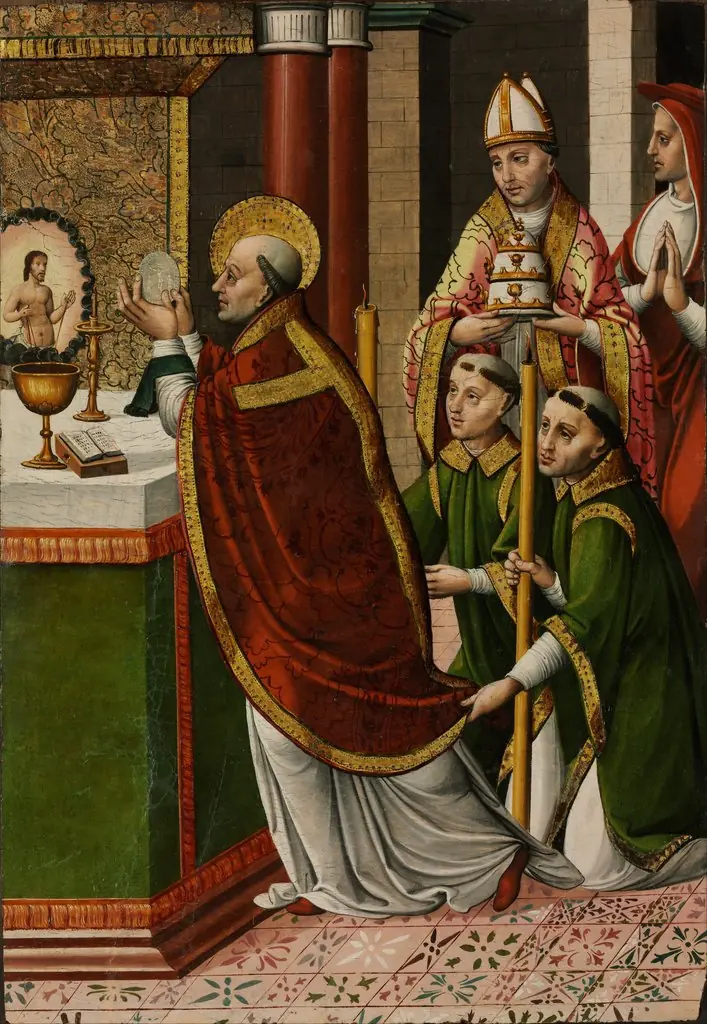
Painted around 1550 by Adriaen Isenbrandt, this oil-on-panel work depicts a liturgical scene centered on Saint Gregory the Great.
Painted around 1550 by Adriaen Isenbrandt, this oil-on-panel work depicts a liturgical scene centered on Saint Gregory the Great. Isenbrandt, based in Bruges, maintained a conservative Northern European style even as Italian Renaissance trends spread. His workshop specialized in devotional imagery for private and ecclesiastical use, and this piece reflects that tradition, blending detailed realism with spiritual solemnity.
Subject & Meaning
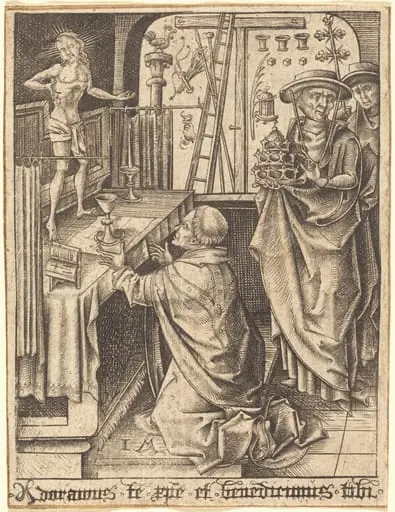
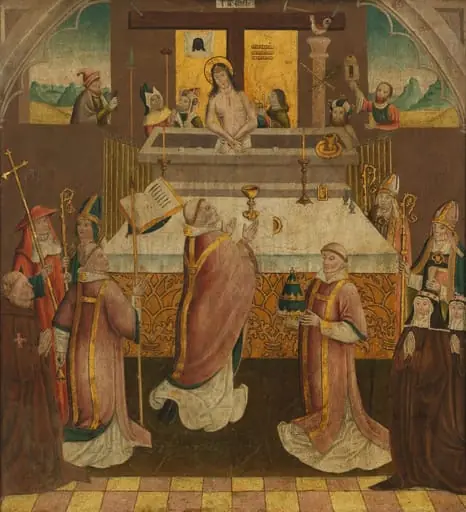
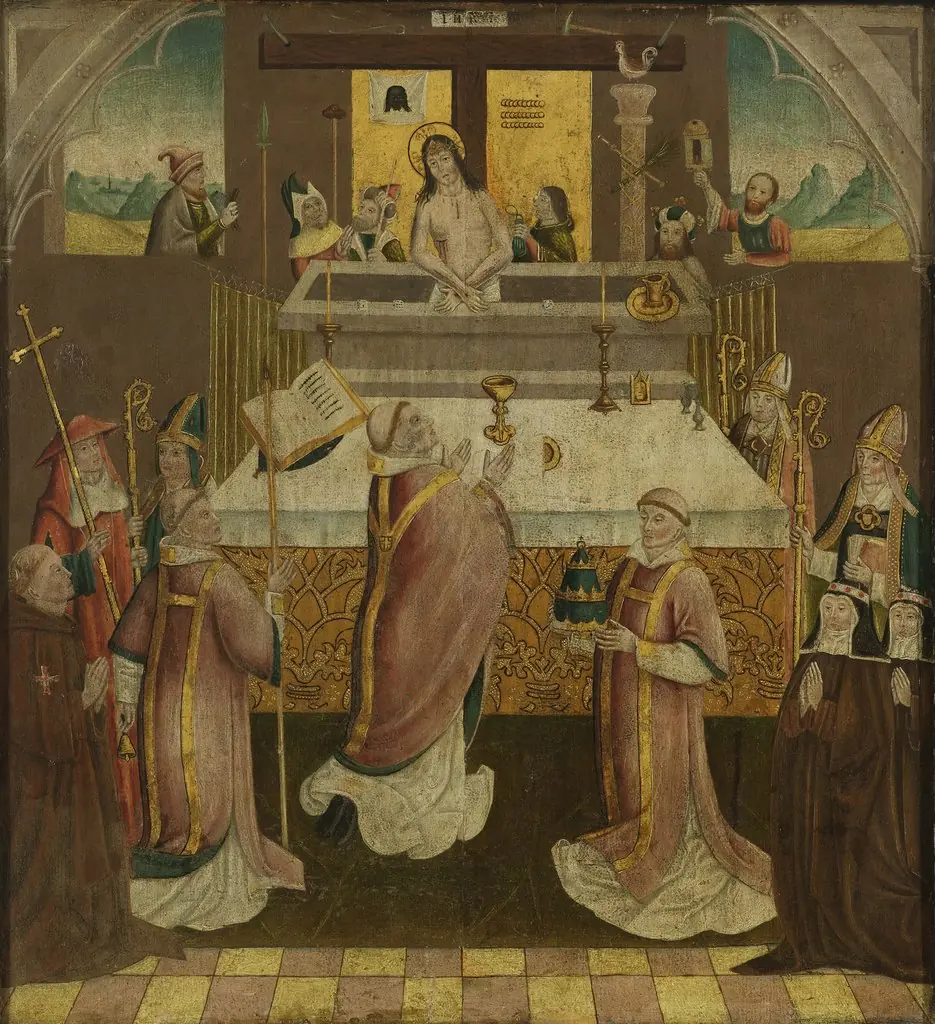
The scene illustrates the legendary moment when Saint Gregory, while celebrating Mass, witnesses the real presence of Christ on the altar. The central figure in gold vestments, likely Gregory, holds a processional cross, while a kneeling figure beside him embodies devotion. The background figures and architectural elements suggest a sacred space open to the faithful, reinforcing the theme of divine revelation through ritual.
Technique & Style
Isenbrandt employed oil paint with meticulous brushwork to render textures of fabric, metal, and stone. Light is carefully modulated to create depth, with strong contrasts between illuminated figures and shadowed areas. The composition is tightly organized, directing attention to the altar through hierarchical scaling and spatial framing, consistent with Northern traditions rather than Italian spatial innovations.
History & Provenance
The painting originated in Bruges, likely commissioned for private devotion or a chapel. Its survival through centuries suggests it remained in religious or aristocratic collections. While its early ownership is undocumented, its style aligns with other works from Isenbrandt’s workshop, which were widely distributed in the Low Countries during the mid-16th century.
Context
Created during a period of religious upheaval, the painting reflects enduring Catholic devotional practices in the Southern Netherlands. Even as Protestant reformers rejected elaborate rituals, artists like Isenbrandt continued producing images that affirmed sacramental theology. The work stands as a quiet counterpoint to the changing religious landscape of Northern Europe.
Legacy
Isenbrandt’s approach influenced later Northern painters who sustained detailed, devotional painting into the 17th century. Though not widely known today, his works, including this one, exemplify the persistence of late medieval iconography in a changing artistic world. The painting remains a testament to the continuity of religious imagery in a time of transformation.
Artist & collection
Artist
Adriaen Isenbrandt or Adriaen Ysenbrandt (between 1480 and 1490 – July 1551) was a painter in Bruges, in the final years of Early Netherlandish painting, and the first of the Dutch and Flemish Renaissance painting of the Northern…

![The Mass of Saint Gregory [recto], by French 15th Century](https://artifactworldgallery.com/img/french-15th-century--the-mass-of-saint-gregory-recto--366c997f6d630640-w320.webp)