Artwork
Mass of Saint Gregory
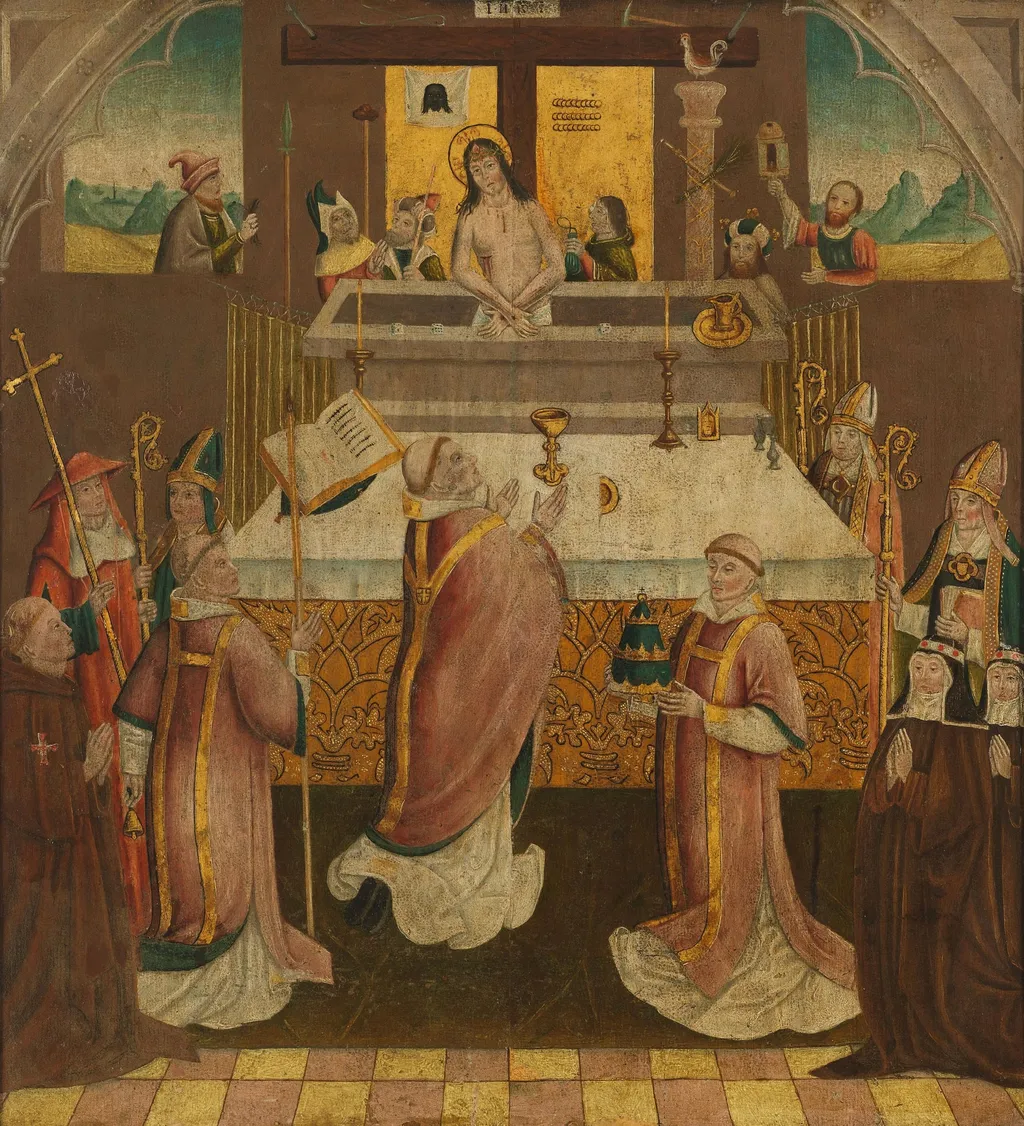
Mass of Saint Gregory is an unspecified painting by the Northern Renaissance artist Unknown. It dates from 1831 and is held in the collection of the Rijksmuseum.
About this work
Overview
The scene unfolds before an altar, with figures kneeling in prayer.
This devotional painting depicts a vision experienced by Pope Gregory the Great, in which Christ emerges from the tomb surrounded by the instruments of his Passion. The scene unfolds before an altar, with figures kneeling in prayer. Commissioned for a convent rather than a parish church, the work reflects the spiritual priorities of its female monastic audience, emphasizing personal revelation and communal devotion.
Subject & Meaning
The vision illustrates a medieval legend in which Gregory, while celebrating Mass, is granted a sight of Christ’s resurrection as a sign of the Eucharist’s truth. The inclusion of the Passion instruments reinforces the sacrificial nature of Christ’s body and blood. The presence of female religious figures alongside male clergy underscores the convent’s identity, positioning the nuns as active participants in sacred narrative rather than passive observers.
Technique & Style
Rendered in tempera or oil on panel, the composition follows late medieval conventions with flattened space and hierarchical scaling. Figures are arranged symmetrically around the central vision, their gestures and garments carefully delineated to denote status and piety. The palette is restrained, with gold leaf accents highlighting sacred elements, consistent with Northern European devotional art of the period.
History & Provenance
The painting originated in the Brigittine convent of Mariënwater near Koudewater in the Netherlands, a community known for its literary and artistic patronage. It remained in the convent until the dissolution of monasteries in the late 16th century. Its survival suggests it was preserved by local collectors or transferred to another religious institution, though its exact path after the Reformation remains partially undocumented.
Context
In the 15th-century Low Countries, visions of Christ’s resurrection were popular among female religious communities seeking intimate spiritual experiences. The Brigittines, who emphasized contemplative prayer and the humanity of Christ, favored imagery that connected liturgy with personal revelation. This painting’s inclusion of nuns and abbesses as witnesses reflects their elevated role within their own spiritual environment.
Legacy
The painting stands as a rare example of devotional art centered on a female monastic community’s perspective, challenging the norm of male-dominated ecclesiastical imagery. Its survival offers insight into how women shaped religious expression in late medieval Europe. Comparable works can be found in Dutch collections, where similar visions were cultivated for private devotion.
Artist & collection

 Domestic Scene
 Giacomo and Cardinal Marco, investing Andrea, Abbot of San Zeno, with his Benefice
 The Nymph of Fontainebleau
 Portrait of a Woman
 Madonna and Child with Saints in the Enclosed Garden
 Venus and Minerva
 Family Group of Four on Sofa
 Wall painting from Room H of the Villa of P. Fannius Synistor at Boscoreale
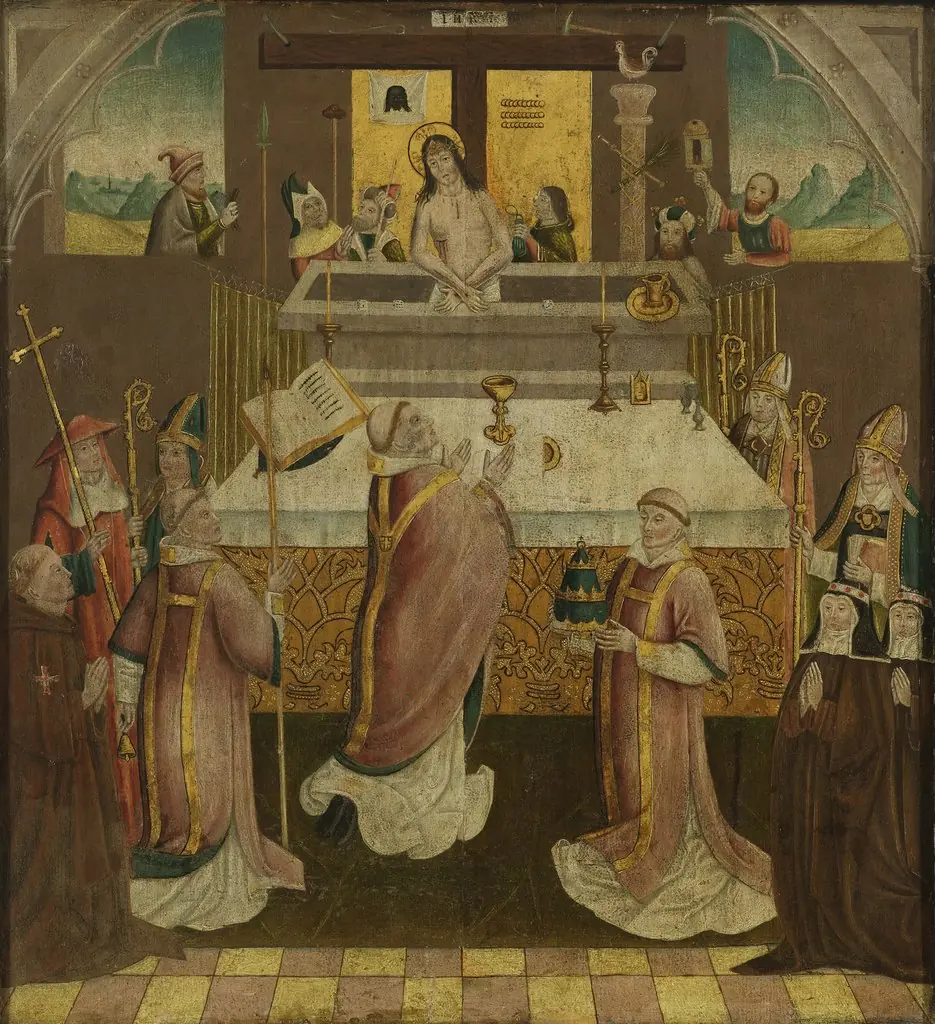 The mass of St. Gregory
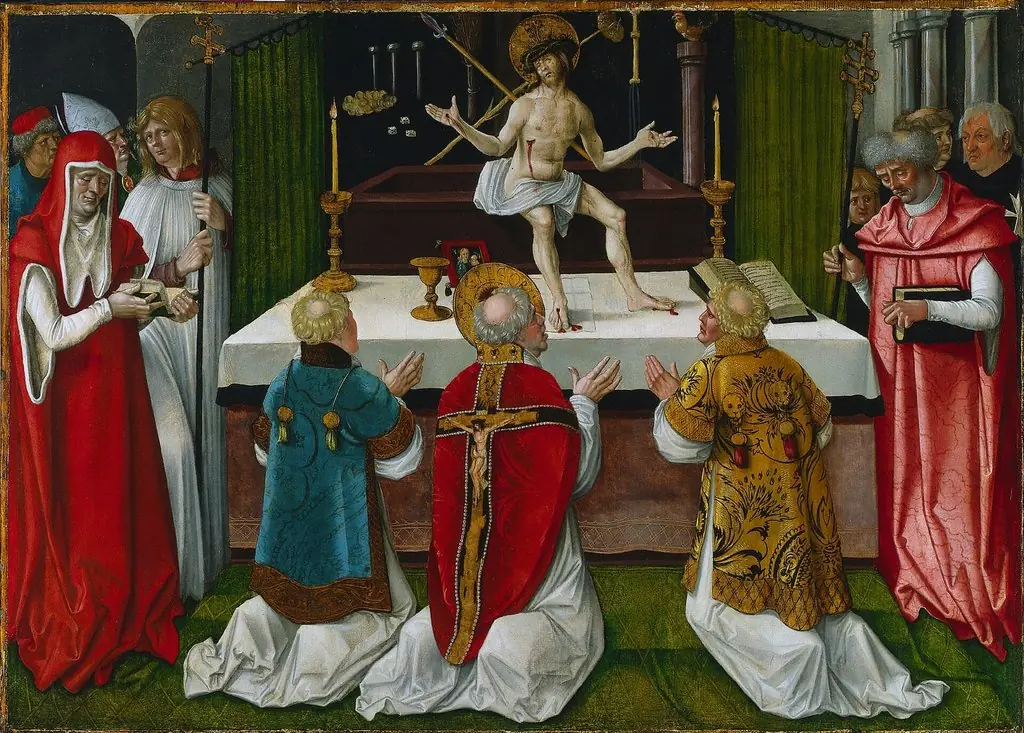 The Mass of Saint Gregory
![The Mass of Saint Gregory [recto], by French 15th Century](https://artifactworldgallery.com/img/french-15th-century--the-mass-of-saint-gregory-recto--366c997f6d630640-w320.webp) The Mass of Saint Gregory [recto]
The Mass of Saint Gregory [recto]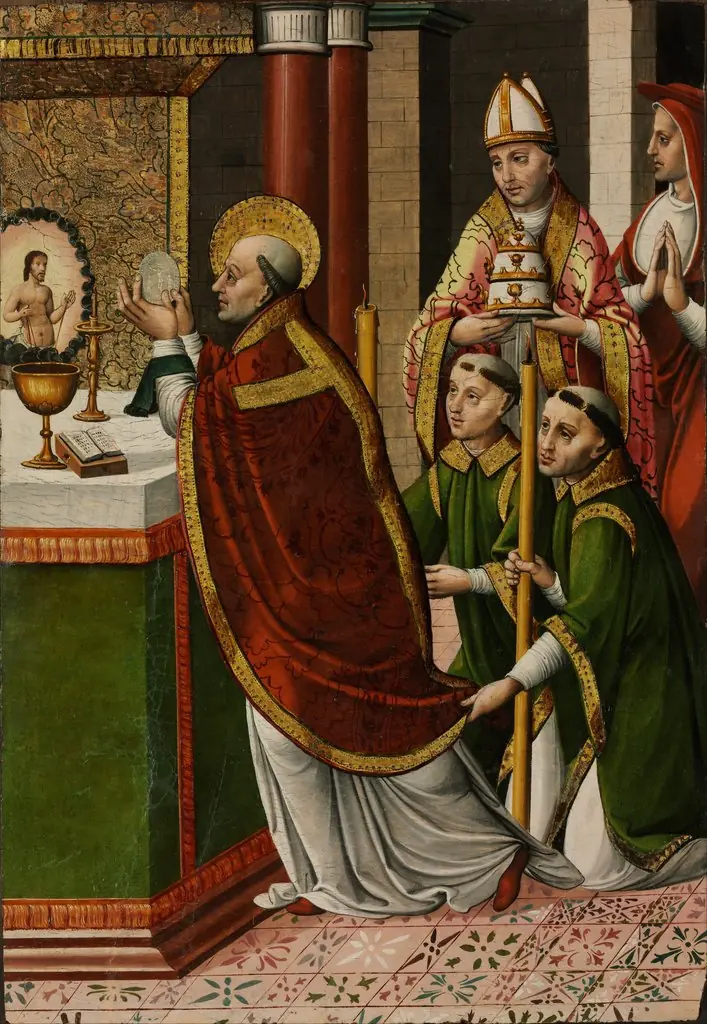 The Mass of Saint Gregory the Great
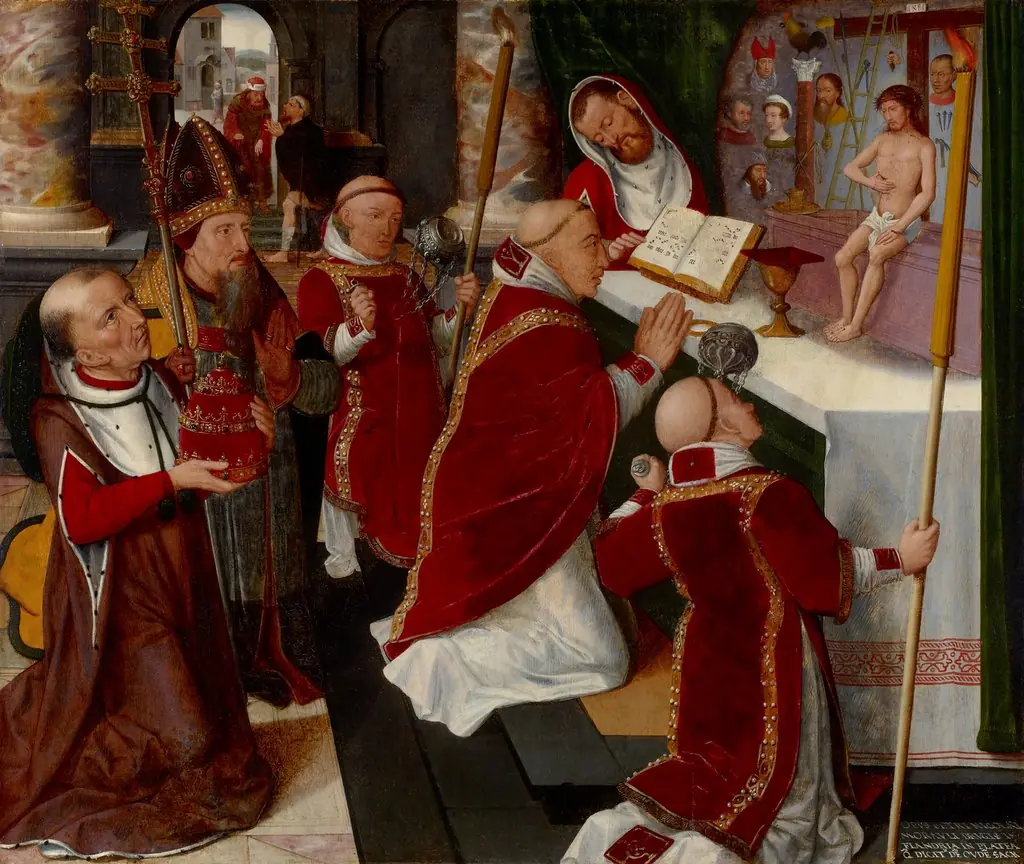 The Mass of Saint Gregory
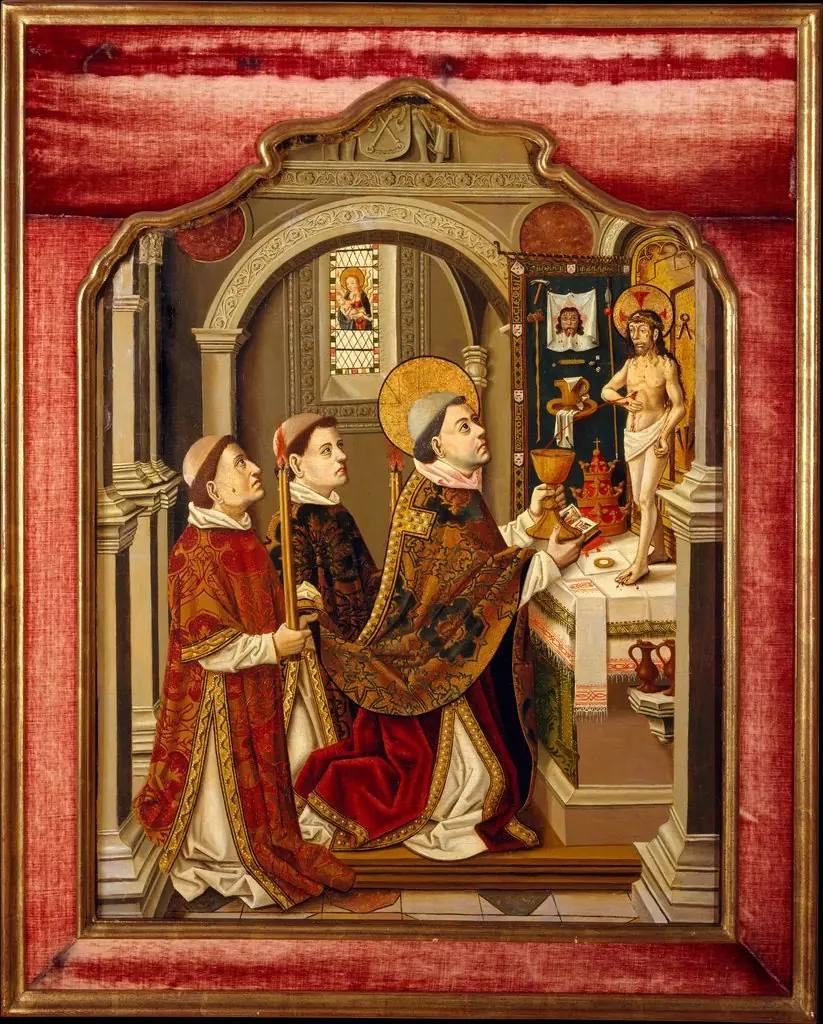 The Mass of Saint Gregory
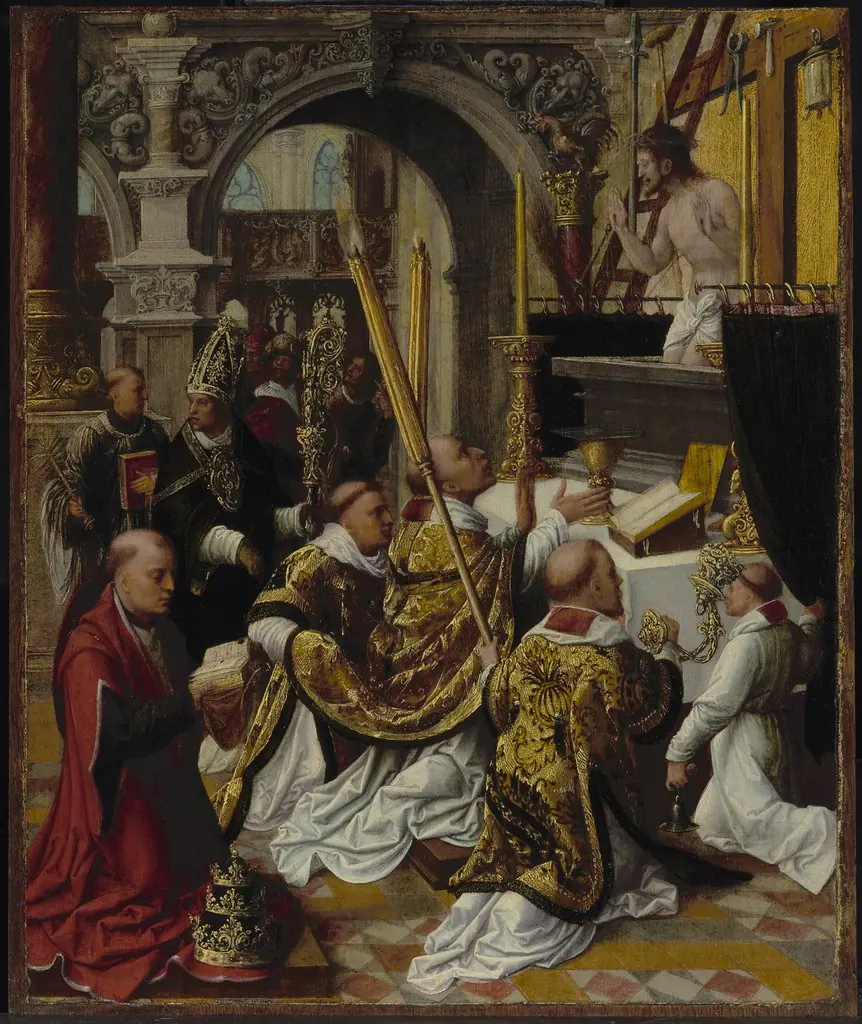 The Mass of Saint Gregory the Great
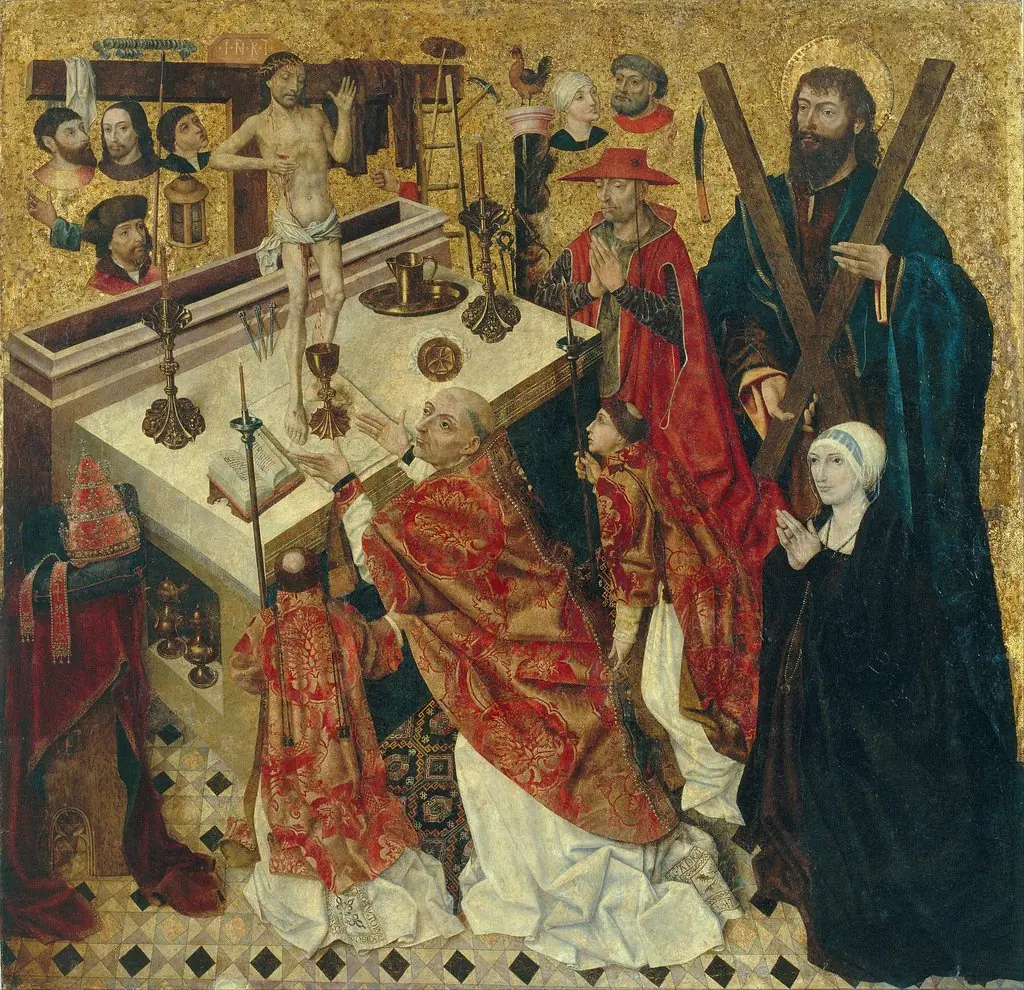 The Mass of Saint Gregory
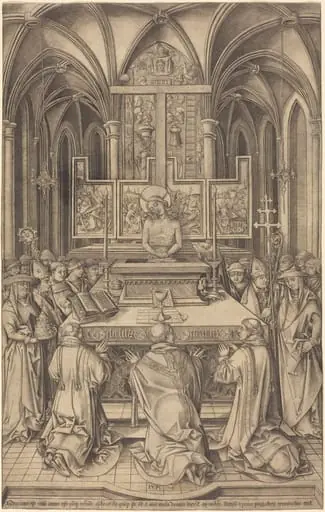 The Mass of Saint Gregory
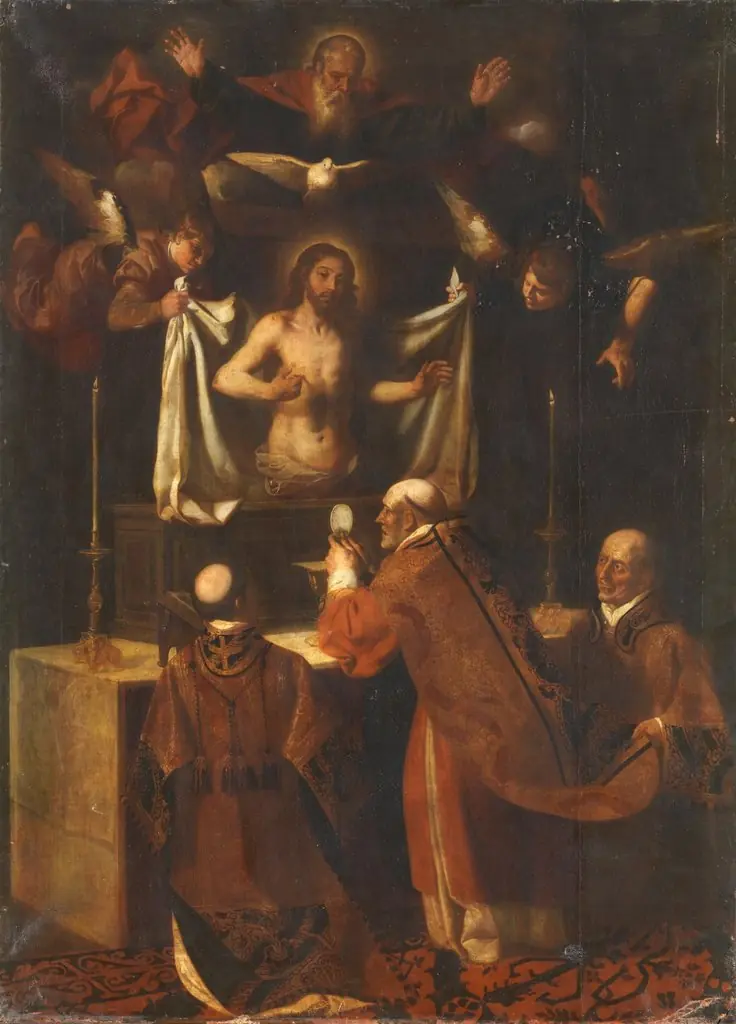 Mass of Saint Gregory
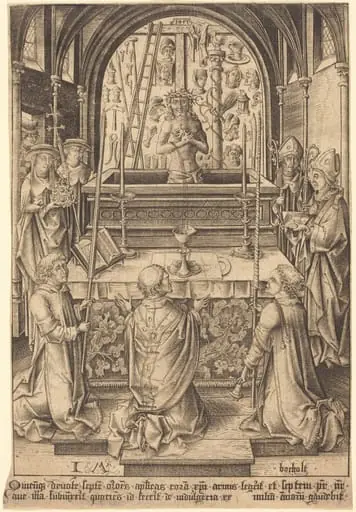 The Mass of Saint Gregory
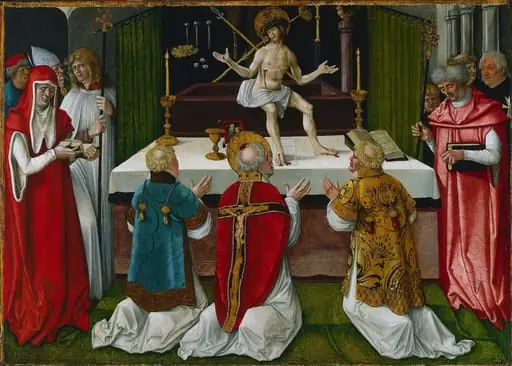 The Mass of Saint Gregory