Artwork
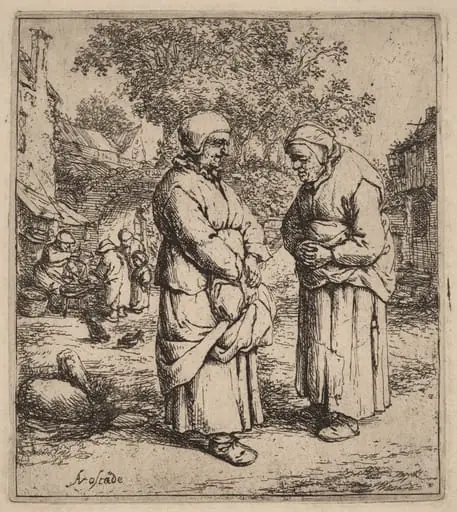
The Two Gossips
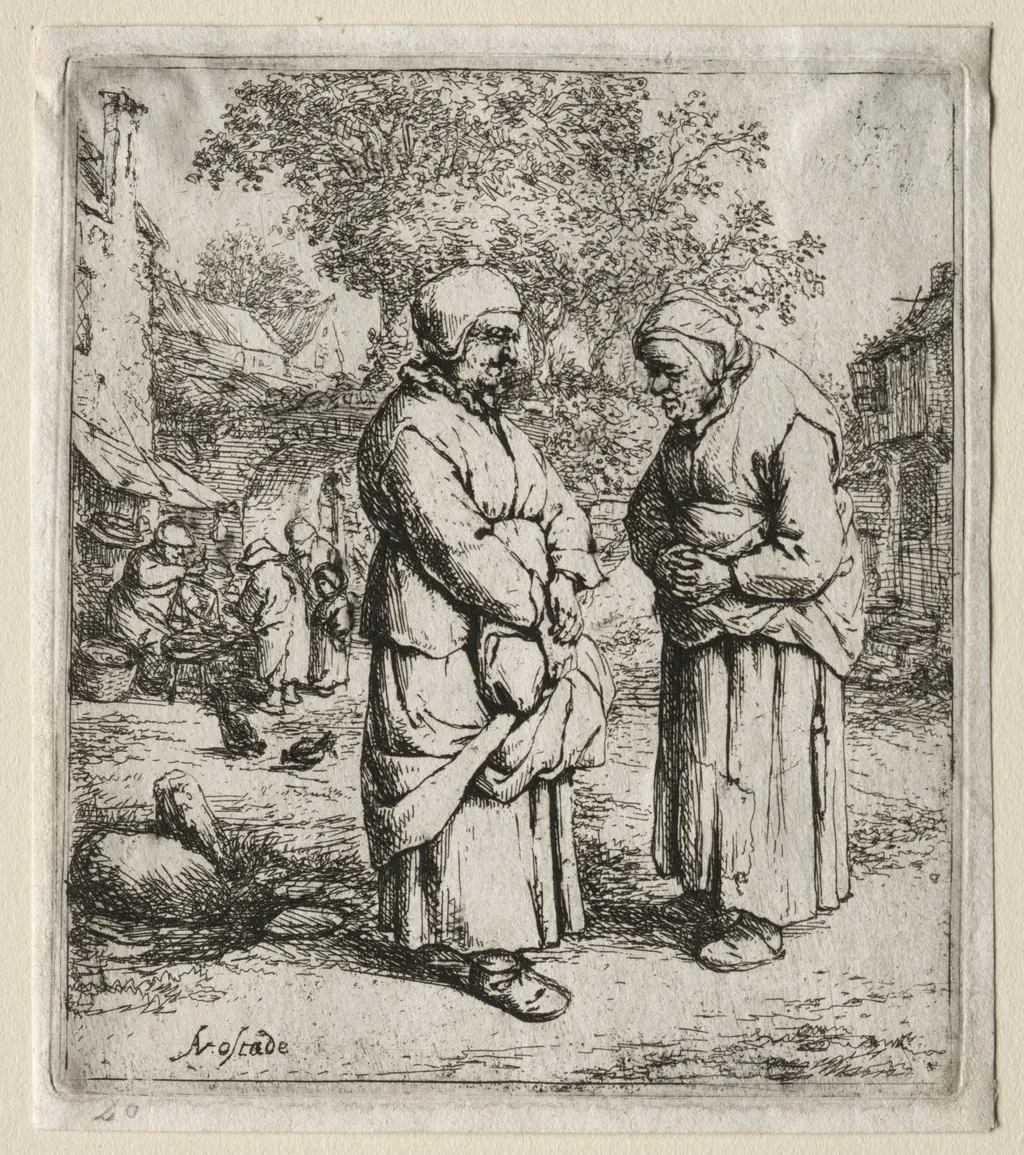
The Two Gossips is a print by the Baroque artist Adriaen van Ostade. It dates from 1651 and is held in the collection of the Cleveland Museum of Art.
About this work
Overview
Part of the Cleveland Museum of Art’s collection, the work exemplifies van Ostade’s dedication to portraying the lives of common people.
Created around 1651 by Adriaen van Ostade, this etching captures a quiet moment between two elderly men in a rural Dutch setting. Part of the Cleveland Museum of Art’s collection, the work exemplifies van Ostade’s dedication to portraying the lives of common people. Unlike grand historical or religious subjects, it finds significance in the mundane, using modest scale and intimate composition to draw attention to ordinary gestures and surroundings.
Subject & Meaning
Two older men, one holding a pipe and the other leaning on a stick, engage in quiet conversation, their body language suggesting gossip or shared observation. Behind them, children play near a low wall and tree, adding a layer of daily life without overt narrative. The scene implies the rhythm of village existence—unhurried, unremarkable, yet rich with subtle social interaction. No moral judgment is offered; the focus remains on presence, not plot.
Technique & Style
Van Ostade employed etching to achieve a rough, expressive line quality, with dense hatching and varied shading to define form and depth. The figures emerge from a dimly lit background through strong contrasts of light and shadow, isolating them visually while preserving the atmosphere of an outdoor village space. The texture of clothing, stone, and foliage is rendered with economical yet precise marks, reflecting the artist’s mastery of tonal economy.
History & Provenance
The print was made during the height of van Ostade’s career, when he was refining his depictions of peasant life in the Dutch Republic. It entered the Cleveland Museum of Art’s collection in the 20th century, following a trajectory common to many Northern European prints of the period—passing through private collections before becoming part of a public institution. Its survival reflects enduring interest in genre scenes from the Golden Age.
Context
In mid-17th century Holland, a growing middle class sought art that mirrored their world, not aristocratic ideals. Van Ostade’s work responded to this demand, portraying laborers, villagers, and domestic interiors with empathy and detail. While contemporaries like Rembrandt explored psychological depth, van Ostade emphasized social observation, aligning with broader trends in Dutch genre painting that valued authenticity over grandeur.
Legacy
Van Ostade’s etchings, including this one, helped establish genre scenes as a legitimate and enduring subject in printmaking. His focus on unidealized figures influenced later artists interested in everyday life, from 18th-century French engravers to 19th-century realists. Though less celebrated than his peers, his work remains a quiet testament to the dignity found in ordinary moments and the power of understated observation.
Artist & collection
Artist
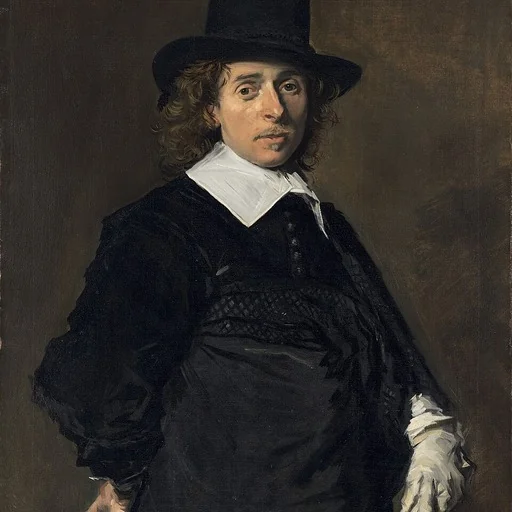
Adriaen van Ostade (baptized as Adriaen Jansz Hendricx 10 December 1610 – buried 2 May 1685) was a Dutch Golden Age painter of genre works, showing the everyday life of ordinary men and women.

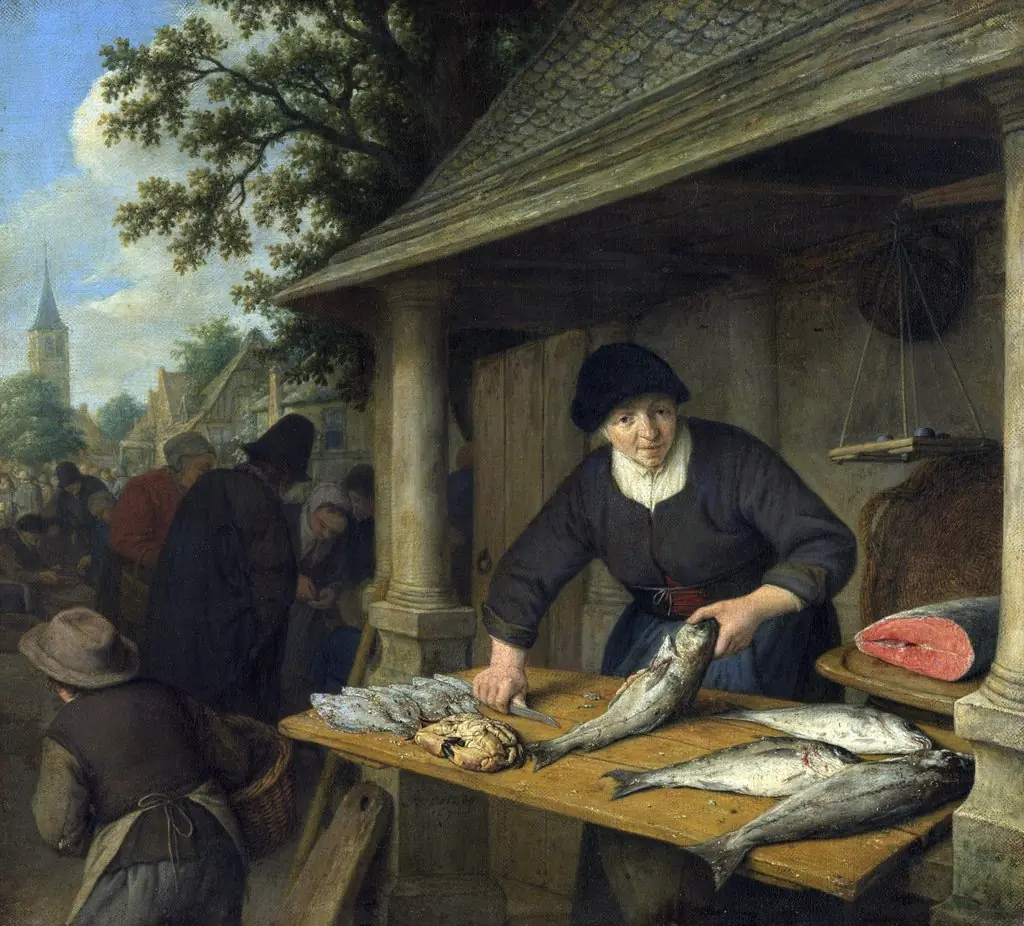
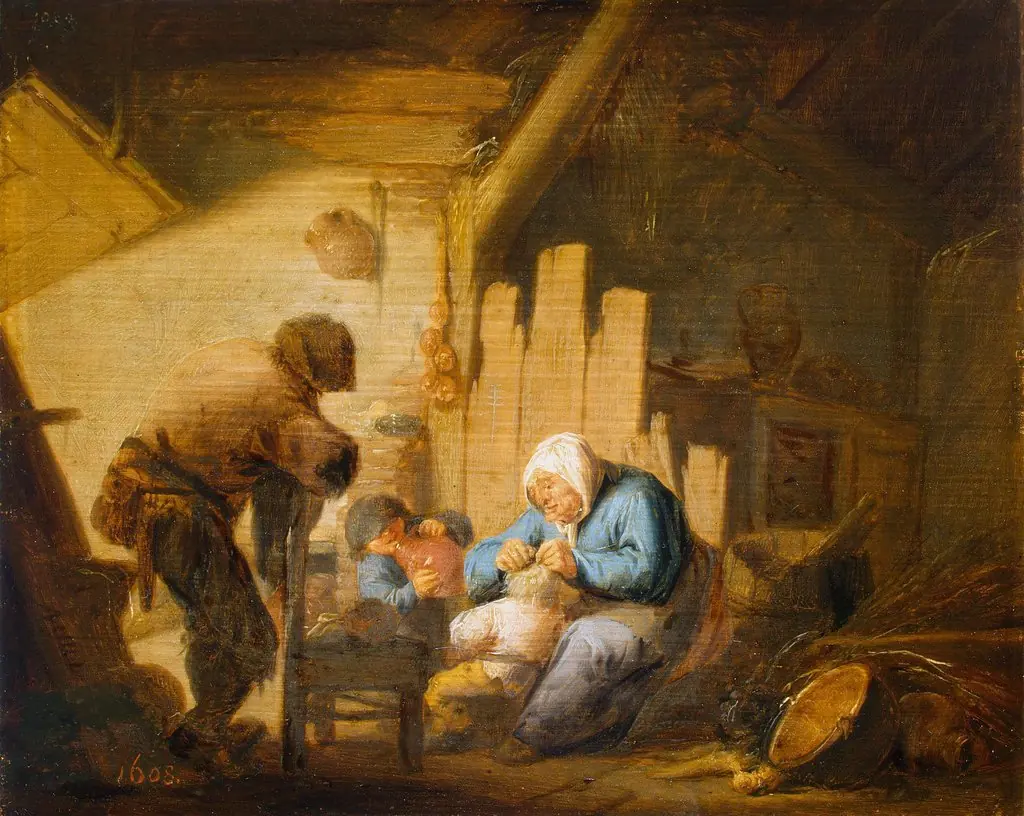
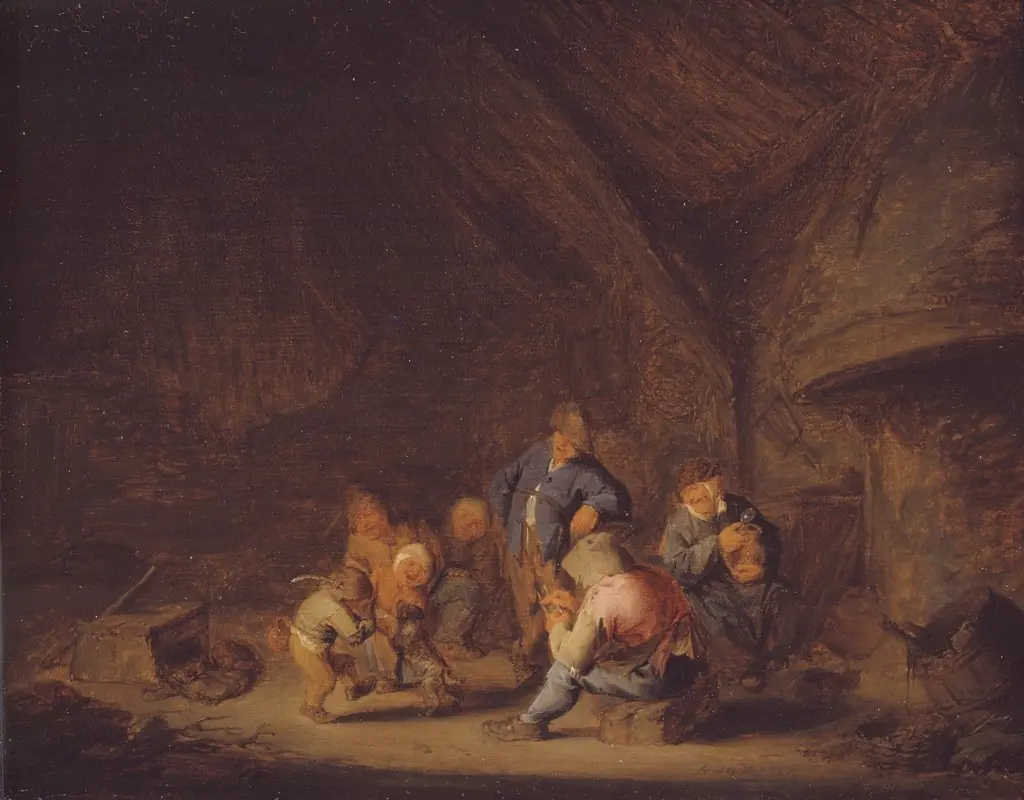
 Two Peasant Women Conversing on a Village Street
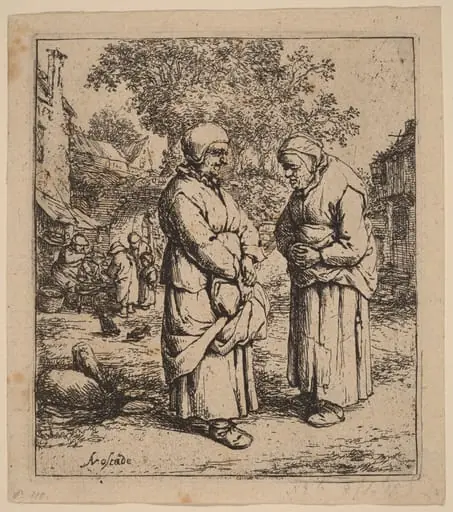 Two Peasant Women Conversing on a Village Street
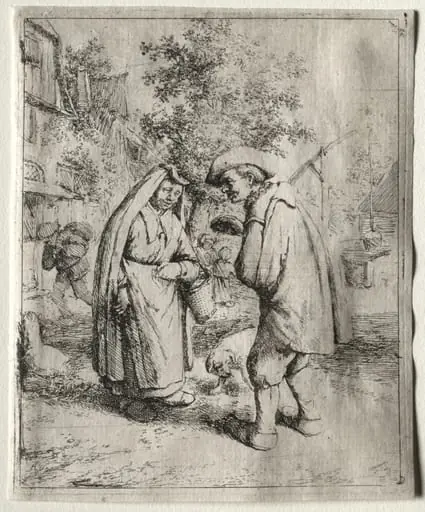 Man Conversing with a Woman
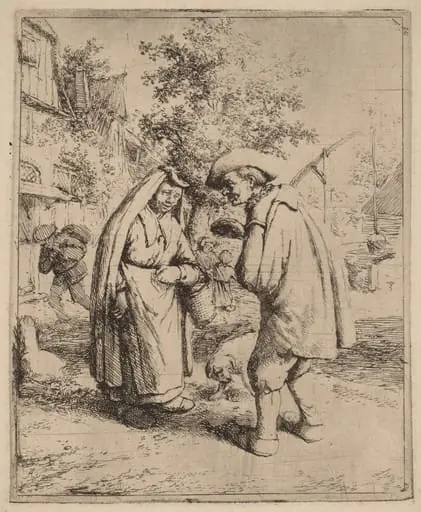 Man and Woman Conversing on a Busy Village Street
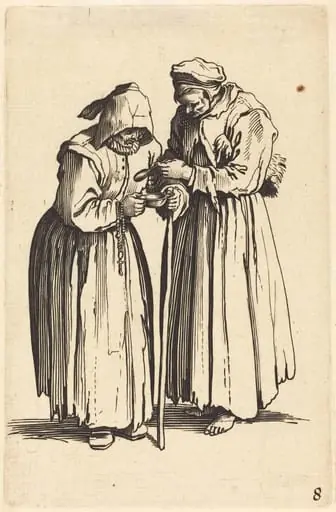 Two Beggar Women
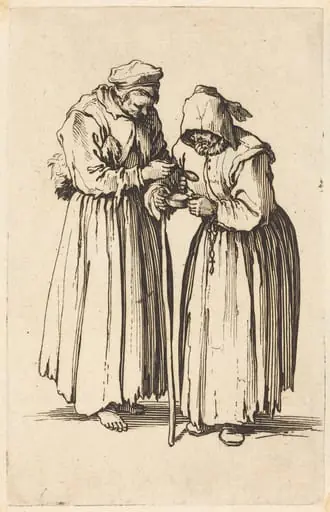 Two Beggar Women
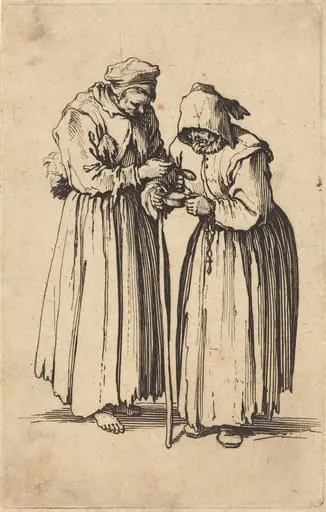 Two Beggar Women
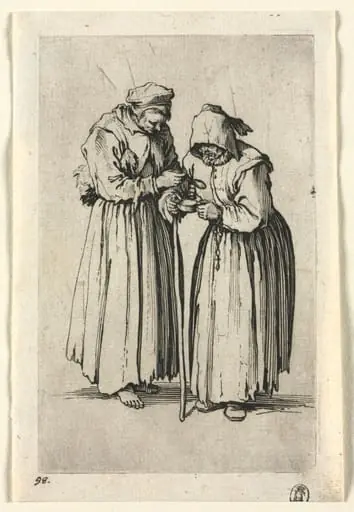 The Beggars: Two Beggar Women
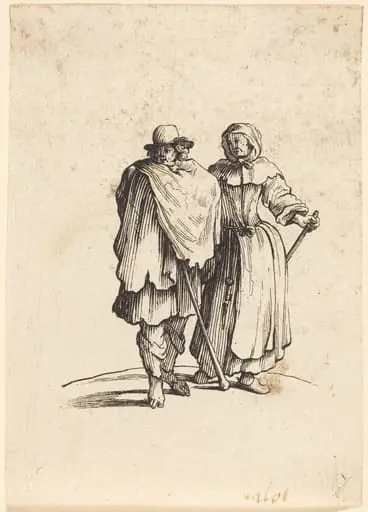 Beggar Couple
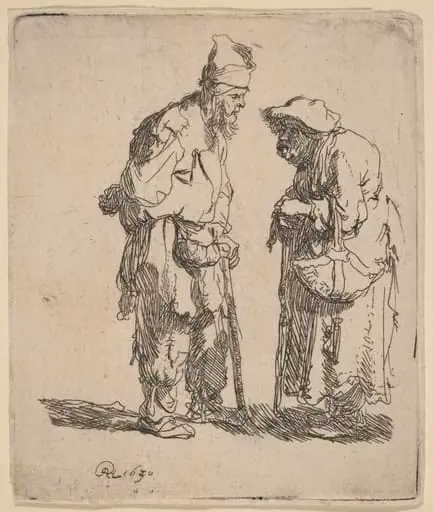 Beggar Man and Beggar Woman Conversing
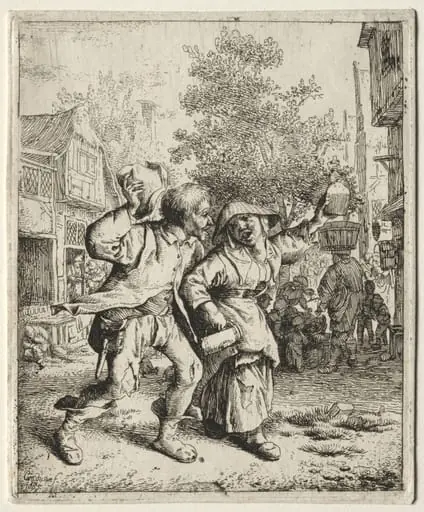 The Drunken Couple
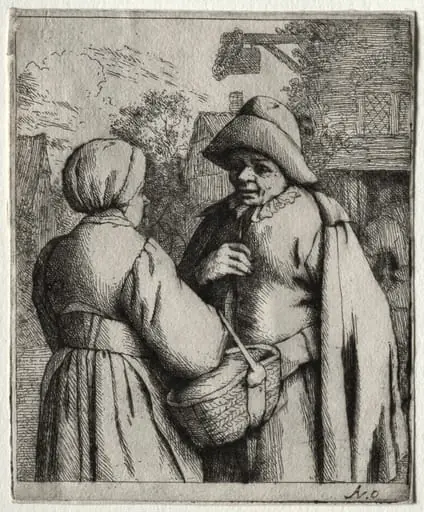 Man and Woman Conversing