Artwork
Still life of game
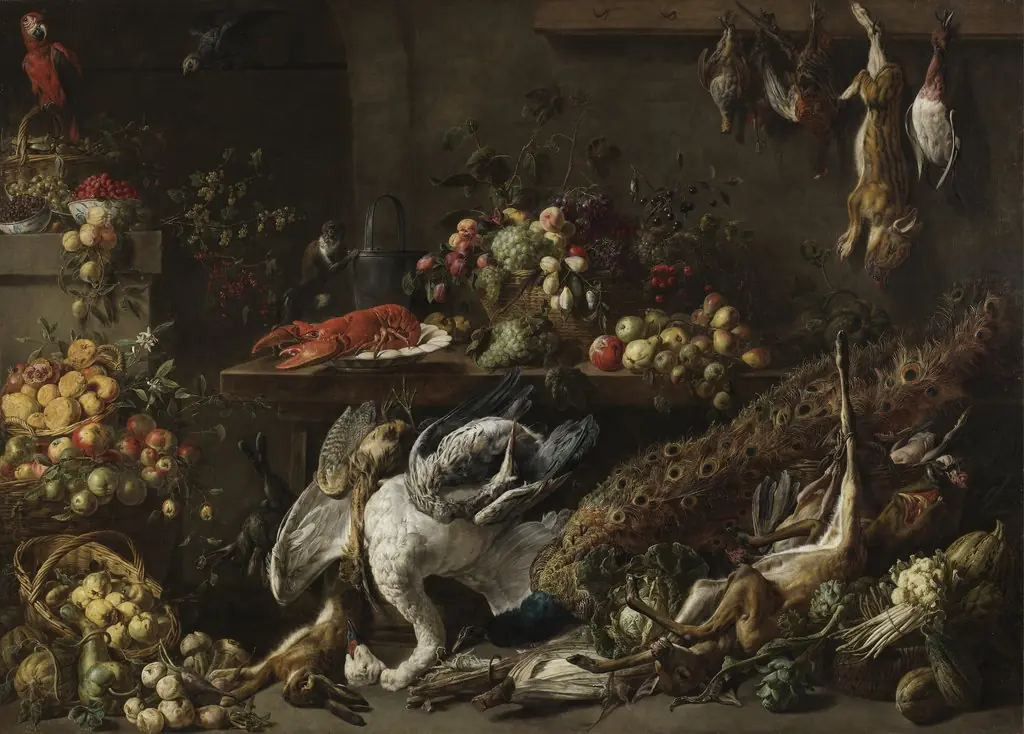
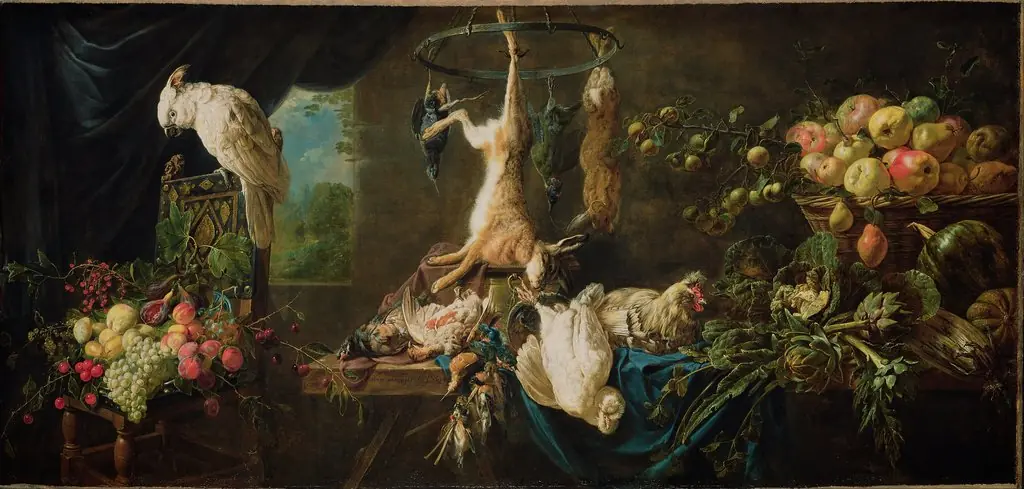
Still life of game is an unspecified painting by the Dutch Golden Age artist Adriaen van Utrecht. It dates from 1650 and is held in the collection of the Kunsthistorisches Museum.
About this work
Overview
Van Utrecht’s compositions frequently included game, fruit, and market scenes, reflecting the period’s fascination with abundance and material richness.
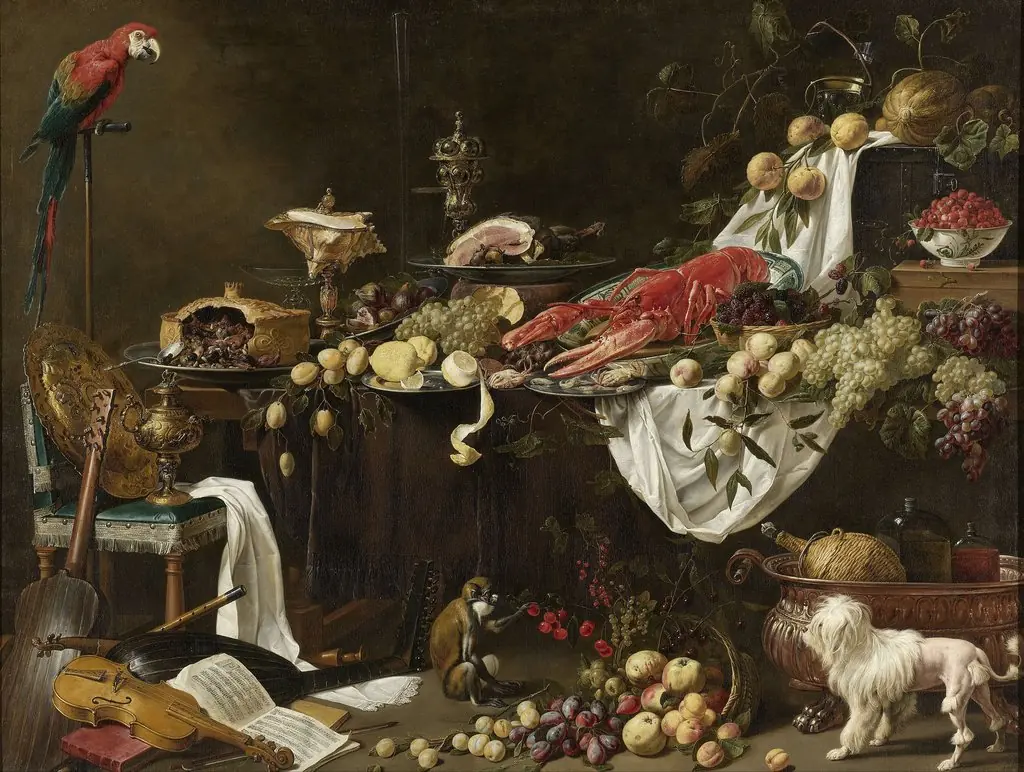
Adriaen van Utrecht, a Flemish painter of the seventeenth century, produced *Still life of game* mid-century. The work exemplifies the pronkstilleven genre, characterized by opulent displays of objects rendered with meticulous detail. Van Utrecht’s compositions frequently included game, fruit, and market scenes, reflecting the period’s fascination with abundance and material richness. This painting remains part of the Kunsthistorisches Museum’s collection.
Subject & Meaning
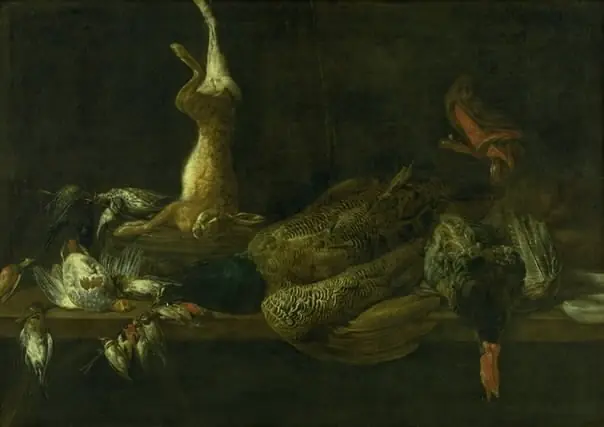
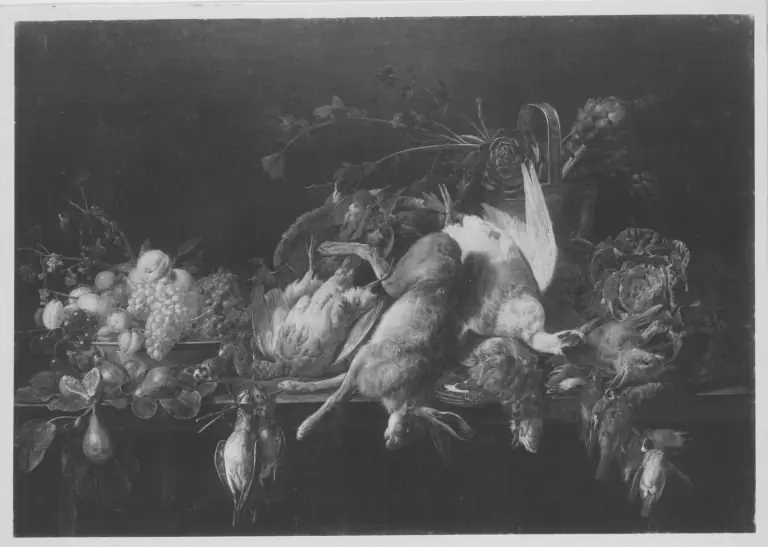
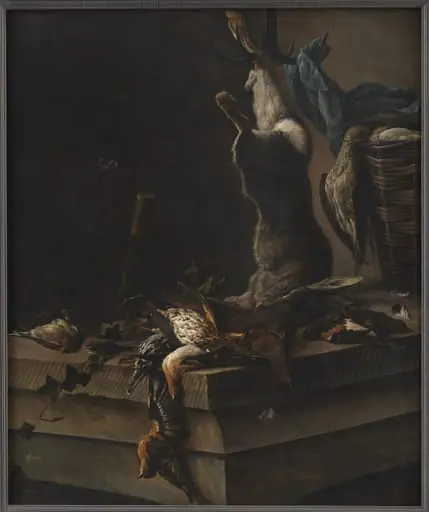
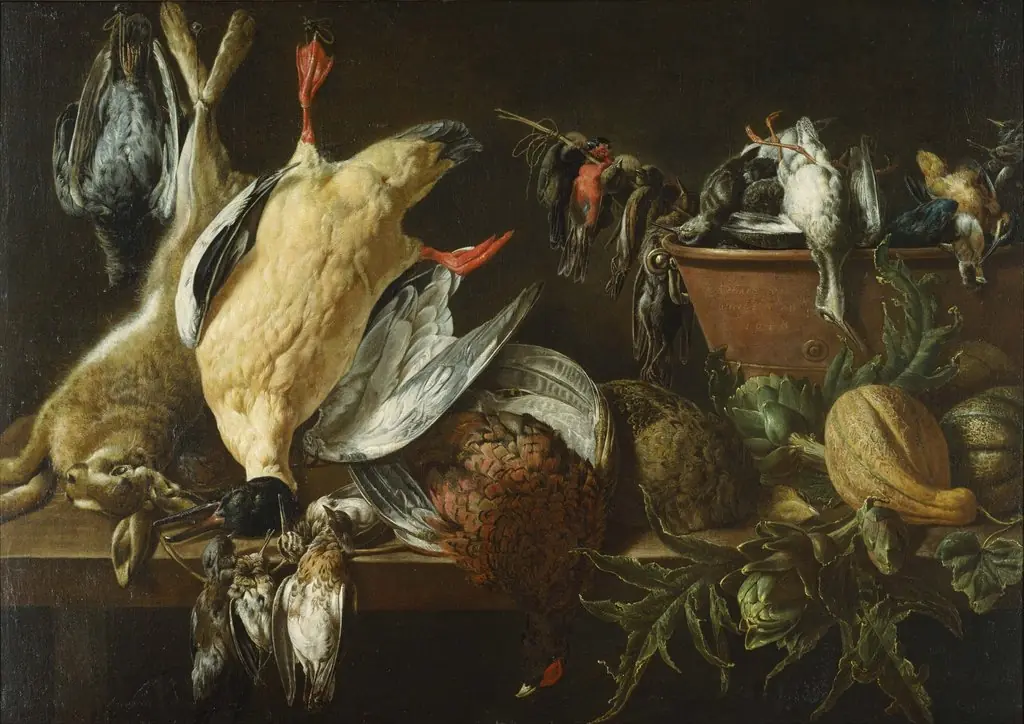
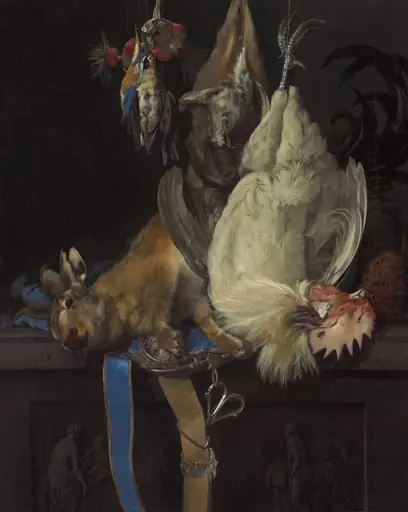
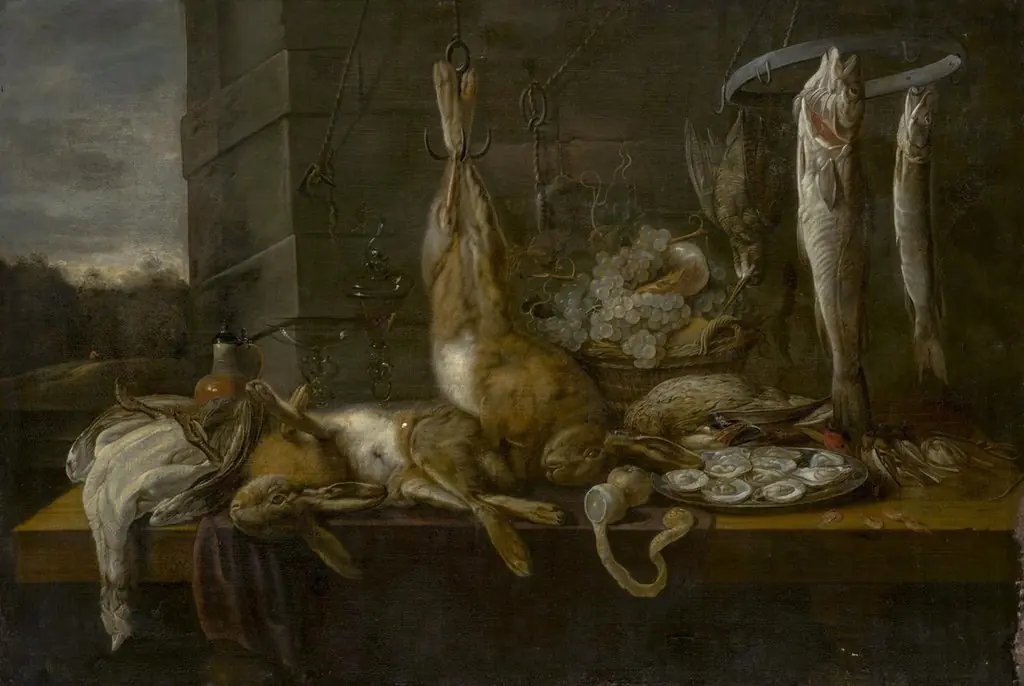
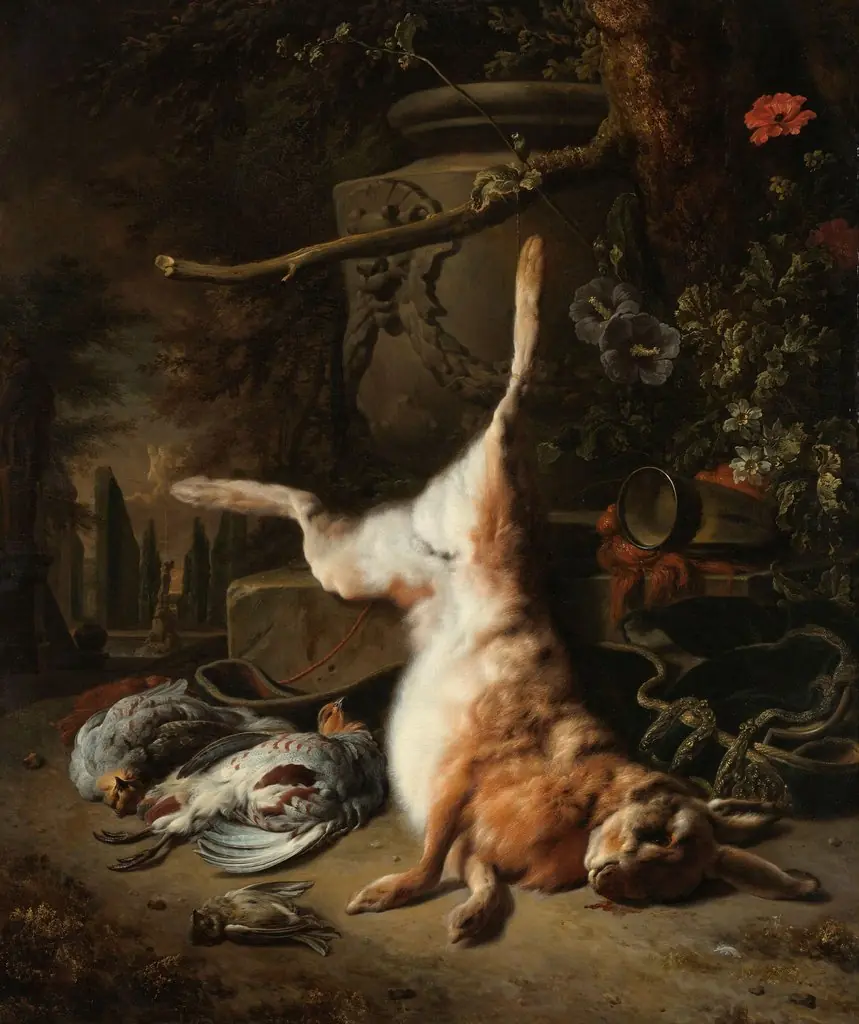
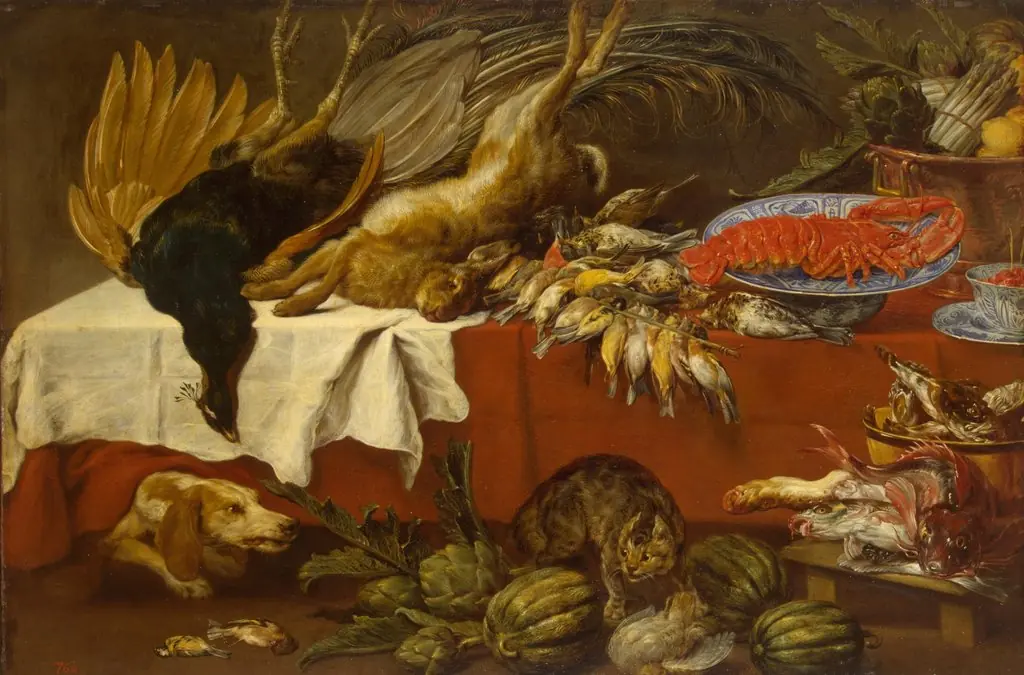
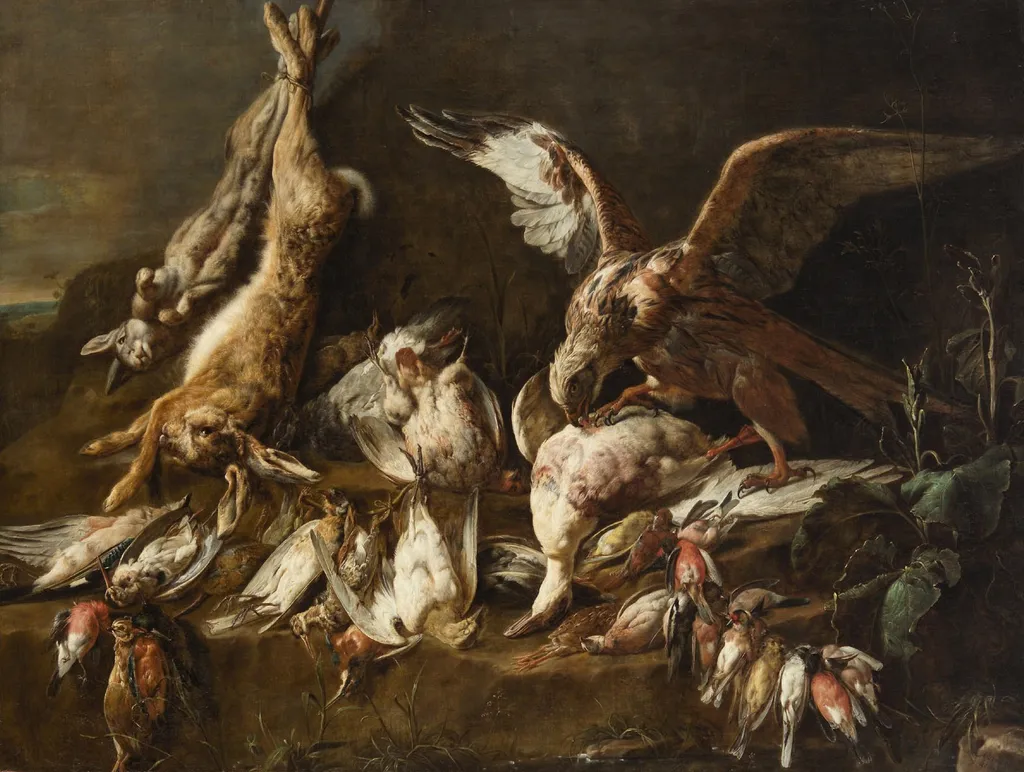
The painting presents a disordered assemblage of hunted animals: a deer suspended by its legs, a wild boar laid on its side, and a scattering of plucked birds. Such imagery aligns with the pronkstilleven tradition, where the depiction of game symbolized both the bounty of nature and the skill of the hunter. The arrangement, though seemingly haphazard, underscores the transient nature of life and the inevitability of decay.
Technique & Style
Van Utrecht employed chiaroscuro to heighten the drama of the scene, using stark contrasts between deep shadows and illuminated surfaces. The palette is dominated by earthy browns, muted whites, and dark greens, with accents of red from the birds’ feet. Textural details—feathers, fur, and flesh—are rendered with precision, demonstrating the artist’s ability to capture varied surfaces within a single composition.
History & Provenance
Created around 1650, *Still life of game* reflects van Utrecht’s engagement with the Flemish still-life tradition, particularly the influence of Frans Snyders. The painting’s emphasis on lavish detail and dynamic arrangement aligns with the broader trends of the Dutch Golden Age. It entered the Kunsthistorisches Museum’s holdings, where it remains a representative example of the period’s pronkstilleven.
Context
During the seventeenth century, still-life painting in the Low Countries often celebrated material wealth and the natural world. Pronkstilleven works like this one catered to a merchant class eager to display their prosperity. The inclusion of game also referenced hunting as a privilege of the elite, reinforcing social hierarchies while showcasing the artist’s technical prowess.
Artist & collection
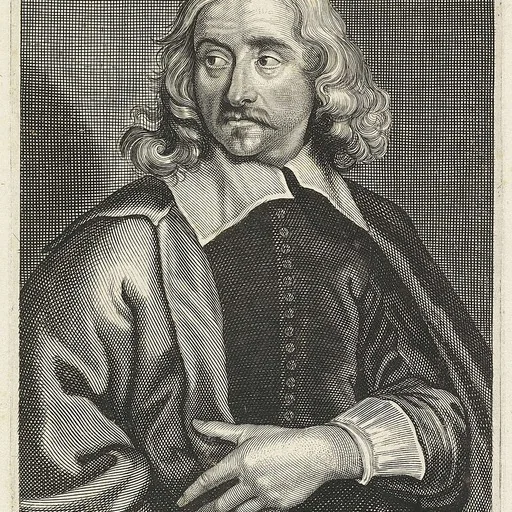
Artist
Adriaen van Utrecht (Antwerp, 12 January 1599 – 1652) was a Flemish painter known mainly for his sumptuous banquet still lifes, game and fruit still lifes, fruit garlands, market and kitchen scenes and depictions of live poultry in…