Artwork
Still life with a Hare and Other Game
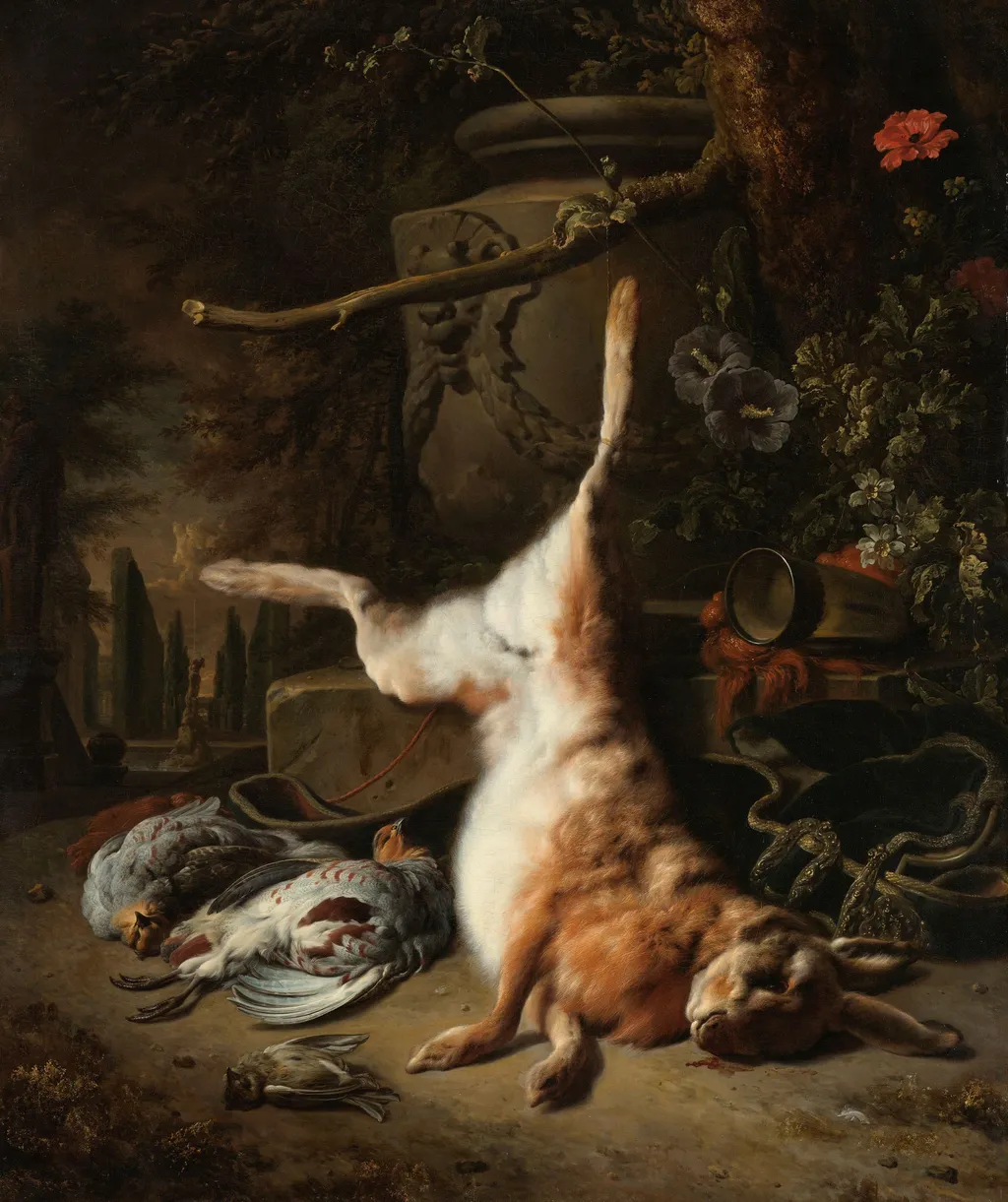
Still life with a Hare and Other Game is an oil painting by the Dutch Golden Age artist Jan Weenix. It dates from 1699 and is held in the collection of the Rijksmuseum. Created in 1699, this oil painting presents a composition of hunted game arranged on a darkened surface.
About this work
Overview
A hare lies stretched across the foreground, its fur rendered in subtle whites and browns, while a bird and a rabbit rest on a shallow plate.
Created in 1699, this oil painting presents a composition of hunted game arranged on a darkened surface. A hare lies stretched across the foreground, its fur rendered in subtle whites and browns, while a bird and a rabbit rest on a shallow plate. Behind the tableau, a muted backdrop features a glimpse of foliage, a reflective mirror and a red drapery, establishing a stark contrast between light and shadow.
Subject & Meaning
The work exemplifies the Dutch tradition of still life that celebrates the abundance of the hunt, portraying the moment after the chase. By assembling the hare, bird and rabbit, the artist underscores themes of mortality and the transitory nature of material wealth, inviting contemplation of the fleeting triumph of human conquest over nature.
Technique & Style
The painter employs a pronounced chiaroscuro, allowing illumination to caress the animal pelts and feathers while the surrounding darkness recedes. Meticulous attention to texture—visible in the soft fur and the delicate plumage—creates a tactile realism. The controlled palette and precise rendering of reflective surfaces, such as the mirror, reveal a mastery of light effects characteristic of late‑17th‑century Dutch realism.
History & Provenance
Initially misattributed to Jan Baptist Weenix, the piece was later reassigned to his son, Jan Weenix, whose reputation for detailed hunting scenes grew in the early 1700s. The painting entered the Rijksmuseum’s collection, where it remains part of the permanent holdings, offering insight into the artist’s mature period.
Context
During the Dutch Golden Age, still lifes featuring game served both decorative and didactic purposes, reflecting the prosperity of a mercantile society and its fascination with naturalistic observation. Weenix, trained alongside his cousin Melchior d’Hondecoeter, inherited a family workshop that specialized in such subjects, positioning him within a lineage of animal painters who emphasized verisimilitude.
Own this work as a print
Artist & collection
Artist
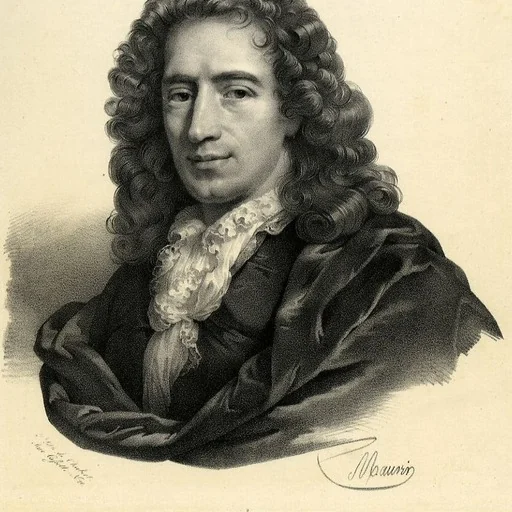
Jan Weenix or Joannis Wenix (between 1641/1649 – 19 September 1719 (buried)) was a Dutch painter.

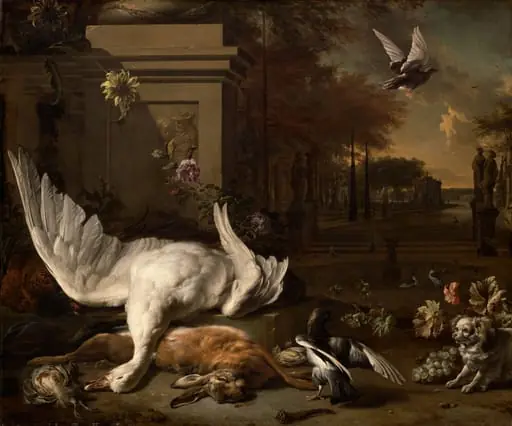 Still Life with Goose and Game before a Country Estate
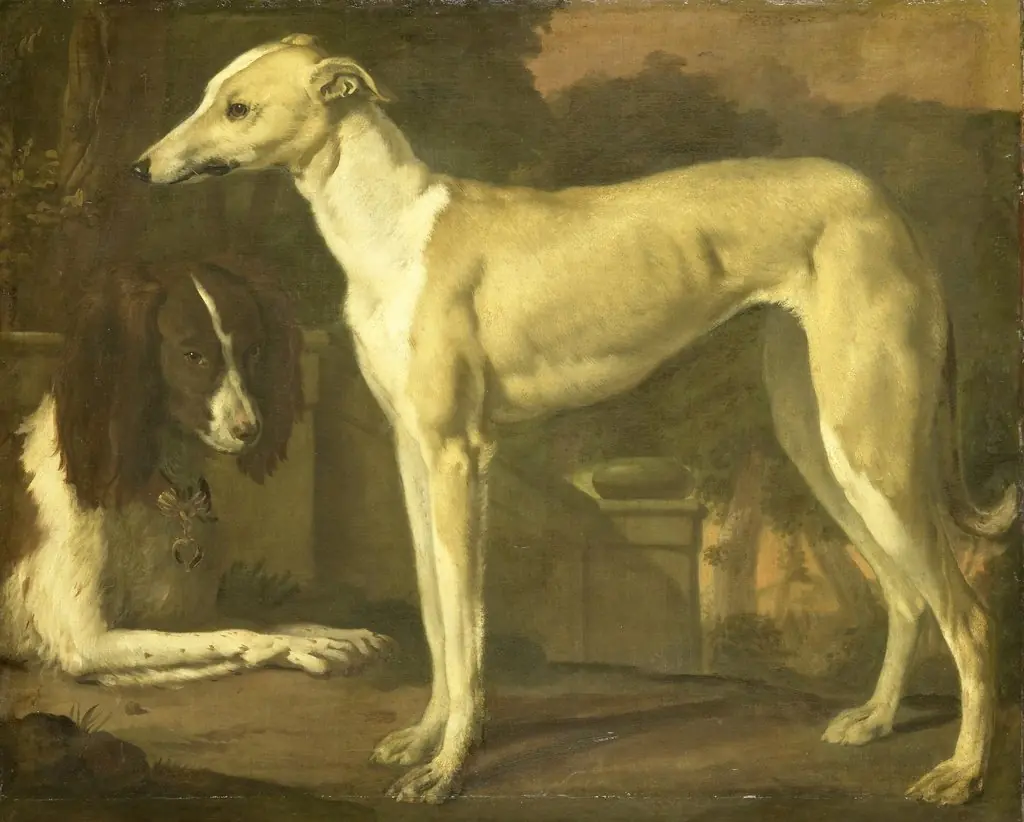 Portrait of a greyhound and a spaniel
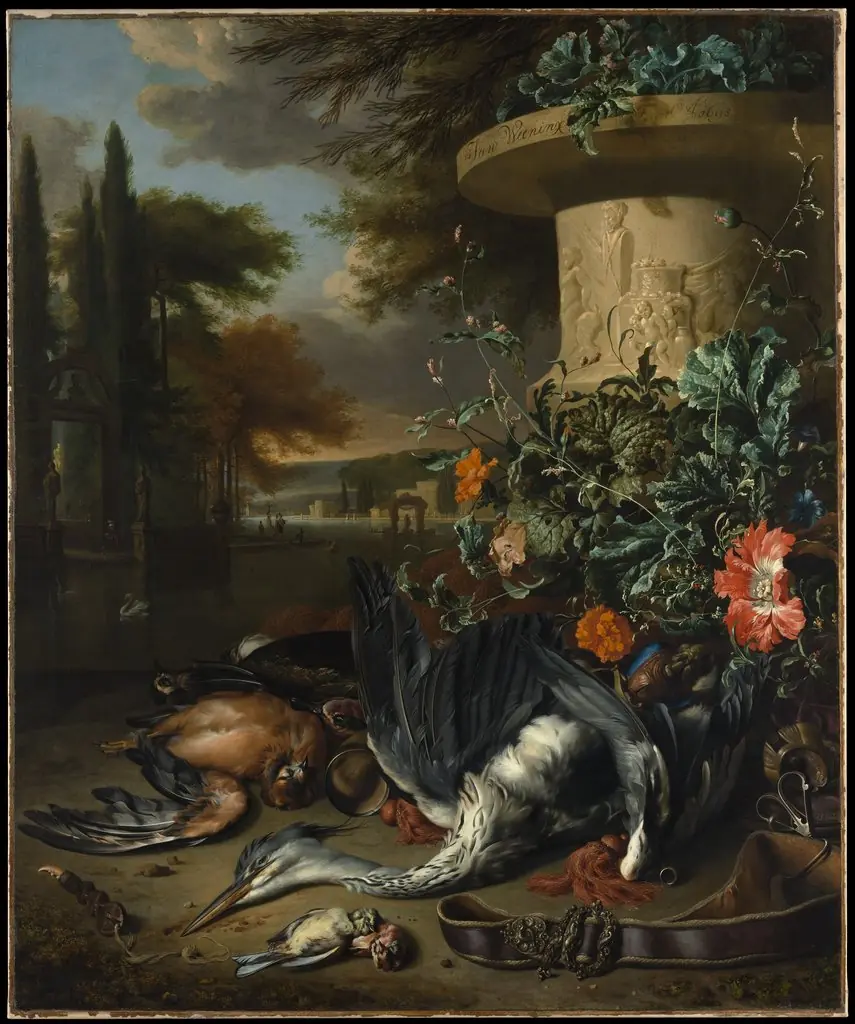 Gamepiece with a Dead Heron ("Falconer's Bag")
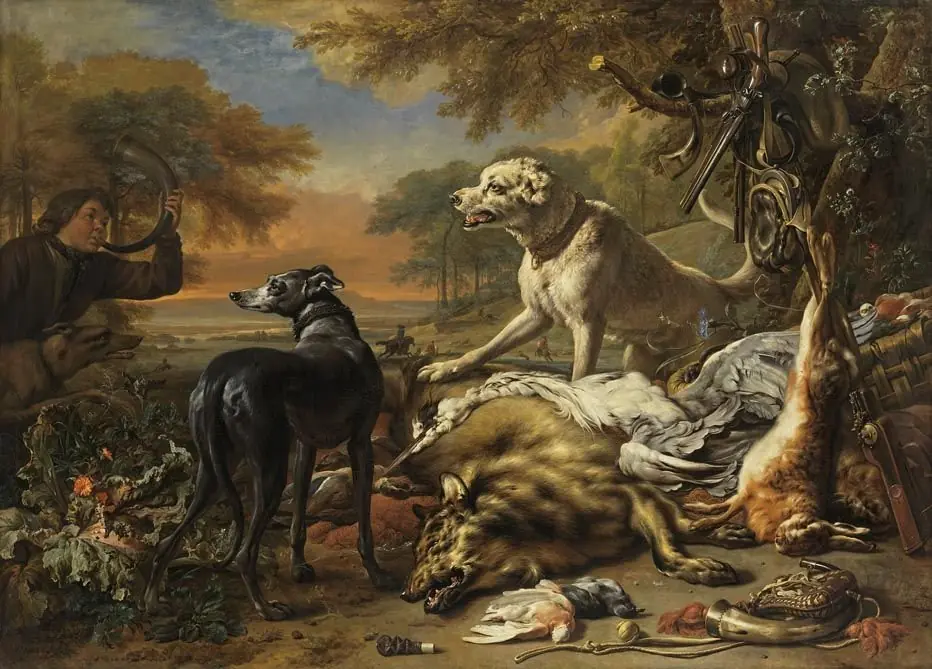 Hunting still life with wolf
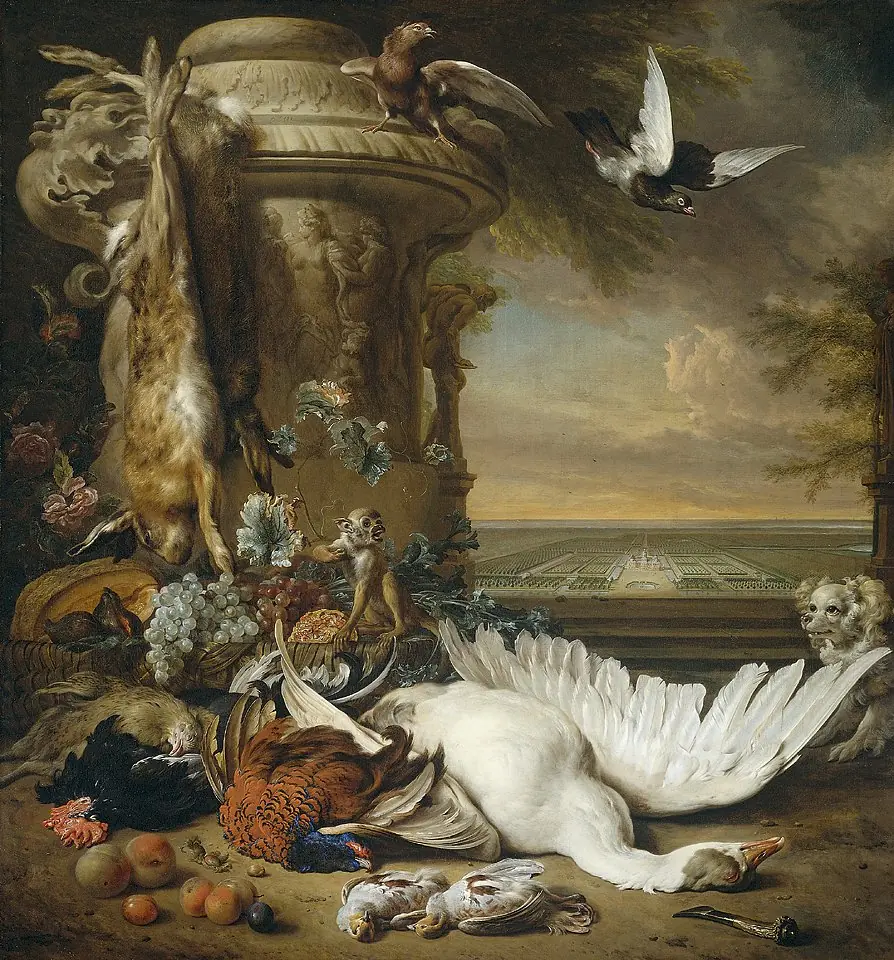 Still Life with Dead Game and Fruit beside a Garden Vase, with a Monkey, a Dog and Two Pigeons; in the Background Rijksdorp near Wassenaar, the Estate of Jonkheer Jacob Emmery, Baron of Wassenaar
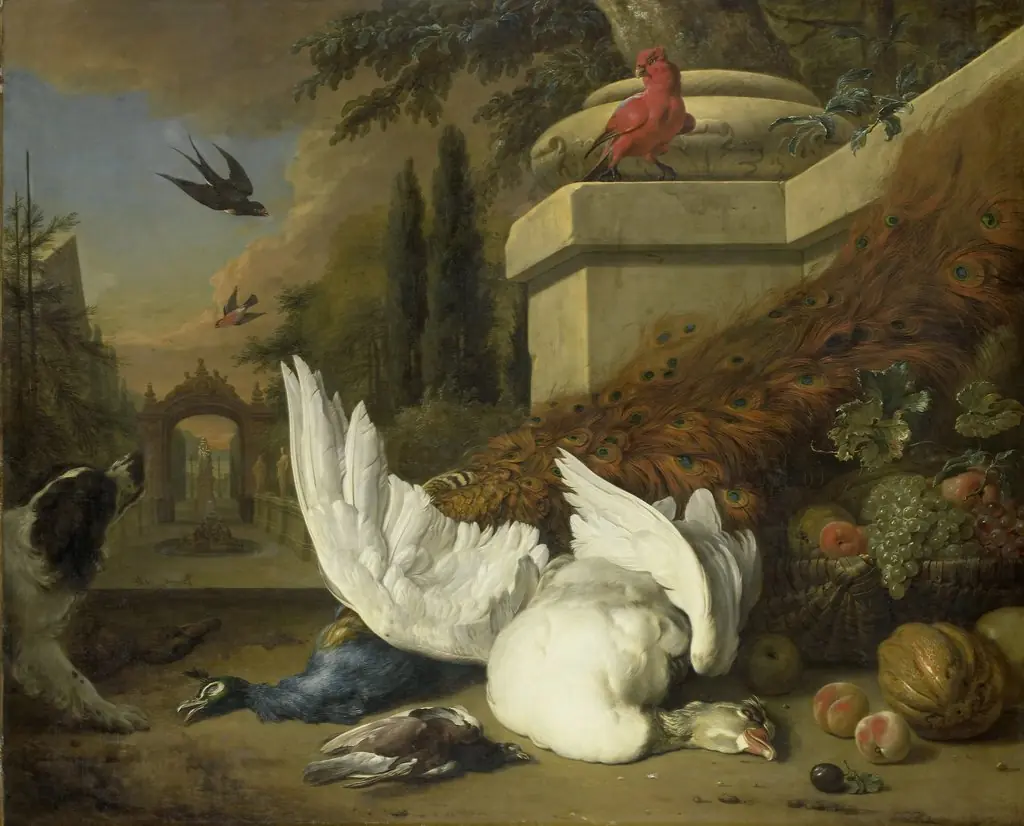 A monkey and a dog beside dead game and fruits, with the estate of Rijxdorp near Wassenaar in the background
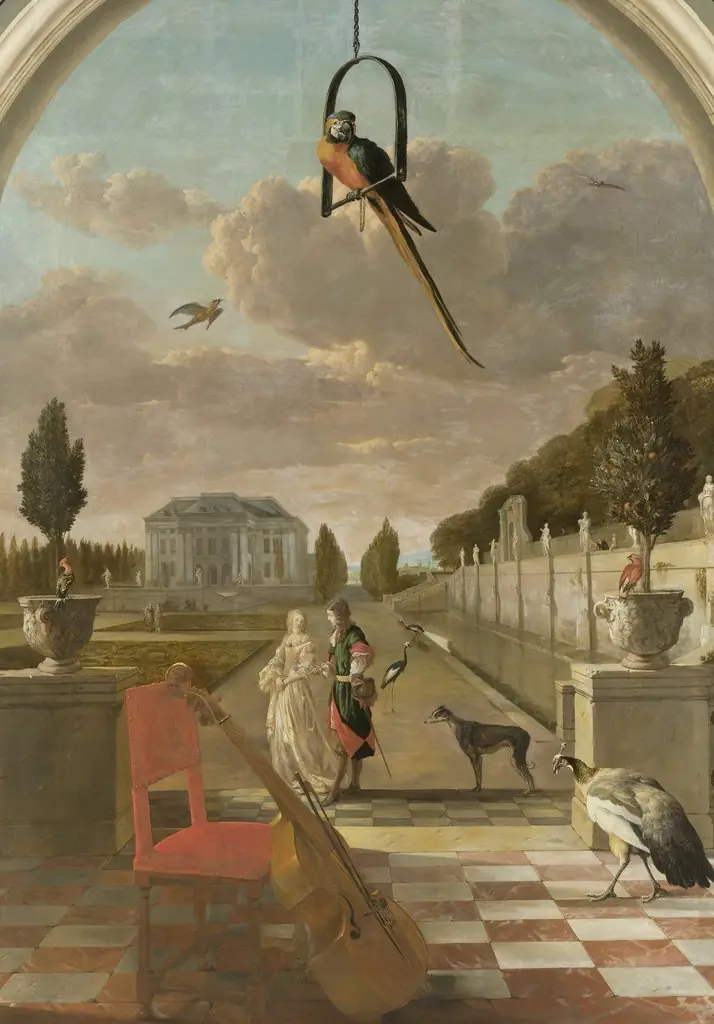 Park with country home
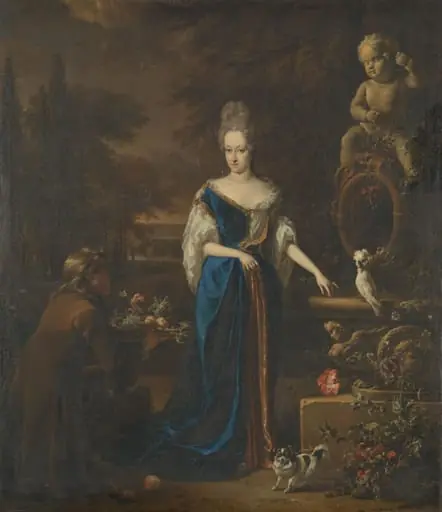 Portrait of Maria Cornelisz, Wife of Silvester van Tongeren
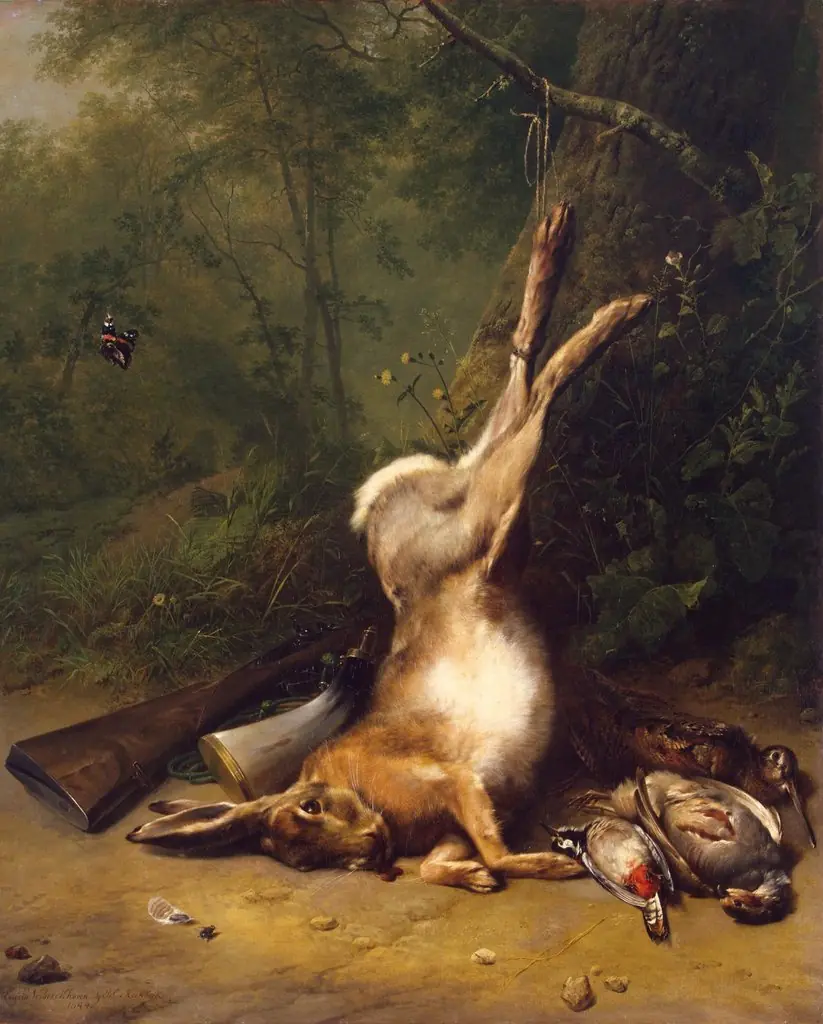 Still Life with a Hare
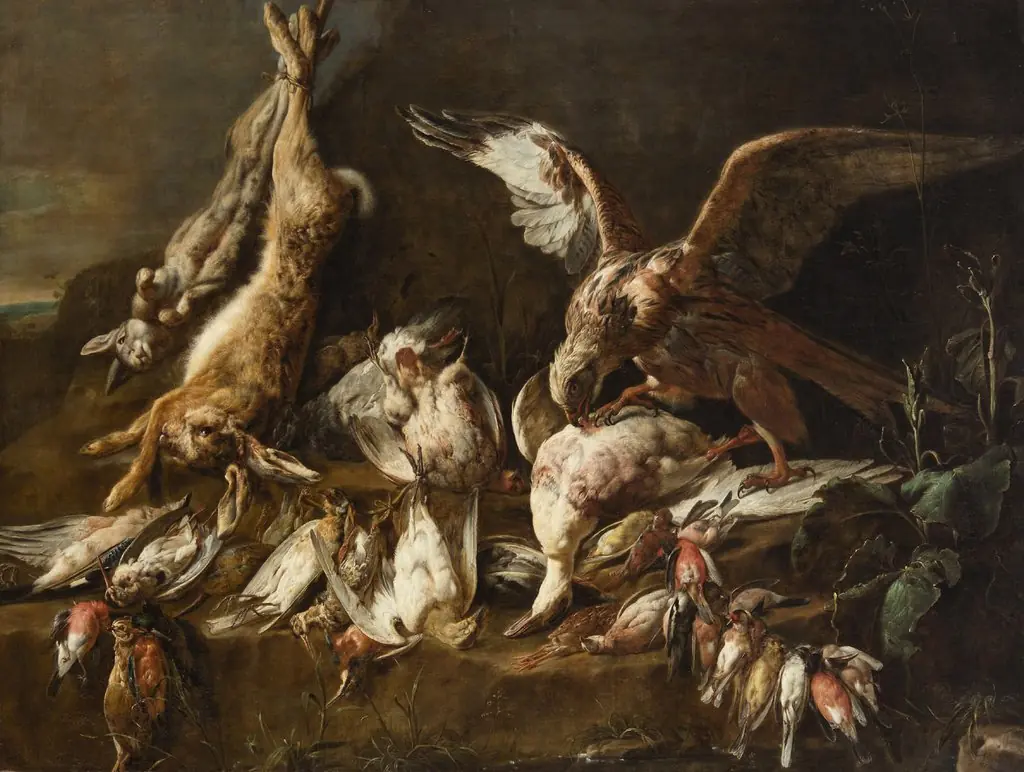 Still life of game
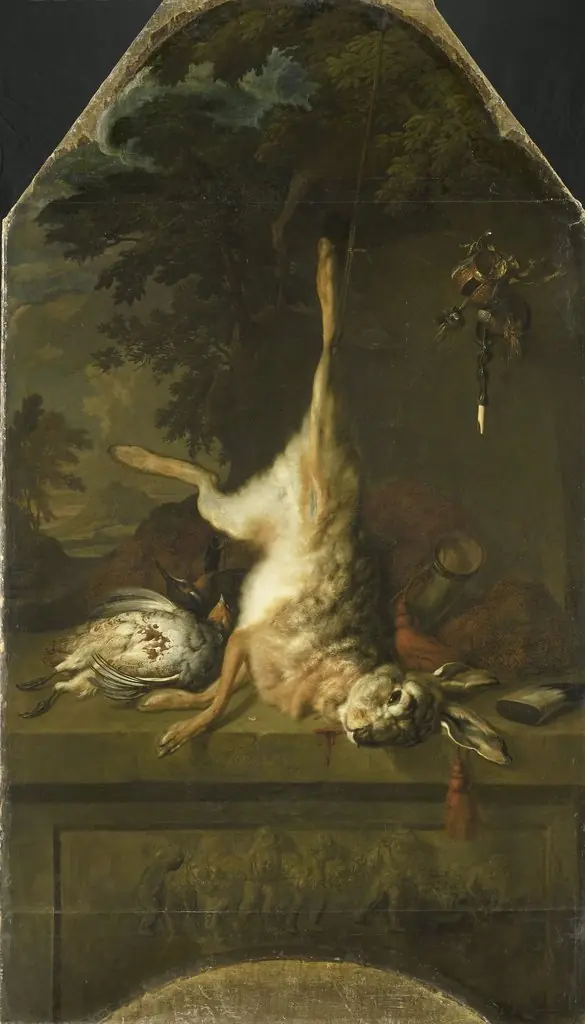 Still Life with Dead Hare and Partridges
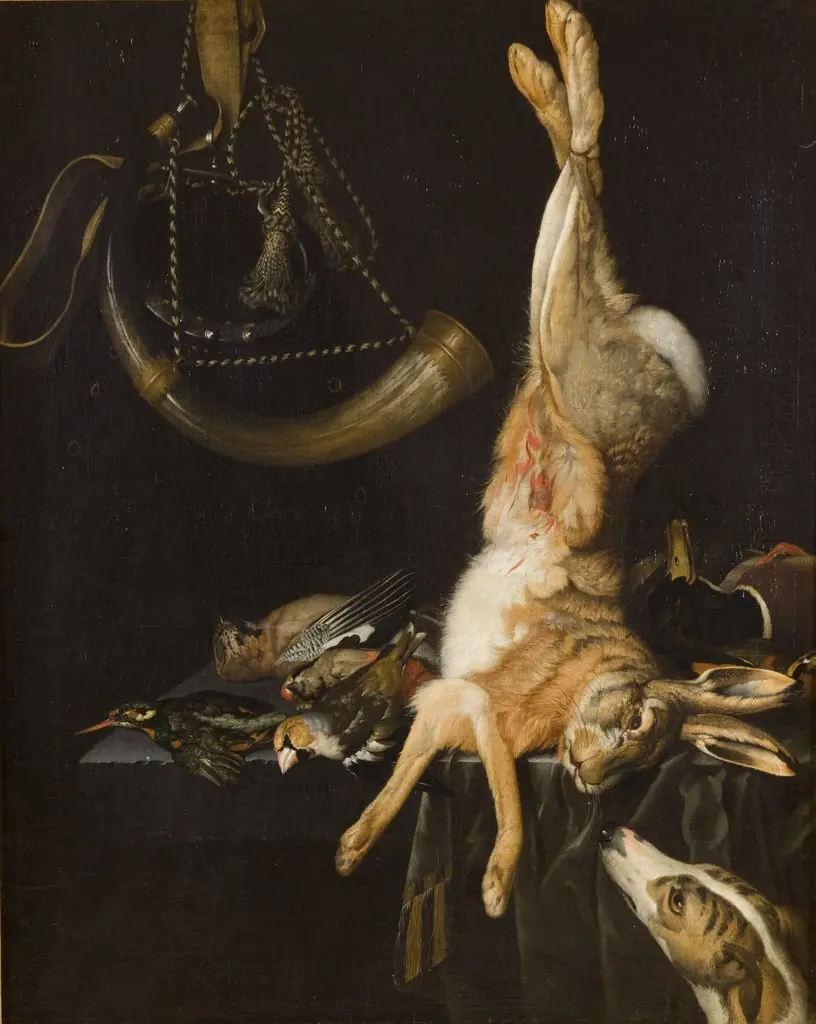 Still Life with a Hare
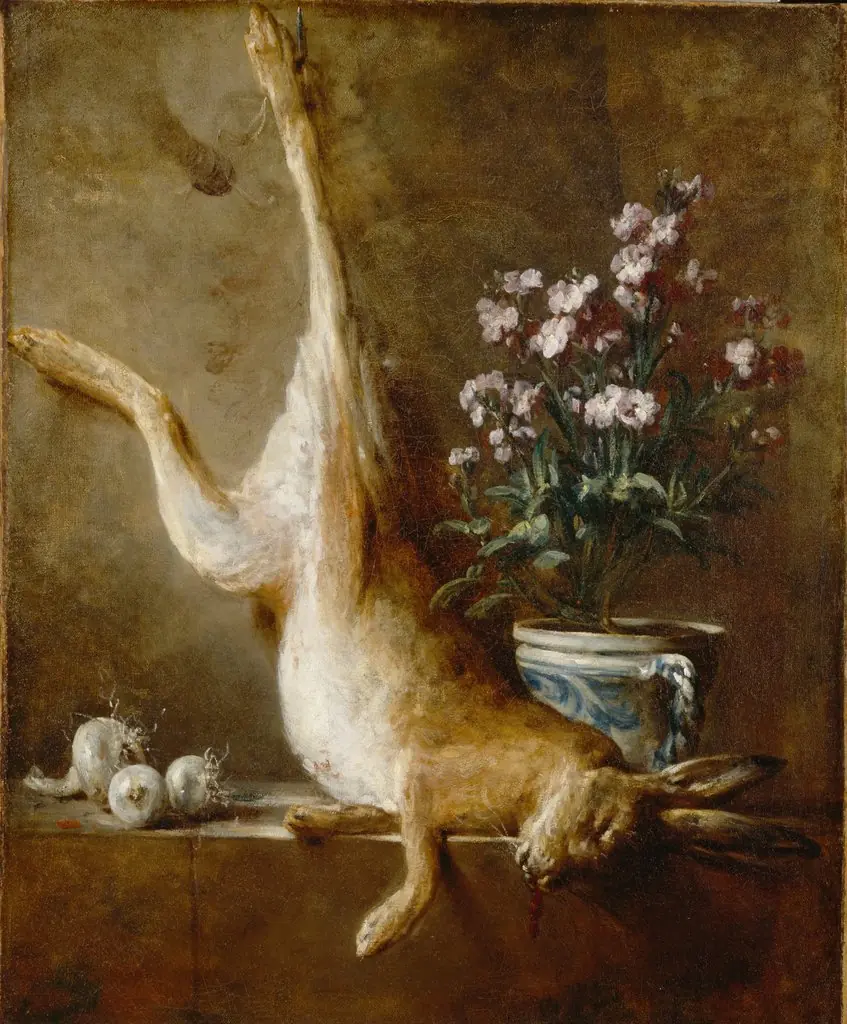 Still Life with Dead Hare
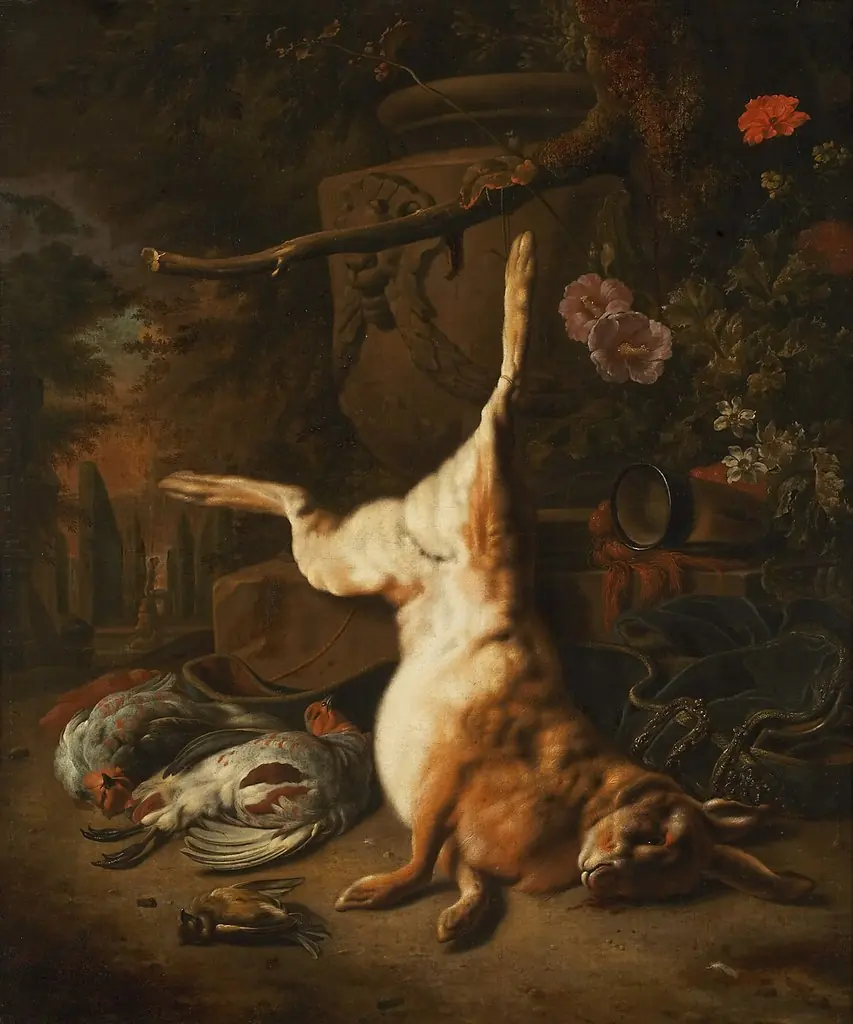 Still-life with dead hare in a park
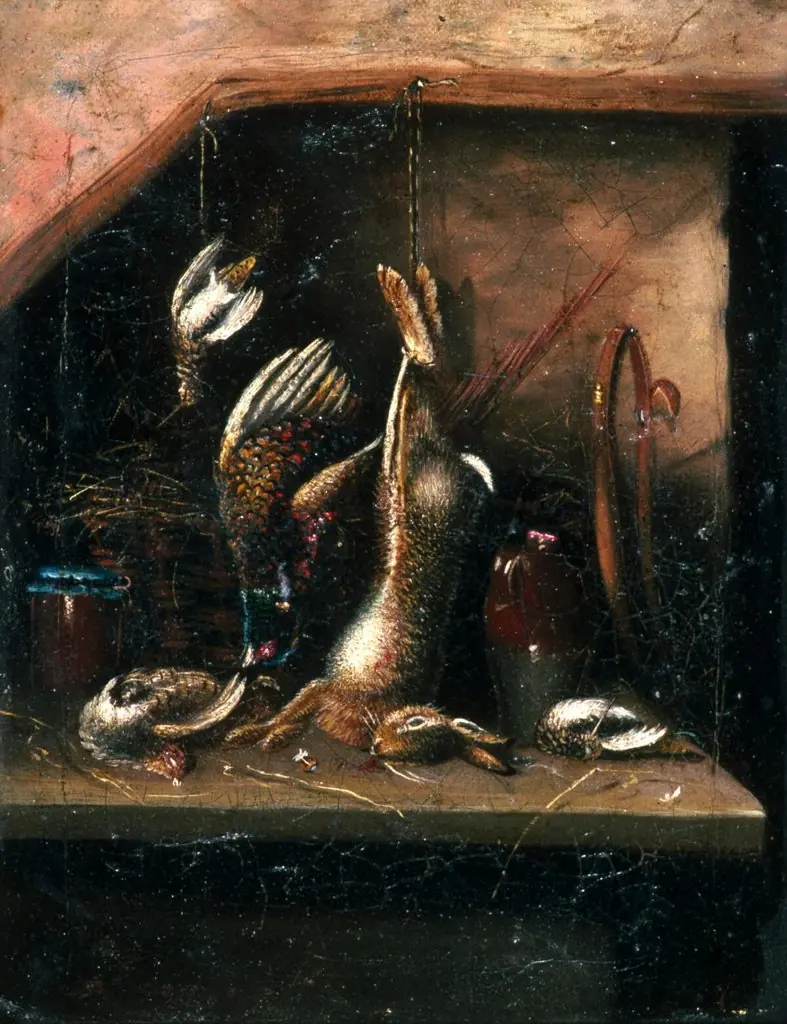 Still life with game
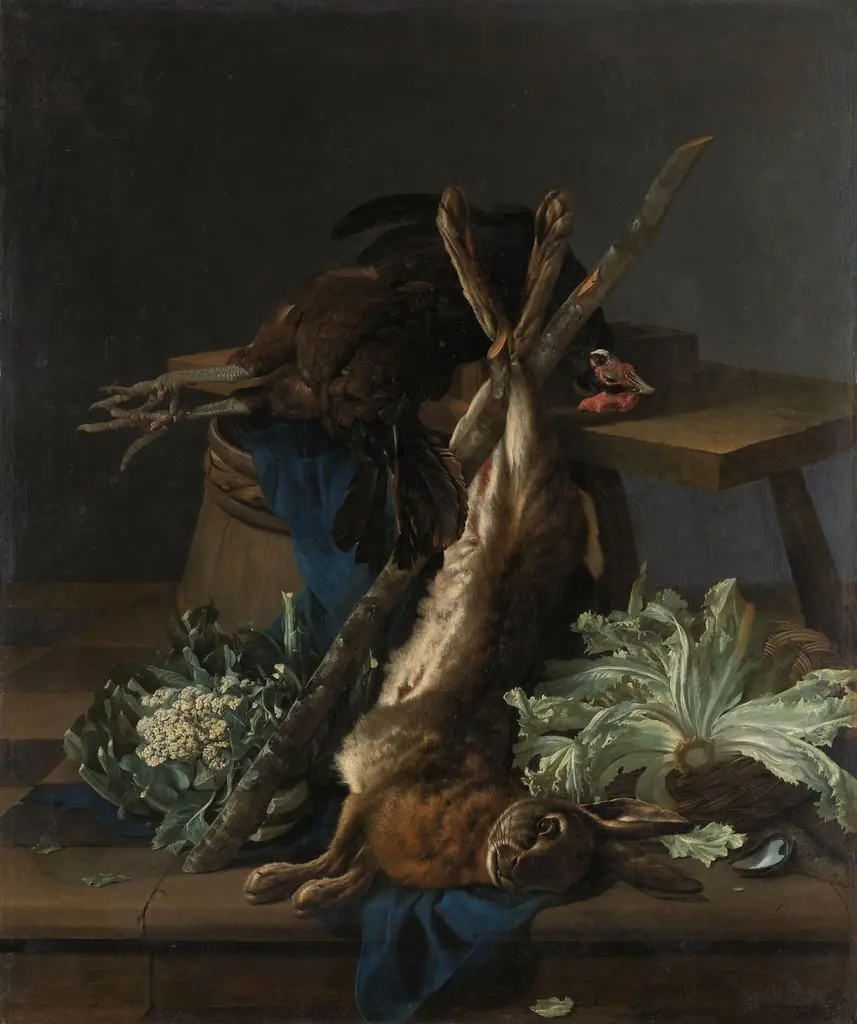 Still life with hare and black rooster
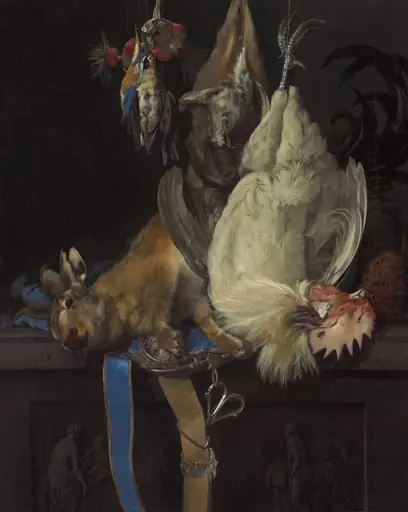 Still Life with Dead Game
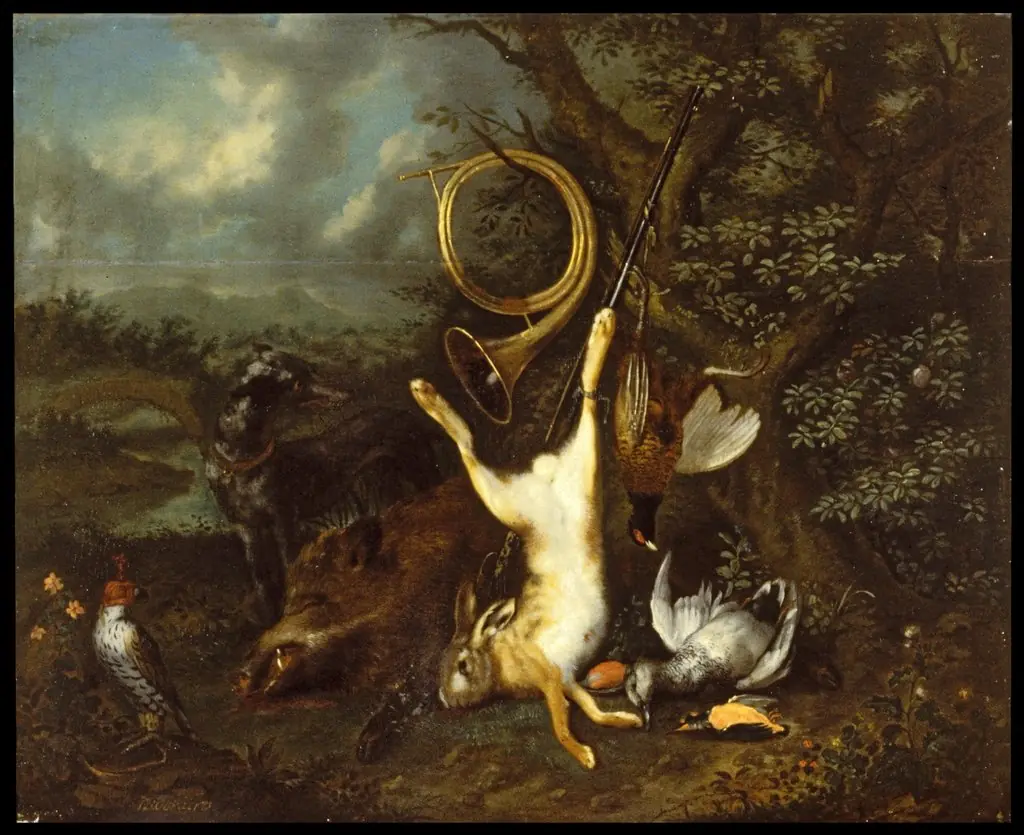 Still Life with Dead Game
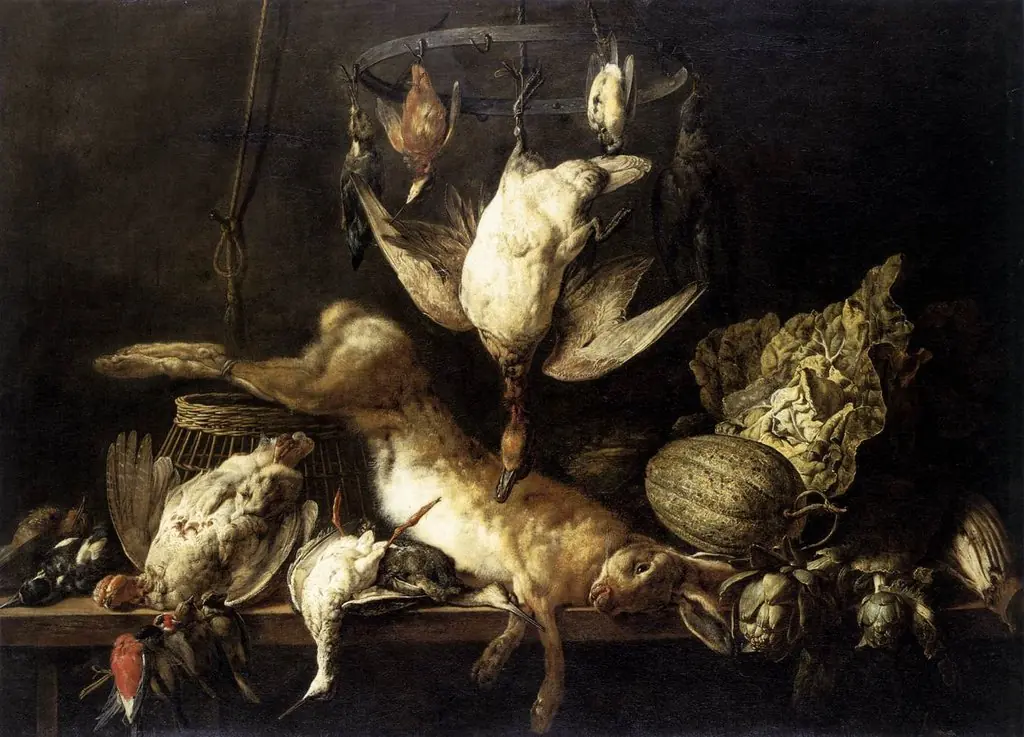 Still-Life with Hare and Birds on a Ring
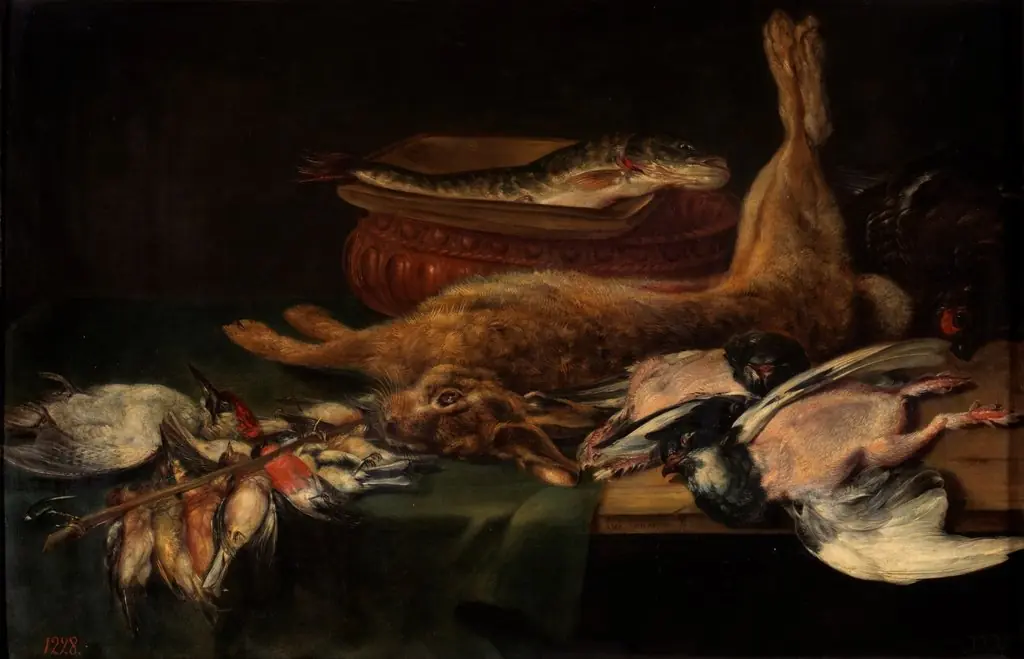 Still life with a hare, dead birds and fish