Artwork
Conflagration in a Dutch city
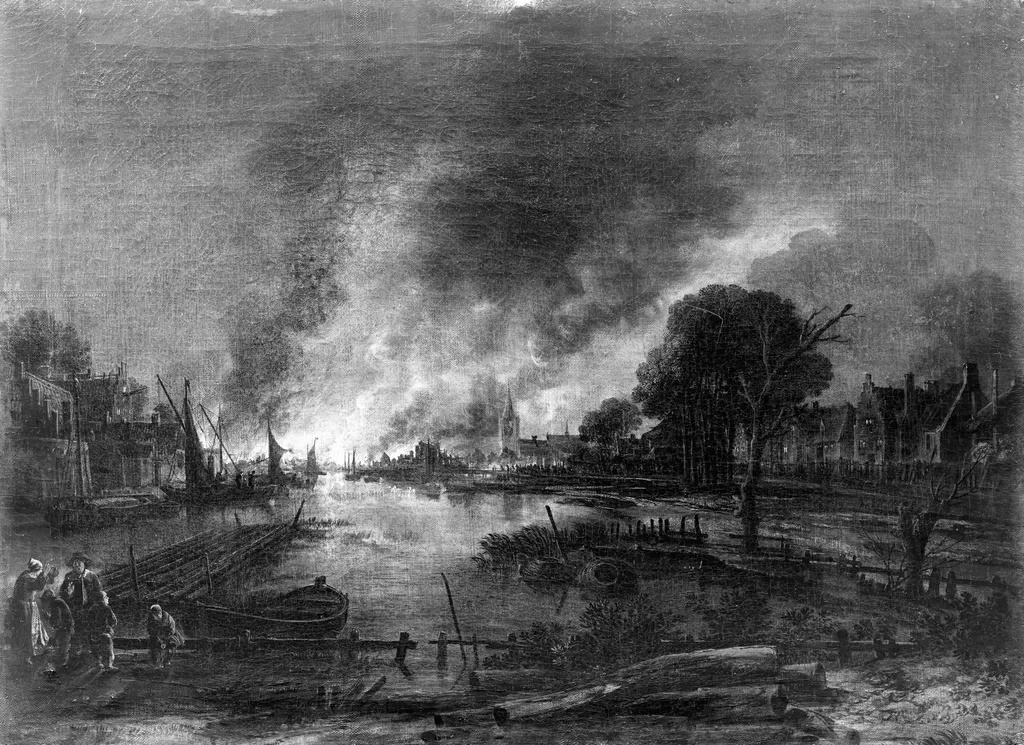
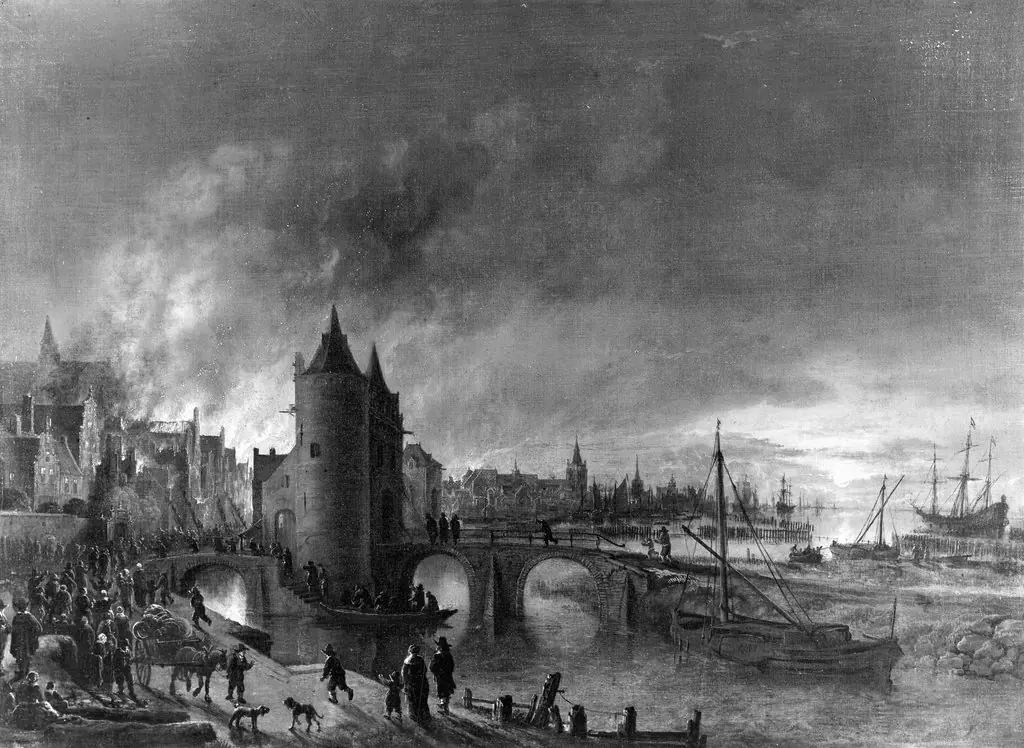
Conflagration in a Dutch city is a paint painting by the Dutch Golden Age artist Aert van der Neer. It dates from 1653 and is held in the collection of the Gemäldegalerie Berlin.
About this work
Overview
Executed in oil on panel, it belongs to a small body of nocturnal landscapes the artist developed during the Dutch Golden Age.
Painted in 1653 by Aert van der Neer, this work captures a nighttime urban fire in a Dutch city. Executed in oil on panel, it belongs to a small body of nocturnal landscapes the artist developed during the Dutch Golden Age. Van der Neer favored intimate, atmospheric scenes over grand narratives, and this piece exemplifies his focus on the interplay of firelight and darkness in quiet, everyday settings.
Subject & Meaning
The painting portrays a sudden conflagration in a canal-side town, with buildings engulfed in flames and smoke billowing into a starless sky. Figures scatter along the waterfront, some in boats, others on shore, reacting to the emergency. The scene conveys vulnerability and chaos, yet avoids melodrama. The absence of heroic intervention suggests a quiet observation of human response to disaster, grounded in realism rather than moralizing.
Technique & Style
Van der Neer employed muted earth tones—browns, grays, and blacks—to establish the night’s depth, contrasting them with the warm, flickering glow of fire. His brushwork is restrained, with subtle gradations to suggest smoke and reflected light. The composition directs attention diagonally from the foreground water to the burning structures, using the canal as a reflective surface that amplifies the fire’s presence without overwhelming the scene’s stillness.
History & Provenance
Created during the height of the Dutch Golden Age, the painting remained in private collections before entering the Gemäldegalerie in Berlin. Van der Neer’s reputation during his lifetime was modest compared to peers like Cuyp or Hobbema, and his nocturnal themes were considered niche. The work’s survival and eventual institutional acquisition reflect a later recognition of his unique contribution to landscape painting’s emotional range.
Context
In mid-17th-century Netherlands, urban fires were common due to wooden construction and close quarters. While such events were documented in prints and chronicles, van der Neer’s treatment was unusual for its poetic stillness amid destruction. His focus on moonlit and firelit scenes aligned with a broader interest in atmospheric effects, distinguishing his work from the more topographical landscapes of his contemporaries.
Legacy
Though overshadowed in his time, van der Neer’s nocturnal studies influenced later artists interested in light and mood. His ability to convey tension and calm within the same frame expanded the expressive potential of landscape painting. Today, *Conflagration in a Dutch city* stands as a quiet testament to the power of subtlety in depicting crisis, valued for its restraint and atmospheric precision.
Own this work as a print
Artist & collection
Artist
Aert van der Neer, or Aernout or Artus (c. 1603 – 9 November 1677), was a landscape painter of the Dutch Golden Age, who specialized in small night scenes lit only by moonlight and fires, and snowy winter landscapes,…

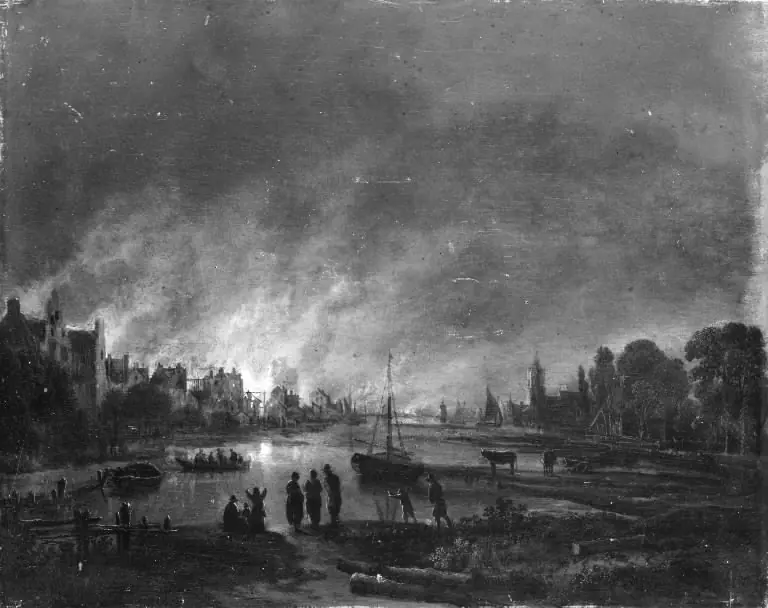 Fire at a Village by Night
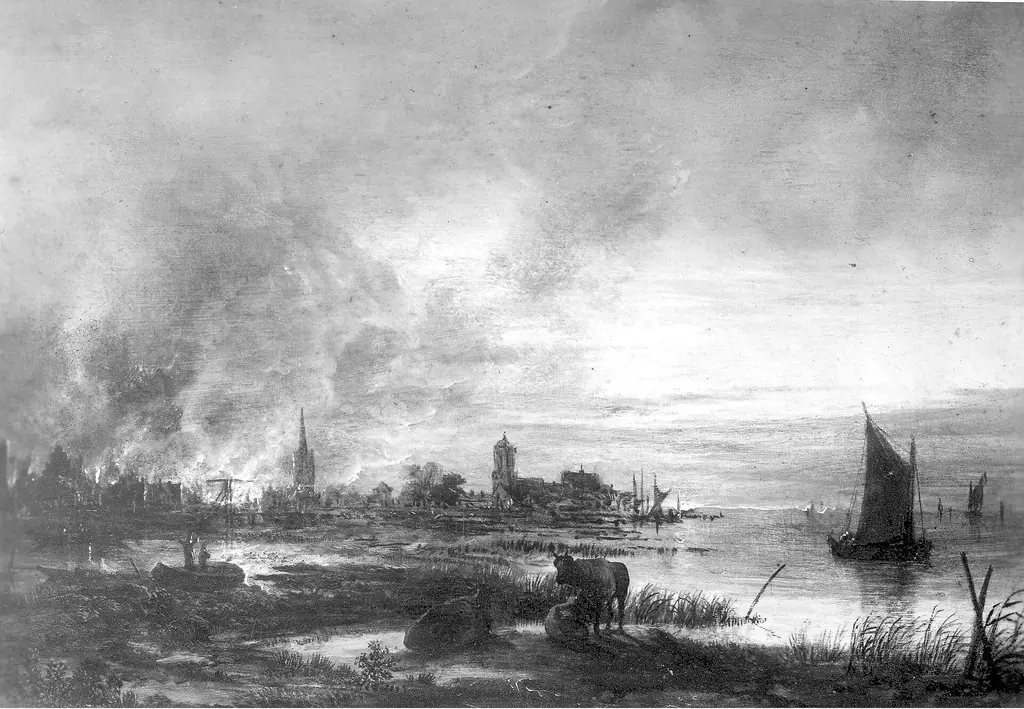 Fire in a town
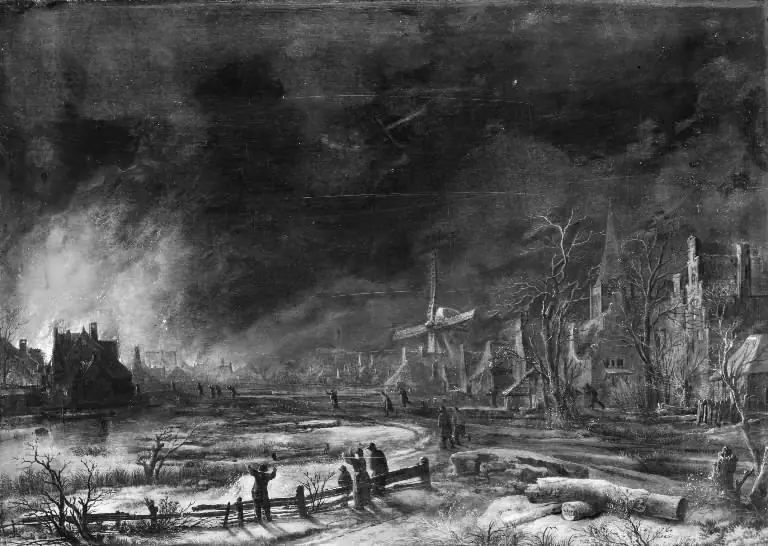 Fire by Night in the Winter
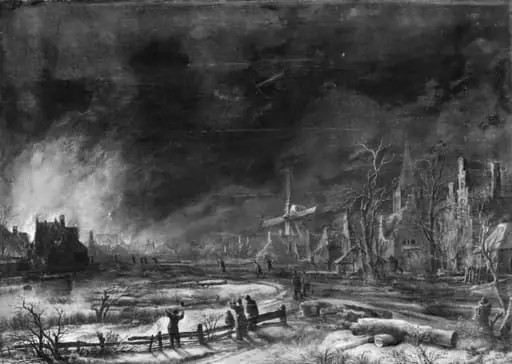 Fire by Night in the Winter
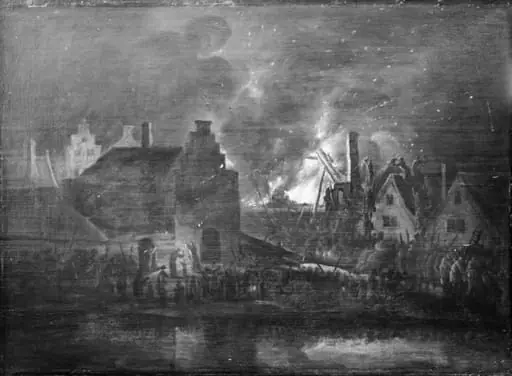 Fire by Night
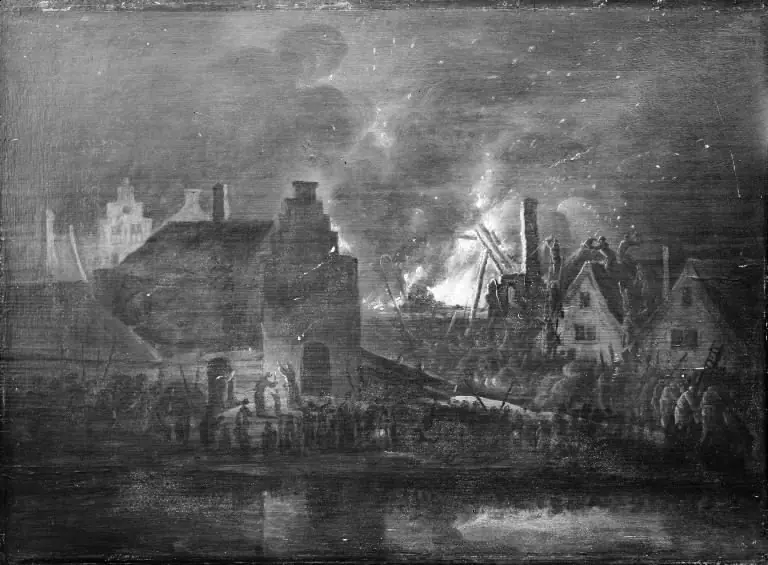 Fire by Night
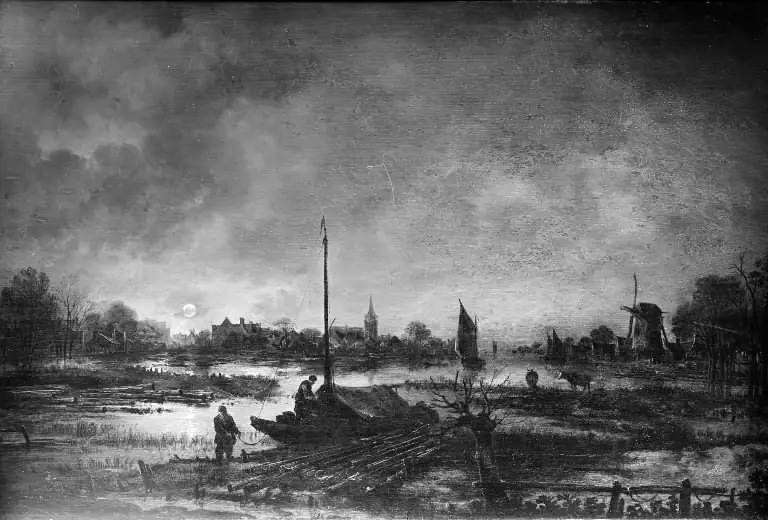 The Moon Rising over a Village
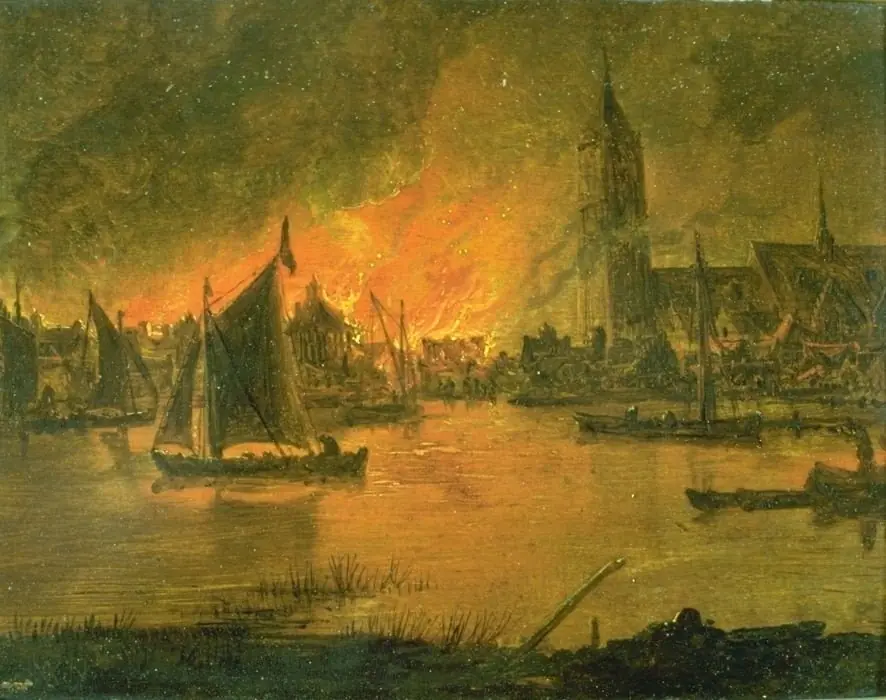 Fire in the Old City Hall of Amsterdam
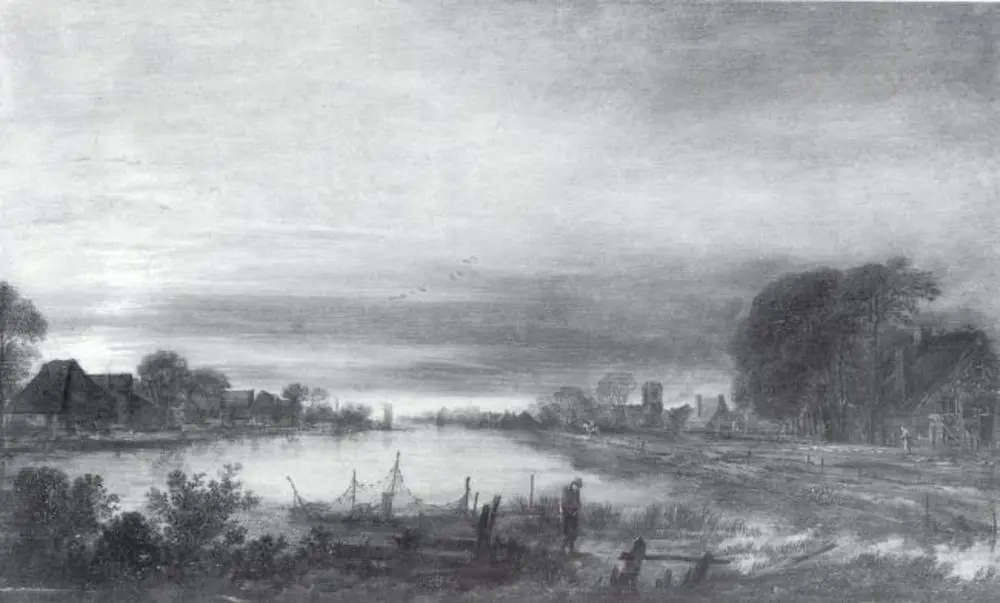 Landscape with Canal at Dusk
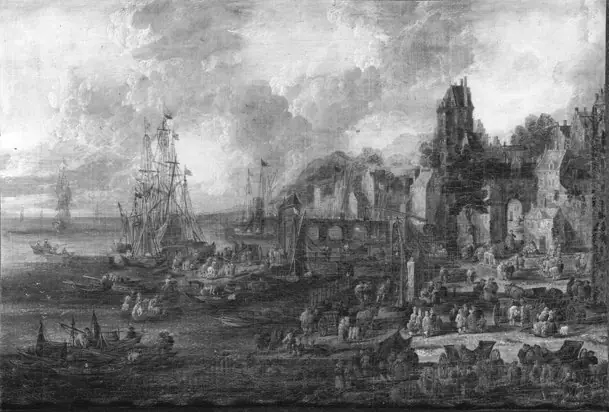 Sounthern Seaport with Numerous Figures on the Shore
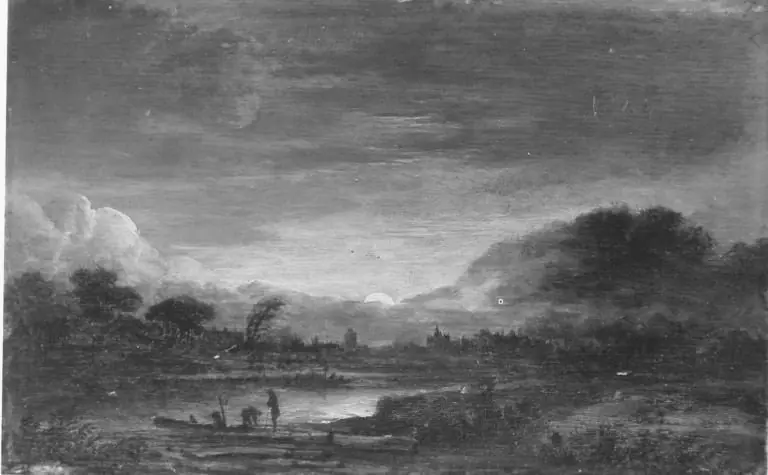 Mondscheinlandschaft (Art des)
 Fire in a Dutch city