Artwork
Fire by Night in the Winter
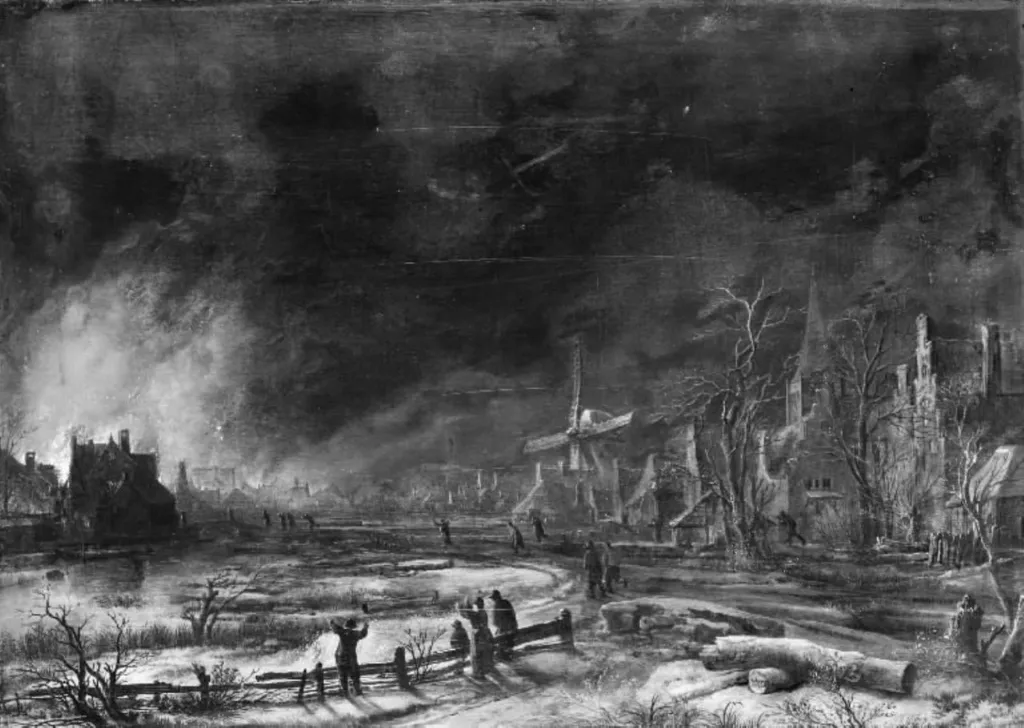
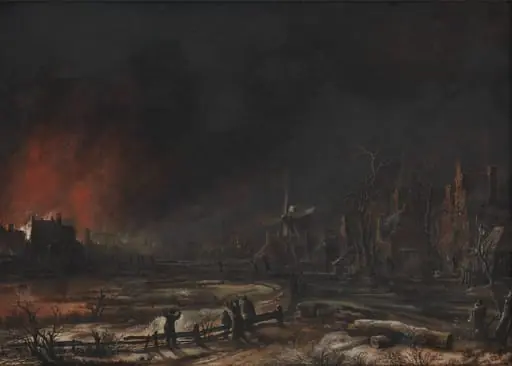
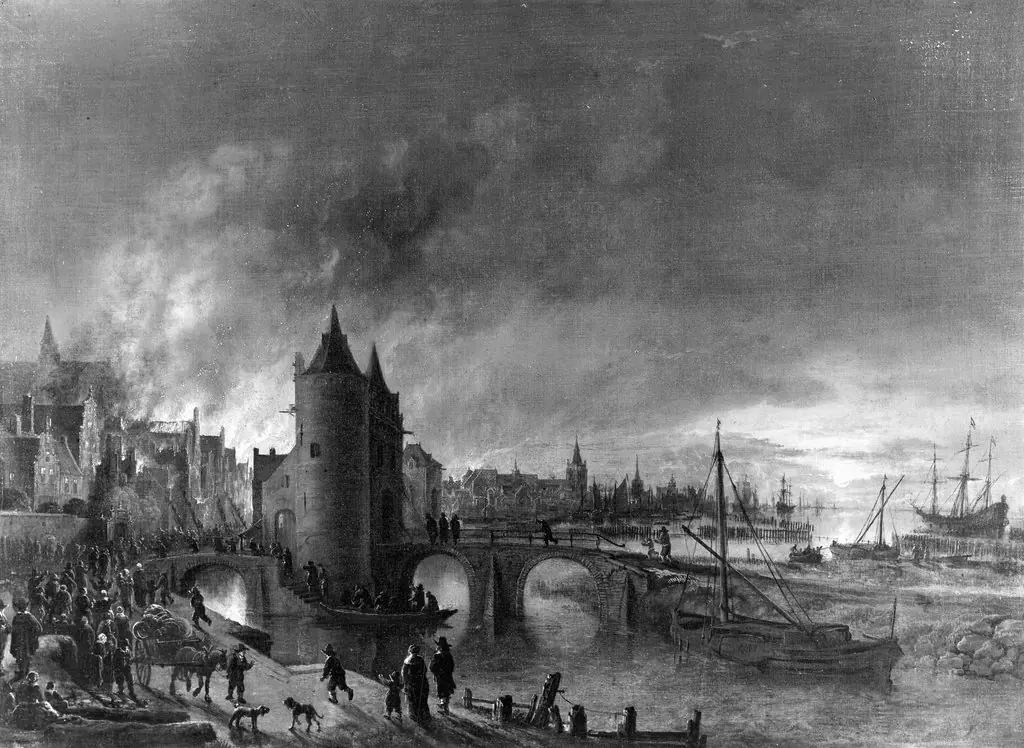
Fire by Night in the Winter is a photography by Unknown. It dates from 1650 and is held in the collection of the Statens Museum for Kunst. Created around 1650, this black-and-white image depicts a winter night in a rural settlement engulfed in fire.
About this work
Overview
The absence of color and the precision of the medium distinguish it from contemporary artistic renderings of similar subjects.
Created around 1650, this black-and-white image depicts a winter night in a rural settlement engulfed in fire. Though it resembles a painted scene, it is a photograph, making its detailed realism unusual for the period. The Museum of Ethnography holds the work, which captures a moment of destruction with striking clarity. The absence of color and the precision of the medium distinguish it from contemporary artistic renderings of similar subjects.
Subject & Meaning
The image portrays a village in ruin, with burning structures, a prominent windmill, and a frozen river reflecting the flames. Figures near a fence observe the disaster, their stillness contrasting with the chaos. The scene suggests a sudden catastrophe—perhaps accidental or wartime—though no specific event is documented. The focus on human presence amid destruction invites contemplation of vulnerability and resilience in rural life.
Technique & Style
The photograph employs high contrast between light and dark, emphasizing the glow of fire against the night. The sharp definition of smoke, ice, and architecture reflects the technical capabilities of early photographic processes. The composition directs attention to the burning buildings and the windmill, using natural lighting to create a dramatic, almost theatrical effect. The clarity of detail is characteristic of the medium’s emerging potential in the mid-seventeenth century.
History & Provenance
The photograph’s origin is undocumented beyond its approximate date and current location at the Museum of Ethnography. Its survival suggests it was preserved as a record of an unusual event, possibly collected for its visual impact or social significance. No known artist or photographer is credited, and its creation method remains consistent with early photographic experiments, though the precise process is unconfirmed.
Context
In the mid-1600s, photography did not yet exist as a known technology; this image’s authenticity as a photograph challenges conventional timelines. If genuine, it would represent an extraordinary, unrecorded technical achievement. Alternatively, the description may misidentify the medium. Either way, the image reflects a period when visual documentation of daily life and disaster was rare and often mediated through painting or print.
Legacy
The image’s perceived realism and emotional weight have led to its use in discussions of early visual documentation. Whether photographic or painted, it contributes to understanding how societies recorded catastrophe before widespread photography. Its presence in an ethnographic collection underscores its value as a cultural artifact, offering insight into perceptions of disaster, memory, and the built environment in early modern Europe.
Artist & collection

 Domestic Scene
 Giacomo and Cardinal Marco, investing Andrea, Abbot of San Zeno, with his Benefice
 The Nymph of Fontainebleau
 Portrait of a Woman
 Madonna and Child with Saints in the Enclosed Garden
 Venus and Minerva
 Family Group of Four on Sofa
 Wall painting from Room H of the Villa of P. Fannius Synistor at Boscoreale