Artwork
Flori
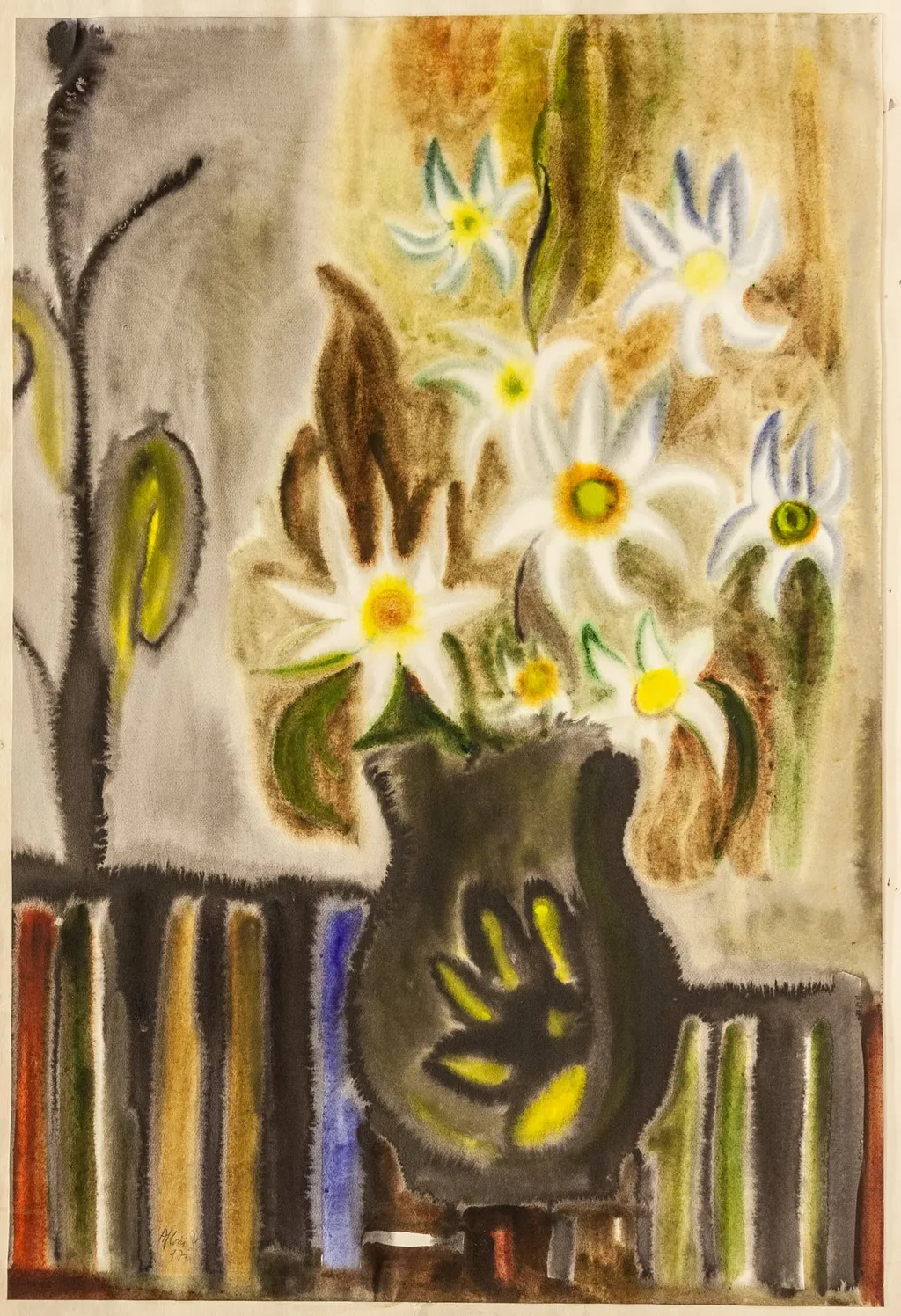
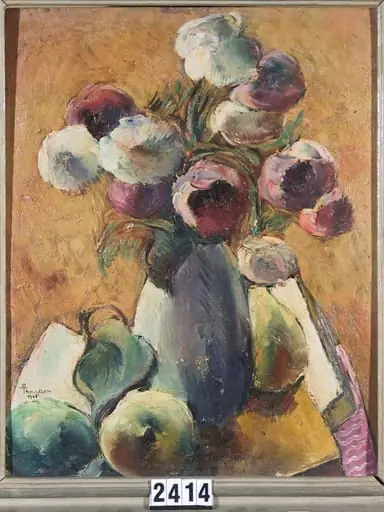
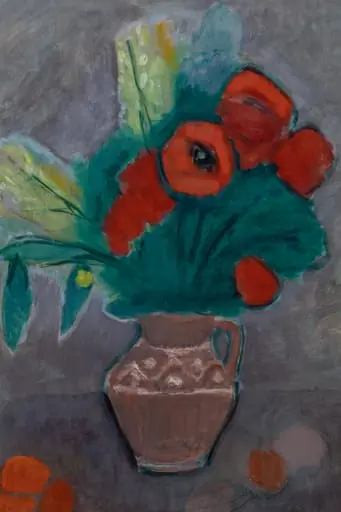
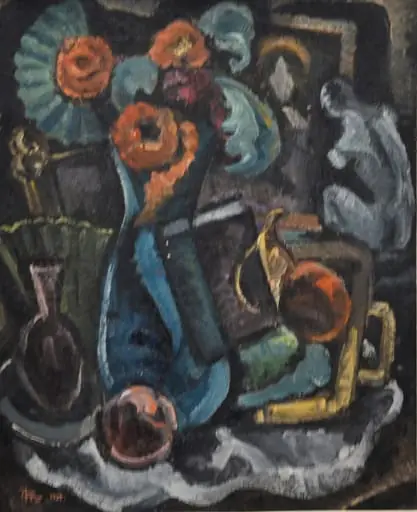
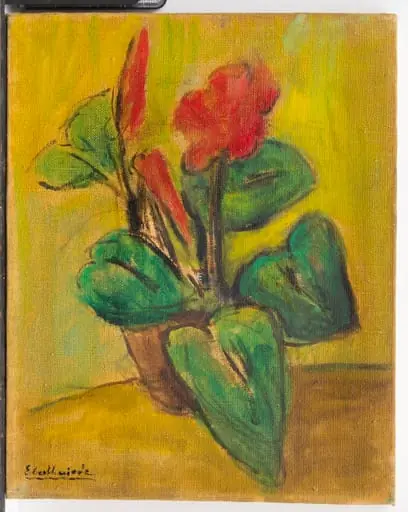
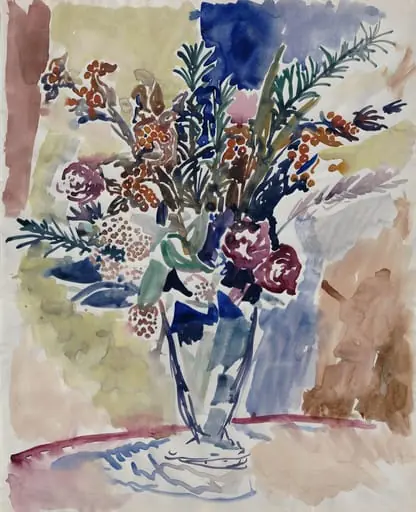
Flori is an unspecified painting by Elena Aflori. It dates from 1950 and is held in the collection of the Gavrila Simion Eco-Museum Research Institute Tulcea.
About this work
Overview
The background suggests an interior space with muted tones and the suggestion of a window, grounding the scene in a quiet domestic setting.
Flori, created around 1950 by Elena Aflori, is a still-life painting depicting a dark ceramic vase brimming with vivid flowers. It resides in the Museum of Ethnography. The composition centers on the contrast between the deep vessel and the luminous blooms, arranged simply on a wooden surface. The background suggests an interior space with muted tones and the suggestion of a window, grounding the scene in a quiet domestic setting.
Subject & Meaning
The painting presents a common domestic motif—a vase of cut flowers—yet its emotional resonance lies in its restraint. The absence of ornate decoration or symbolic references shifts focus to the transient beauty of natural forms. The flowers, rendered with immediacy, evoke a moment of quiet observation rather than narrative or ritual, reflecting an intimate, personal engagement with the everyday.
Technique & Style
Aflori employed loose, expressive brushwork that borders on sketch-like, avoiding polished finish in favor of vitality. Bold hues of white and yellow flowers emerge sharply against a subdued palette of browns and greens. Light is used to define petal volume and surface, employing subtle chiaroscuro to model form without dramatic contrast. The technique conveys spontaneity, as if the scene was captured in a single, attentive glance.
History & Provenance
Flori entered the collection of the Museum of Ethnography shortly after its creation, likely through direct acquisition or donation by the artist. Its presence in an ethnographic institution, rather than a fine arts museum, suggests an interest in documenting vernacular artistic practices of the period. No significant exhibition or ownership history beyond the museum’s custody is documented.
Context
Created in the early postwar years, Flori reflects a shift in Romanian art toward personal expression amid broader cultural reconstruction. While formal academic traditions persisted, artists like Aflori turned to intimate subjects, embracing informal techniques. The painting aligns with a regional trend of quiet domestic realism, prioritizing sensory presence over ideological or monumental themes.
Legacy
Flori remains a quiet example of mid-century Romanian still-life painting, valued for its unembellished observation and tactile brushwork. It contributes to scholarly understanding of how artists navigated the boundaries between folk sensibility and modernist experimentation. Though not widely reproduced, it continues to inform studies of everyday visual culture in Eastern Europe during the mid-20th century.
Artist & collection
Artist
Elena Aflori painted two works here: the oil *Flori*, a single blooming branch that fills the canvas in soft light, and the lithograph *Peisaj*, a quiet hillside road disappearing into the distance.
Museum
Gavrila Simion Eco-Museum Research Institute Tulcea
Continue through works from the same source collection.