Artwork
St. Peter's, Marlborough
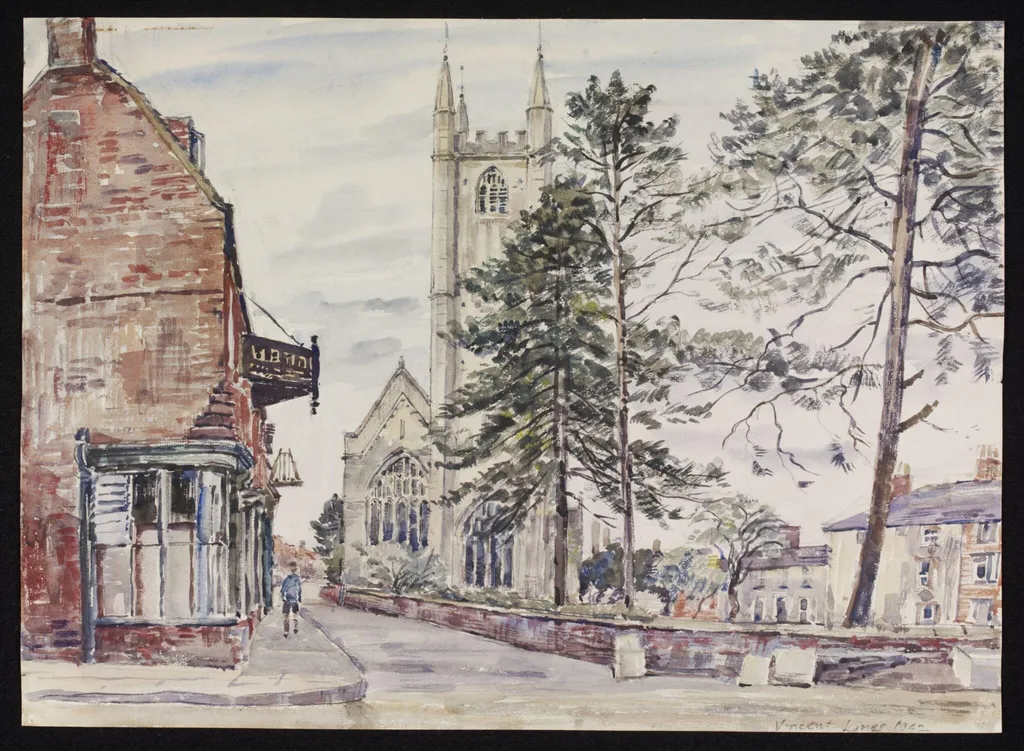
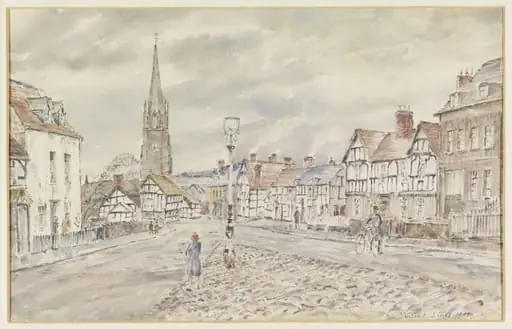
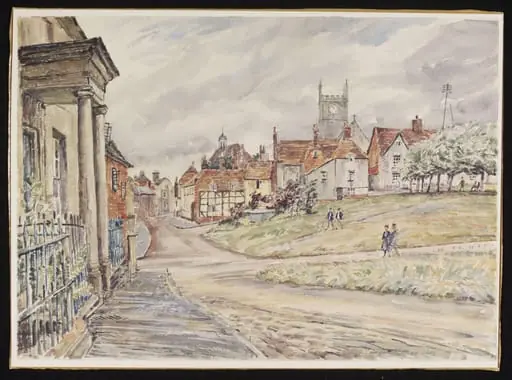
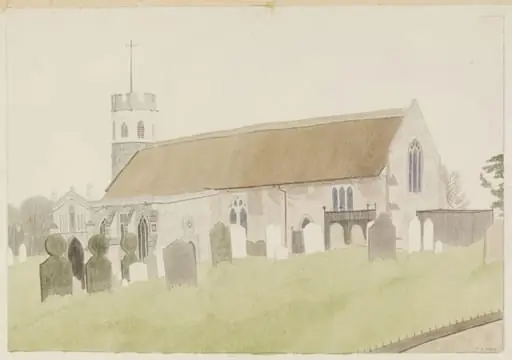
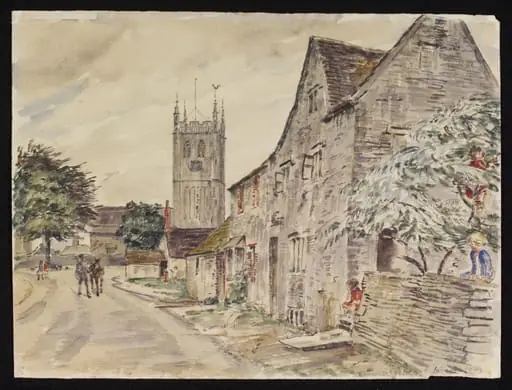
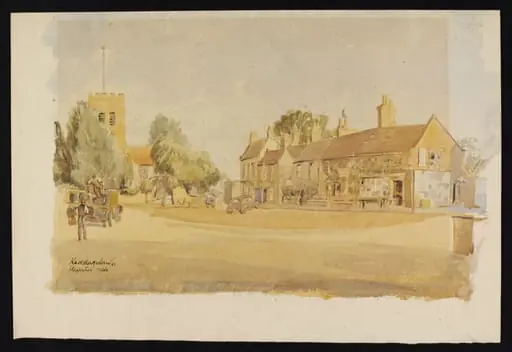
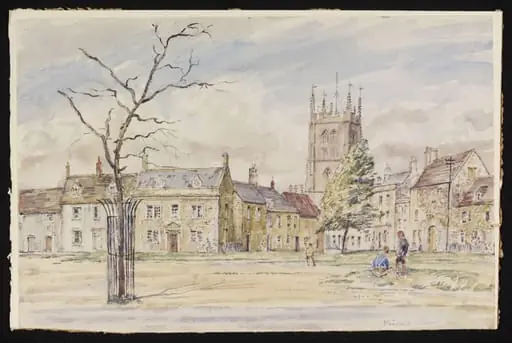
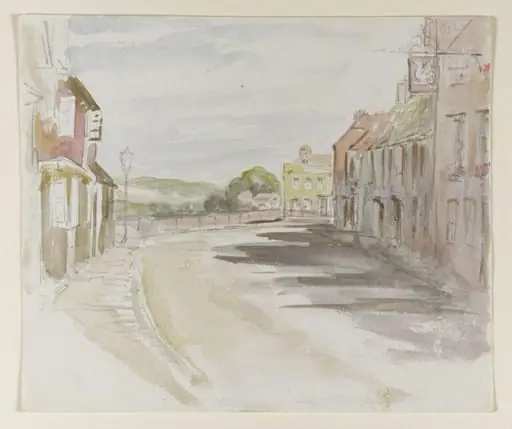
St. Peter's, Marlborough is a watercolor work on paper by the Impressionist artist Lines. It dates from 1942 and is held in the collection of the Victoria and Albert Museum. Created in 1942, this watercolour presents a modest street view of St.
About this work
Overview
A solitary pedestrian and a horse‑drawn carriage move past leaf‑less trees, rendered in soft greens, browns and grays that convey a quiet, everyday moment.
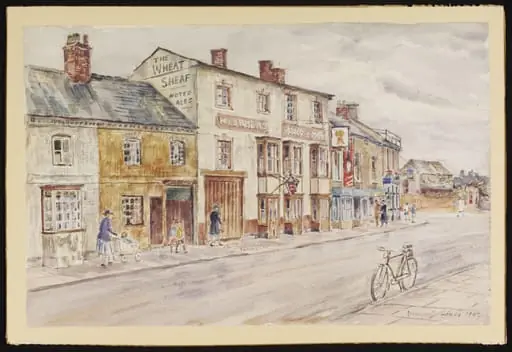
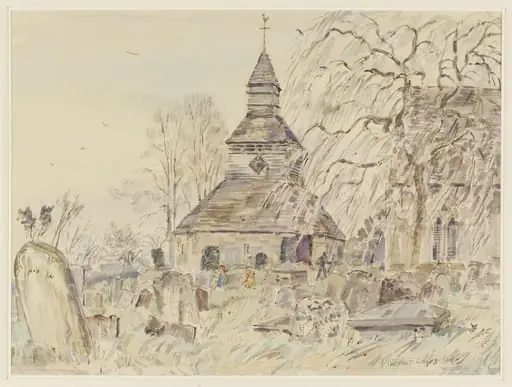
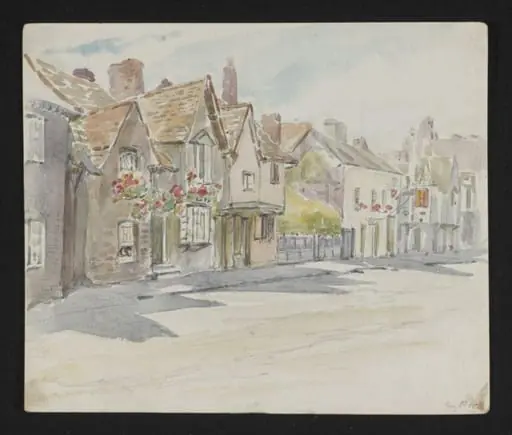
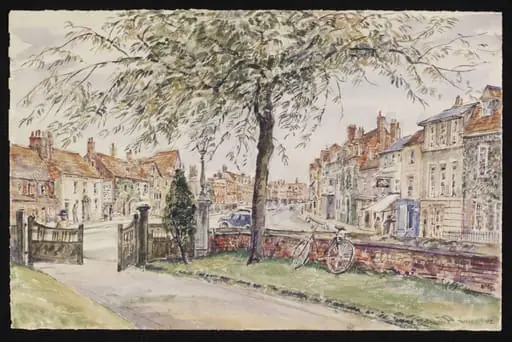
Created in 1942, this watercolour presents a modest street view of St. Peter’s Church in Marlborough. The composition centers on the church’s tall tower, set against a sky of muted blue, while a weathered brick building with a painted “M.B.A.” sign occupies the left foreground. A solitary pedestrian and a horse‑drawn carriage move past leaf‑less trees, rendered in soft greens, browns and grays that convey a quiet, everyday moment.
Subject & Meaning
The work records a specific slice of rural English life, juxtaposing the permanence of the medieval church with the transitory activity of a lone walker and carriage. By emphasizing ordinary details—a faded sign, barren trees—the artist underscores the continuity of daily routine amid the broader uncertainties of wartime Britain.
Technique & Style
Executed with loose, fluid brushstrokes, the watercolour relies on a restrained palette to suggest texture rather than precise detail. The artist captures the rough surfaces of brick and stone through subtle washes, while the sky and foliage are hinted at with delicate, semi‑transparent layers, giving the scene a fleeting, snapshot quality.
History & Provenance
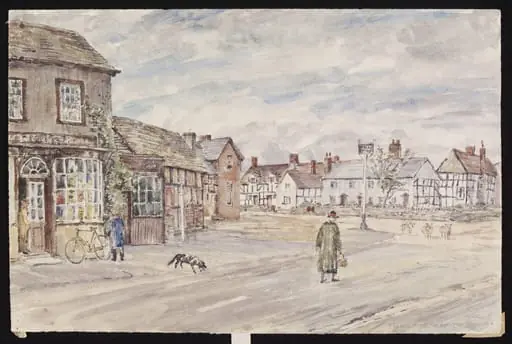
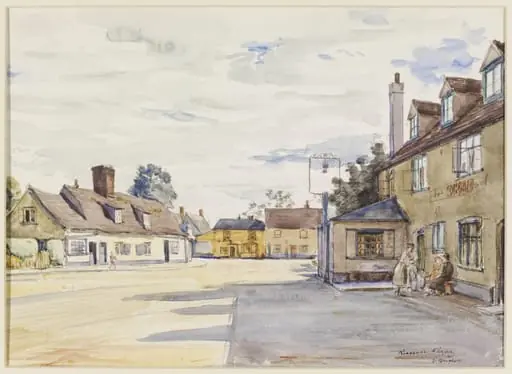
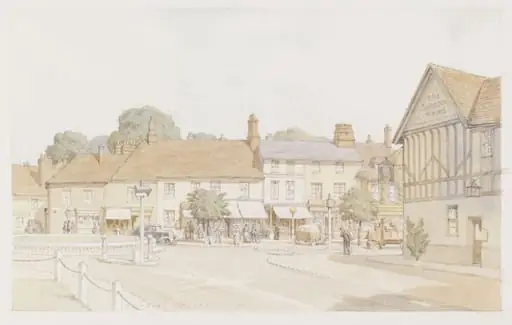
The painting was produced under the Recording Britain scheme, a wartime initiative directed by Sir Kenneth Clark to document the nation’s architectural and rural heritage. Over 1,500 pieces were commissioned from 97 artists; this work forms part of that collective visual archive, reflecting concerns about possible wartime loss of historic sites.
Context
Recorded during World War II, the piece reflects a period when Britain feared extensive damage to its historic environment. The Recording Britain project deliberately excluded Northern Ireland and only limited parts of Wales and Scotland, focusing on England’s towns and countryside as symbols of national identity.
Legacy
As a component of the Recording Britain collection, the watercolour contributes to a larger historical record used by scholars to study mid‑20th‑century English landscapes and architecture. Its modest, observational style exemplifies the project’s aim to preserve everyday visual memory rather than create idealised representations.
Artist & collection