Artwork
Woman Outdoors
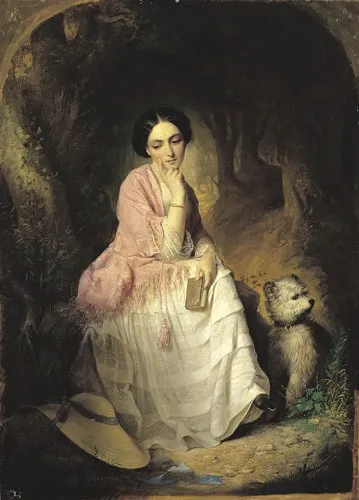
Woman Outdoors is an oil painting by the Biedermeier artist Alajos Györgyi Giergl. It dates from 1853 and is held in the collection of the Hungarian National Gallery.
About this work
Overview
Painted in 1853 by Hungarian artist Alajos Györgyi Giergl, this oil-on-canvas work captures a quiet moment of solitude in a natural setting.
Painted in 1853 by Hungarian artist Alajos Györgyi Giergl, this oil-on-canvas work captures a quiet moment of solitude in a natural setting. Giergl, active in Pest during the mid-19th century, focused on intimate portraiture and domestic scenes, often infused with the restrained emotional tone characteristic of the Biedermeier era. The painting reflects his interest in personal, contemplative subjects rather than grand historical narratives.
Subject & Meaning
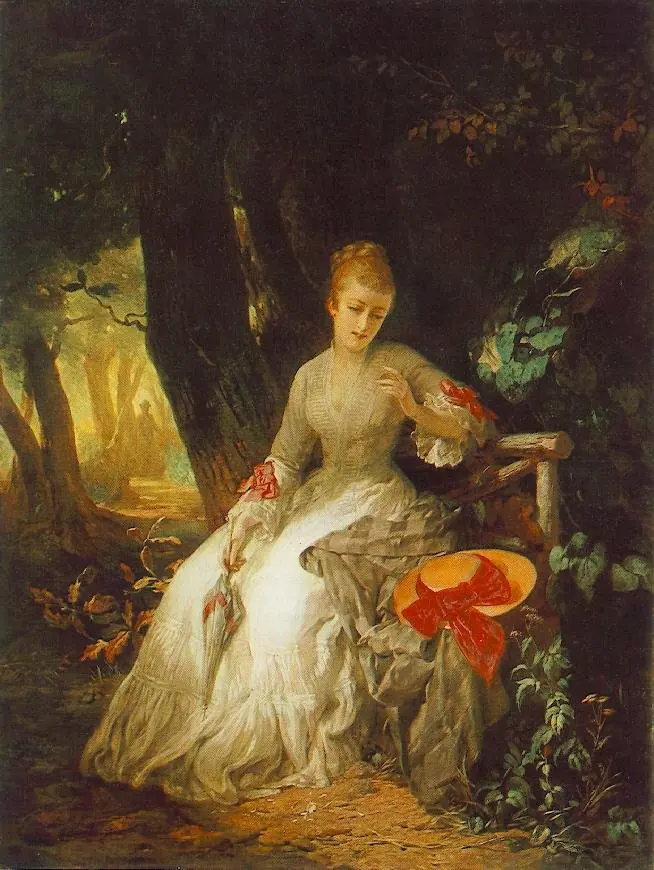
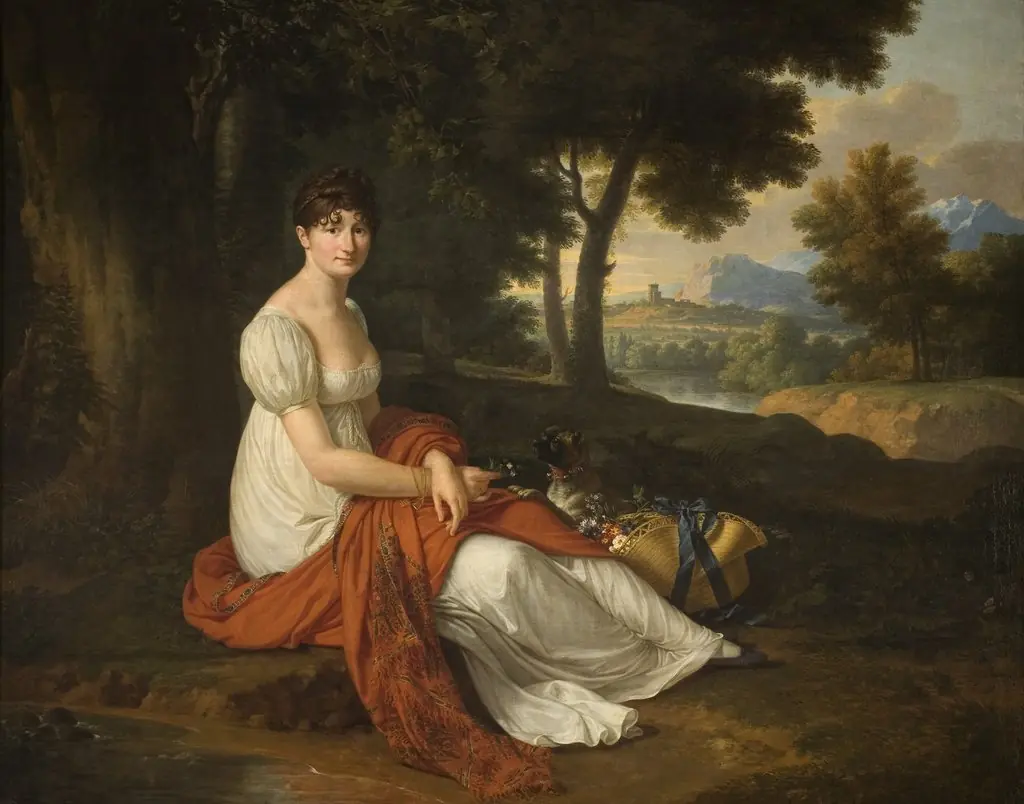
The figure is a woman seated alone in a wooded landscape, dressed in a pale gown with a soft pink shawl, her dark hair neatly gathered. She holds a book, her gaze lowered as if absorbed in thought or reading. A small dog rests at her side, its attention fixed on her. The scene suggests introspection and quiet companionship, evoking themes of inner life and the harmony between human stillness and the natural world.
Technique & Style
Giergl employs soft, muted tones to render the woman and her surroundings with gentle precision. The brushwork is delicate, particularly in the rendering of fabric and foliage, creating a tactile sense of texture without overt drama. Light falls evenly across the scene, avoiding strong contrasts, which reinforces the calm mood. The composition is balanced and intimate, drawing the viewer into the private moment without theatricality.
History & Provenance
The painting was completed during Giergl’s active years in Pest, a cultural center within the Austrian Empire. While specific ownership records from the 19th century are limited, the work aligns with the domestic portraiture favored by middle-class patrons of the Biedermeier period. It likely remained in private Hungarian collections before entering institutional care, though its early provenance remains partially undocumented.
Context
Created in the aftermath of the 1848 revolutions, the painting reflects a broader cultural retreat from political upheaval into private, domestic ideals. The Biedermeier movement emphasized tranquility, moral restraint, and the beauty of everyday life—values mirrored in the woman’s quiet demeanor and the unassuming natural setting. Giergl’s work resonated with audiences seeking solace in personal, rather than public, expression.
Legacy
Though not widely known outside Hungary, Giergl’s oeuvre contributes to the understanding of regional Biedermeier painting. 'Woman Outdoors' exemplifies how Hungarian artists adapted Central European aesthetic norms to local sensibilities, blending Romantic sensitivity with restrained realism. The painting endures as a quiet testament to the era’s preoccupation with inner life and the dignity of solitary contemplation.
Artist & collection
Artist
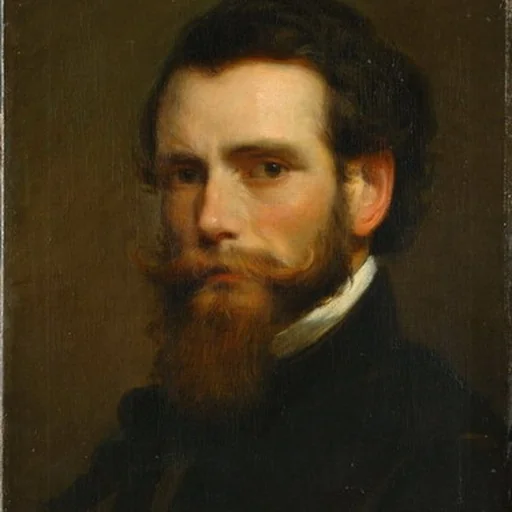
Alajos Györgyi Giergl (1821 in Pest – 1863 in Pest) was a Hungarian painter. He is notable for his portraits and paintings in the Romanticism style.

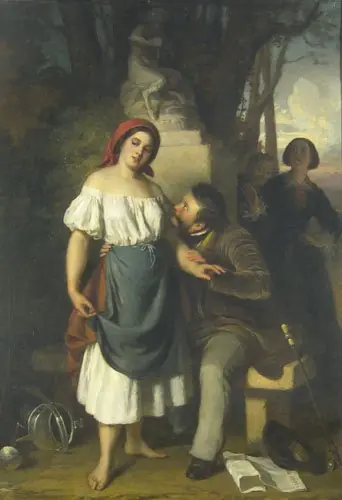
 Randezvous
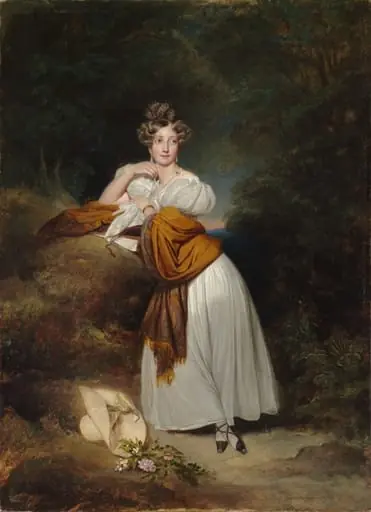 Sophie Guillemette, Grand Duchess of Baden (1801-1865)
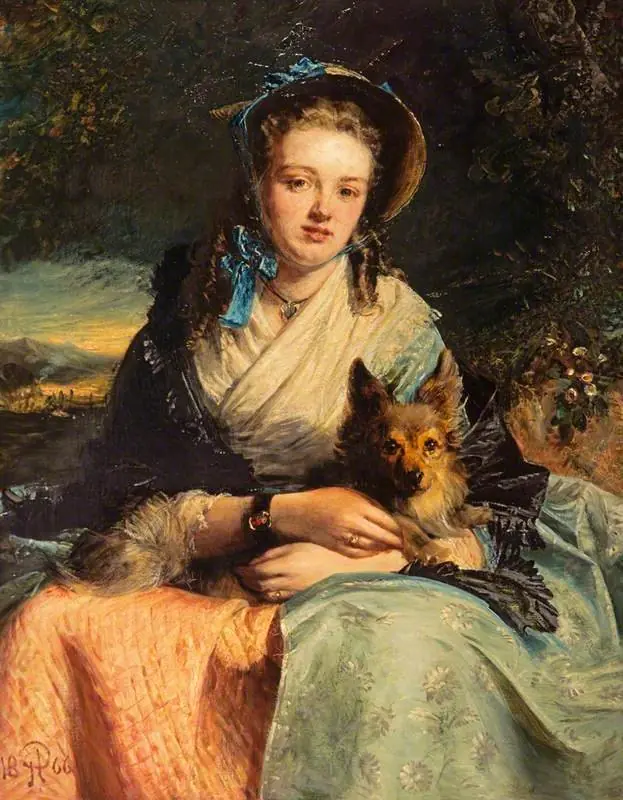 Mary MacKay Caird, later Mrs James Glen (1847 - 1940)
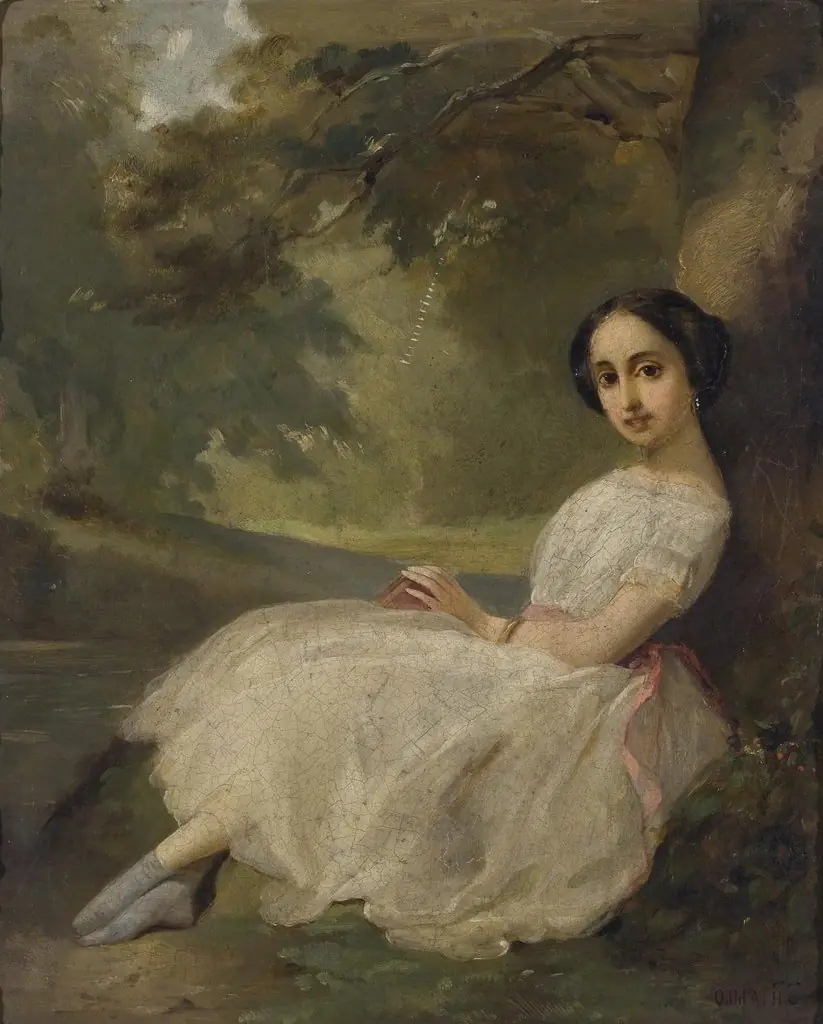 Portrait of L.L.Lazareva
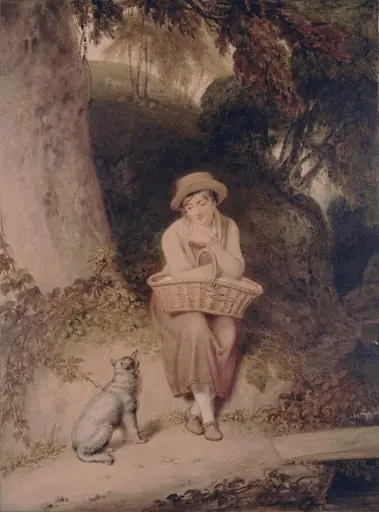 The Market Girl
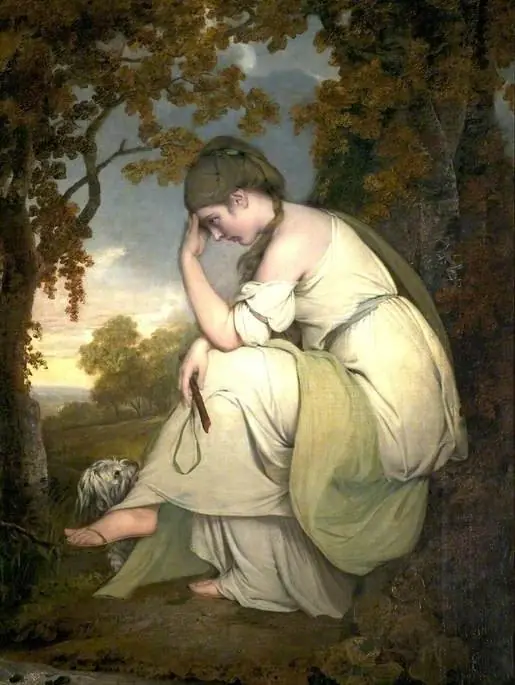
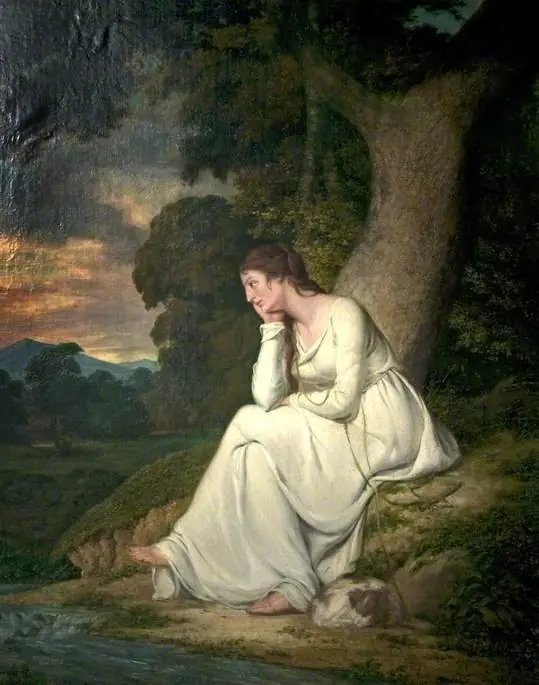 Maria and Her Dog 'Silvio'
 Young Girl with a Dog on the Terrace
 Maria and Her Dog 'Silvio'
 Girl with Flowers
 A Girl Seated and Fondling a Dove
 Portrait of Elżbieta Skotnicka née Laskiewicz (1781–1849), Wife of Michał Skotnicki
 Portrait of a young Woman