Artwork
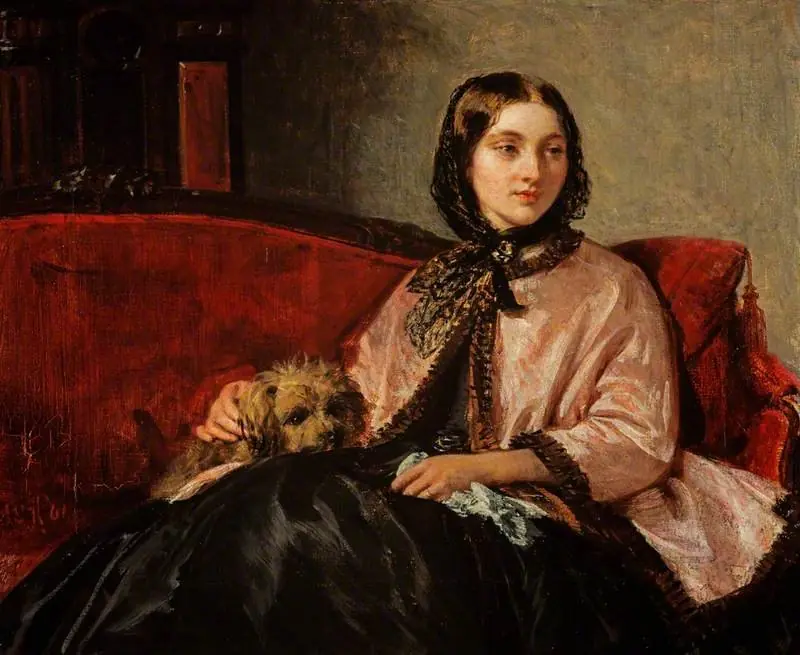
Mary MacKay Caird, later Mrs James Glen (1847 - 1940)
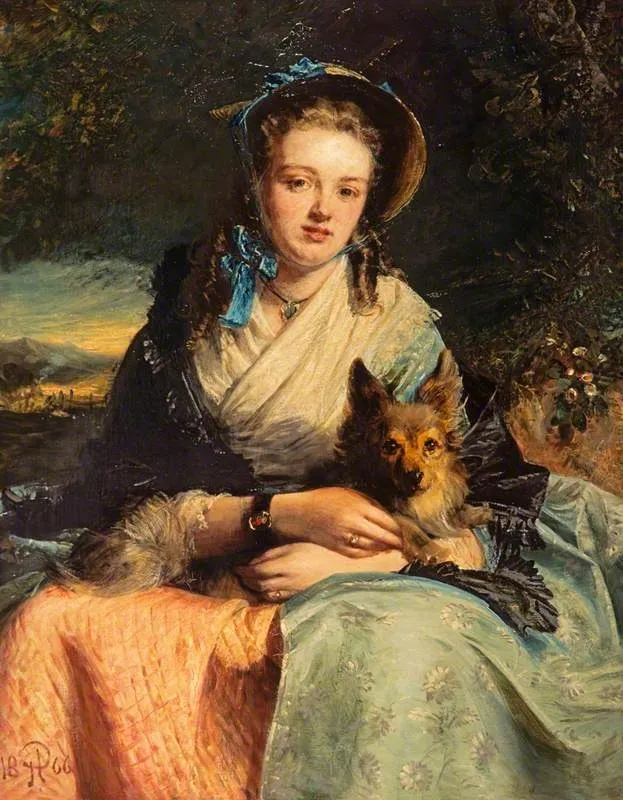
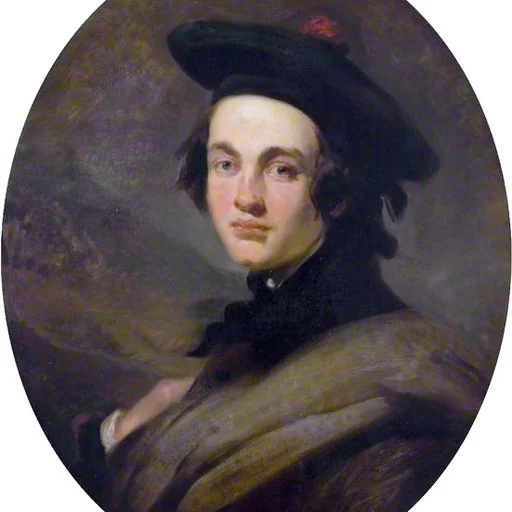
Mary MacKay Caird, later Mrs James Glen (1847 - 1940) is an oil painting by the British Romanticist artist John Phillip. It dates from 1866 and is held in the collection of the National Galleries Scotland.
About this work
Overview
Painted in 1866 by Scottish artist John Phillip, this portrait captures Mary MacKay Caird, who later became Mrs. James Glen. Executed in oil on canvas, the work is a quiet yet deliberate study of a woman in domestic attire, set against a muted background. It resides in the Scottish National Gallery, reflecting Phillip’s engagement with portraiture alongside his more widely known Spanish scenes.
Subject & Meaning
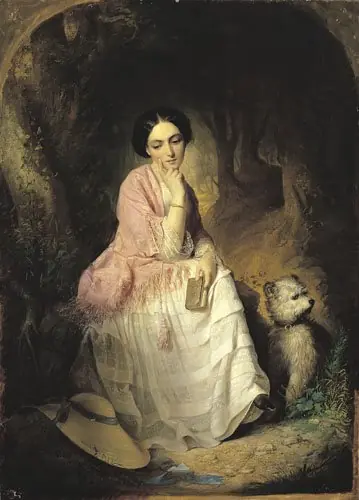
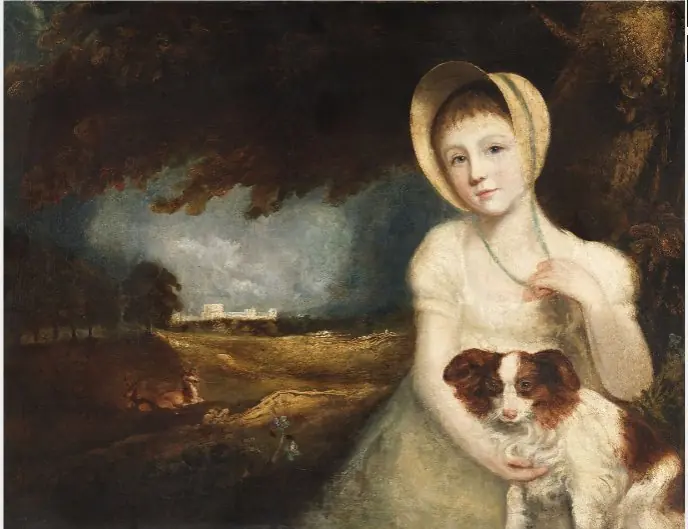
The subject, Mary MacKay Caird, is portrayed with composure, her direct gaze inviting quiet engagement from the viewer.
The subject, Mary MacKay Caird, is portrayed with composure, her direct gaze inviting quiet engagement from the viewer. Her seated posture, with a dog resting on her lap, suggests intimacy and domestic tranquility. The dog’s turned head creates a subtle counterpoint, softening the intensity of her stare. The composition avoids narrative drama, instead emphasizing presence and stillness as markers of personal identity.
Technique & Style
Phillip employs chiaroscuro to model the figure with subtle gradations of light, enhancing the volume of the white shawl and dark jacket. The brushwork is controlled, with fine attention to fabric textures and the softness of the dog’s fur. The dark, indistinct background isolates the figures, focusing attention on their forms and the quiet interplay between human and animal. The palette remains restrained, favoring tonal harmony over color contrast.
History & Provenance
Commissioned during Phillip’s return to Scotland after years in Spain, the portrait reflects his reconnection with British subjects. It entered the Scottish National Gallery’s collection in the late 19th century, likely through donation or acquisition from the sitter’s family. Its preservation underscores its significance as a personal record and an example of Phillip’s lesser-known portraiture.
Context
Created in the mid-Victorian era, the painting aligns with a broader trend in British art that valued intimate, domestic portraiture over grand historical themes. While Phillip was known for exoticized Spanish scenes, this work reveals his sensitivity to quiet, everyday moments. The emphasis on personal dignity and understated elegance reflects contemporary ideals of femininity and refinement among the Scottish middle class.
Legacy
Though not among Phillip’s most celebrated works, the portrait remains a thoughtful example of his ability to convey character through restraint. It contributes to the understanding of 19th-century Scottish portraiture beyond formal aristocratic commissions. Its presence in the national collection ensures continued access for study and appreciation of nuanced, non-heroic representation in Victorian art.
Artist & collection
Artist
John Phillip (19 April 1817 – 27 February 1867) was a Scottish painter best known for his portrayals of Spanish life. He started painting these studies after a trip to Spain in 1851. He was nicknamed John 'Spanish' Phillip.