Artwork
Robert Besnard and His Donkey (Robert Besnard et son âne)
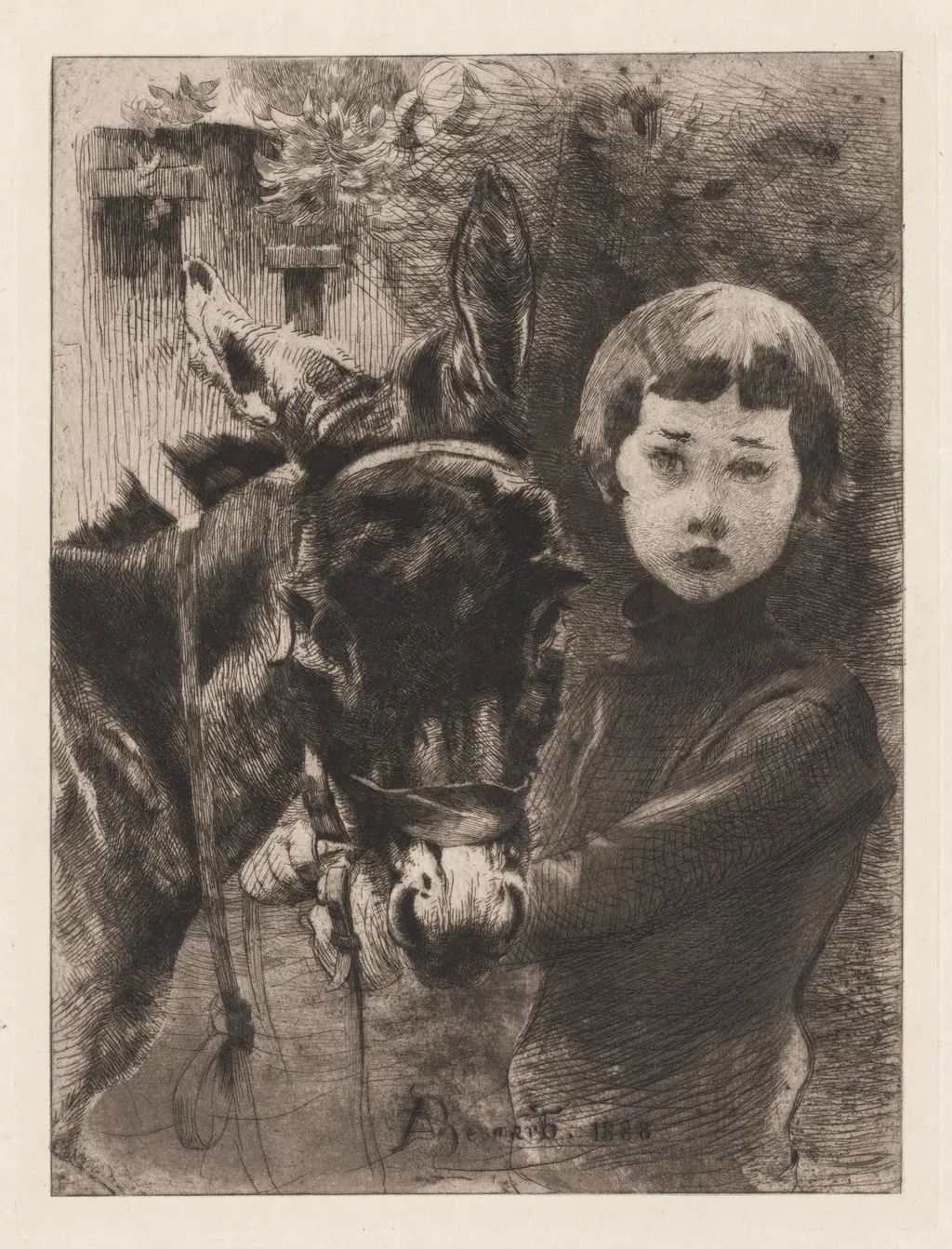
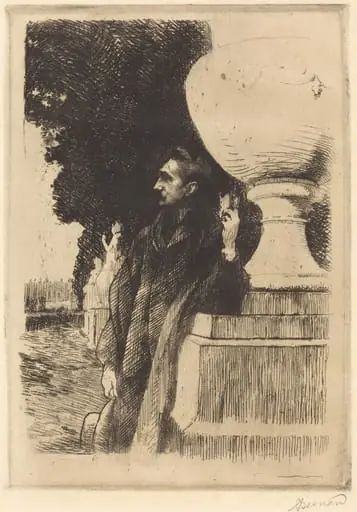
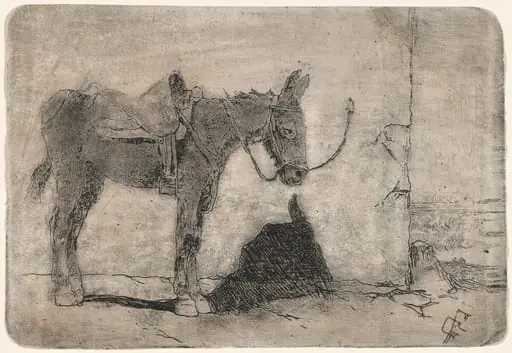
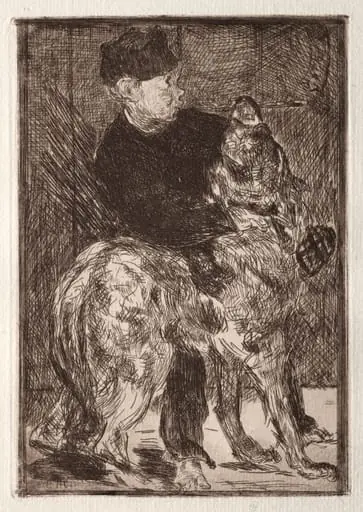
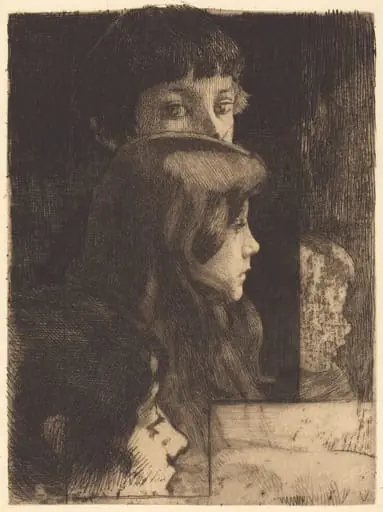
Robert Besnard and His Donkey (Robert Besnard et son âne) is a print by the Impressionist artist Paul-Albert Besnard. It dates from 1888 and is held in the collection of the Cleveland Museum of Art. Created in 1888, Robert Besnard and His Donkey is a painted print by French artist Albert Besnard.
About this work
Albert Besnard painted his son Robert on a donkey in a countryside road. The boy sits sideways, holding the reins loosely. The donkey looks calm, ears perked up.
This was painted in 1888, when Besnard lived in Italy. He often showed family life in simple settings. The bright light and soft shadows feel warm and personal.
Look up Albert Besnard (French, 1849–1934) next.
Overview
Created in 1888, Robert Besnard and His Donkey is a painted print by French artist Albert Besnard. It depicts his young son, Robert, seated sideways on a donkey along a rural path. The work reflects Besnard’s interest in intimate domestic scenes and was made during his time in Italy, where he absorbed the effects of Mediterranean light and quiet outdoor life.
Subject & Meaning
The painting captures a quiet moment between father and son, with Robert Besnard Jr. loosely holding the donkey’s reins. The child’s relaxed posture and the animal’s calm demeanor suggest a tranquil, unposed interaction. Rather than idealizing childhood, Besnard presents it as a natural, unembellished experience, grounded in everyday observation.
Technique & Style
Besnard employed soft, diffused brushwork to render the warm, golden light of the Italian countryside. Shadows are gentle and atmospheric, enhancing the sense of stillness. The composition is uncluttered, focusing attention on the figures and their quiet connection. His approach blends realism with a lyrical sensitivity to tone and texture.
History & Provenance
Painted during Besnard’s stay in Italy, the work remained in the artist’s possession until it entered the collection of The Cleveland Museum of Art. Its journey to the museum reflects broader early 20th-century interest in French Impressionist and Post-Impressionist works, though Besnard’s style often diverged from mainstream movements of the time.
Context
In the late 1880s, Besnard was exploring themes of family and domesticity, often painting his children in outdoor settings. His time in Italy influenced his palette and handling of light, aligning with broader European trends toward naturalism. Unlike contemporaries focused on urban life, he turned to rural simplicity as a source of emotional resonance.
Legacy
Though not widely exhibited today, the work exemplifies Besnard’s quiet contribution to late 19th-century French painting. His focus on familial intimacy and subtle light effects influenced later artists interested in personal, non-dramatic narratives. The painting remains a testament to his ability to elevate ordinary moments through careful observation.
Artist & collection
Artist
Paul-Albert Besnard (1849–1934) was a French artist, born in 7th arrondissement of Paris.