Artwork
Untitled
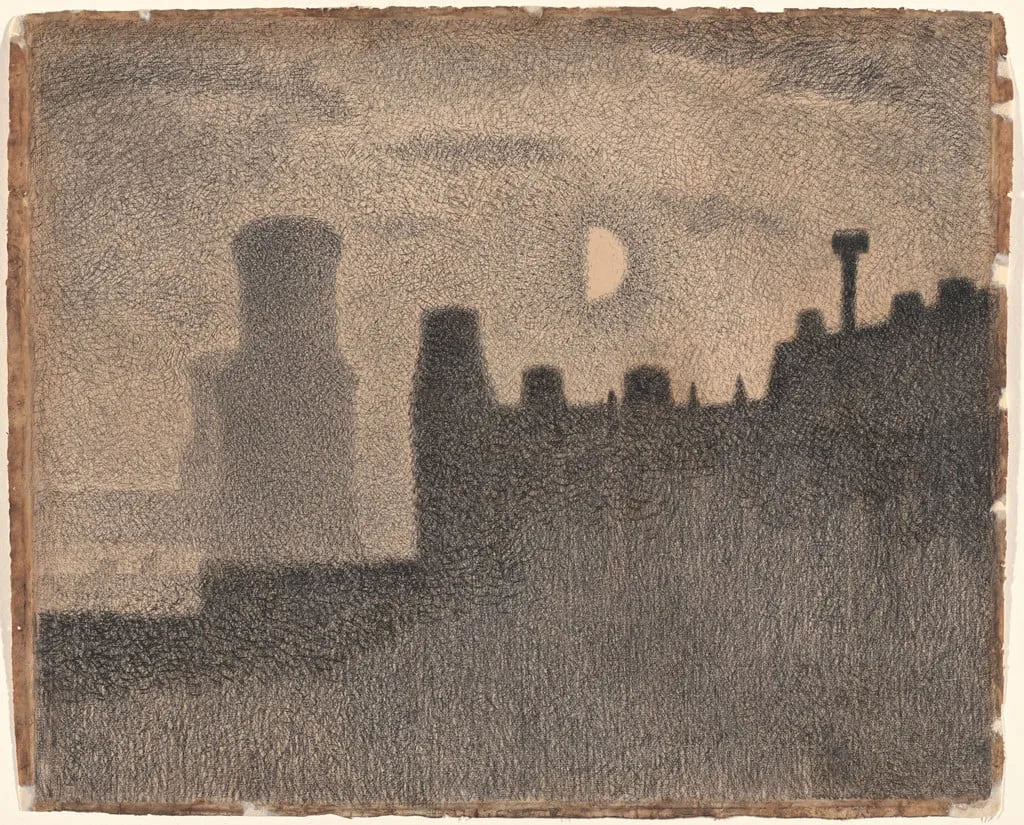
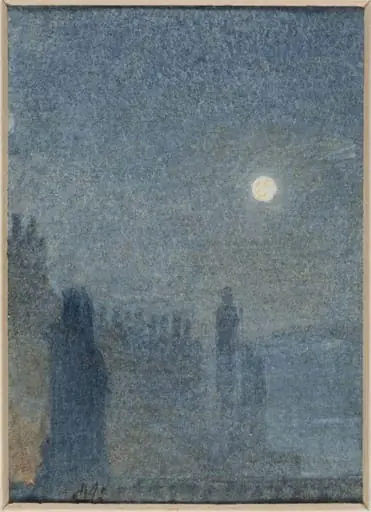
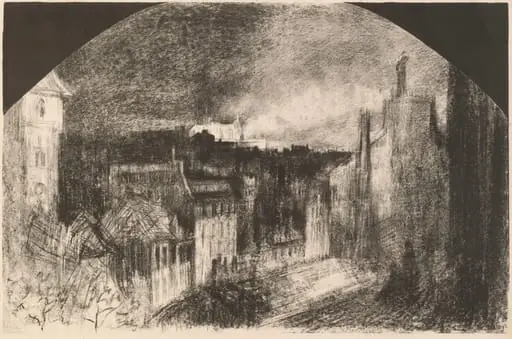
Untitled is a charcoal drawing by the Impressionist artist Albert Dubois-Pillet. It dates from 1888 and is held in the collection of the Museum of Modern Art.
About this work
Overview
The piece belongs to The Museum of Modern Art’s collection and reflects his engagement with emerging visual languages in late 19th-century France.
Created in 1888, this charcoal drawing by Albert Dubois-Pillet is one of several works in which he experimented with tonal abstraction outside the conventions of oil painting. As both a military officer and an artist, Dubois-Pillet pursued avant-garde practices alongside his duties. The piece belongs to The Museum of Modern Art’s collection and reflects his engagement with emerging visual languages in late 19th-century France.
Subject & Meaning
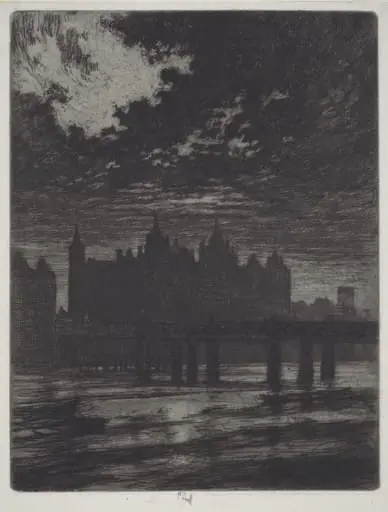
The scene depicts a nocturnal urban landscape with a prominent tower on the left and a fortified structure on the right, suggesting a blend of real and imagined architecture. A faint moon illuminates a hazy sky, while the ground dissolves into textured shadows. The absence of figures and the muted atmosphere evoke solitude and quiet contemplation, aligning with the introspective tone common in works of the period that sought emotional resonance over narrative clarity.
Technique & Style
Dubois-Pillet employed charcoal with deliberate pressure and smudging to build layers of soft gradations and sharp, scratchy lines. The overlapping strokes create a granular surface that blurs edges and dissolves forms, producing a sense of atmospheric depth. This method, distinct from Pointillism’s dots, uses tonal variation to suggest light and volume, revealing his interest in optical effects through monochrome means.
History & Provenance
The drawing was made during a period when Dubois-Pillet was actively involved with the Société des Artistes Indépendants, a group that rejected academic exhibition norms. Though little documented prior to its acquisition by MoMA, the work’s survival suggests it was retained within private circles, possibly among fellow artists or patrons sympathetic to experimental practices outside the mainstream art world.
Context
In the late 1880s, French artists were rethinking representation through new materials and techniques. Dubois-Pillet’s charcoal work emerged alongside broader explorations of light, mood, and abstraction—parallel to Seurat’s Pointillism but more focused on texture and tone. His dual identity as an officer and artist placed him at the intersection of discipline and innovation, influencing his restrained, methodical approach to image-making.
Legacy
Though less known than his contemporaries, Dubois-Pillet’s drawings contributed to the shift toward non-traditional media in modern art. This work exemplifies how charcoal, often dismissed as preparatory, could carry expressive weight on its own. Its presence in MoMA’s collection underscores its role in expanding the definition of drawing as a finished, autonomous form within modernist discourse.
Artist & collection
Artist
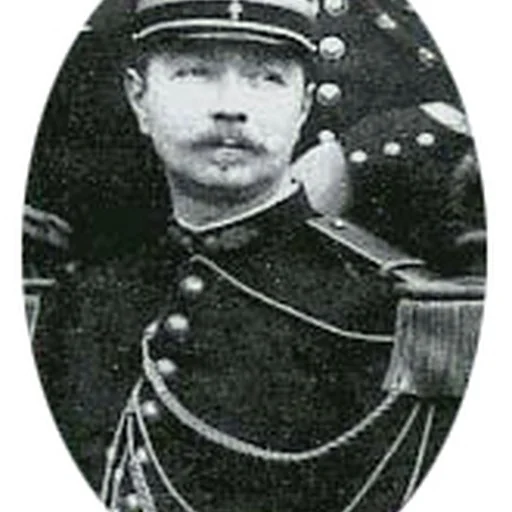
Albert Dubois-Pillet (French pronunciation: ; 28 October 1846 – 18 August 1890) was a French Neo-impressionist painter and a career army officer.