Artwork
Near Maidstone
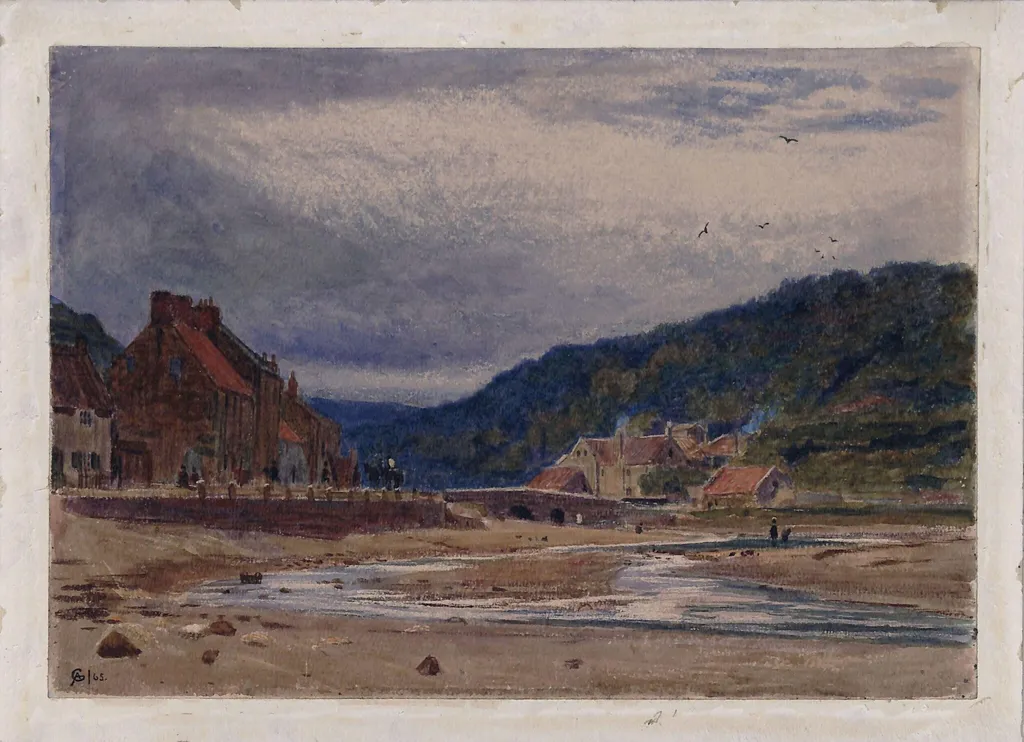
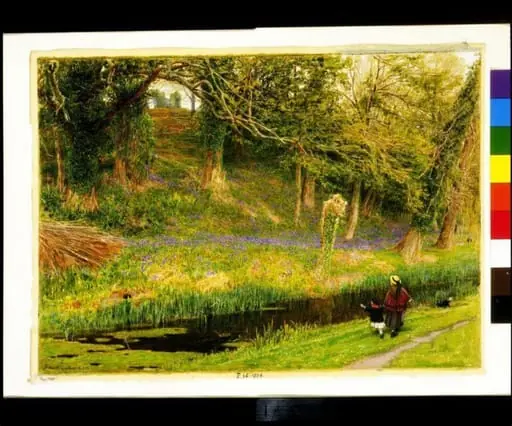
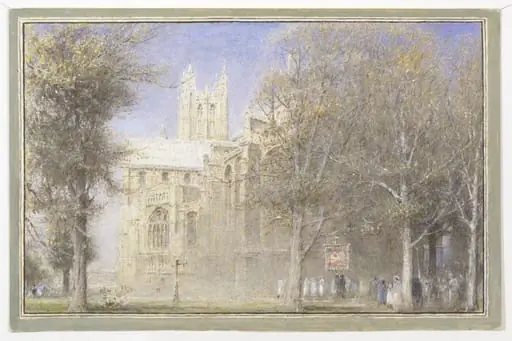
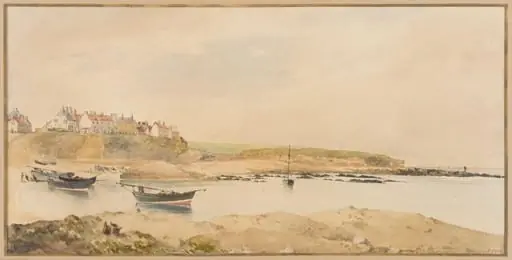
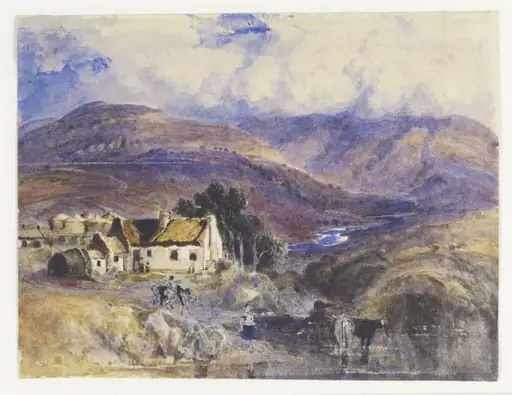
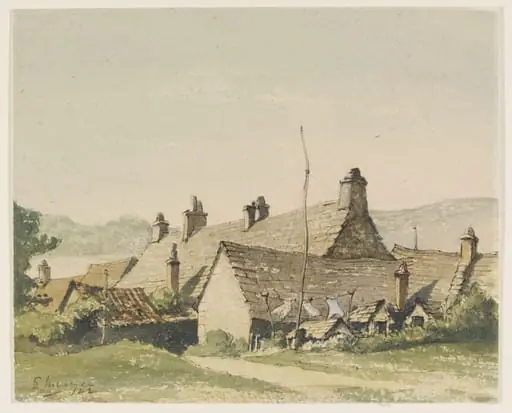
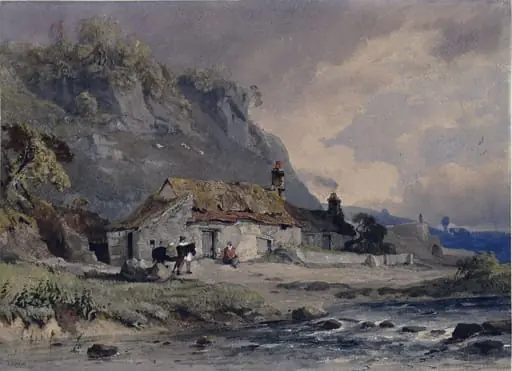
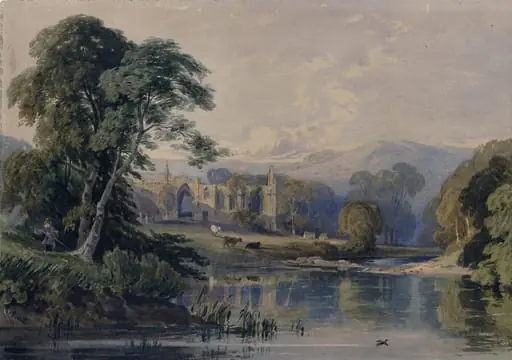
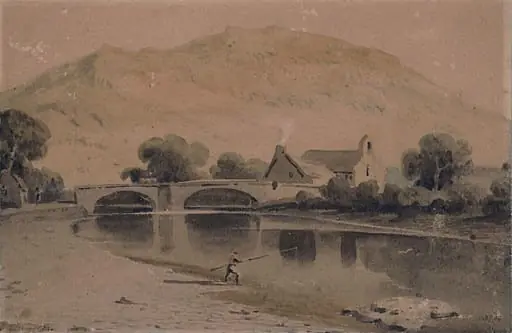
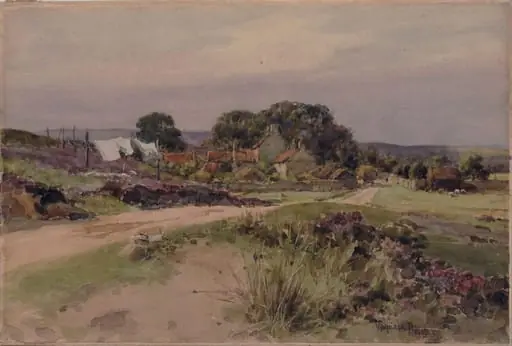
Near Maidstone is a watercolor work on paper by the British Romanticist artist Albert Goodwin. It dates from 1865 and is held in the collection of the Victoria and Albert Museum.
About this work
Overview
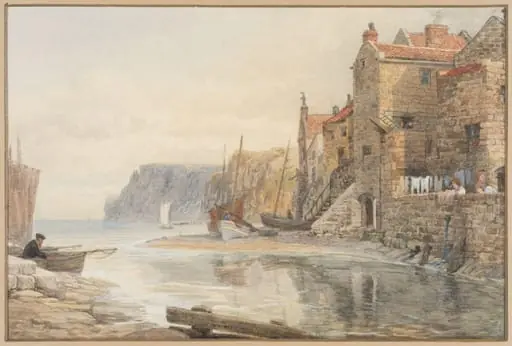
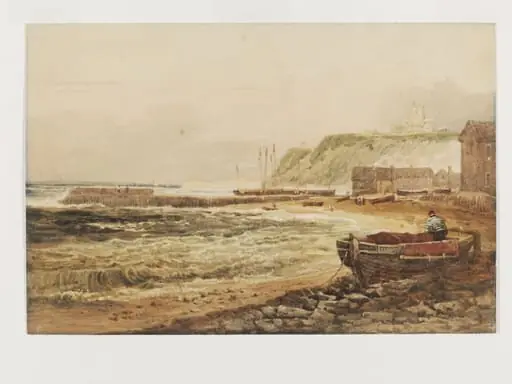
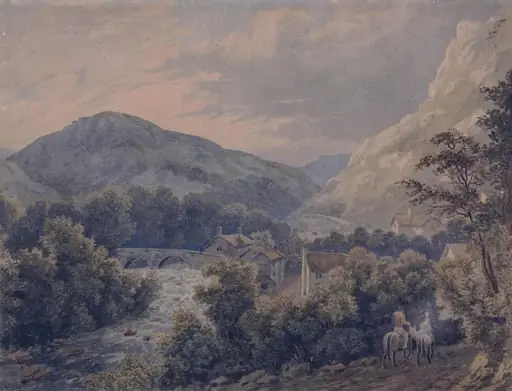
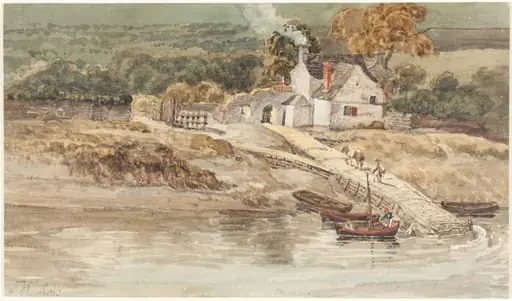
Painted in 1865, this watercolour by Albert Goodwin captures a tranquil riverside setting near Maidstone. The work is signed and dated by the artist, affirming its place in his early output. Rendered in transparent washes, it reflects the 19th-century British tradition of plein air sketching, where artists sought to record natural scenes with immediacy and sensitivity to light.
Subject & Meaning
The scene presents an unassuming stretch of the River Medway, lined with modest brick dwellings and a stone bridge. Beyond, a gently sloping hill bears scattered cottages and foliage. Figures strolling along the bank suggest quiet daily life, not grand spectacle. The composition avoids drama, instead emphasizing harmony between human habitation and the natural landscape.
Technique & Style
Goodwin employed loose, fluid brushwork and layered washes to convey atmosphere rather than detail. The sky is rendered in soft, diffused tones, while the water reflects subtle shifts in light without sharp definition. The quick, economical strokes suggest spontaneity, characteristic of watercolourists who valued immediacy over finish, capturing the fleeting qualities of weather and time.
History & Provenance
Created during Goodwin’s formative years, this work belongs to a series of topographical watercolours he produced in Kent. While its early ownership is undocumented, its survival in private collections reflects its appeal to collectors of regional British landscapes. The artist’s consistent practice of signing and dating such works aids in establishing its chronology within his oeuvre.
Context
In mid-19th-century England, watercolour was increasingly valued as a serious medium, not merely for preliminary sketches.
In mid-19th-century England, watercolour was increasingly valued as a serious medium, not merely for preliminary sketches. Artists like Goodwin responded to a growing public interest in rural life and local scenery, often influenced by the Pre-Raphaelites’ attention to detail and the Aesthetic Movement’s emphasis on mood. This piece aligns with that cultural shift toward intimate, observational art.
Legacy
Goodwin’s watercolours, including this one, contributed to the recognition of landscape as a subject worthy of sustained artistic attention outside the academic tradition. His approach influenced later generations of British watercolourists who prioritized atmospheric effect and everyday subject matter. Though less widely known today, his work remains a quiet testament to the quiet beauty of provincial England.
Artist & collection

Artist
Albert "Ginger" Goodwin, nicknamed Ginger for his bright red hair, was a migrant coal miner who advocated for workers' rights and promoted the cause of unions in British Columbia, Canada.