Artwork
Scottish landscape
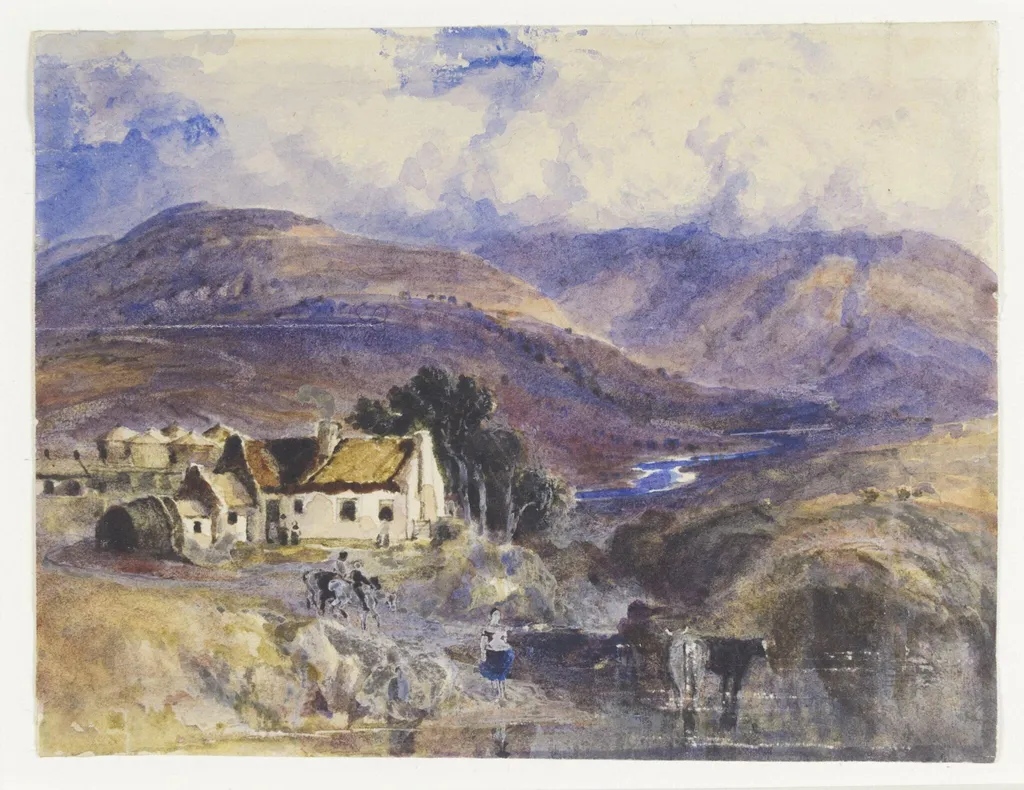
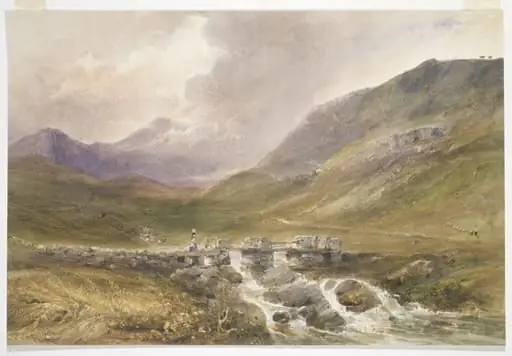
Scottish landscape is a watercolor work on paper by the British Romanticist artist Joseph Noel Paton. It dates from 1821 and is held in the collection of the Victoria and Albert Museum. Created in 1821 by Sir Joseph Noël Paton, this watercolour depicts a tranquil Scottish countryside.
About this work
Overview
Executed in a delicate, atmospheric style, the work reflects early 19th-century British Romantic sensibilities, emphasizing natural beauty and quiet rural life.
Created in 1821 by Sir Joseph Noël Paton, this watercolour depicts a tranquil Scottish countryside. Executed in a delicate, atmospheric style, the work reflects early 19th-century British Romantic sensibilities, emphasizing natural beauty and quiet rural life. It is part of the Victoria and Albert Museum’s collection, where it stands as an example of Paton’s early engagement with landscape before his later focus on mythological themes.
Subject & Meaning
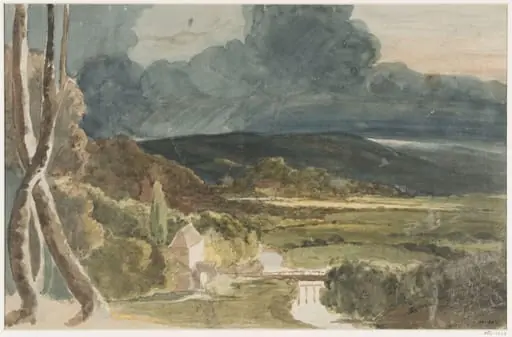
The scene portrays a modest village nestled among rolling hills, with a winding path leading into the distance and a river meandering through the foreground. Figures and animals are sparse, suggesting daily rural routines rather than dramatic events. The composition invites contemplation, aligning with Romantic ideals that valued solitude, nature, and the dignity of ordinary life in the Scottish countryside.
Technique & Style
Paton employed loose, fluid brushwork to suggest form and light without rigid definition. The palette is restrained, dominated by soft blues, muted browns, and earthy greens that blend seamlessly across sky, land, and water. The watercolour medium allows for subtle gradations, enhancing the hazy, atmospheric quality of the scene and reinforcing its quiet, introspective mood.
History & Provenance
Painted in 1821, this work predates Paton’s more famous mythological illustrations and reflects his formative years as an artist. It entered the Victoria and Albert Museum’s collection as part of its broader effort to document British watercolour traditions. The piece remains a rare early example of his landscape practice, offering insight into his artistic development before he turned to narrative and folk themes.
Context
In the early 1820s, British artists increasingly turned to native landscapes as expressions of national identity. Paton’s work aligns with this trend, capturing the Scottish countryside with sensitivity rather than idealization. Though he later became known for Celtic legends, this early piece reveals his grounding in the real, observable world — a foundation for his later symbolic work.
Legacy
While not among Paton’s most widely recognized works, this watercolour contributes to the understanding of his artistic evolution and the broader British watercolour movement. It exemplifies how landscape served as both aesthetic and cultural expression in the Romantic era, preserving a quiet vision of rural Scotland that resonated with contemporary ideals of nature and tradition.
Artist & collection
Artist
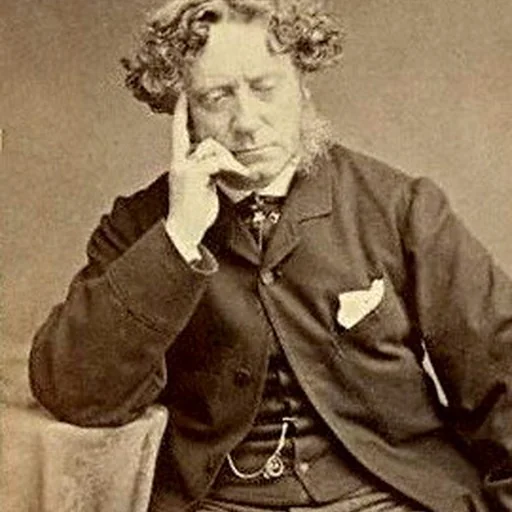
Sir Joseph Noel Paton (13 December 1821 – 26 December 1901) was a Scottish artist, illustrator and sculptor. He was also a poet and had an interest in, and knowledge of, Scottish folklore and Celtic legends.

 Welsh mountain scene
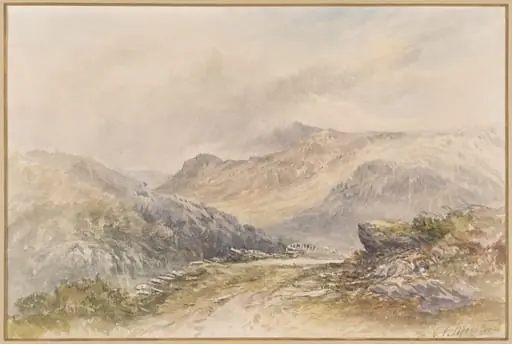 View on the Conway
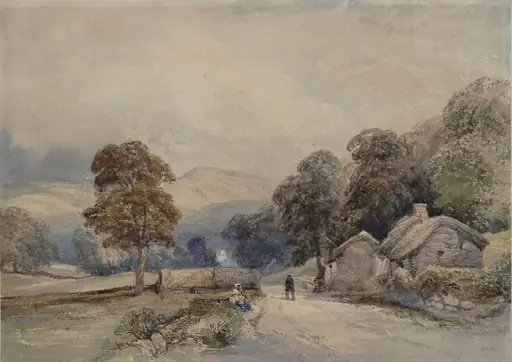 Landscape with trees and mountains
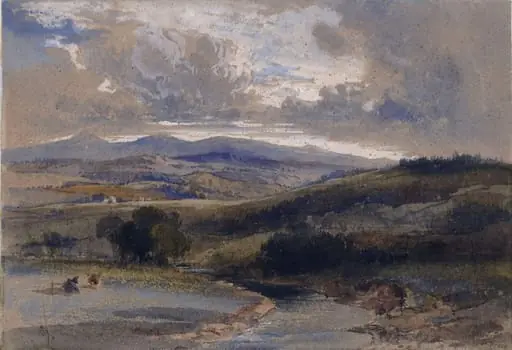 Landscape
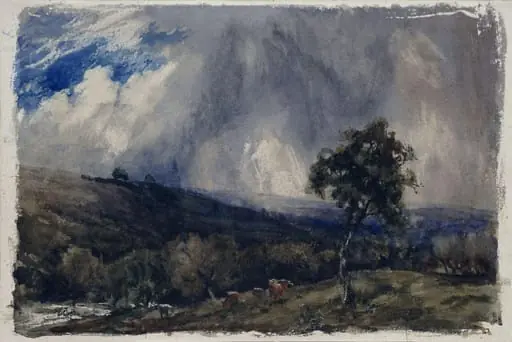 In the Wharfedale, Yorkshire
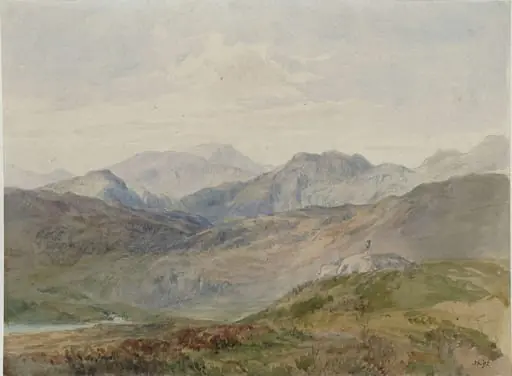 Llanrhychwyn, near Trefriw, North Wales
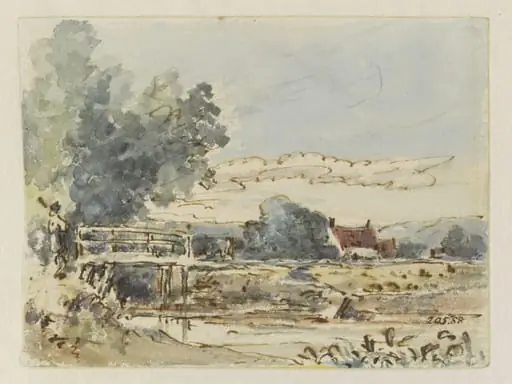 A bridge over a stream, with a cottage behind
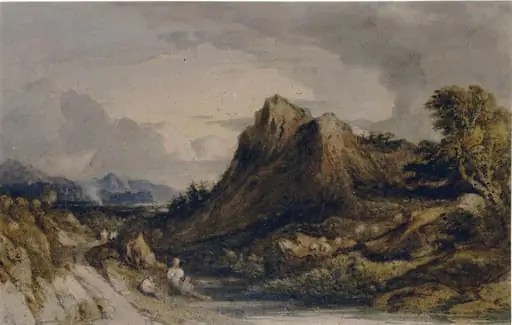 Mountain Scenery
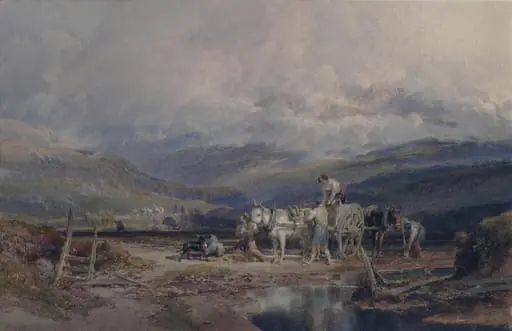 The Peat Cutters
 Landscape with river and mountains
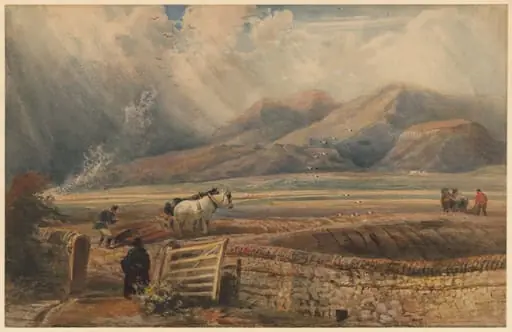 Harrowing--View near the Cross Fells
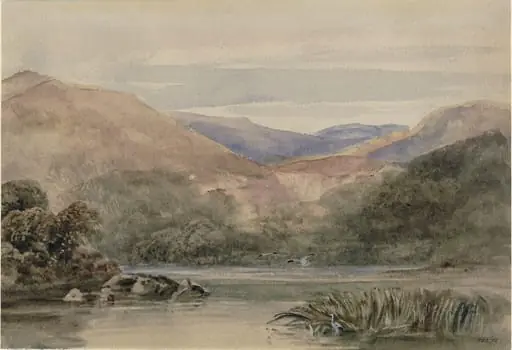 A Mountain Tarn