Artwork
The Pleasure Garden
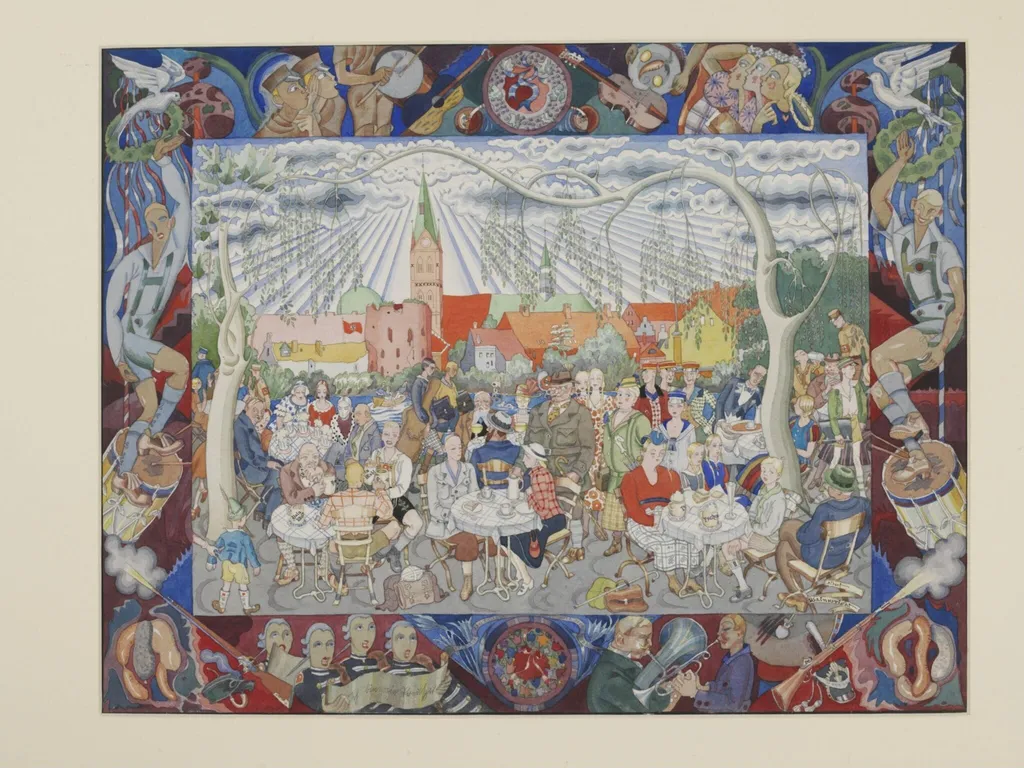
The Pleasure Garden is a watercolor work on paper by the Impressionist artist Albert Wainwright. It dates from 1934 and is held in the collection of the Victoria and Albert Museum.
About this work
Overview
Its delicate medium and vivid palette contribute to a sense of animated stillness, balancing realism with a whimsical, almost theatrical atmosphere.
Created in 1934, this watercolour and gouache work by Albert Wainwright captures a bustling outdoor gathering in a garden setting. The piece is signed by the artist and presents a densely populated scene filled with figures engaged in leisure activities. Its delicate medium and vivid palette contribute to a sense of animated stillness, balancing realism with a whimsical, almost theatrical atmosphere.
Subject & Meaning
The painting portrays a social gathering beneath the canopy of two large trees, where guests dine, converse, dance, and play music. Above, miniature buildings and a church spire suggest a distant village, anchoring the scene in a recognizable world. Floating figures with instruments at the edges hint at a dreamlike or celestial presence, subtly blurring the line between earthly celebration and imagined harmony.
Technique & Style
Wainwright employed watercolour and gouache to achieve luminous, layered tones with sharp, precise detailing. The figures are rendered in miniature scale, their expressions and gestures carefully defined, creating a cameo-like effect along the margins. The composition is tightly packed, yet orderly, with bright, unmodulated hues enhancing the scene’s cheerful, stylized energy without descending into caricature.
History & Provenance
The painting was completed in 1934 and has remained in private collections since its creation. It was later acquired by the Victoria and Albert Museum, where it is held as part of their collection of 20th-century British watercolours. Its provenance reflects a quiet but consistent appreciation for Wainwright’s detailed, narrative-driven approach to genre scenes.
Context
Produced during the interwar period, the work reflects a British cultural interest in idealized leisure and communal joy, even amid economic uncertainty. Wainwright’s focus on intimate, lively gatherings aligns with a broader tradition of English watercolourists who found poetic value in everyday social rituals, often blending observation with gentle fantasy.
Legacy
Though not widely exhibited, the painting endures as a refined example of mid-century British watercolour practice. Its intricate detail and quiet surrealism have drawn scholarly attention for how it balances realism with imaginative elements. The work remains a quiet testament to Wainwright’s skill in transforming ordinary scenes into layered, contemplative compositions.
Artist & collection
Artist
Albert Wainwright painted gentle watercolours of everyday life in the 1930s. One example is *The Pleasure Garden*, a quiet scene of people relaxing outside. His style belongs to the quiet years between the world wars,…

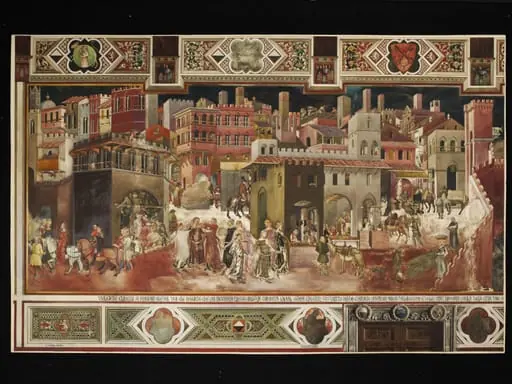 Good Government in the Palazzo Pubblico in Siena
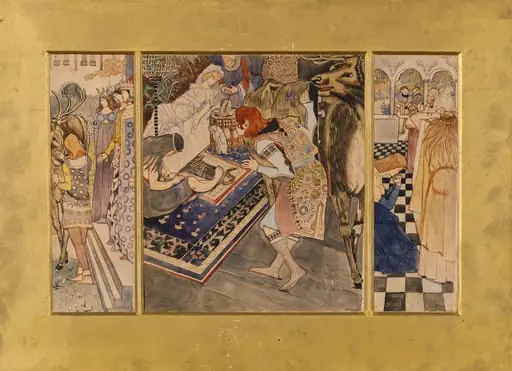 CERBUL DE AUR
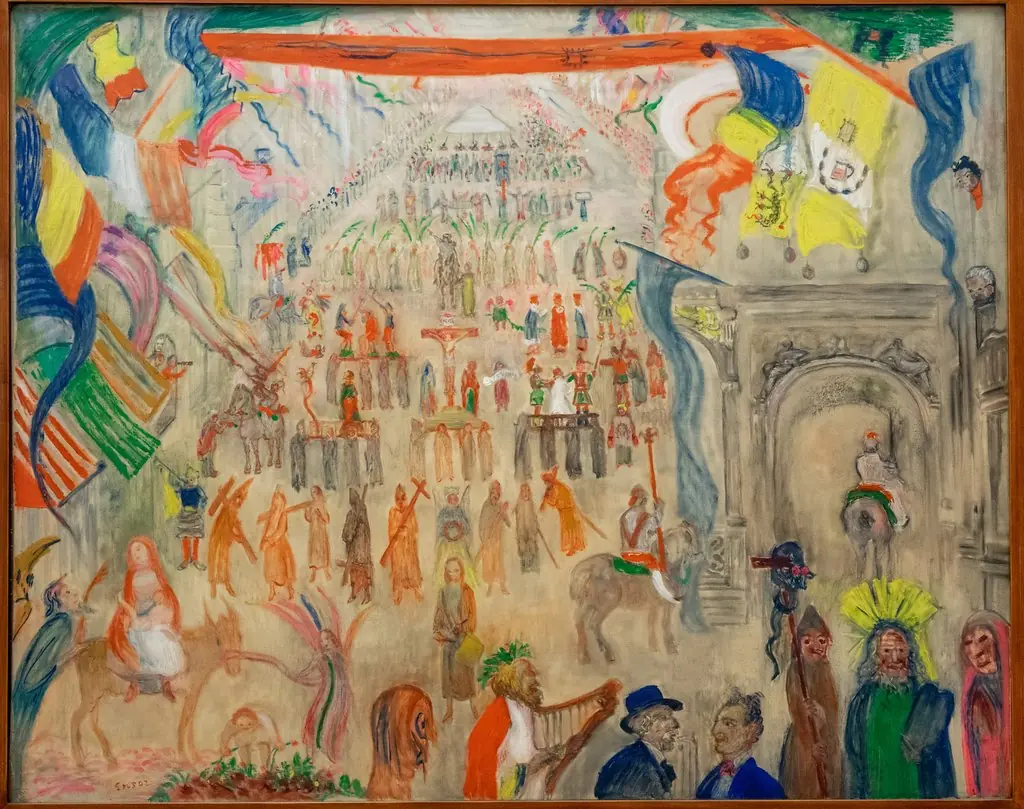 The Procession of the Penitents at Furnes
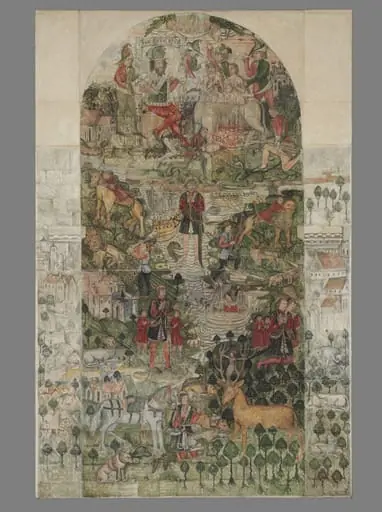 The Legend of St Eustace
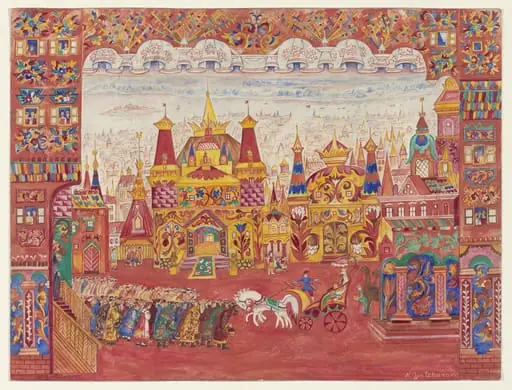 Untitled
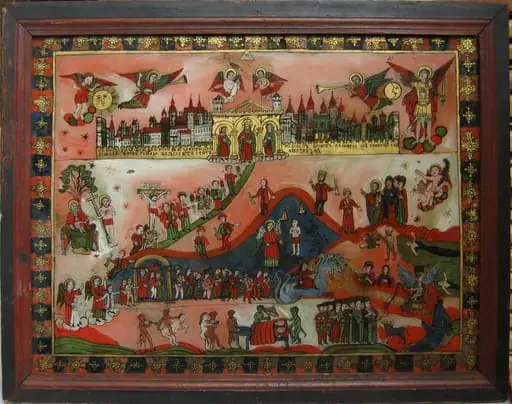 Înficoșătoarea Judecată de Apoi
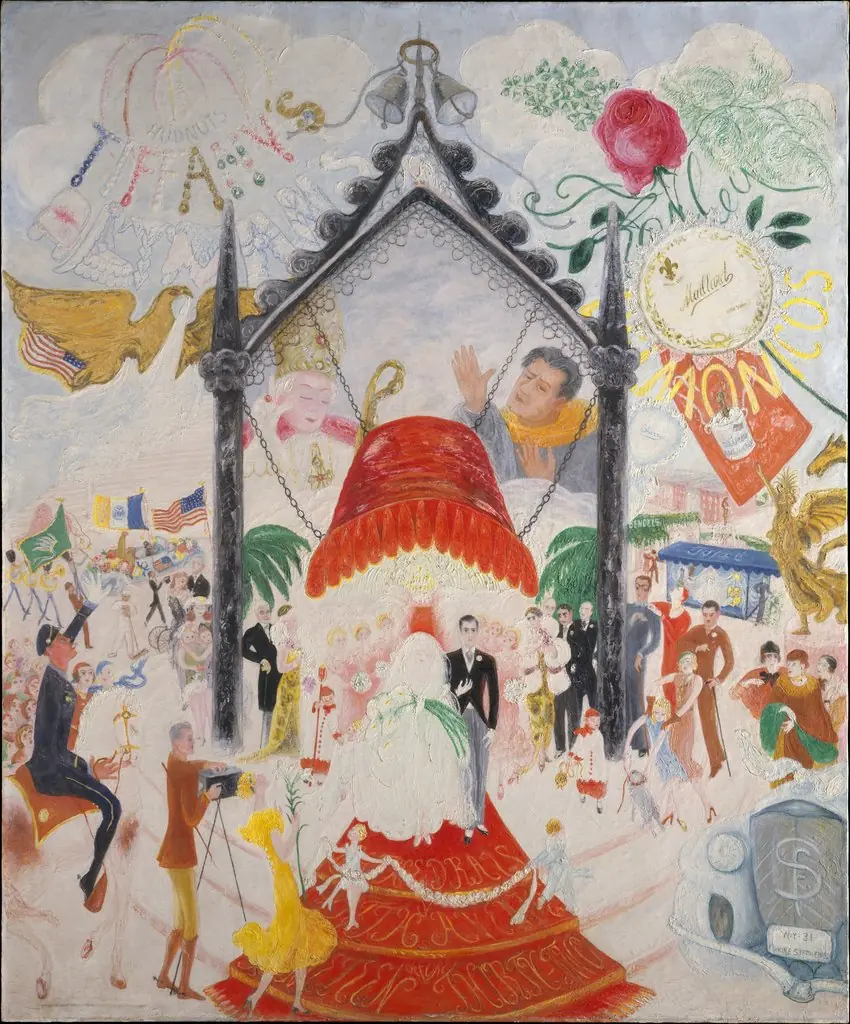 The Cathedrals of Fifth Avenue
 Saint Bonaventure Arriving and Preaching in Lyon
 Prăznicar cu scene din viața lui Iisus Hristos
 Untitled
 Arrival of Väinämöinen, Ilmarinen and Lemminkäinen at Pohjola
 Sfânmati