Artwork
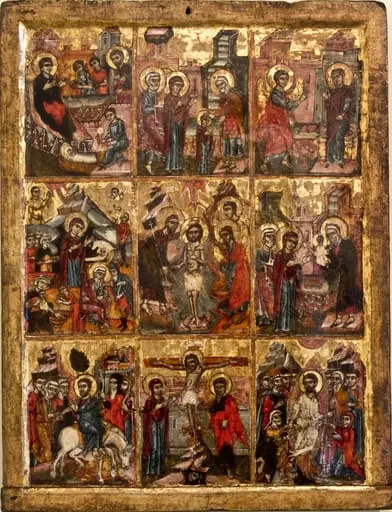
Prăznicar cu scene din viața lui Iisus Hristos
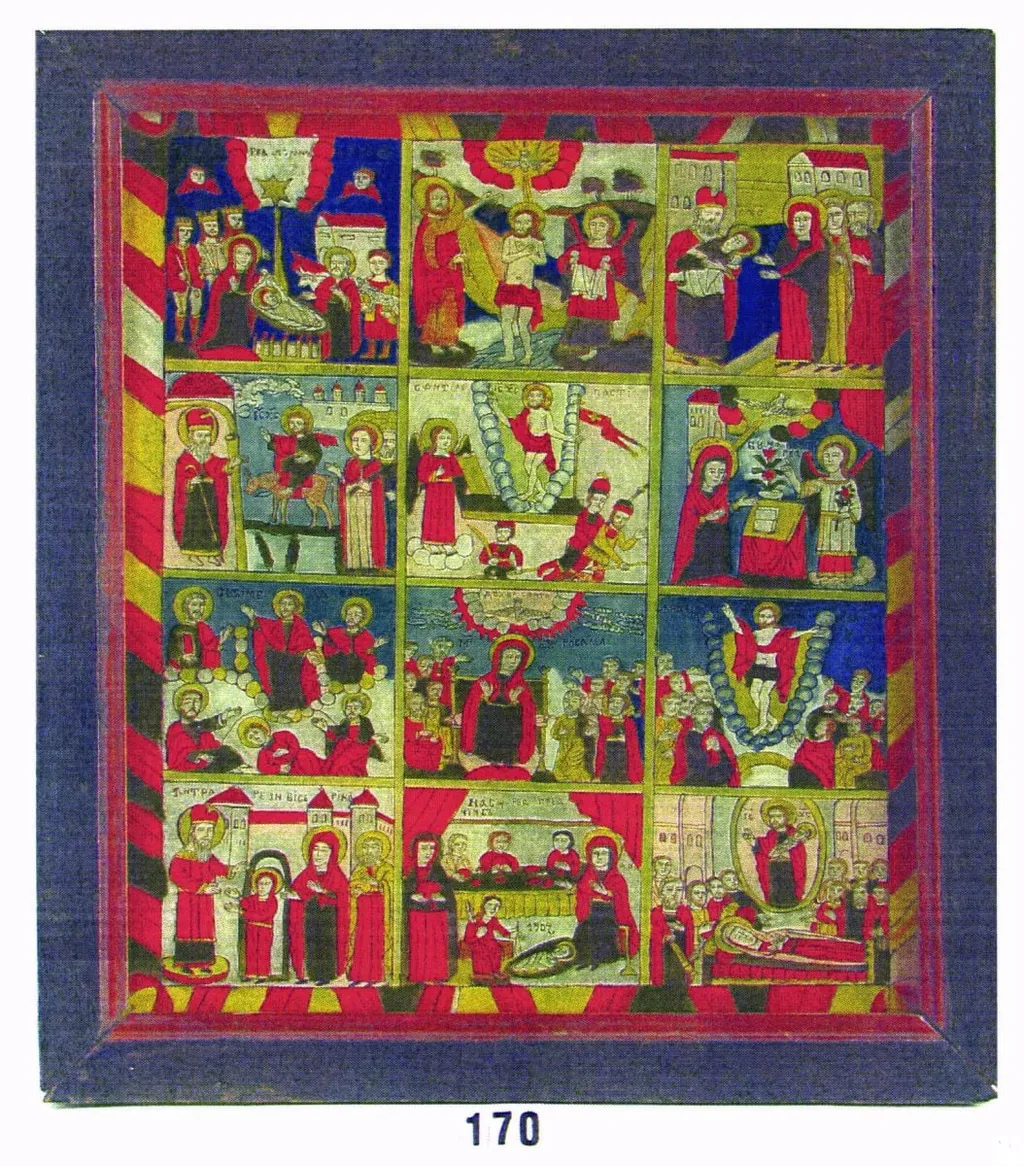
Prăznicar cu scene din viața lui Iisus Hristos is a drawing by Unknown. It dates from 1902 and is held in the collection of the ASTRA National Museum Complex. The work consists of a square arrangement of twelve individual panels, each bordered in red and yellow.
About this work
Overview
Within each compartment, figures in vivid, flat colors—predominantly red garments—are depicted either standing or kneeling around central religious characters.
The work consists of a square arrangement of twelve individual panels, each bordered in red and yellow. Within each compartment, figures in vivid, flat colors—predominantly red garments—are depicted either standing or kneeling around central religious characters. The composition presents a sequence of scenes that together reference episodes from the life of Jesus Christ, though each vignette is visually self‑contained.
Subject & Meaning
Each panel portrays a distinct episode drawn from the New Testament narrative, featuring Christ and associated saints or disciples. Halos identify sacred persons, while surrounding figures in similar stylized form emphasize communal devotion. The repetitive facial types and gestures suggest a didactic purpose, guiding viewers through a visual meditation on Christ’s ministry.
Technique & Style
The artist employs a flat, decorative palette dominated by gold, blue and red, with minimal shading. Figures are rendered with simple outlines and uniform poses, creating a stylized, almost iconographic quality. The use of bold, unmodulated color fields and framed compartments reflects a medieval manuscript aesthetic adapted to a painted format.
History & Provenance
The piece is catalogued under the title “Prăznicar cu scene din viața lui Iisus Hristos,” indicating a Romanian origin. No specific date or artist is recorded, and the work’s provenance remains undocumented, suggesting it may have been produced for local devotional use rather than a major institutional collection.
Context
The grid format of multiple narrative scenes aligns with Eastern Orthodox visual traditions, where sequential storytelling is common in liturgical art. The emphasis on bright, symbolic colors and the use of halos correspond to iconographic conventions intended to convey spiritual significance over naturalistic representation.
Legacy
While the painting does not belong to a recognized canon of celebrated works, its compositional approach offers insight into regional religious art practices. The piece serves as an example of how narrative cycles were rendered in portable, visually accessible formats for communal worship.
Artist & collection

 Domestic Scene
 Giacomo and Cardinal Marco, investing Andrea, Abbot of San Zeno, with his Benefice
 The Nymph of Fontainebleau
 Portrait of a Woman
 Madonna and Child with Saints in the Enclosed Garden
 Venus and Minerva
 Family Group of Four on Sofa
 Wall painting from Room H of the Villa of P. Fannius Synistor at Boscoreale
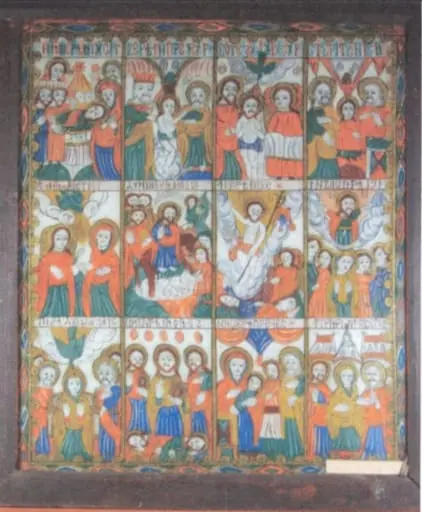 Scene din viața lui Iisus
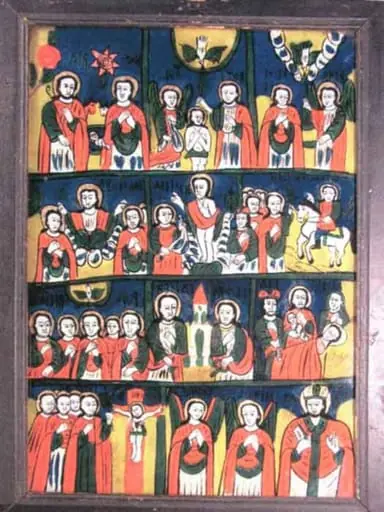 Scene din viața lui Iisus
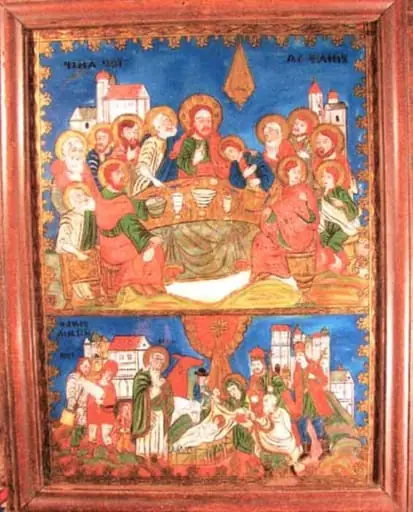 Cina cea de Taină și Nașterea lui Iisus
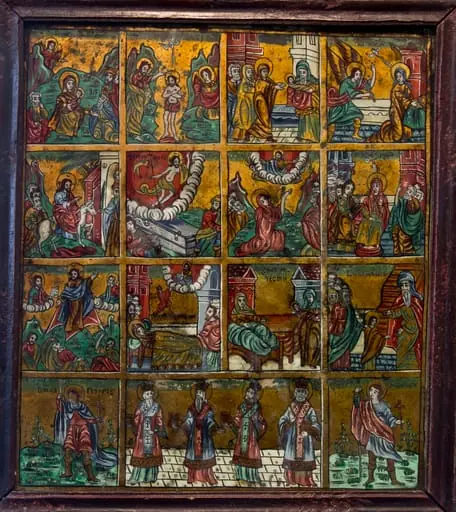 Prăznicar – Scene din viața lui Iisus
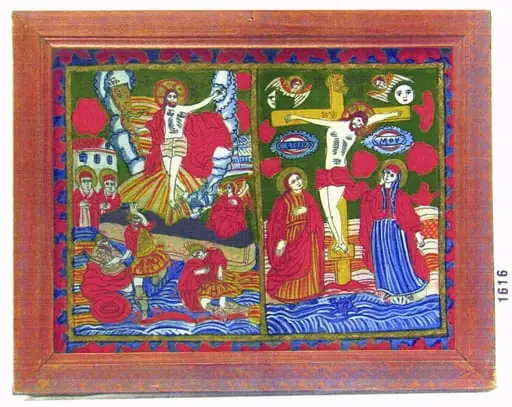 Răstignirea și învierea Mântuitorului Iisus Hristos
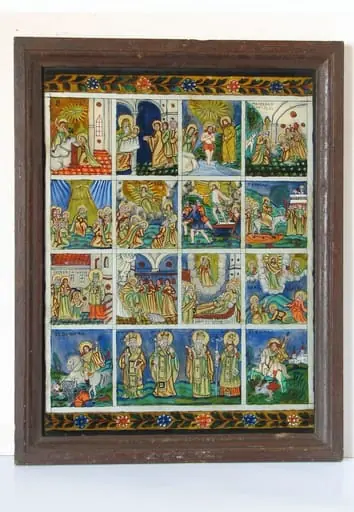 Prăznicar cu scene din viața Mântuitorului Iisus Hristos și alți Sfinți
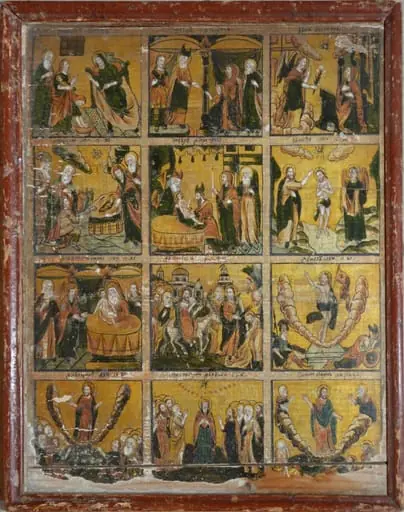 Prăznicar cu 12 scene
 Scene din viața lui Iisus și a Maicii Domnului
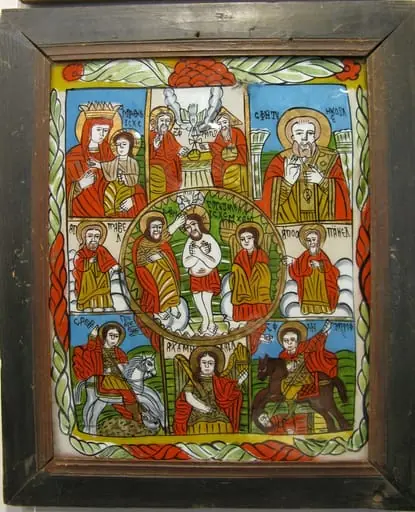 Prăznicar – Botezul lui IS HS