Artwork
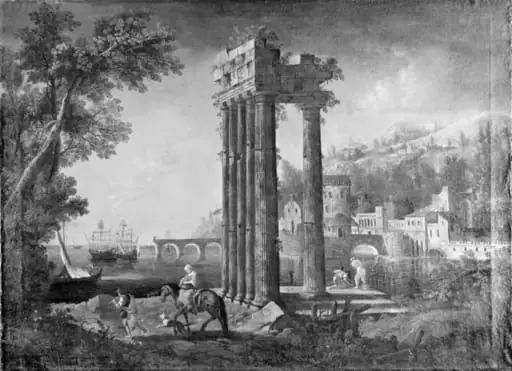
Christ Blessing Little Children among Classical Ruins
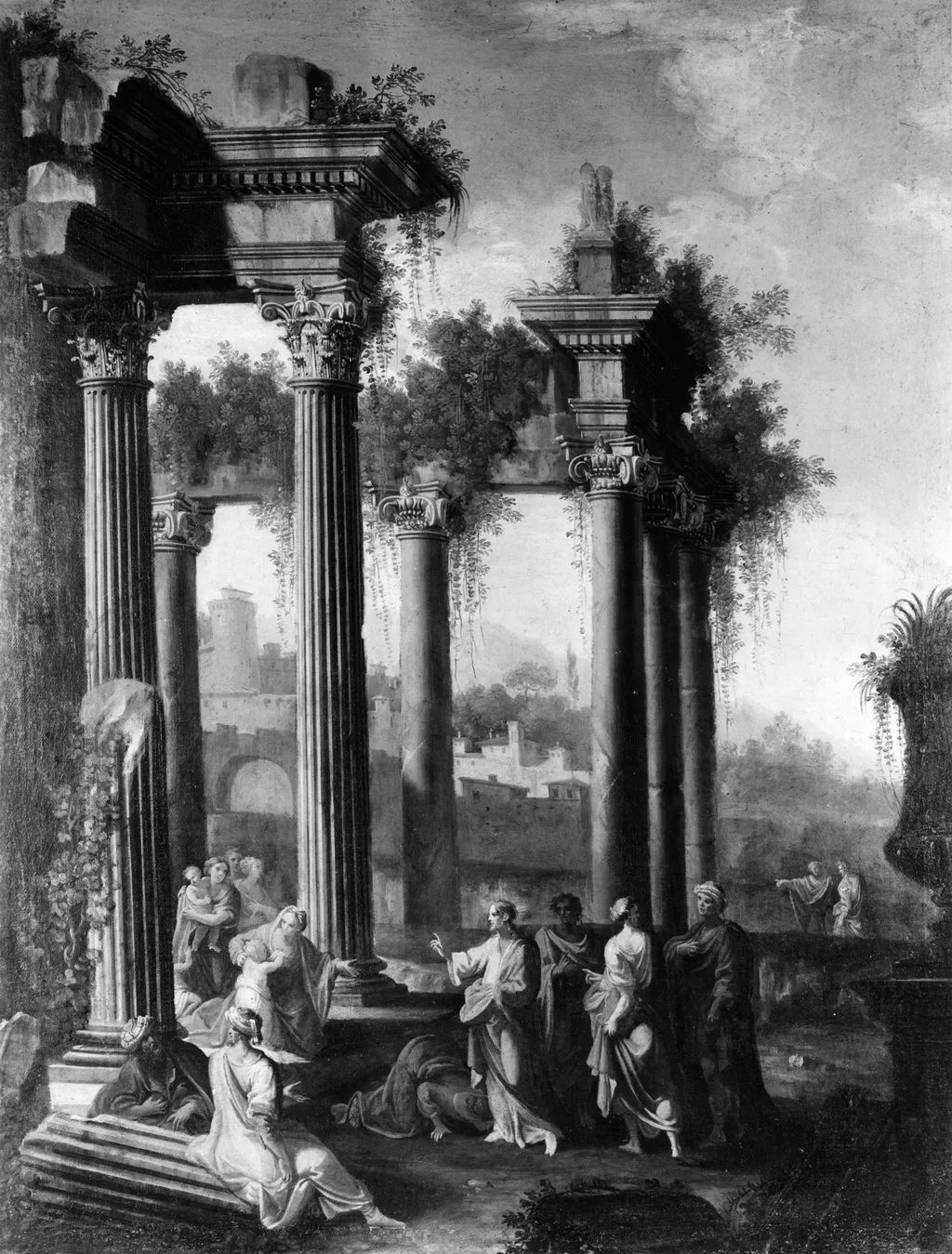
Christ Blessing Little Children among Classical Ruins is an oil painting by the Early Baroque Italian artist Alberto Carlieri. It dates from 1706 and is held in the collection of the Walters Art Museum.
About this work
Overview
Created circa 1706 by the Roman‑trained painter Alberto Carlieri, this oil on canvas presents a tranquil biblical tableau set against a backdrop of ancient architectural fragments. The central figure, identified as Christ, extends a benediction toward a group of children, while surrounding ruins of columns and arches frame the scene, lending a classical ambience to the devotional moment.
Subject & Meaning
The composition illustrates the New Testament episode in which Jesus welcomes and blesses little children, emphasizing themes of innocence and spiritual openness. The attentive onlookers, dressed in contemporary robes, convey reverence, while the ruined classical setting may suggest the transition from pagan antiquity to Christian revelation, underscoring the enduring relevance of the teaching.
Technique & Style
The handling of light follows chiaroscuro principles, modeling forms with subtle gradations of shadow that enhance three‑dimensionality.
Carlieri employs a balanced palette of warm ochres and cool blues, creating a gentle contrast between figures and architecture. The handling of light follows chiaroscuro principles, modeling forms with subtle gradations of shadow that enhance three‑dimensionality. Though renowned for illusionistic quadratura, the artist here focuses on figurative representation, rendering the figures with delicate brushwork and a calm, measured rhythm.
History & Provenance
The painting entered the collection of the Walters Art Museum, where it remains on view. Its attribution to Carlieri aligns with his early Baroque period output, and the work has been documented in the museum’s acquisition records as part of a broader effort to represent Italian religious art from the early eighteenth century.
Context
During the early 1700s, Roman artists often merged sacred narratives with the grandeur of classical ruins, reflecting a cultural fascination with antiquity and its moral symbolism. Carlieri, a pupil of Giuseppe Marchi and Andrea Pozzo, absorbed this aesthetic, integrating architectural fantasy into devotional scenes—a practice common among his contemporaries seeking to harmonize the spiritual and the historic.
Artist & collection
Artist
Alberto Carlieri (1672-after 1720) was an Italian painter of the late-Baroque period. He was born at Rome, where he was first a pupil of Giuseppe Marchi, but afterwards of Andrea Pozzo. He excelled in painting quadratura.

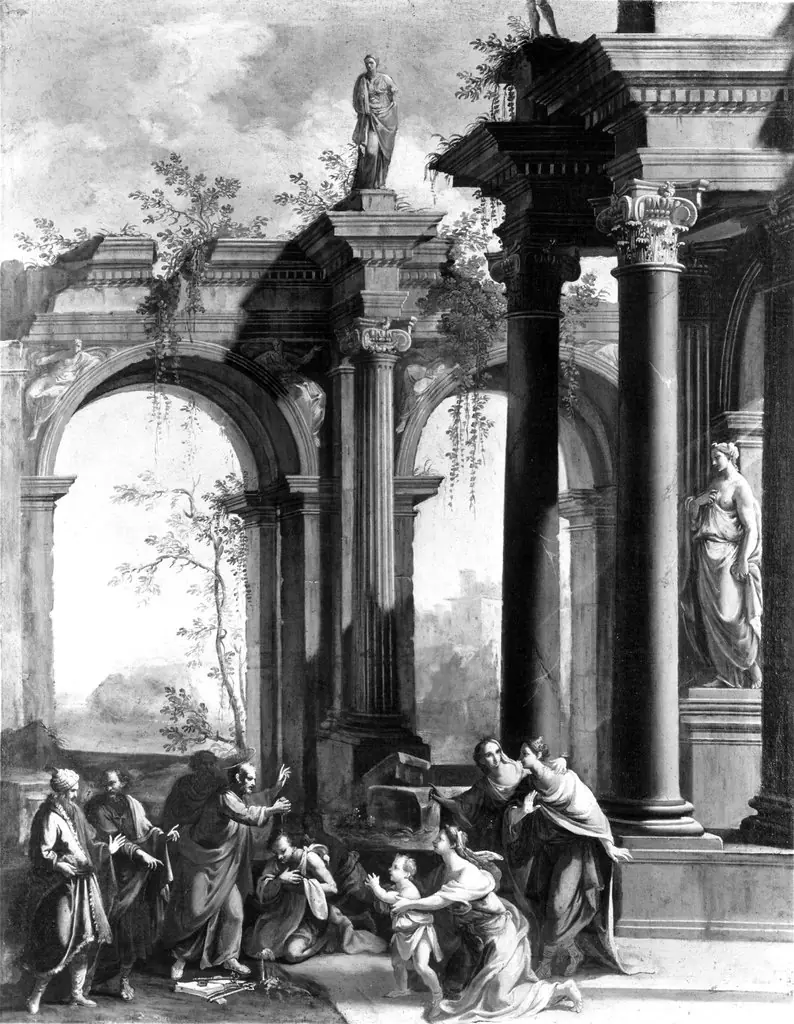 St. Peter Baptizing the Centurion, Cornelius
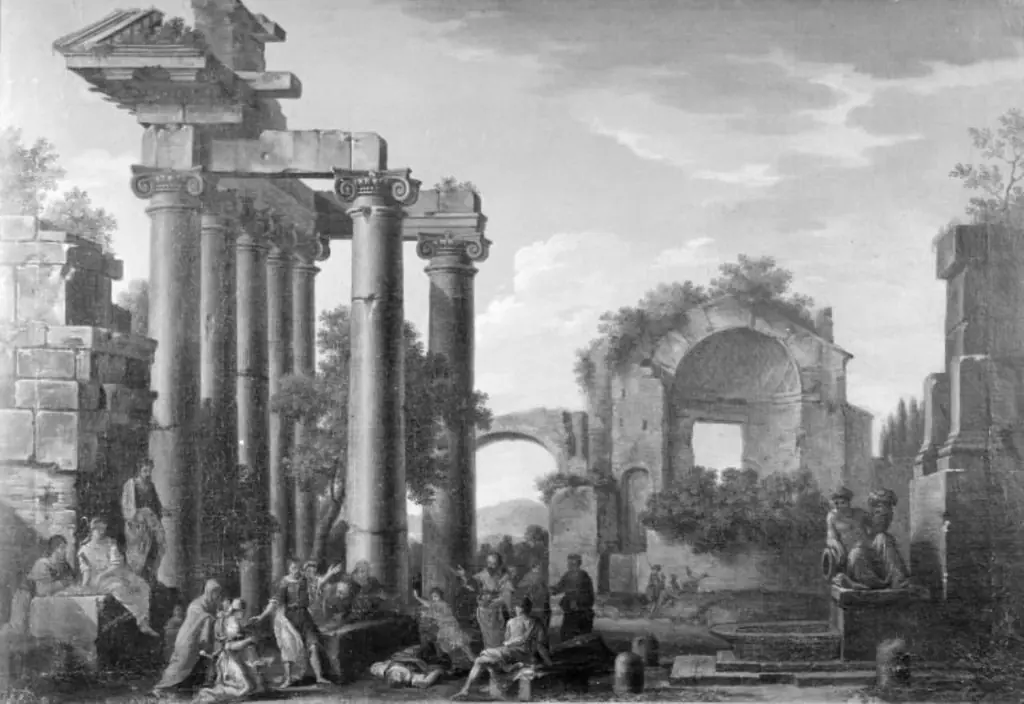 Ruiner af et græsk-romersk tempel med mange figurer
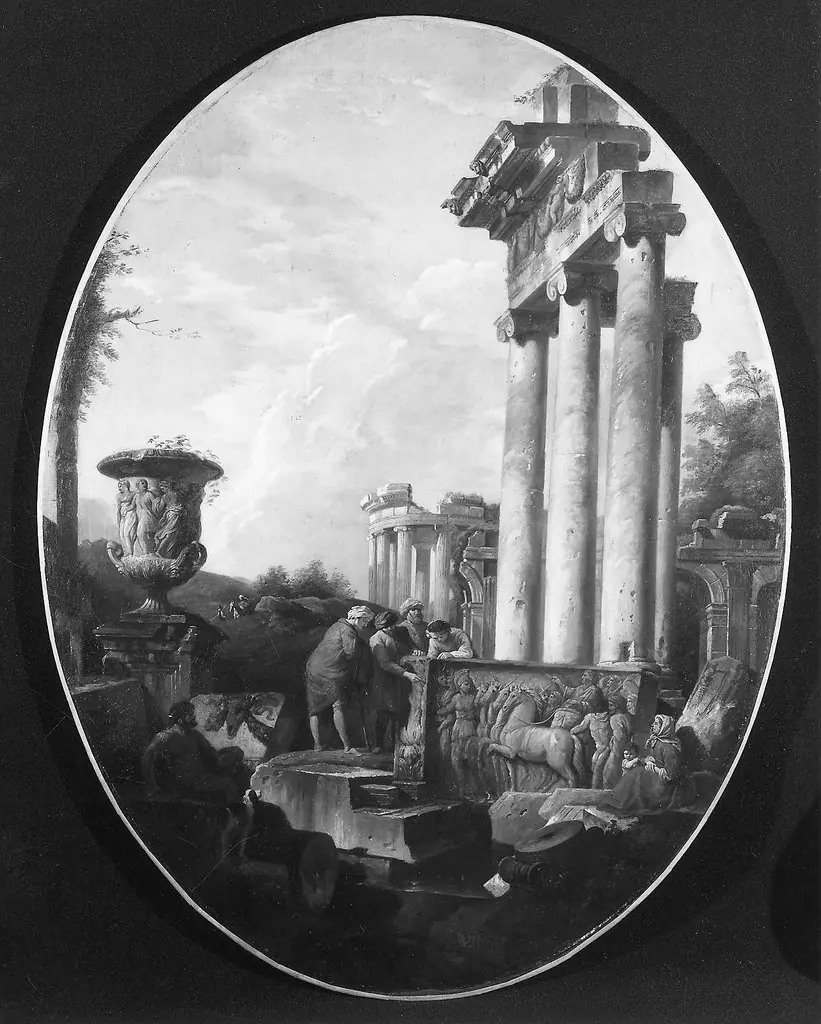 Capriccio of Roman Ruins with a Bas-Relief of a Charioteer
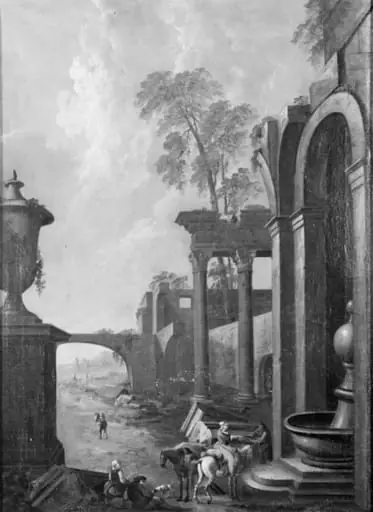 Ruins in a Landscape
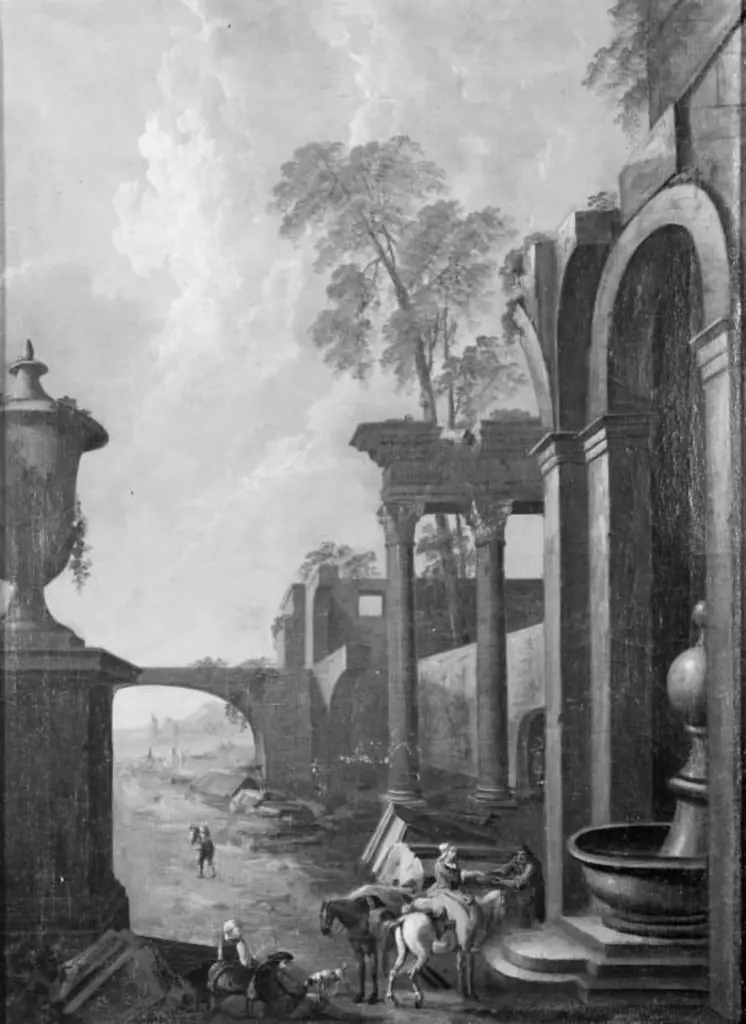 Ruins in a Landscape
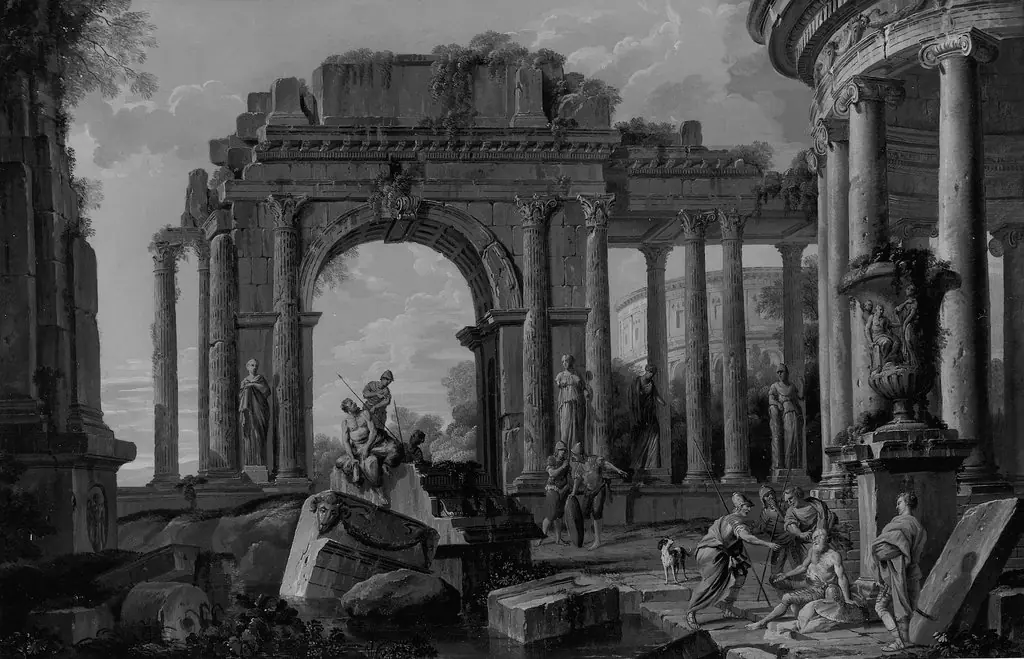 Architectural Landscape with Belisarius Receiving Alms
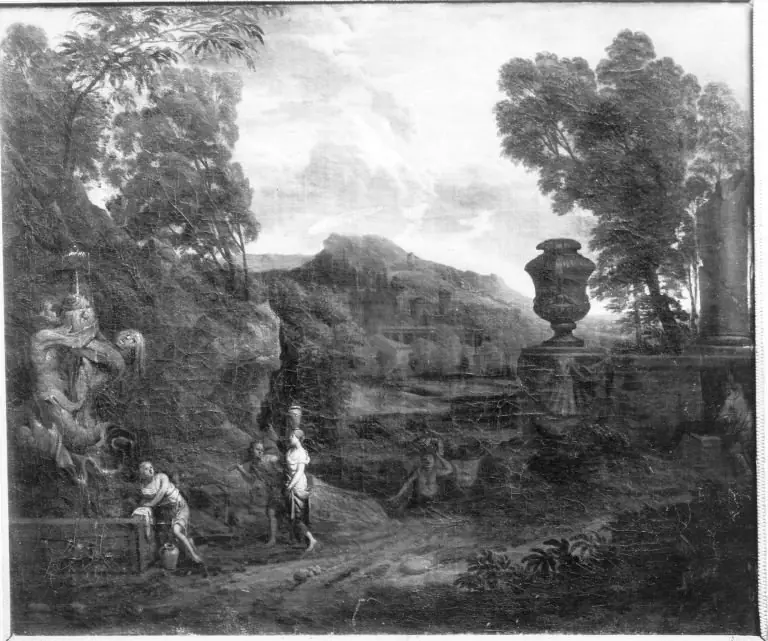 Italienisch-klassische Landschaft
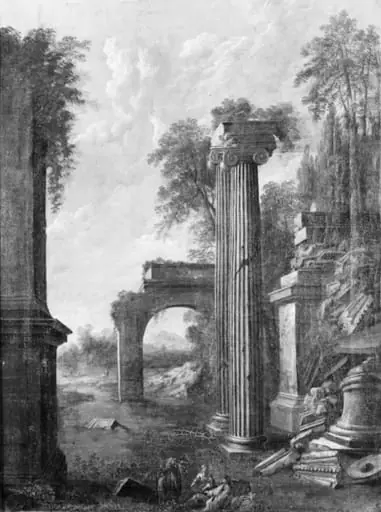 Roman Ruins and Gravemonuments
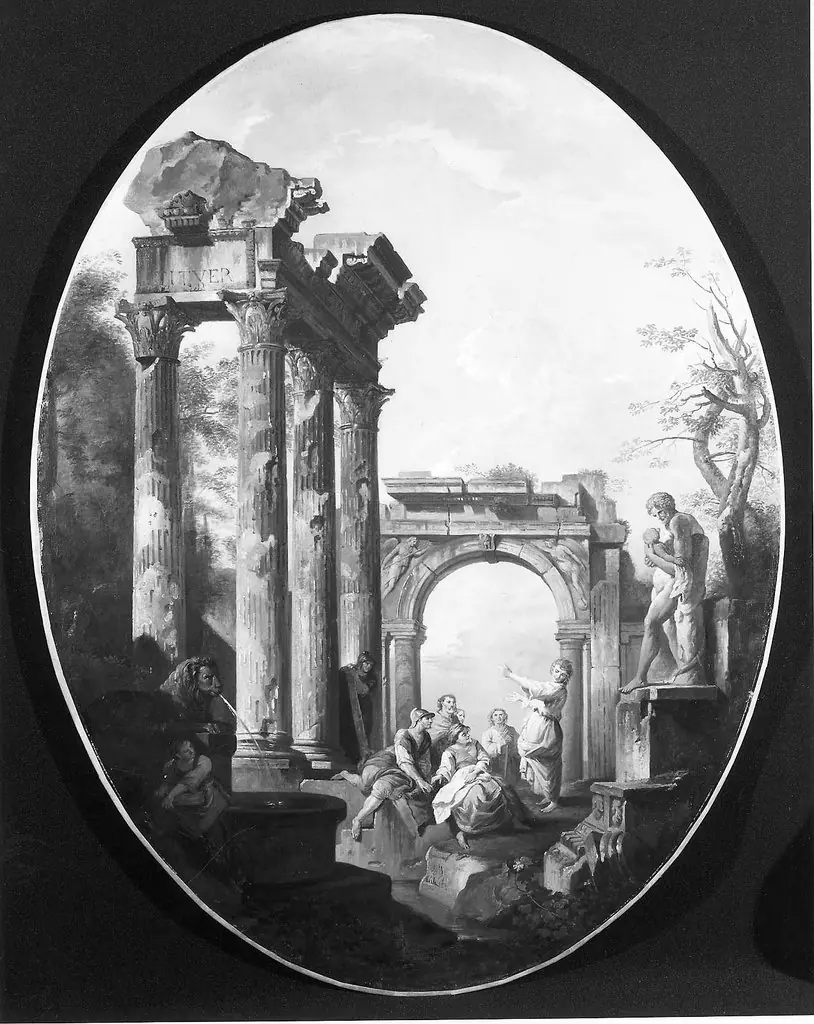 Capriccio of Roman Ruins with a Statue of Silenus and Dionysus
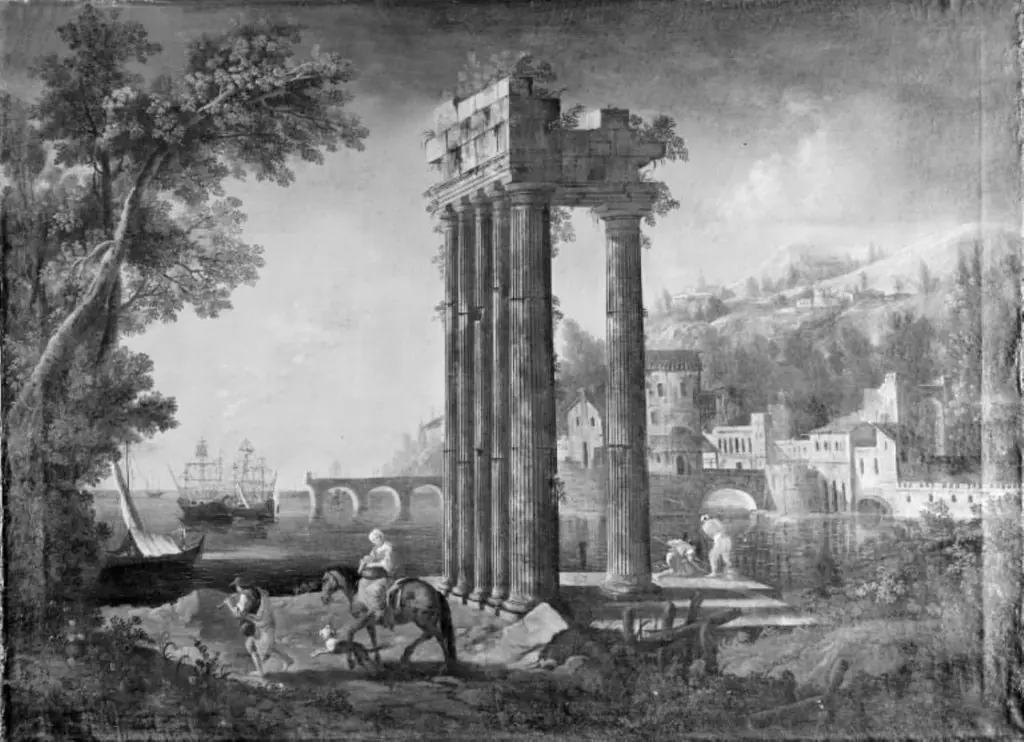 Et mådeligt maleri, forestillende en venetiansk søhavn
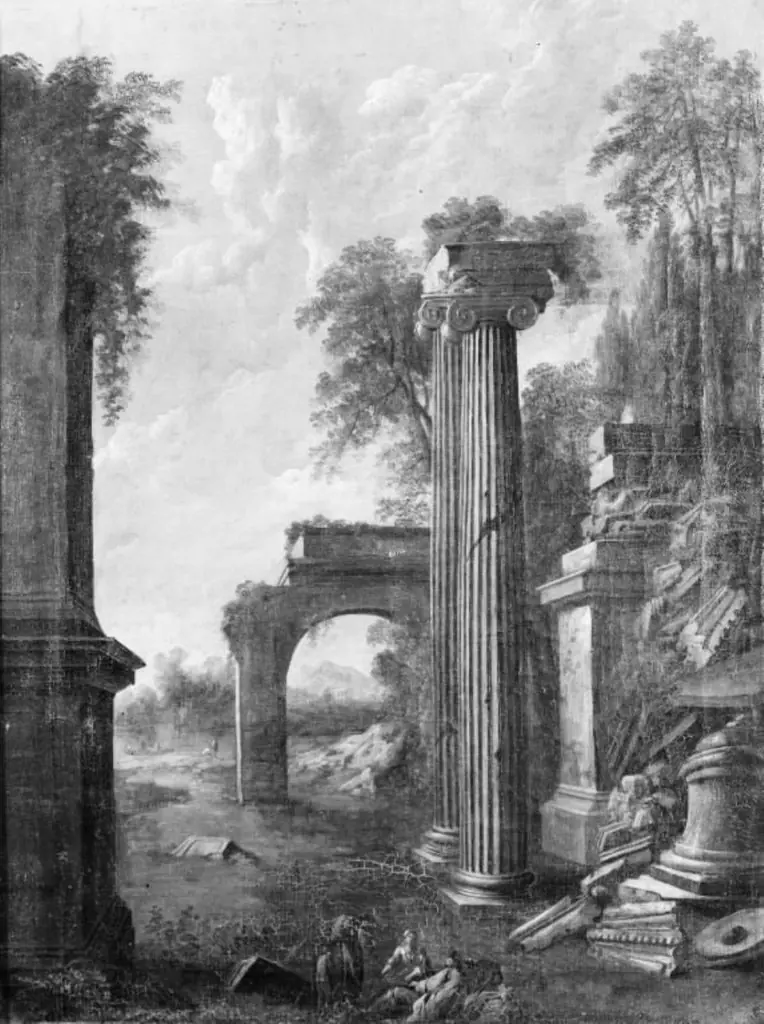 Roman Ruins and Gravemonuments
 Et mådeligt maleri, forestillende en venetiansk søhavn