Artwork
Saint John the Baptist in the Wilderness
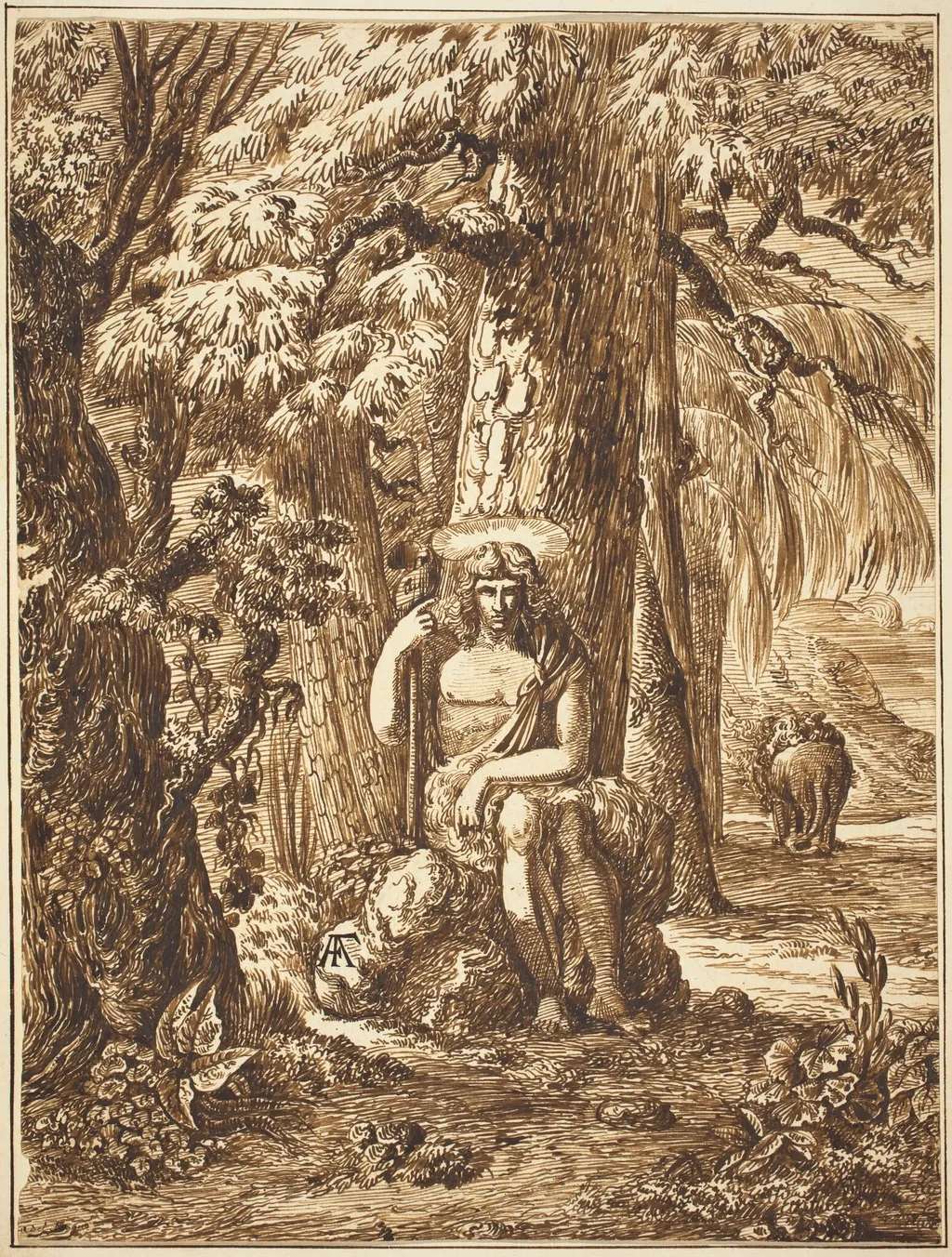
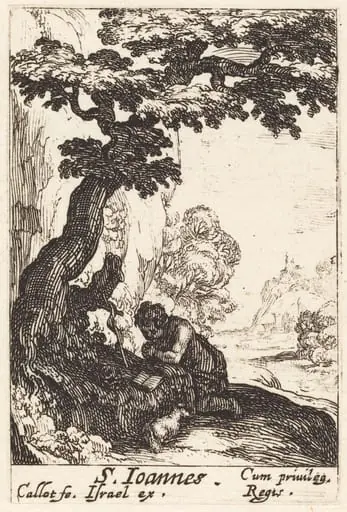
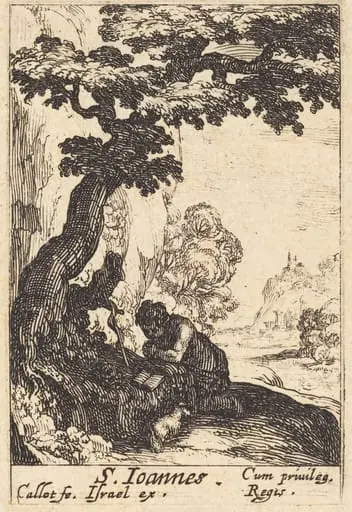
Saint John the Baptist in the Wilderness is an ink drawing by the Renaissance artist Felice Albites. It dates from 1584 and is held in the collection of the National Gallery of Art.
About this work
Overview
Felice Albites executed a pen and brown‑ink drawing on wove paper in 1584, now mounted on an album page. The work portrays a solitary, bearded figure in a desolate, rocky setting, identified as John the Baptist, surrounded by sparse vegetation and a small animal at the edge of the composition.
Subject & Meaning
The lone figure, wrapped in a simple robe and clutching a staff, reflects the biblical portrayal of John the Baptist as a hermit prophet. His downward gaze and isolated stance emphasize themes of contemplation, asceticism, and the wilderness as a place of spiritual preparation.
Technique & Style
Albites employed fine cross‑hatching with pen to render shadows and surface texture, creating a tactile sense of rugged stone and foliage. The dense, intersecting lines build depth and volume, while the limited brown ink palette reinforces the austere atmosphere of the scene.
History & Provenance
Created in the late sixteenth century, the drawing was incorporated into a bound album, a common practice for collecting sketches and studies. Its survival within this format suggests it was valued as a preparatory or devotional image, though specific ownership records prior to its museum acquisition are not documented.
Context
The work aligns with Counter‑Reformation artistic trends that emphasized clear, didactic religious imagery. Depictions of John the Baptist in solitary wilderness settings were popular in Italian art of the period, serving both devotional and instructional purposes.
Legacy
While not as widely reproduced as larger paintings, Albites’s drawing illustrates the meticulous draftsmanship characteristic of late Renaissance drawing practices, offering insight into the use of cross‑hatching for atmospheric effect in devotional art.
Artist & collection