Artwork
The Fall and Redemption of Man: Adam and Eve Eating the Forbidden Fruit
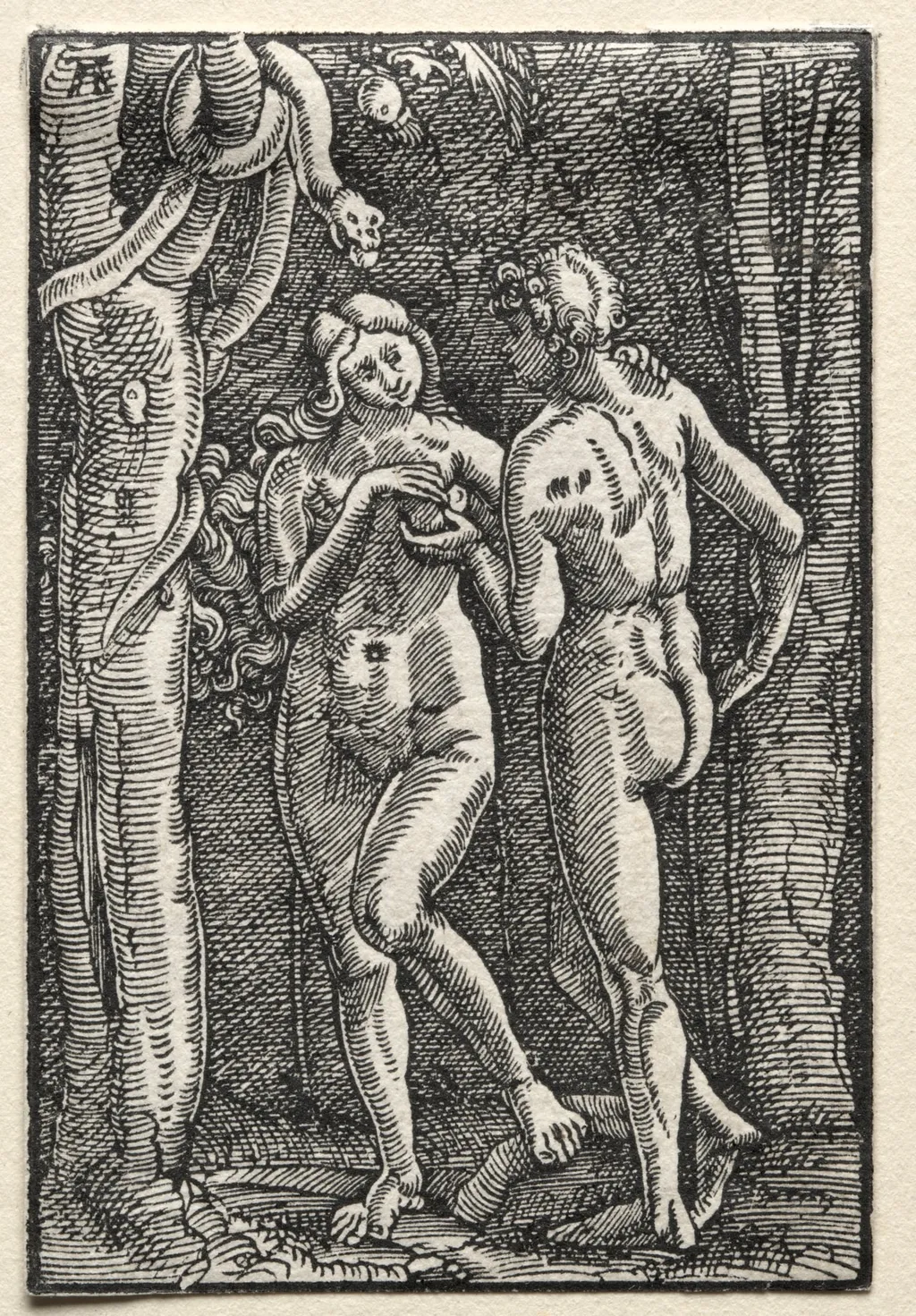
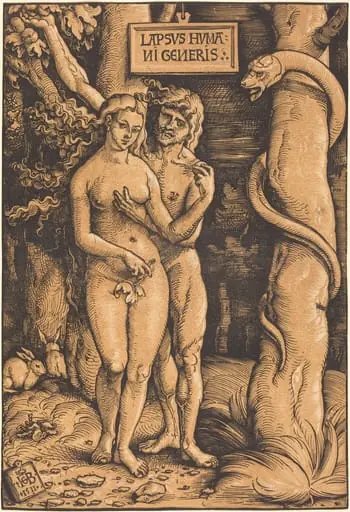
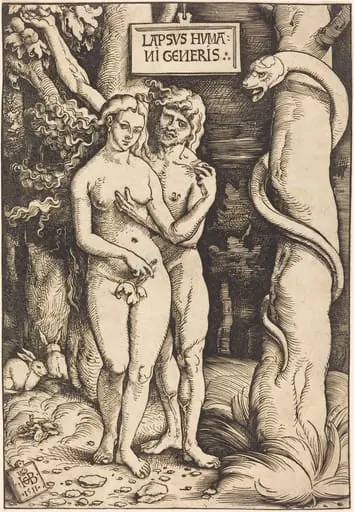
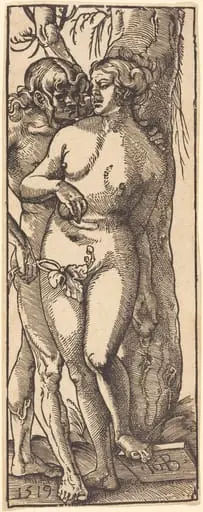
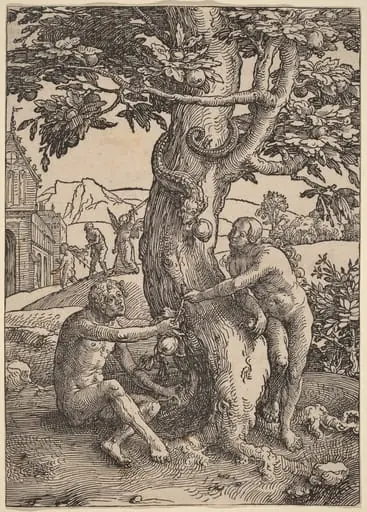
The Fall and Redemption of Man: Adam and Eve Eating the Forbidden Fruit is a print by the Renaissance artist Albrecht Altdorfer. It dates from 1515 and is held in the collection of the Cleveland Museum of Art.
About this work
Overview
The Fall and Redemption of Man: Adam and Eve Eating the Forbidden Fruit is a print created by Albrecht Altdorfer around 1515. As a prominent figure of the Danube School, Altdorfer's work combines biblical themes with detailed, expressive landscapes.
Subject & Meaning
The print depicts the pivotal moment of Adam and Eve consuming the forbidden fruit in Eden. Symbolic elements, such as skulls intertwined with natural forms, underscore the consequences of their transgression, while the composition conveys the emotional and moral weight of the scene.
Technique & Style
Characterized by simple yet expressive figures, clear lines, and nuanced shading, the print reflects Altdorfer's mastery of engraving. The densely packed, swirling foliage in the background, along with the serpent's skull-tipped tail, exemplify the Danube School's emphasis on vivid, detailed natural settings.
History & Provenance
Created circa 1515 by Albrecht Altdorfer, a German Renaissance painter, architect, and engraver based in Regensburg. Associated with both the Danube School and the Nuremberg Little Masters, this work showcases his contribution to the Renaissance printmaking tradition.
Context
This work fits within the broader Renaissance art movement, where biblical narratives were often set against rich, symbolic landscapes. Altdorfer's style, blending the spiritual with the natural, aligns with the era's artistic explorations of human experience and the divine.
Artist & collection
Artist
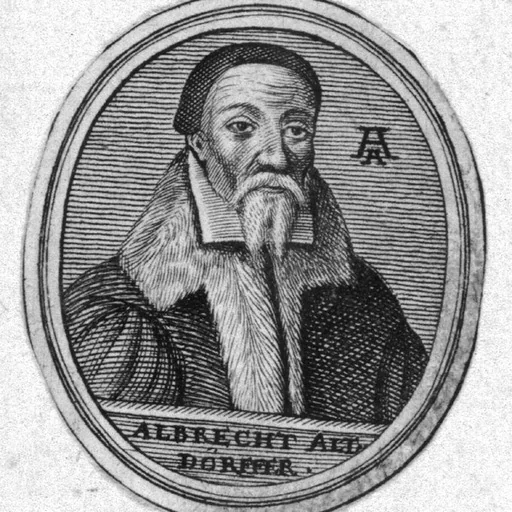
Albrecht Altdorfer (c. 1480 – 12 February 1538) was a German painter, engraver and architect of the Renaissance working in Regensburg. Along with Lucas Cranach the Elder and Wolf Huber he is regarded to be the main…