Artwork
The Virgin with the Child and St. Anne at the Cradle
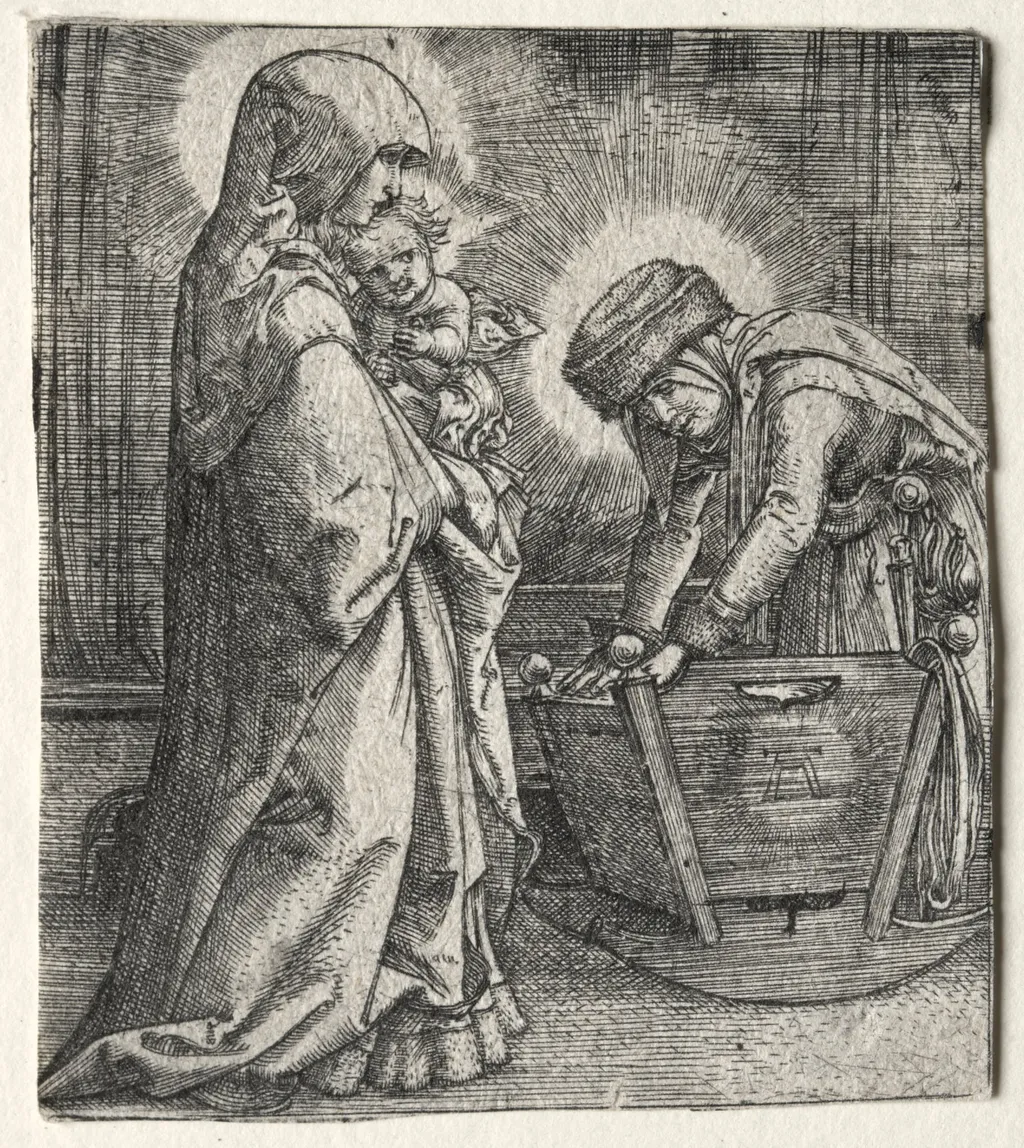
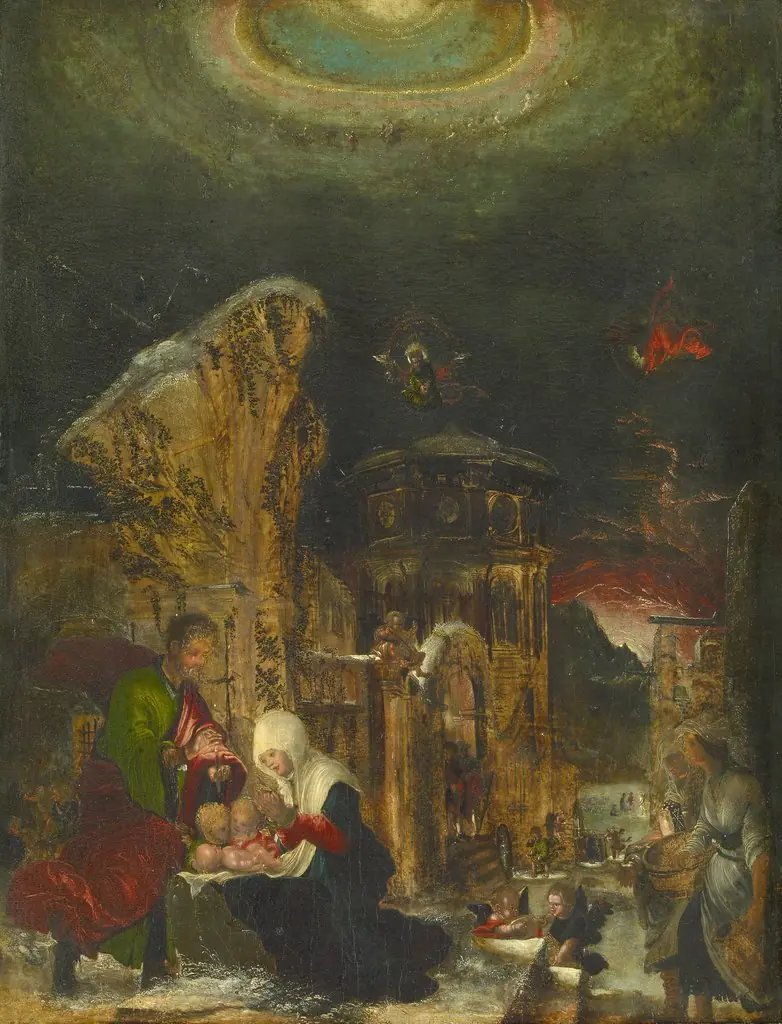
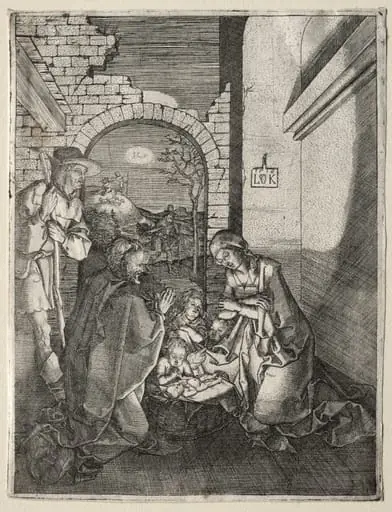
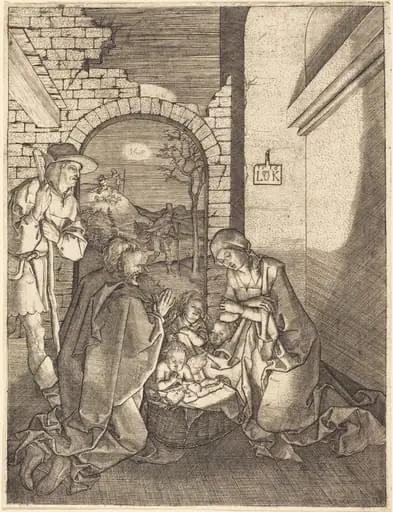
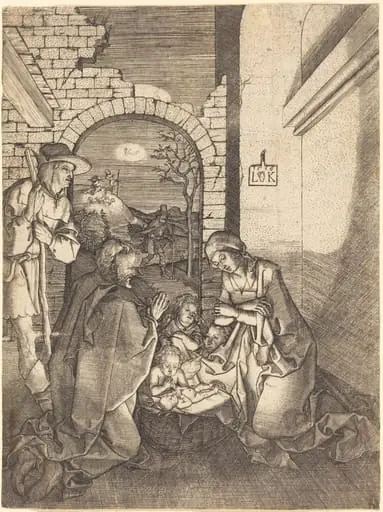
The Virgin with the Child and St. Anne at the Cradle is a print by the Renaissance artist Albrecht Altdorfer. It dates from 1523 and is held in the collection of the Cleveland Museum of Art.
About this work
Overview
Created in 1523 by Albrecht Altdorfer, this black-and-white engraving portrays the Virgin Mary, the Christ Child, and Saint Anne in a quiet domestic moment.
Created in 1523 by Albrecht Altdorfer, this black-and-white engraving portrays the Virgin Mary, the Christ Child, and Saint Anne in a quiet domestic moment. Altdorfer, a central figure in the Danube School, combined religious subject matter with richly detailed natural surroundings. The composition is intimate, focusing on the figures’ gestures and the subtle interplay of light and shadow to convey reverence and tenderness.
Subject & Meaning
The scene captures a private moment of familial care: the Virgin holds the infant, Saint Anne leans in to observe, and a kneeling figure—possibly Joseph—gazes upward with quiet devotion. The cradle anchors the group, symbolizing both vulnerability and divine presence. The absence of overt symbolism invites contemplation of human connection within sacred narrative, grounding the holy in everyday tenderness.
Technique & Style
Altdorfer employed fine, precise lines and controlled hatching to model form and suggest volume. Light appears to descend from above, illuminating faces and hands while leaving surrounding areas in soft shadow. The textured background, rendered with delicate crosshatching, enhances spatial depth without distracting from the central figures. His skill in chiaroscuro gives the scene a quiet, sculptural presence despite its small scale.
History & Provenance
Produced during Altdorfer’s mature period in Regensburg, the print reflects his engagement with both devotional imagery and the growing interest in landscape as an expressive element. While the work’s early ownership is undocumented, it aligns with the circulation of small-scale religious engravings among educated patrons in southern Germany, who valued intimate, contemplative imagery for private devotion.
Context
In the early 1520s, religious imagery in Germany was shifting amid Reformation debates. Altdorfer’s focus on quiet domestic piety, rather than grand theological scenes, offered a personal alternative to both Catholic iconography and Protestant austerity. His integration of nature as a silent witness to sacred events distinguished his work from contemporaries and reflected a broader humanist turn in Northern art.
Legacy
Altdorfer’s engraving exemplifies the Danube School’s fusion of emotional depth and natural observation. Though not widely reproduced, its influence endures in the way later artists approached intimate religious scenes with psychological nuance and environmental harmony. His mastery of line and light in small formats helped elevate printmaking as a medium for serious artistic expression.
Artist & collection
Artist
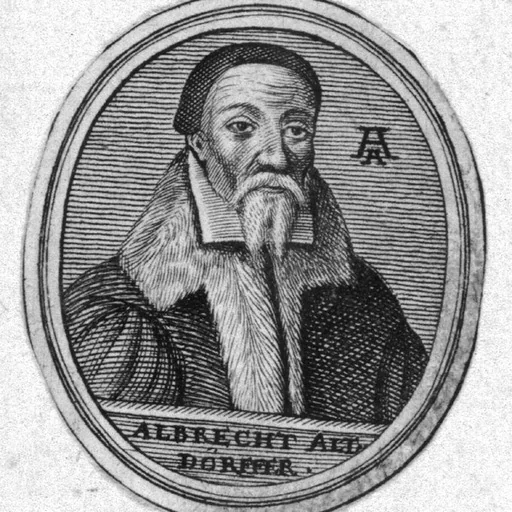
Albrecht Altdorfer (c. 1480 – 12 February 1538) was a German painter, engraver and architect of the Renaissance working in Regensburg. Along with Lucas Cranach the Elder and Wolf Huber he is regarded to be the main…