Artwork
The Nativity
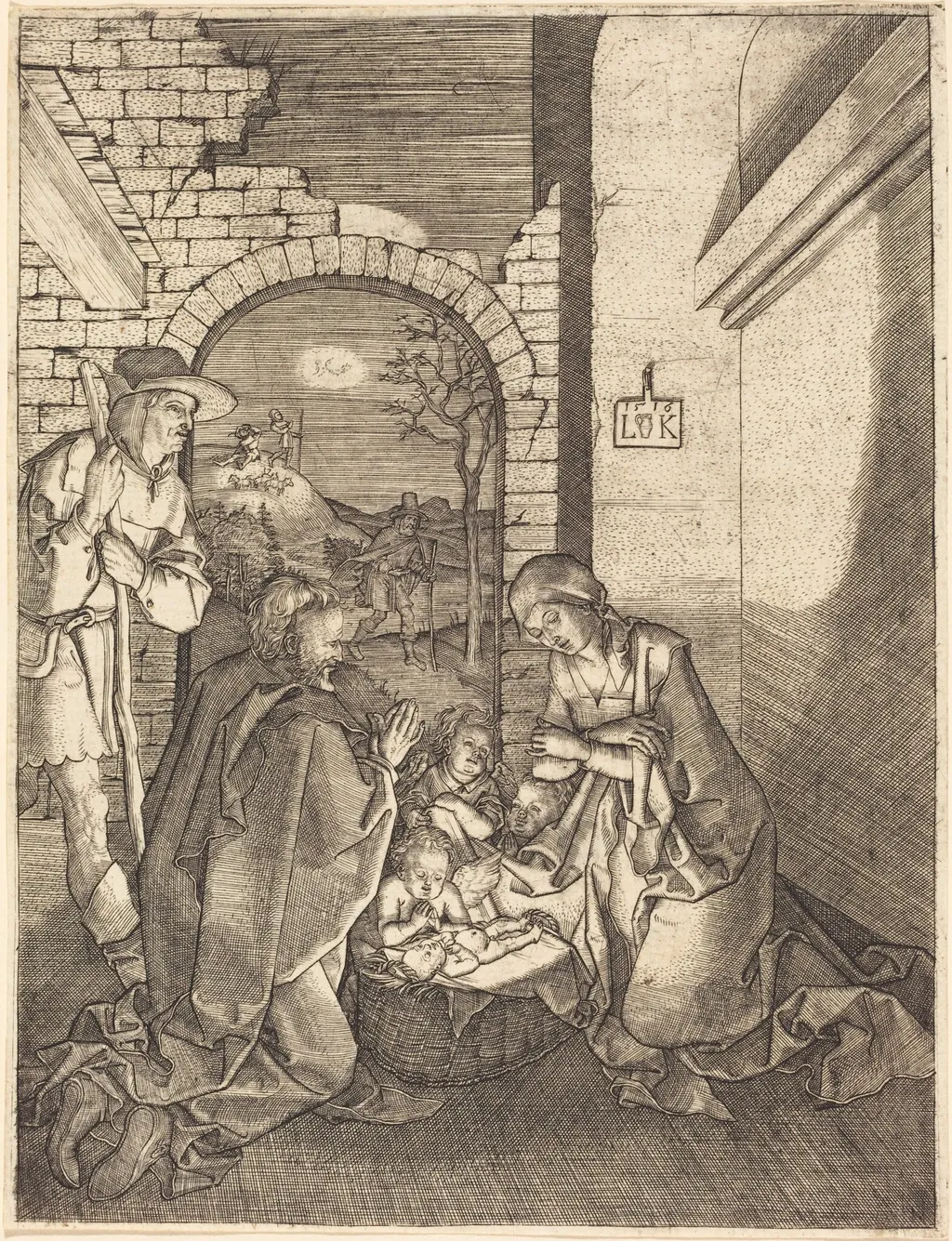
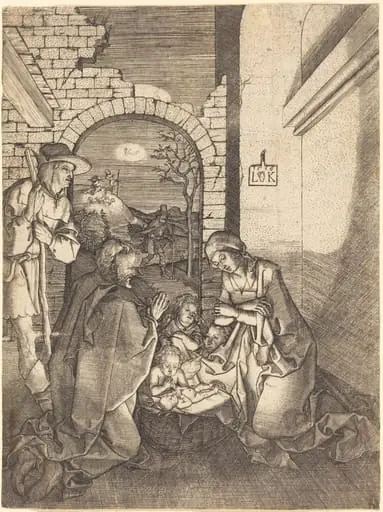
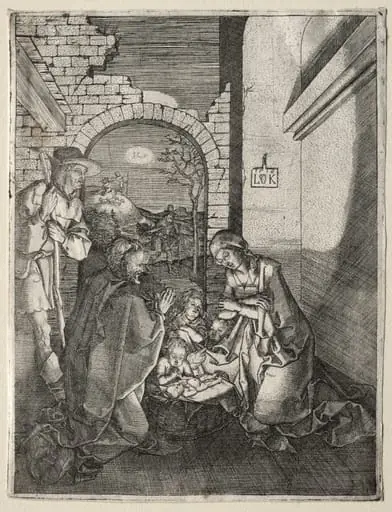
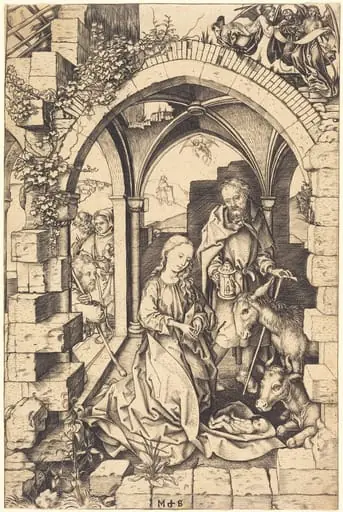
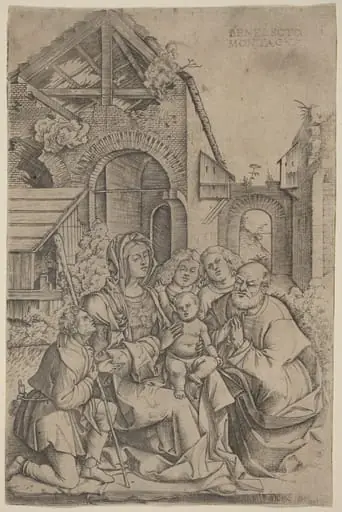
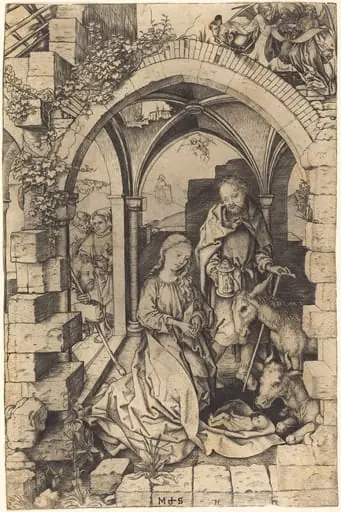
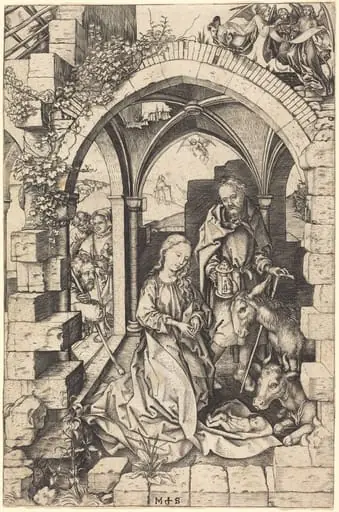
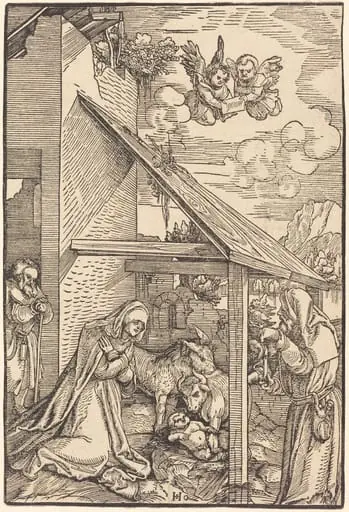
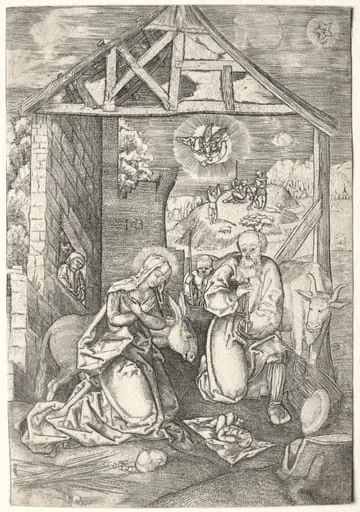
The Nativity is an ink print by the Renaissance artist Ludwig Krug. It dates from 1516 and is held in the collection of the National Gallery of Art.
About this work
Overview
Created in 1516, *The Nativity* is an engraving by Ludwig Krug, a German goldsmith and sculptor active in the early sixteenth century. The print presents the biblical birth of Christ within a modest, stone‑walled stable, populated by the Virgin, Joseph, the infant, and the traditional animal companions, while three figures observe the scene from an arched doorway.
Subject & Meaning
The composition follows the conventional Christian iconography of the nativity, emphasizing humility and reverence. By placing Mary and Joseph kneeling beside the newborn, Krug underscores the human intimacy of the event, while the presence of the ox and donkey alludes to prophetic symbolism. The three onlookers, positioned at the threshold, invite the viewer into the sacred moment.
Technique & Style
The engraving achieves a realistic depth through careful gradations of tone, rendering stone walls, wooden beams, and animal fur with meticulous detail.
Krug employs the fine line work characteristic of early printmaking, using dense cross‑hatching to model forms and suggest texture. The engraving achieves a realistic depth through careful gradations of tone, rendering stone walls, wooden beams, and animal fur with meticulous detail. This precise, almost sculptural approach reflects Krug’s background in goldsmithing, where exacting craftsmanship is paramount.
History & Provenance
Ludwig Krug, alongside contemporaries such as Wenzel Jamnitzer, was recognized as a leading goldsmith in the German lands of his era. *The Nativity* stands as one of his few surviving prints, illustrating how his metalworking skills transferred to the medium of engraving. The work entered museum collections in the nineteenth century, where it remains a reference point for early German print art.
Artist & collection

Artist
Ludwig Krug (1488 – 1532) was a German goldsmith, engraver, and sculptor. Together with Wenzel Jamnitzer, he is considered among the most important goldsmiths of the 16th century in what is now Germany.