Artwork
Altarpiece of the Mater Dolorosa, Scene: Christ Nailed Art the Cross
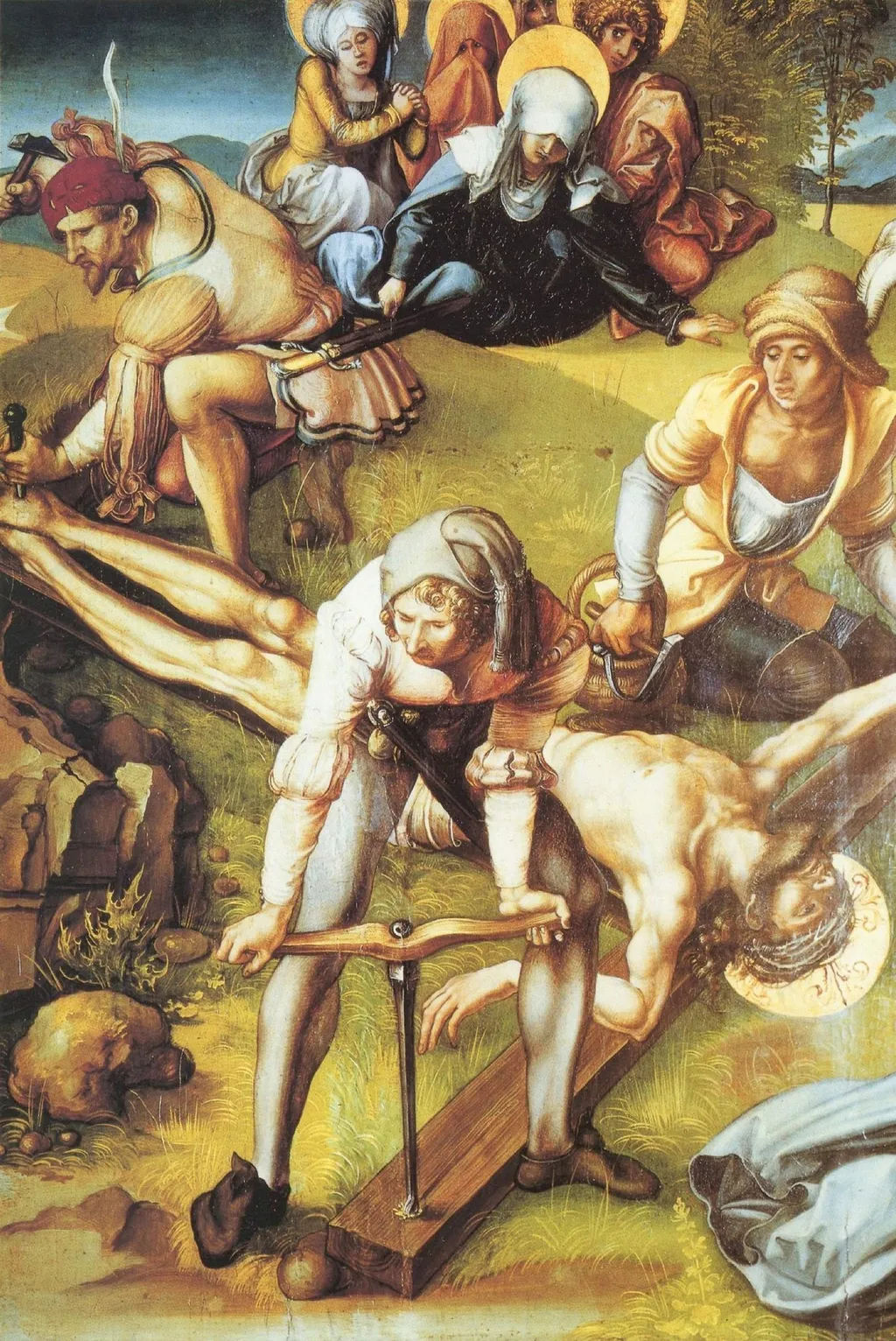
Altarpiece of the Mater Dolorosa, Scene: Christ Nailed Art the Cross is an oil painting by the Northern Renaissance artist Albrecht Dürer. It dates from 1498 and is held in the collection of the Staatliche Kunstsammlungen Dresden.
About this work
Overview
Created in 1498 by Albrecht Dürer, this oil painting is one panel from a larger altarpiece dedicated to the Mater Dolorosa. It belongs to the Northern Renaissance tradition and reflects Dürer’s early mastery of oil technique. The work is now held in the Gemäldegalerie Alte Meister in Dresden, where it remains part of a significant collection of early modern European art.
Subject & Meaning
The scene captures the moment Christ is being fastened to the cross, with a laborer securing his feet while another figure observes.
The scene captures the moment Christ is being fastened to the cross, with a laborer securing his feet while another figure observes. The composition emphasizes physical suffering and quiet solemnity, avoiding theatricality. The presence of onlookers, including a woman in black and a man in a red hat, suggests witnesses to the event, reinforcing the narrative’s gravity and inviting contemplation rather than emotional display.
Technique & Style
Dürer employs chiaroscuro to model forms with precision, using subtle gradations of light and shadow to define Christ’s body and the surrounding figures. The brushwork is controlled and detailed, characteristic of Northern Renaissance attention to texture and anatomy. The figures are rendered with psychological restraint, their expressions subdued, enhancing the scene’s meditative tone.
History & Provenance
Painted during Dürer’s formative years, the panel was originally part of a multi-panel altarpiece commissioned for a religious setting. It entered the collection of the Gemäldegalerie Alte Meister in the 19th century, following the reorganization of Saxon royal holdings. Its survival as a single panel from a larger ensemble is uncommon, making it a rare example of Dürer’s early devotional work.
Context
This work emerged during a period when German artists were adapting Italian Renaissance ideals to Northern devotional traditions. Dürer, influenced by his travels and study of human proportion, fused precise observation with spiritual intensity. The altarpiece reflects the growing emphasis on personal piety and the emotional weight of Christ’s Passion in late 15th-century Northern Europe.
Legacy
Though less known than Dürer’s prints, this painting illustrates his early command of oil painting and narrative restraint. It contributed to the evolution of religious imagery in Germany, moving away from stylized Gothic conventions toward naturalism grounded in human experience. The panel remains a reference point for studies of Northern Renaissance devotional art and Dürer’s technical development.
Own this work as a print
Artist & collection
Artist
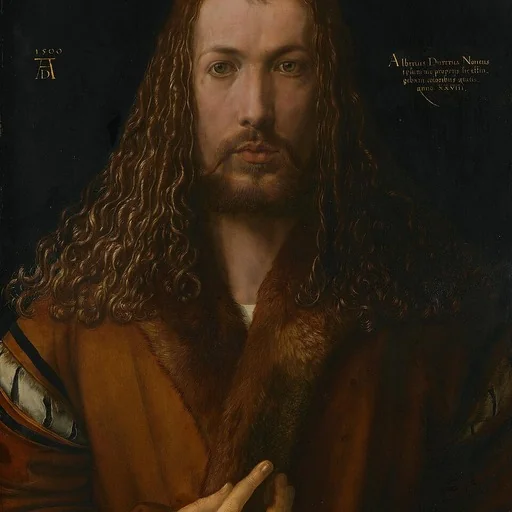
Albrecht Dürer spent his life in Nuremberg, a busy German city where artists traded prints like currency.

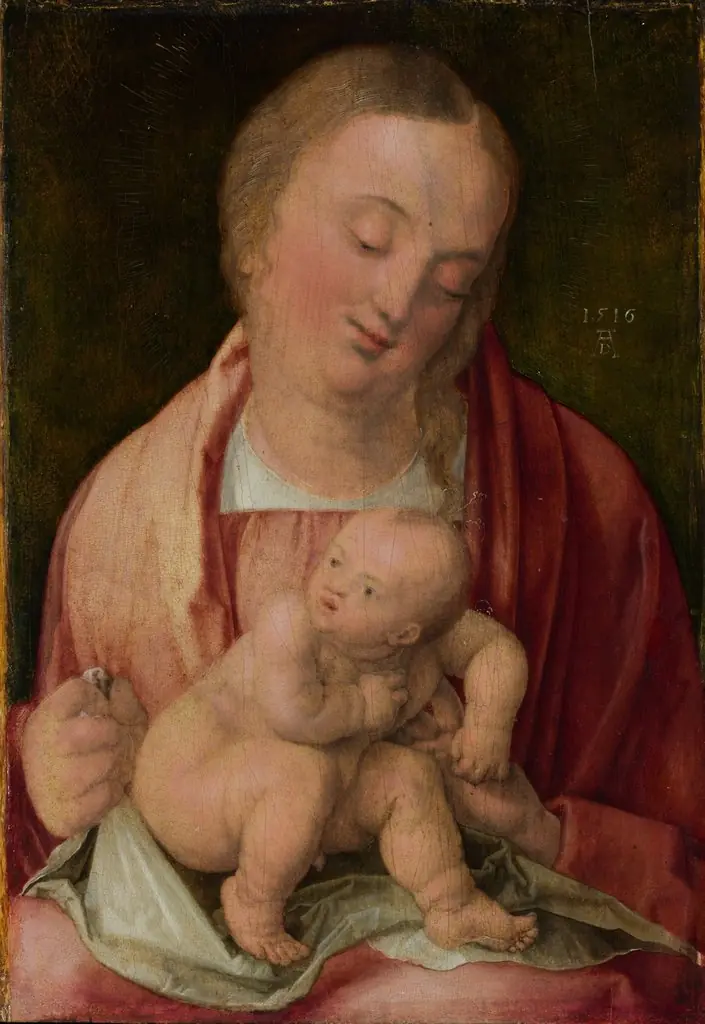
![Madonna and Child [obverse], by Albrecht Dürer](https://artifactworldgallery.com/img/albrecht-durer--madonna-and-child-obverse--d7b8ebf05d22ebe5-w320.webp)
![Lot and His Daughters [reverse], by Albrecht Dürer](https://artifactworldgallery.com/img/albrecht-durer--lot-and-his-daughters-reverse--b4ebf9b282faa17a-w320.webp)
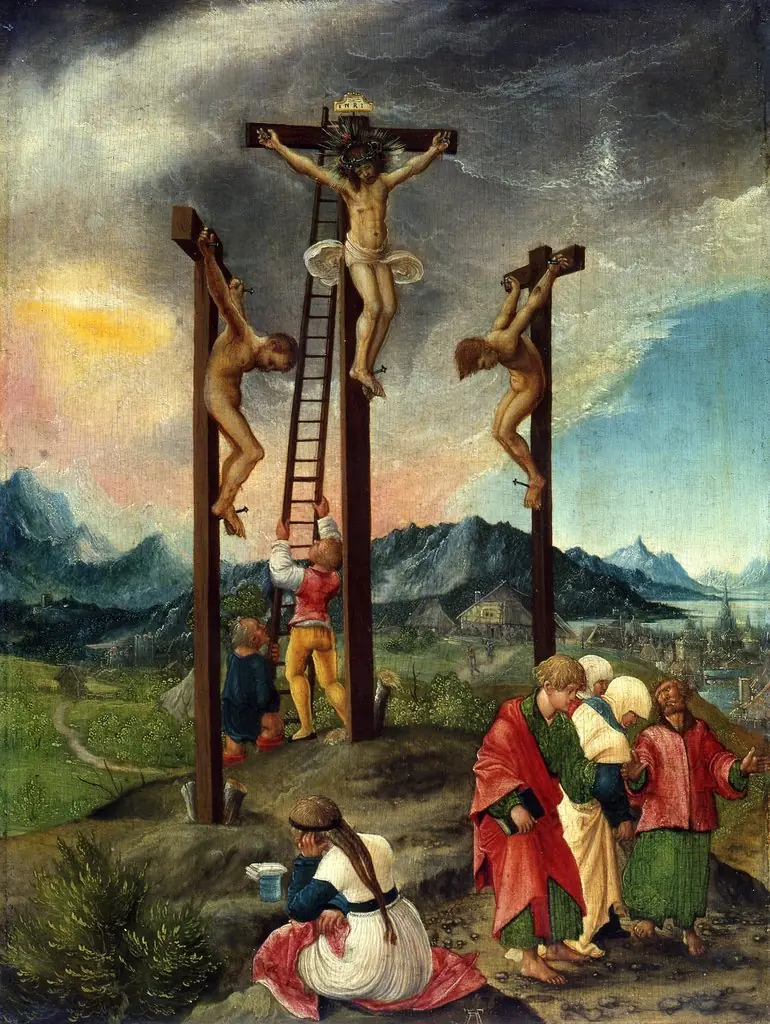 Christ on the Cross between the Two Thieves
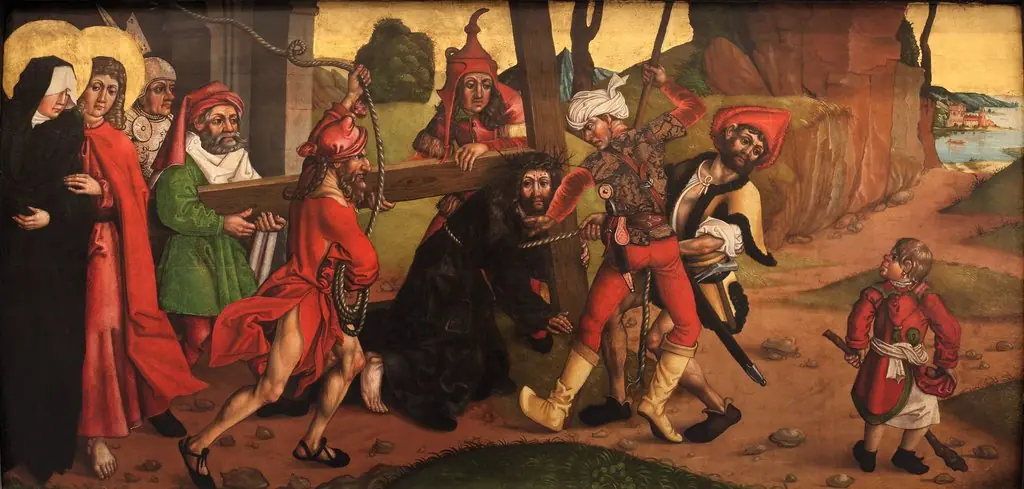 The carrying of the cross
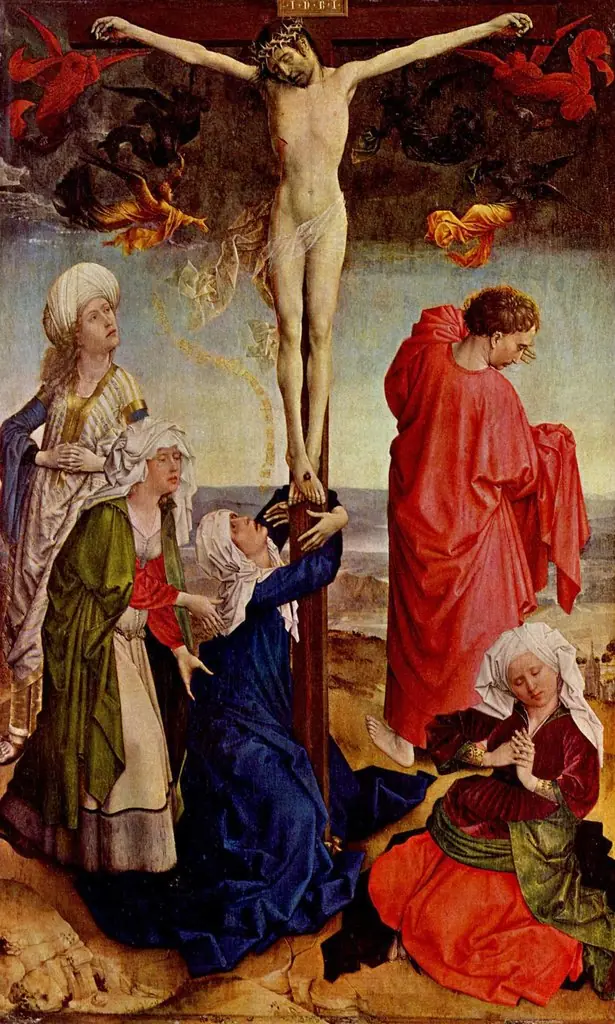 Christ on the Cross
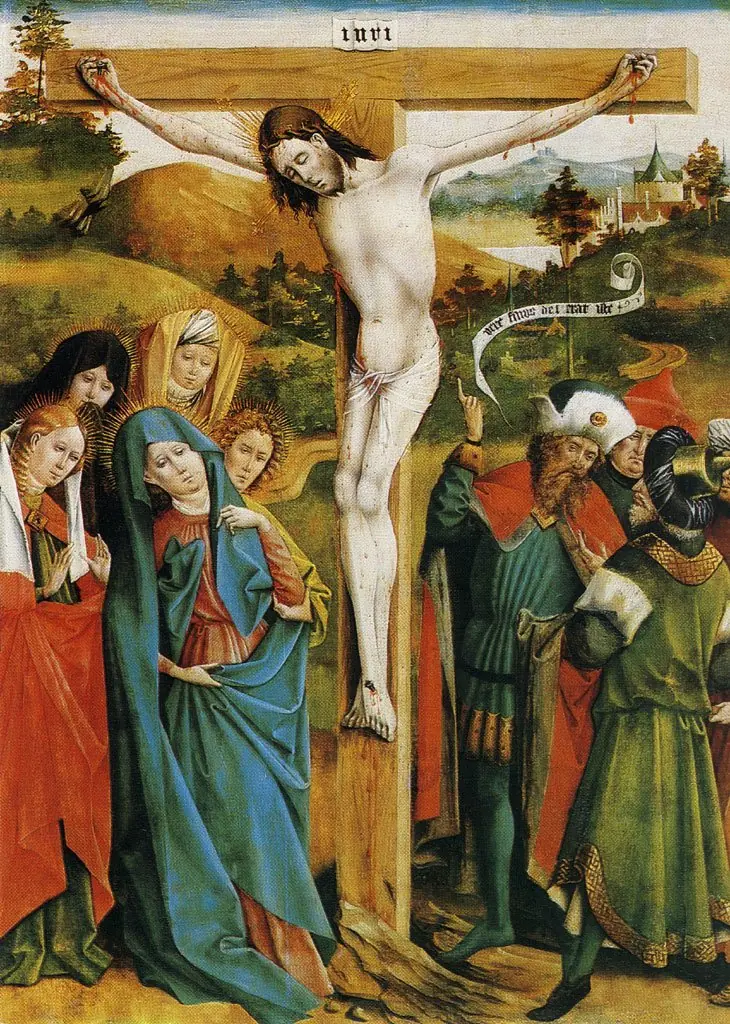 Crucifixion of Christ
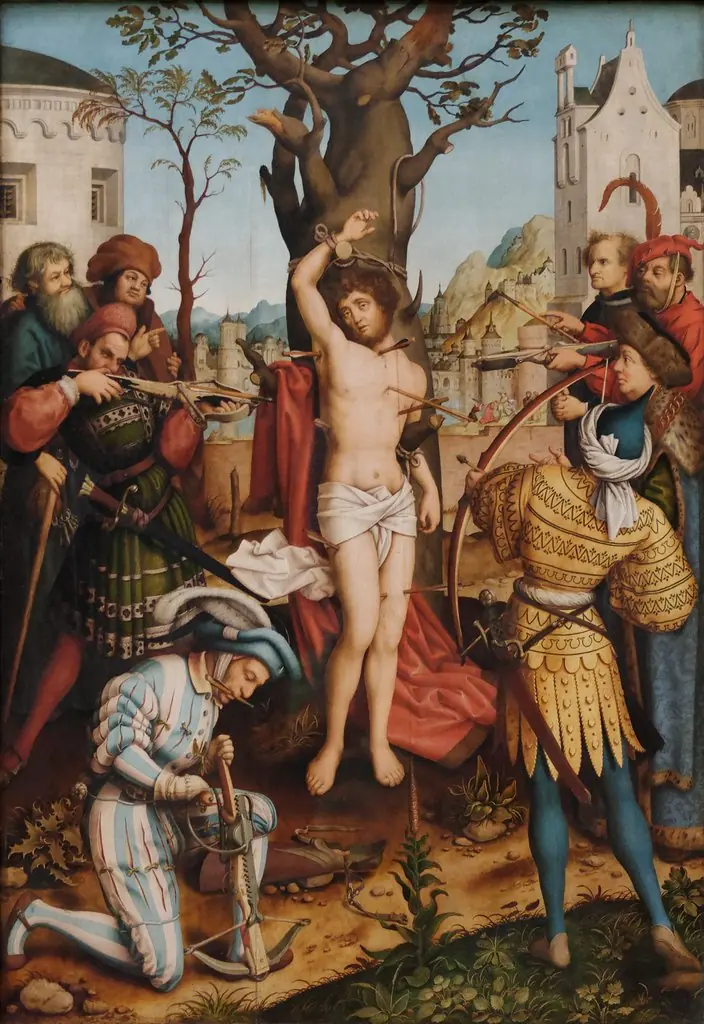 St. Sebastian Altar: The Martyrdom of St. Sebastian
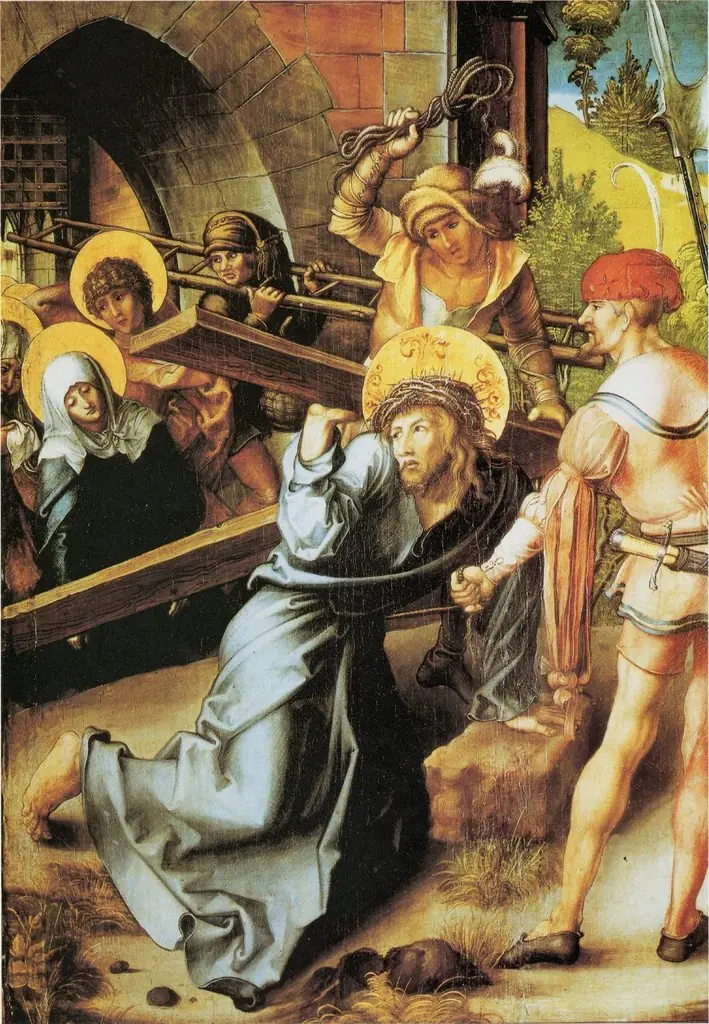 Via Crucis
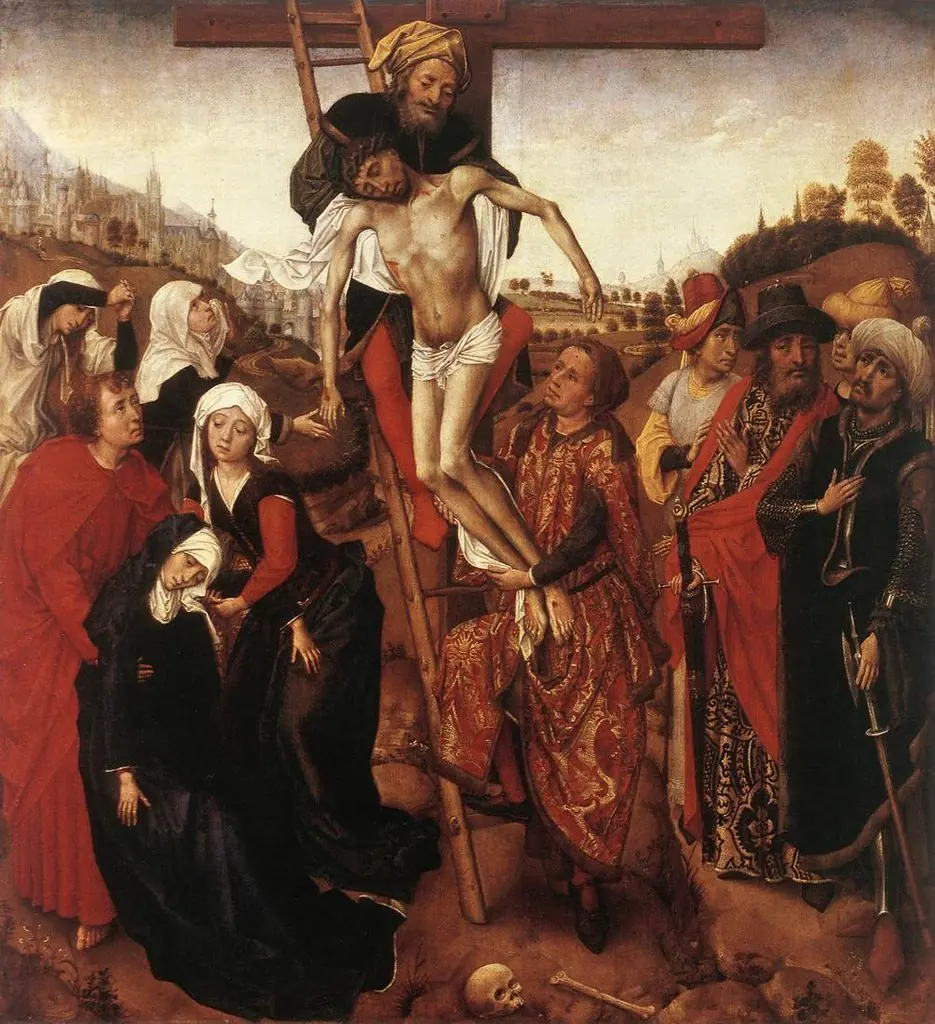 Deposition by Vrancke van der Stockt in the Alte Pinakothek
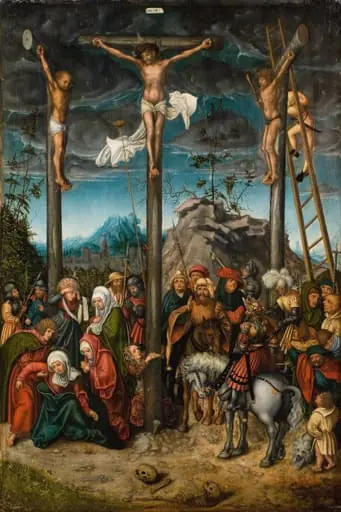 The Crucifixion
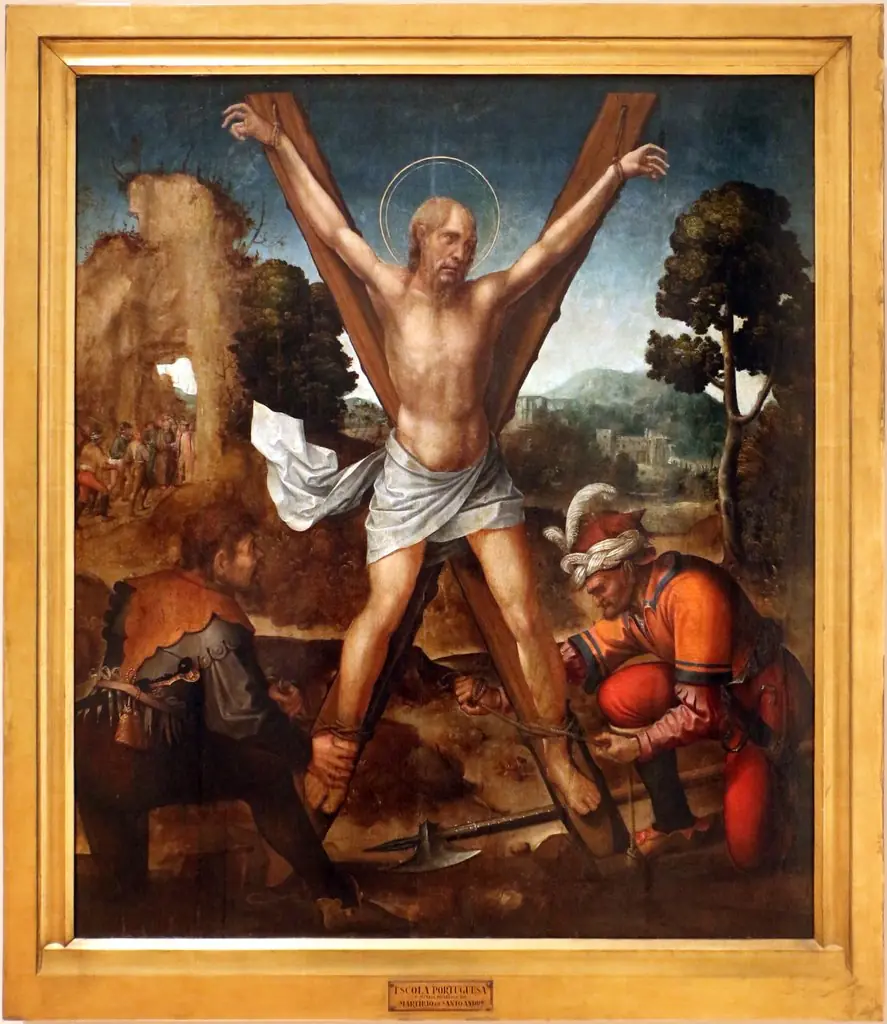 Martyrdom of Saint Andrew
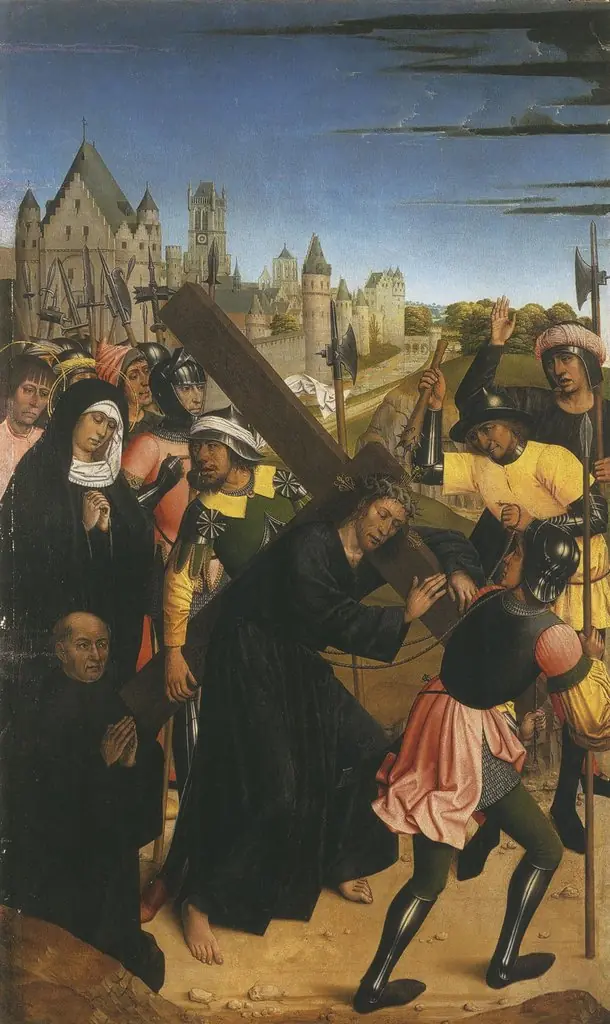 Kruisdraging
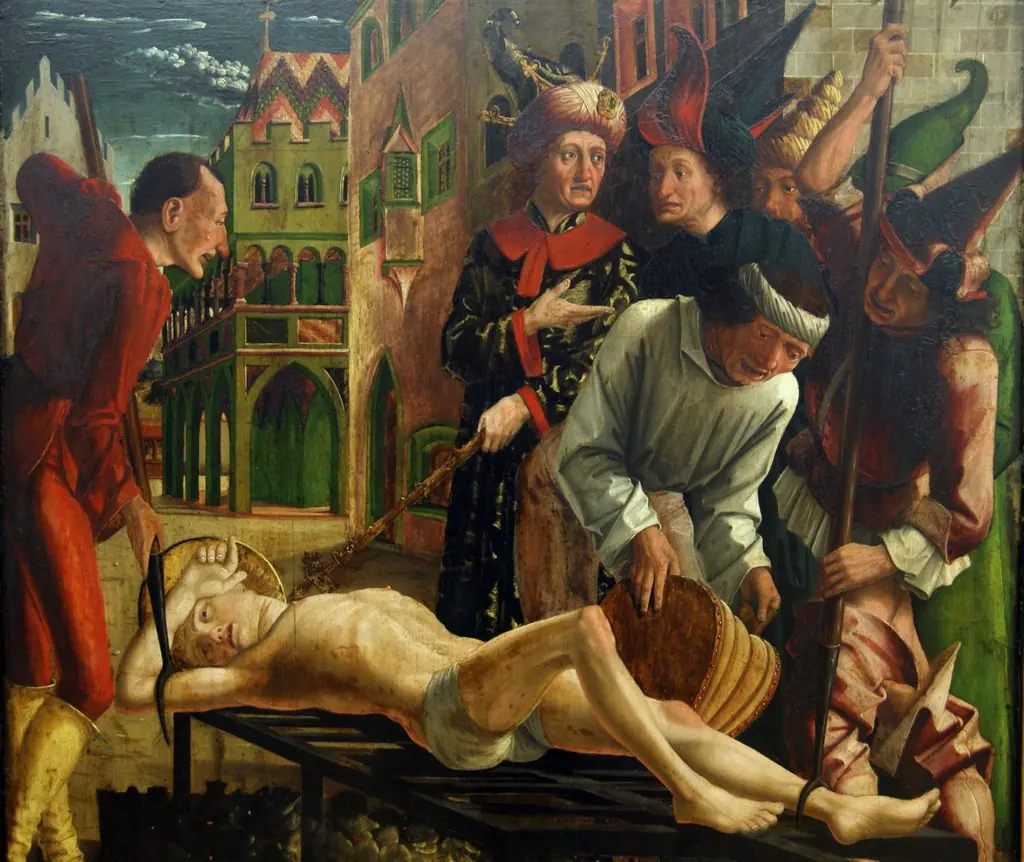 The Martyrdom of St. Lawrence
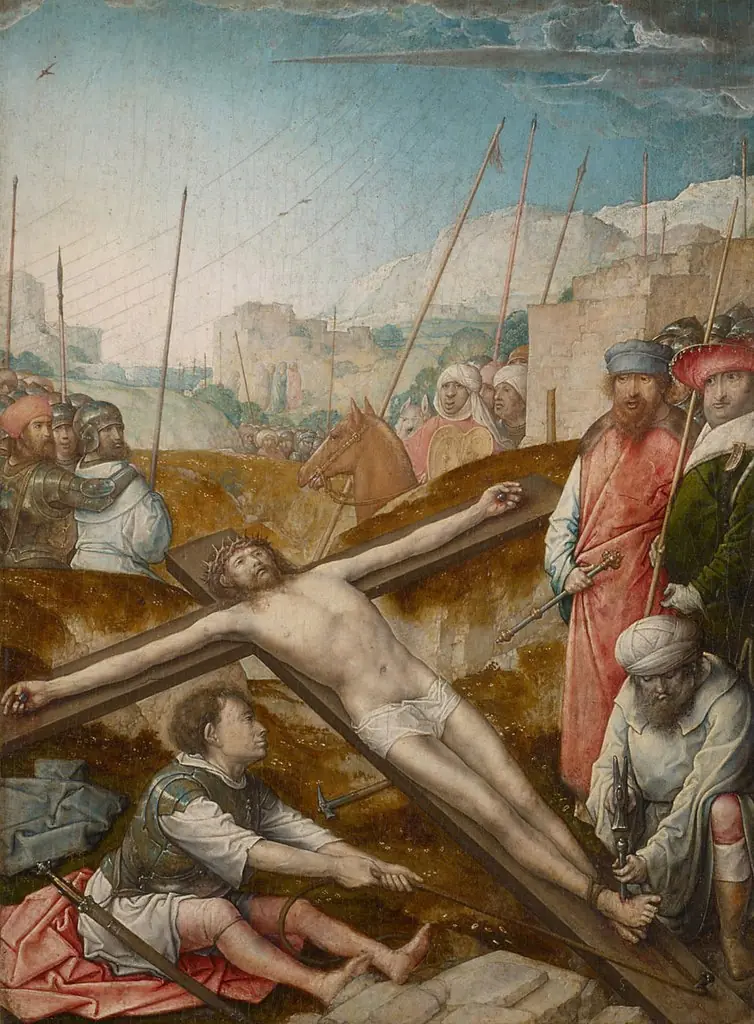 Christ Nailed to the Cross