Artwork
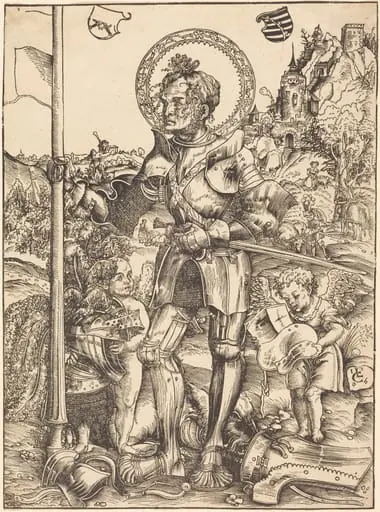
St. George on Foot
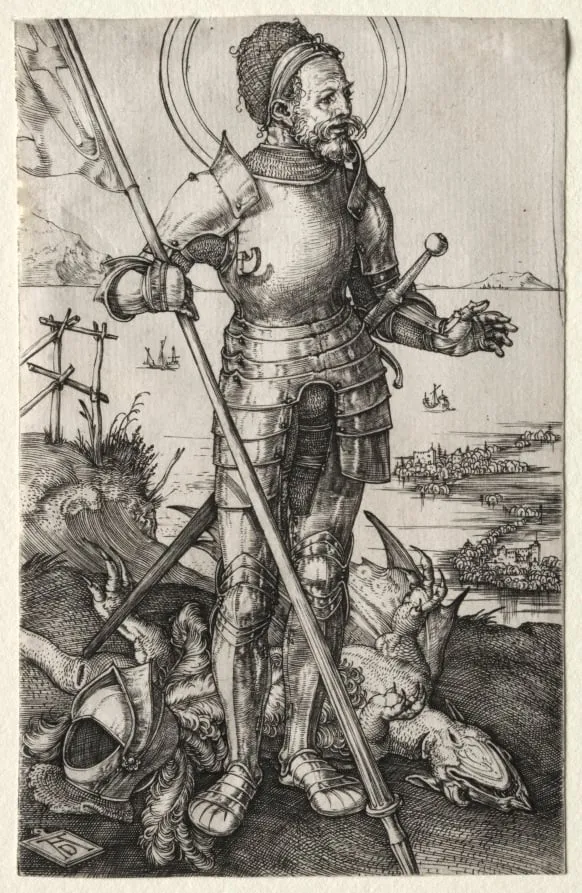
St. George on Foot is a print by the Renaissance artist Albrecht Dürer. It dates from 1504 and is held in the collection of the Cleveland Museum of Art. Created around 1504, *St.
About this work
Overview
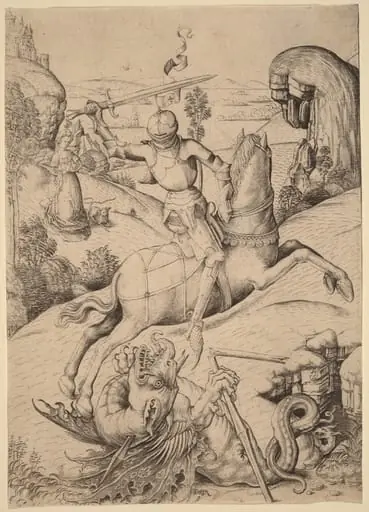
Created around 1504, *St. George on Foot* is a woodcut by Albrecht Dürer, one of the most influential printmakers of the German Renaissance. Unlike his later engravings, this work showcases his early command of the woodcut medium, using bold lines and precise carving to convey form and movement. The image captures a moment of quiet victory, emphasizing the saint’s composure over dramatic action.
Subject & Meaning
The inclusion of distant boats on the water hints at a broader world beyond the battle, reinforcing the saint’s role as a protector beyond the immediate scene.
The print portrays Saint George, a Christian martyr and legendary dragon-slayer, standing armored and still after his triumph. The severed head and lifeless body of the dragon at his feet symbolize the defeat of evil, while his calm posture suggests divine assurance rather than brute force. The inclusion of distant boats on the water hints at a broader world beyond the battle, reinforcing the saint’s role as a protector beyond the immediate scene.
Technique & Style
Dürer employed fine, controlled lines in woodcut to render the intricate details of armor, plume, and dragon scales. The contrast between the solid, upright figure and the twisted, fragmented dragon creates visual tension. His use of negative space and rhythmic patterning reflects both Gothic tradition and emerging Renaissance ideals of anatomical clarity and spatial awareness, all achieved within the technical constraints of woodblock printing.
History & Provenance
The print was produced during Dürer’s early career, shortly after his return from Italy, where he absorbed classical and humanist influences. It circulated widely across Europe through print networks, contributing to his international reputation. Surviving impressions are held in major collections, including the British Museum and the Albertina, attesting to its early and enduring demand among collectors and patrons.
Context
In early 16th-century Europe, images of Saint George were popular as symbols of chivalry and Christian virtue. Dürer’s version diverges from earlier, more stylized depictions by grounding the figure in naturalistic form and psychological presence. The work reflects broader Renaissance interests in individual heroism, classical antiquity, and the fusion of religious narrative with human-centered observation.
Legacy
This woodcut helped establish Dürer as a leading innovator in printmaking, influencing generations of Northern European artists. Its balance of narrative clarity and technical precision became a model for religious imagery in print. Though less celebrated than his later engravings, *St. George on Foot* remains a key example of how print could convey complex moral and spiritual themes with remarkable economy.
Artist & collection
Artist
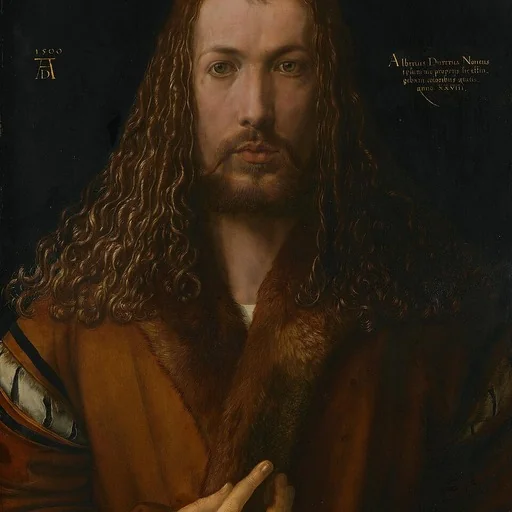
Albrecht Dürer spent his life in Nuremberg, a busy German city where artists traded prints like currency.

![Madonna and Child [obverse], by Albrecht Dürer](https://artifactworldgallery.com/img/albrecht-durer--madonna-and-child-obverse--d7b8ebf05d22ebe5-w320.webp)


![Lot and His Daughters [reverse], by Albrecht Dürer](https://artifactworldgallery.com/img/albrecht-durer--lot-and-his-daughters-reverse--b4ebf9b282faa17a-w320.webp)