Artwork
Ludwig II, King of Hungary
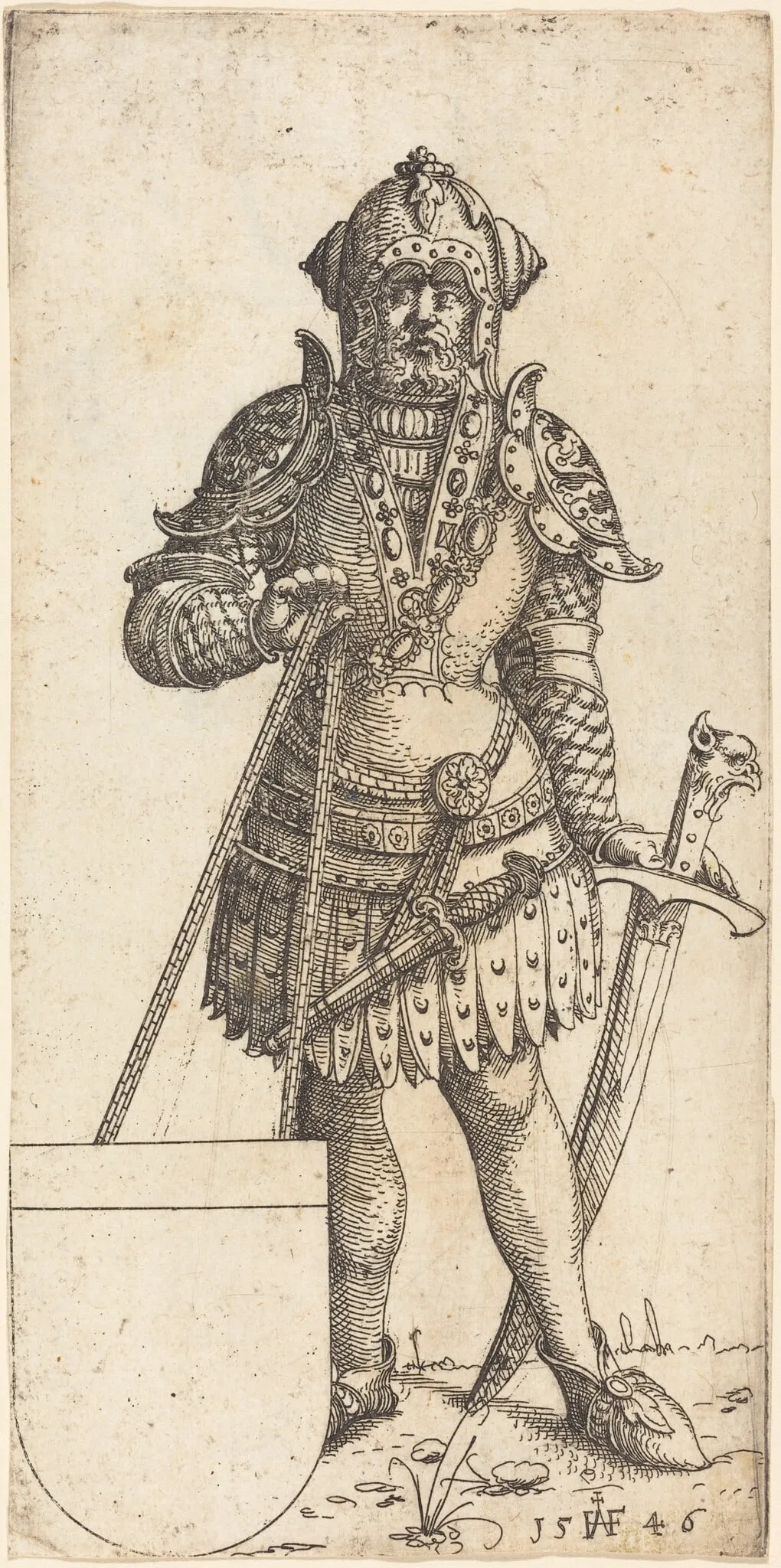
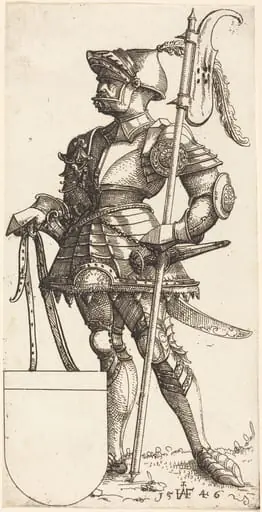
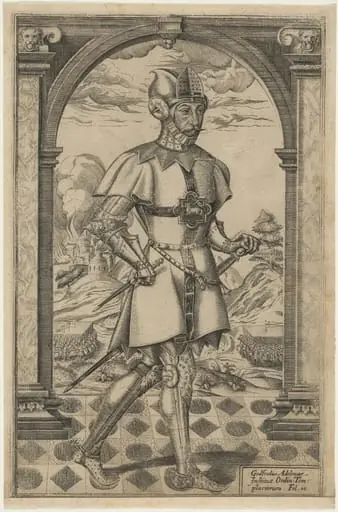
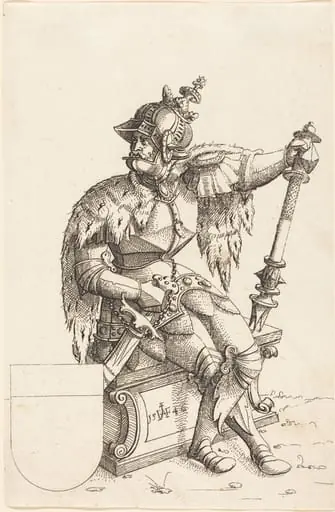
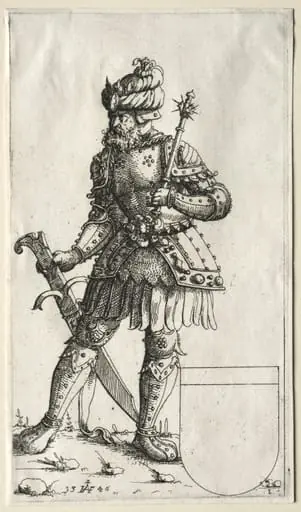
Ludwig II, King of Hungary is an ink print by the Renaissance artist Augustin Hirschvogel. It dates from 1546 and is held in the collection of the National Gallery of Art.
About this work
Overview
The work is attributed to Augustin Hirschvogel, a German artist noted for his contributions to cartography and mathematics as well as his printmaking.
Created in 1546, this small etching portrays a figure identified as Ludwig II, King of Hungary. The work is attributed to Augustin Hirschvogel, a German artist noted for his contributions to cartography and mathematics as well as his printmaking. Executed in the characteristic fine line work of mid‑16th‑century etching, the image measures only a few centimeters across, typical of Hirschvogel’s series of intimate landscape and figure prints.
Subject & Meaning
The central figure stands on a modest patch of grass, dressed in richly ornamented armor that includes a crested helmet, a sword in the right hand and a dagger in the left. The elaborate detailing of the metalwork and the composed facial expression convey the status and martial authority associated with a medieval king, while the sparse floral elements soften the otherwise formal presentation.
Technique & Style
Hirschvogel employed the etching process, incising lines into a copper plate with acid to achieve delicate, precise contours. The rendering of the armor’s intricate patterns demonstrates his mastery of line modulation and shading, creating a sense of texture and three‑dimensionality. The overall aesthetic aligns with the Danube School’s emphasis on clear outlines and a restrained, almost monochrome background that directs focus to the figure.
History & Provenance
The print belongs to a group of thirty‑five small landscape and figure etchings Hirschvogel produced between 1545 and 1549. Although the original ownership record is unclear, the work has been catalogued in several collections of Northern Renaissance prints and is cited in scholarly references to the Danube School’s output during the mid‑16th century.
Context
Hirschvogel’s activity coincided with a flourishing of printmaking in Bavaria and Austria, where the Danube School gathered artists interested in combining natural observation with expressive detail. By depicting a Hungarian monarch, the etching reflects the period’s interest in pan‑European royal iconography and the circulation of political imagery through portable, reproducible media.
Artist & collection
Artist
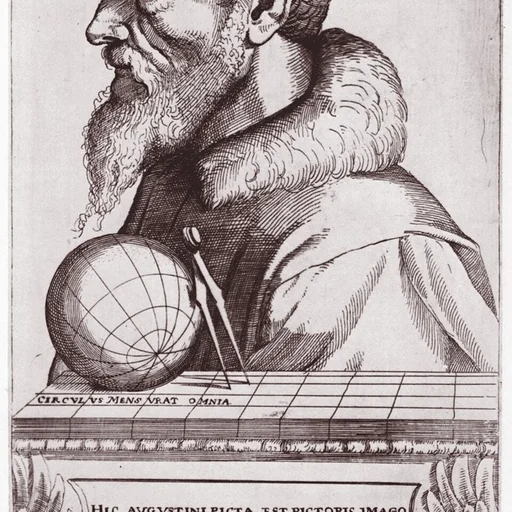
Augustin Hirschvogel (1503 – February 1553) was a German artist, mathematician, and cartographer known primarily for his etchings.