Artwork
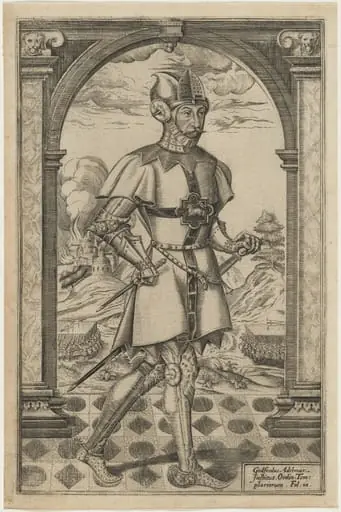
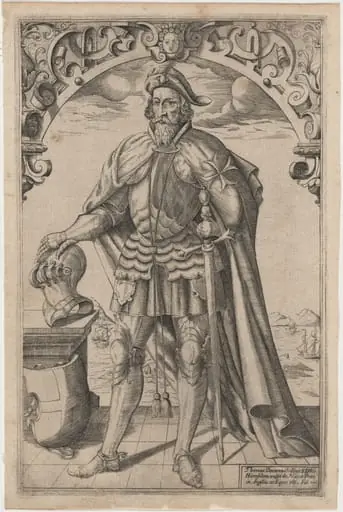
Godfrey Adelmar, Founder of the Knights Templar
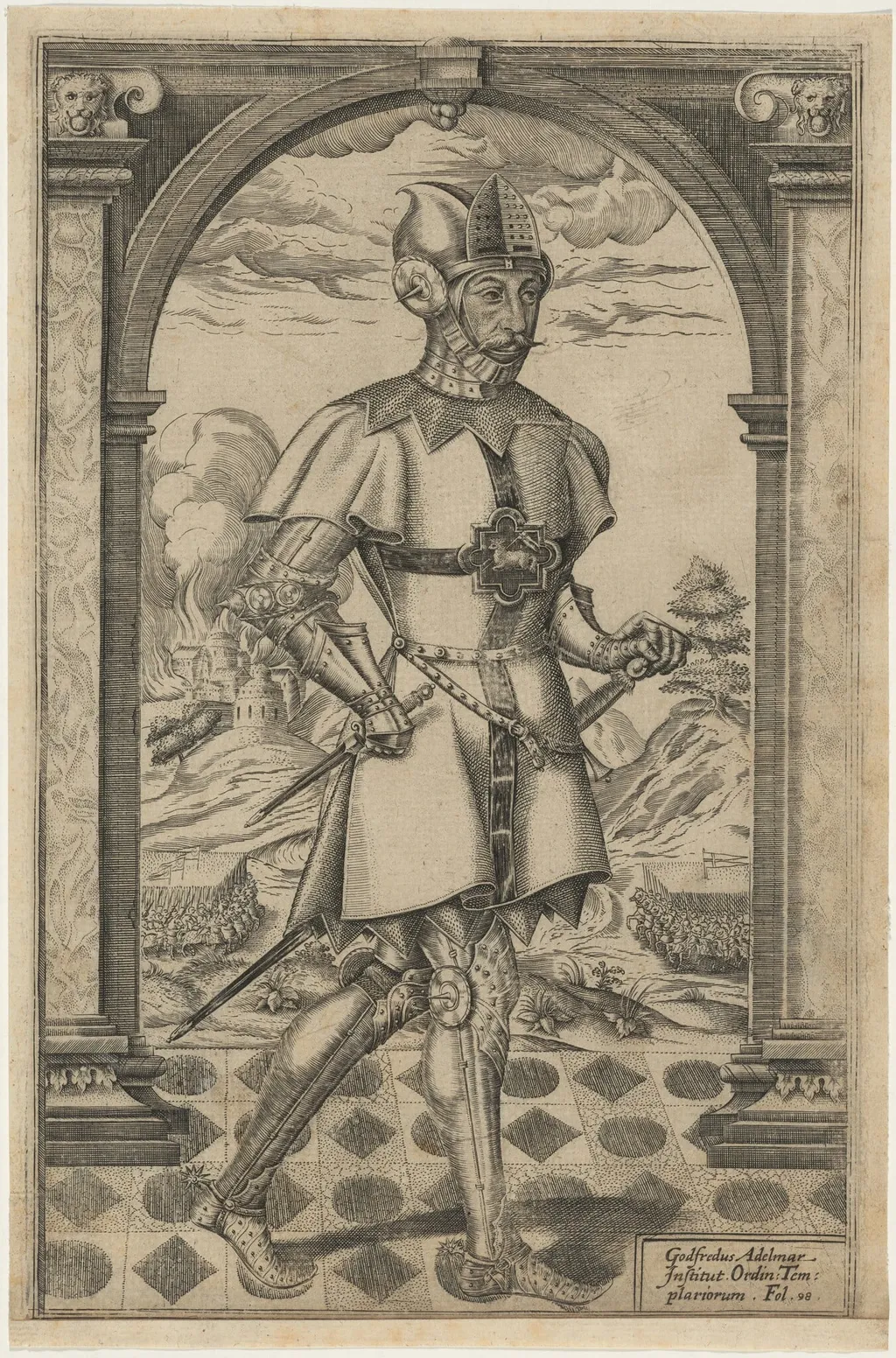
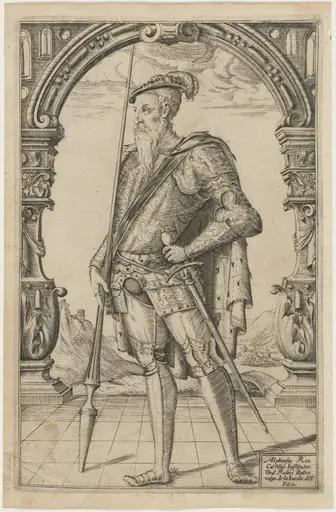
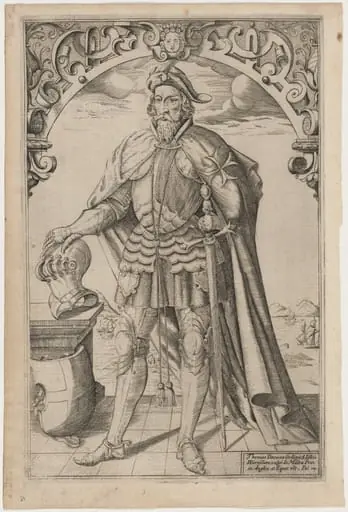
Godfrey Adelmar, Founder of the Knights Templar is an ink print by the Baroque artist William Rogers. It dates from 1602 and is held in the collection of the National Gallery of Art.
About this work
Overview
The figure is clad in full plate armor, brandishing a sword in one hand and a shield in the other, his helmet topped with a decorative plume.
Created in 1602, this copperplate engraving by the English printmaker William Rogers portrays a solitary knight poised on a craggy outcrop beneath a turbulent sky. The figure is clad in full plate armor, brandishing a sword in one hand and a shield in the other, his helmet topped with a decorative plume. The composition emphasizes the solitary, martial presence of the rider against a stark natural backdrop.
Subject & Meaning
The work identifies the figure as Godfrey Adelmar, traditionally credited as the founder of the Knights Templar, though the historical basis for this attribution is uncertain. By presenting the knight in a moment of readiness, the image evokes themes of chivalric duty, religious militancy, and the ideal of the warrior‑monk defending the faith, aligning the subject with the order’s legendary origins.
Technique & Style
Rogers employed the fine incised lines characteristic of early 17th‑century engraving, using cross‑hatching and stippling to model the reflective surfaces of the armor and the folds of the surrounding drapery. The contrast between deep shadows and bright highlights creates a sense of three‑dimensionality, while the crisp delineation of straps and joints reflects the period’s interest in detailed, almost anatomical, representation of armament.
History & Provenance
The print emerged during a resurgence of interest in medieval orders under the early Stuart monarchy, when antiquarian subjects were popular among collectors. Though the original metal plate has not survived, surviving impressions are held in several European print collections, indicating that the image circulated widely as a devotional and historical illustration in the decades following its publication.
Artist & collection