Artwork
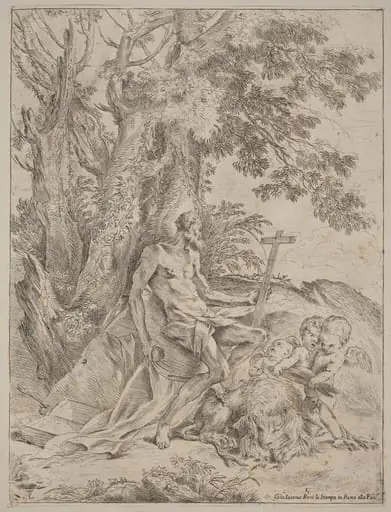
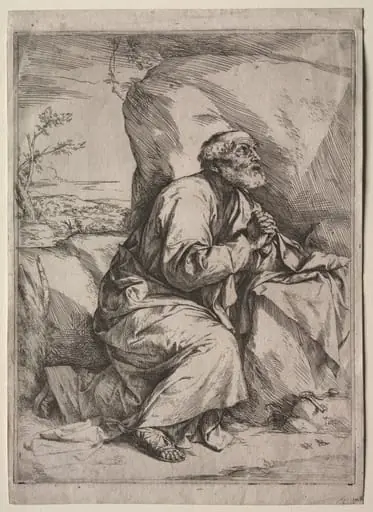
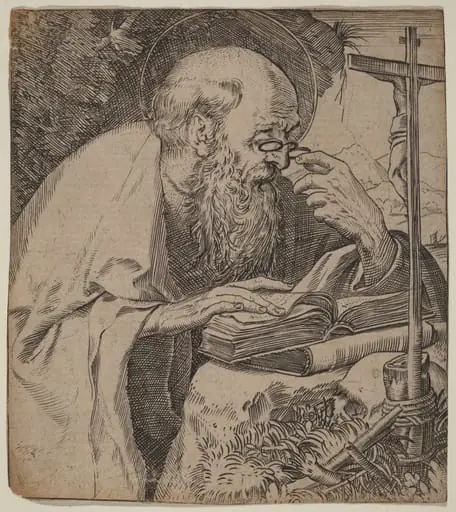
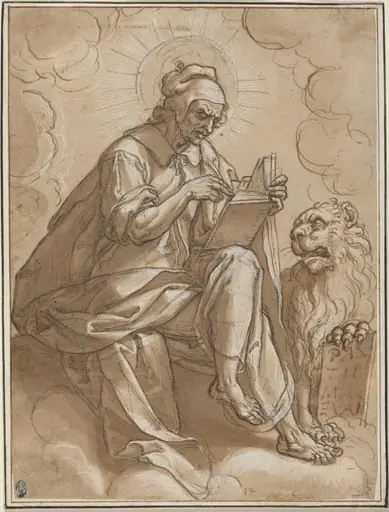
St. Jerome Seated near a Pollard Willow
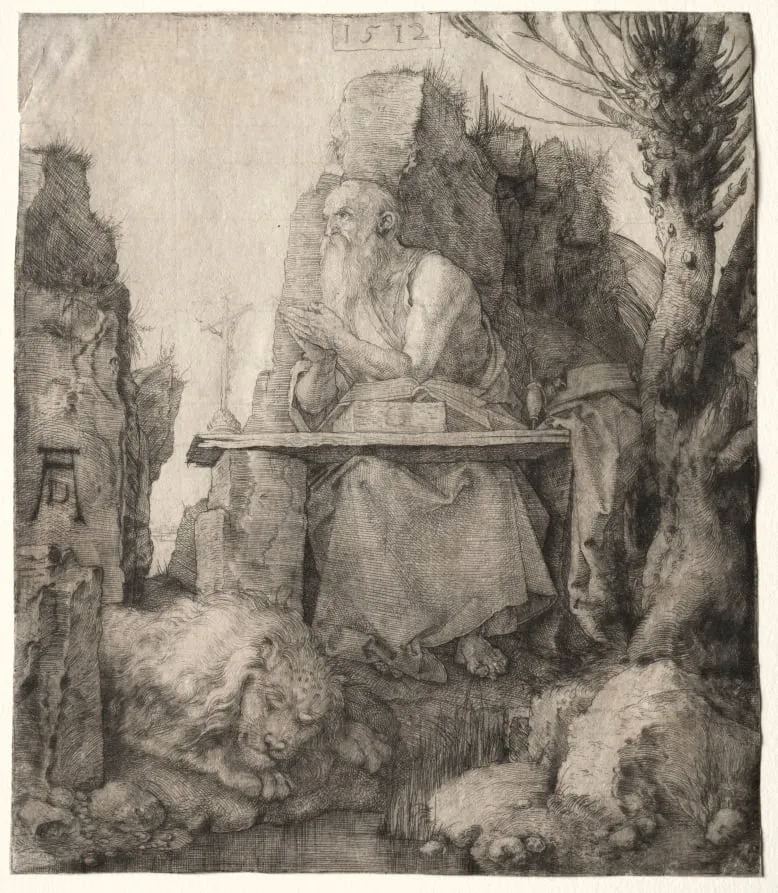
St. Jerome Seated near a Pollard Willow is a print by the Renaissance artist Albrecht Dürer. It dates from 1512 and is held in the collection of the Cleveland Museum of Art.
About this work
Overview
This print is one of only three drypoints created by Albrecht Dürer, a rare technique in which a sharp needle incises lines directly into a copperplate.
This print is one of only three drypoints created by Albrecht Dürer, a rare technique in which a sharp needle incises lines directly into a copperplate. Unlike engraving, drypoint produces soft, blurred edges due to the burr of displaced metal, lending the image a tactile, atmospheric quality. Dürer used this method to evoke the quiet, introspective world of Saint Jerome, capturing not just form but the mood of solitude and contemplation.
Subject & Meaning
Saint Jerome, depicted in quiet repose, pauses from his scriptural work to pray beside a river. At his feet, a lion—symbol of his taming of wild nature through faith—rests peacefully. A skull on the rock nearby alludes to mortality and the transience of earthly life. The pollard willow, its trunk cut and regenerating, mirrors Jerome’s spiritual renewal through asceticism, suggesting that sacrifice yields inner growth and divine connection.
Technique & Style
Dürer’s drypoint technique produced dense, velvety lines that blur at the edges, creating a sense of softness and movement. The texture of bark, feathers, and foliage emerges through delicate, overlapping scratches rather than sharp outlines. This method allowed him to render the hermitage as a living, breathing space—where light filters through leaves, birds take flight, and the river’s surface shimmers with minimal but precise marks.
History & Provenance
Created around 1514, this print belongs to Dürer’s mature period, when he was deeply engaged with religious themes and printmaking innovation. Though few impressions survive, early owners included collectors in Germany and the Low Countries who valued his technical precision and spiritual depth. The print’s rarity stems from the fragility of the drypoint plate, which wore down quickly under pressure, limiting the number of high-quality impressions possible.
Context
In early 16th-century Europe, monastic ideals still influenced artistic depictions of holy figures. Jerome, as translator of the Bible and model of scholarly devotion, resonated with humanist circles. Dürer’s portrayal diverges from formal altarpieces by emphasizing intimate, naturalistic detail—reflecting a broader shift toward personal piety and observation of the natural world as a reflection of divine order.
Legacy
Dürer’s drypoint technique influenced later printmakers seeking expressive line quality over mechanical precision. Though rarely replicated due to its technical difficulty, this work demonstrated how printmaking could convey psychological depth and environmental atmosphere. Its quiet intensity helped redefine the potential of the medium beyond reproduction, elevating it to a vehicle for personal and spiritual expression.
Artist & collection
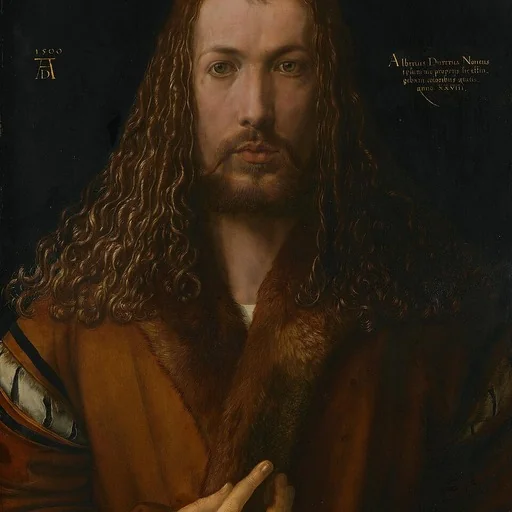
Artist
Albrecht Dürer spent his life in Nuremberg, a busy German city where artists traded prints like currency.

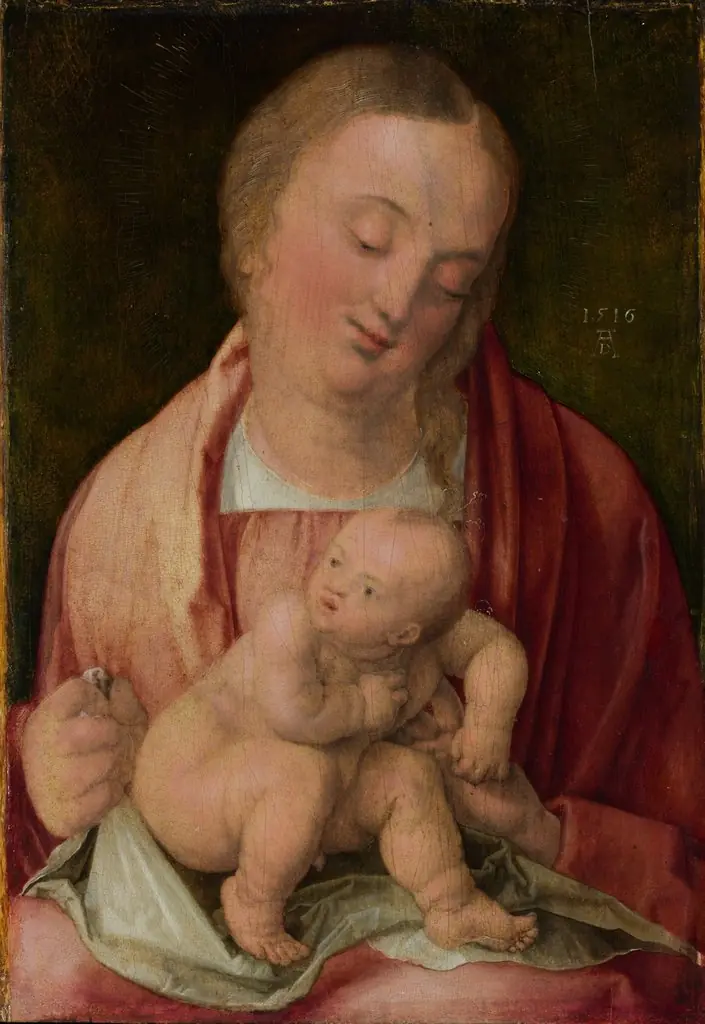
![Madonna and Child [obverse], by Albrecht Dürer](https://artifactworldgallery.com/img/albrecht-durer--madonna-and-child-obverse--d7b8ebf05d22ebe5-w320.webp)
![Lot and His Daughters [reverse], by Albrecht Dürer](https://artifactworldgallery.com/img/albrecht-durer--lot-and-his-daughters-reverse--b4ebf9b282faa17a-w320.webp)