Artwork
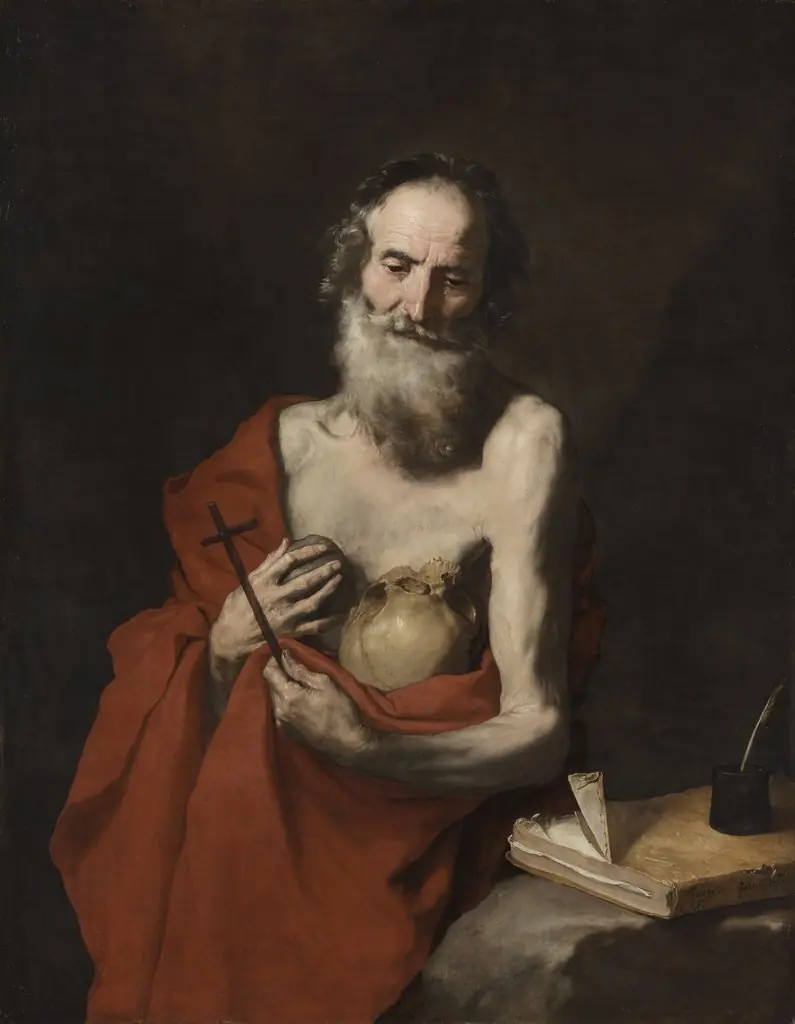
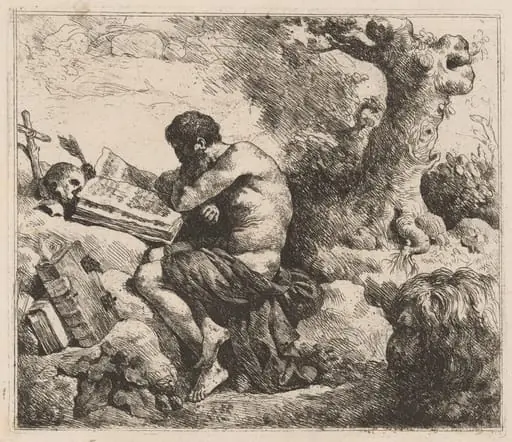
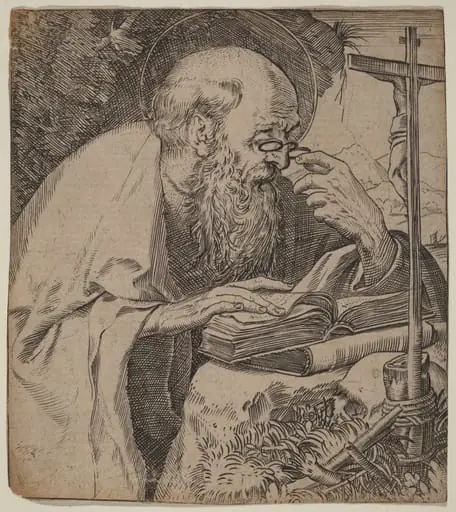
Saint Jerome Reading
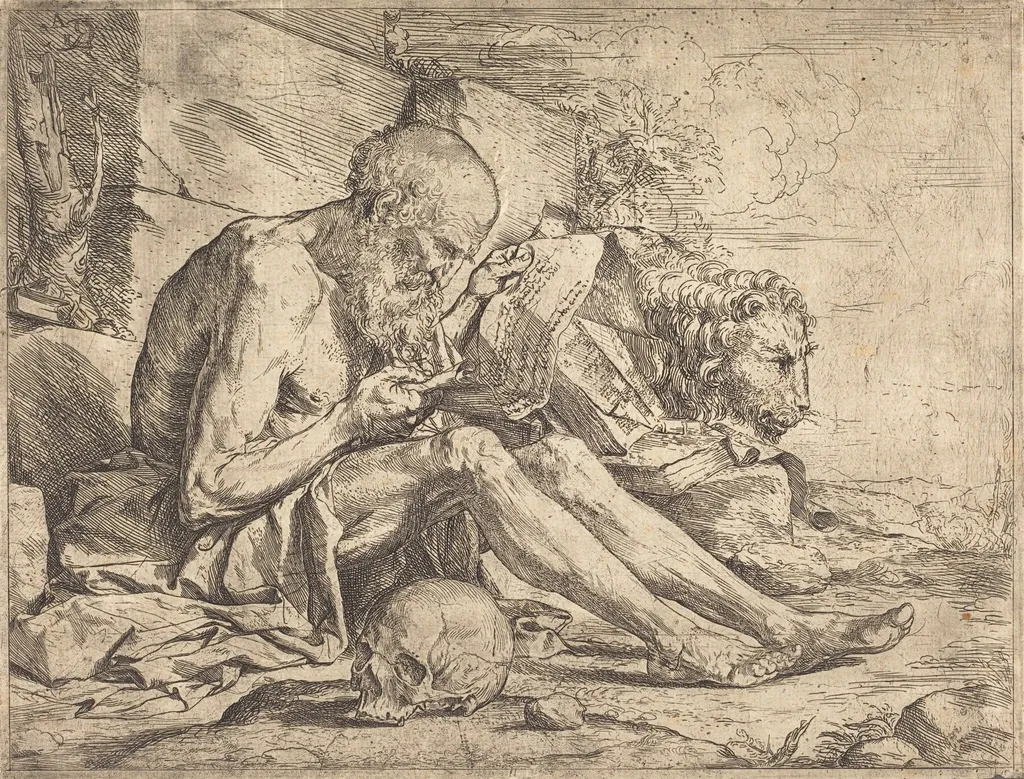
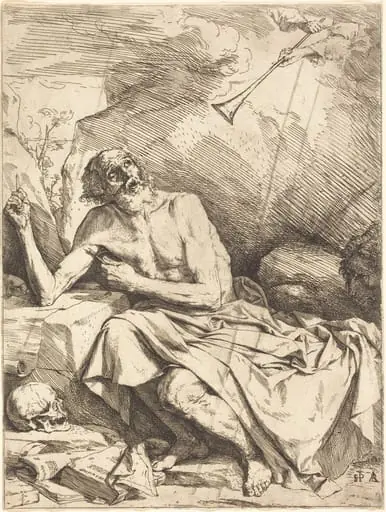
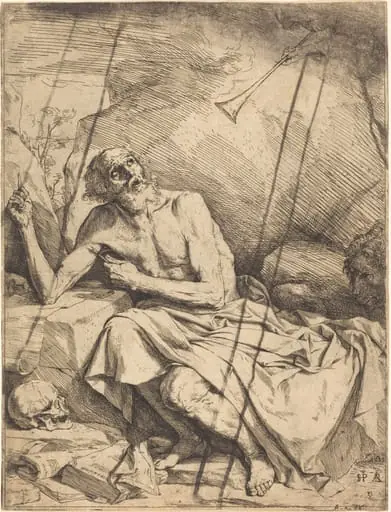
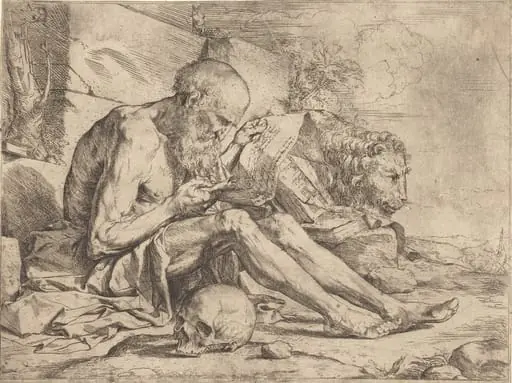
Saint Jerome Reading is an ink print by the Baroque artist Jusepe de Ribera. It dates from 1624 and is held in the collection of the National Gallery of Art.
About this work
Overview
Saint Jerome Reading is a print created by Jusepe de Ribera around 1624, combining etching, engraving, and drypoint on laid paper. This work exemplifies Ribera's skill in printmaking, a lesser-known aspect of his artistic output alongside his prominent role in Spanish Baroque painting.
Subject & Meaning
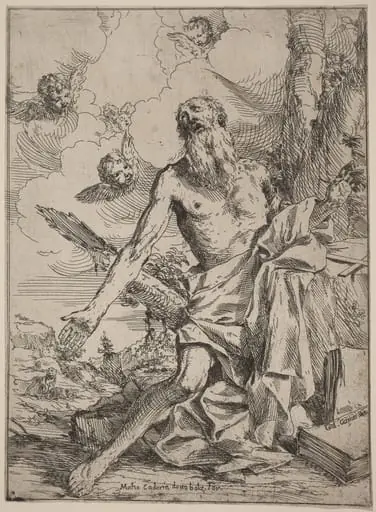
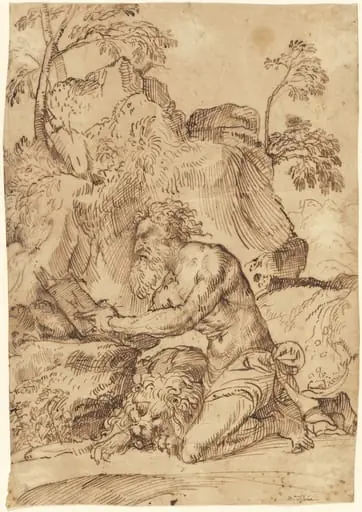
The print depicts Saint Jerome in a moment of studious solitude, emphasizing his scholarly devotion. Accompanied by symbols of mortality (a skull) and companionship (a lion), the saint is fully absorbed in his reading, conveying a sense of introspective contemplation.
Technique & Style
Ribera employed a nuanced blend of etching, engraving, and drypoint to achieve detailed, realistic renderings of texture and depth. The intricate lines and shading contribute to the overall sense of quiet realism characteristic of the artist's printwork.
History & Provenance
Created during Ribera's active period in Naples, where he was a central figure in Neapolitan painting, the exact provenance of *Saint Jerome Reading* is not detailed here, reflecting the focus on the artist's broader career in Spanish Baroque art.
Context
Within the broader context of Spanish Baroque, Ribera's work stands alongside that of Velázquez and Zurbarán, though his printmaking contributions like *Saint Jerome Reading* offer a distinct glimpse into his technical versatility.
Legacy
While Ribera is predominantly recognized for his contributions to Neapolitan and Spanish Baroque painting, prints like *Saint Jerome Reading* underscore his mastery across mediums, contributing to a more nuanced understanding of his artistic legacy.
Artist & collection
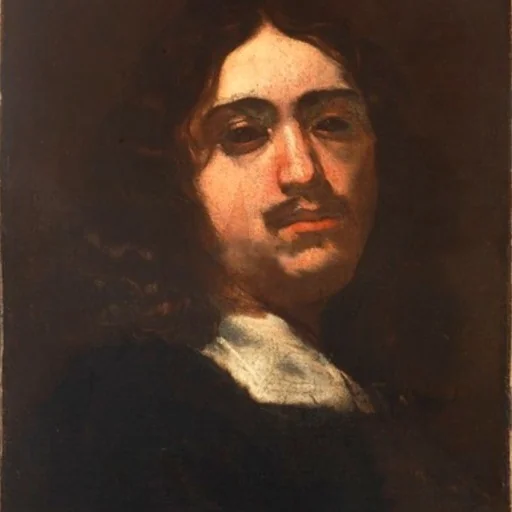
Artist
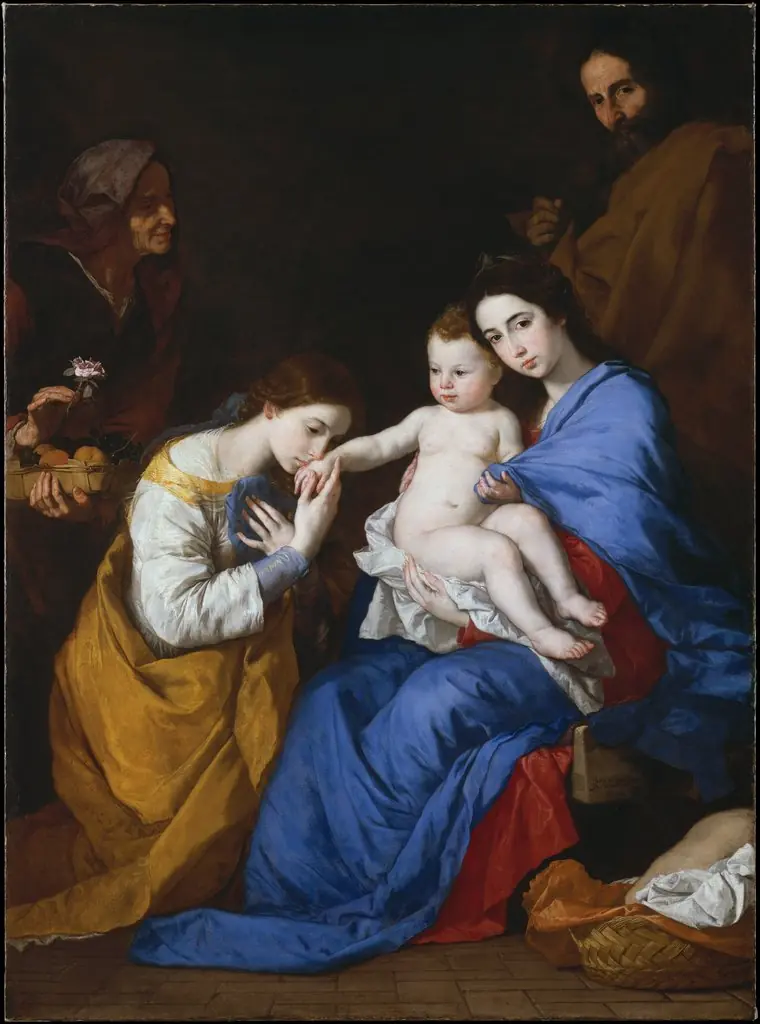
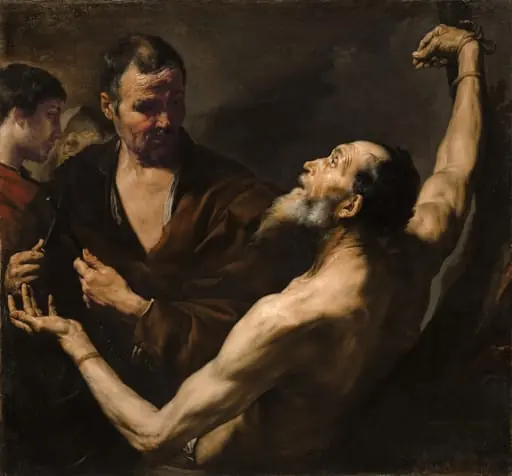
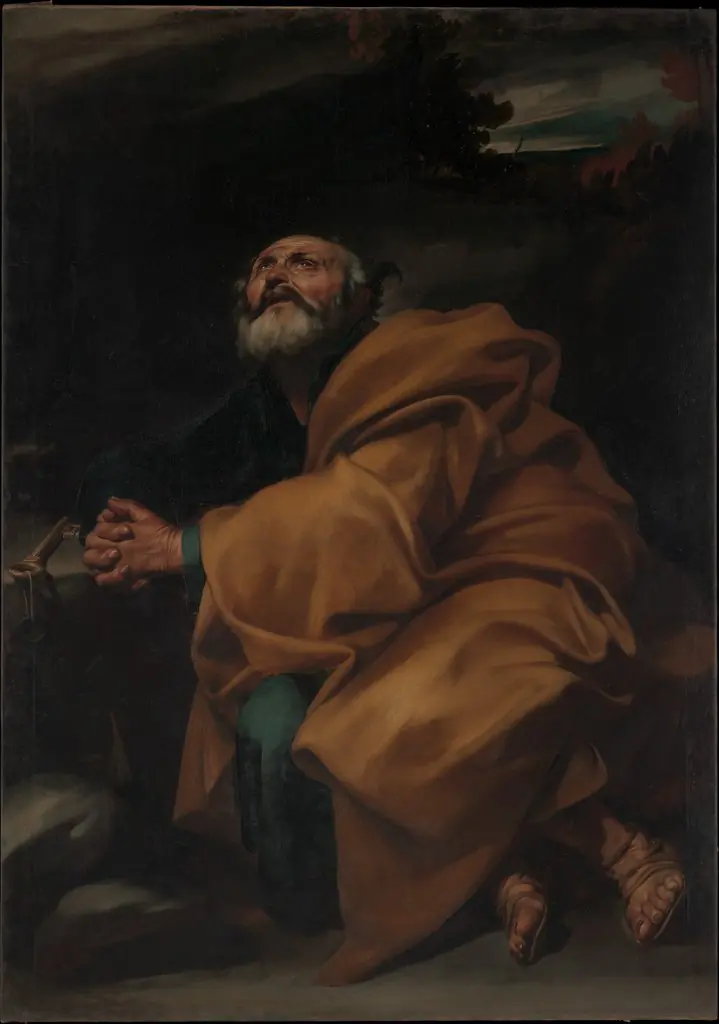
Jusepe de Ribera (Valencian: ; baptised 17 February 1591 – 3 November 1652) was a Spanish painter and printmaker.